 Ferndale Siding
 Birch Bay Sits Right at the Edge of Whatcom County's Toughest Exposure
Birch Bay is one of the more exposed pockets of Whatcom County when it comes to what the weather does to a house. Homes along the water and even a few blocks back get a steady dose of salt-laden air coming off the bay, combined with the driving, sideways rain that shows up every fall and winter and a shoulder season damp enough to grow moss on almost any north-facing surface. It's a beautiful place to live, but it is not a gentle place for exterior building materials. Siding here has to handle salt exposure, near-constant moisture, and temperature swings between a humid summer and a cold, wet winter — often within the same roofline.
We're based out of Ferndale and work throughout this stretch of the county, so Birch Bay isn't an unfamiliar drive for us — it's part of our regular service area, and we've seen firsthand how differently siding ages here compared to homes further inland in Whatcom County.
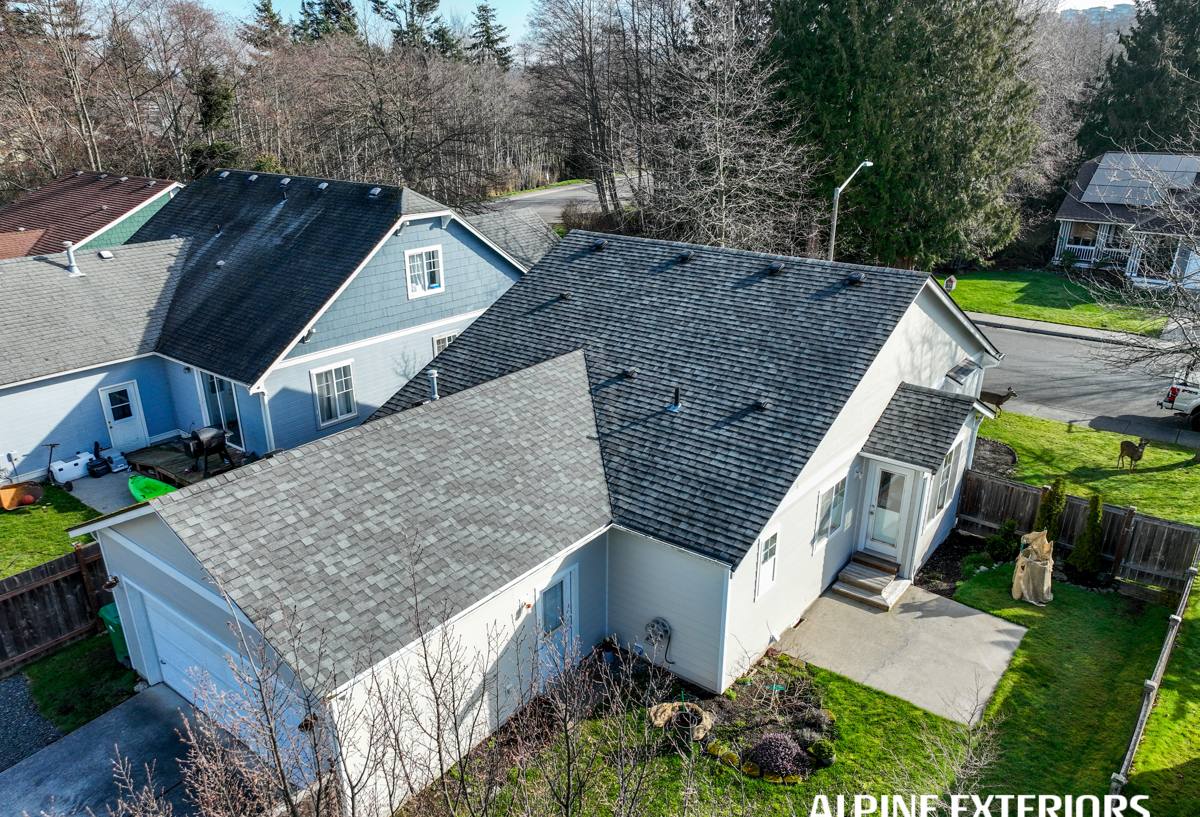
What Salt Air, Driving Rain, and Moss Actually Do to a House
Salt Air
Airborne salt from the bay settles on every exterior surface it touches. On untreated or improperly sealed wood and some engineered wood products, that salt accelerates moisture absorption at the surface, which speeds up swelling, checking, and paint failure. It's also hard on fasteners and trim details that aren't rated for a coastal-adjacent environment.
Driving Rain
Wind off the water doesn't just drop rain — it pushes it sideways into siding seams, window trim, and butt joints. A siding system that relies on caulk and paint film alone to stay watertight will eventually let moisture behind the cladding. Once water gets behind siding in a climate this wet, it has very little time to dry out before the next storm arrives.
Moss and Sustained Dampness
Whatcom County's long moss season is real, and Birch Bay's tree cover and marine humidity make it worse in shaded and north-facing areas. Moss and algae hold moisture directly against a wall surface for weeks at a time. On materials that aren't dimensionally stable or that absorb water at the surface, that sustained dampness is where rot, delamination, and coating failure usually start.
Common Siding Problems We See on Birch Bay Homes
- Paint and coating failure on the weather-facing (usually west and southwest) walls, years ahead of the north side
- Soft or delaminating panel edges on engineered wood siding near grade and around window sills
- Caulk joints that have shrunk, cracked, or pulled away, leaving gaps at trim and butt seams
- Persistent moss and algae staining on shaded walls and under eaves with limited sun exposure
- Fastener staining or corrosion on trim and fascia in older installations
- Older vacation and seasonal cottages where deferred maintenance let moisture problems get well established before anyone caught them
A lot of Birch Bay properties were originally built as seasonal or vacation homes and are now used year-round, or are being upgraded for full-time living. That shift matters for siding decisions — a cottage built for occasional summer use wasn't necessarily detailed for standing up to forty winters of driving rain off the bay.
Why We Install Only James Hardie Fiber Cement Siding
We made a decision as a company to install James Hardie fiber cement siding exclusively, and we don't waver on that in a climate like Birch Bay's. Fiber cement is made from cement, sand, and cellulose fiber — it doesn't absorb water the way wood-based products do, it doesn't support rot, and it isn't a food source for the moss and organic growth that thrives in this environment. That combination matters more here, on the water, than it does in a lot of other parts of the county.
James Hardie's HZ5 product line is engineered specifically for the kind of marine, freeze-thaw-adjacent climate that covers this part of the Pacific Northwest. The panels are dimensionally stable across wet and dry cycles, which keeps joints tighter over time and reduces the caulk-and-paint maintenance cycle that wears out other siding materials near the water. The ColorPlus factory finish is baked on under controlled conditions rather than field-applied, which gives it far better resistance to fading and coating failure than a jobsite paint job — an advantage that shows up quickly on a south- or west-facing wall taking direct salt spray and sun.
Hardie also backs the product with a strong, transferable non-prorated warranty on the substrate, which is worth more in a coastal-adjacent market like this one — if you ever sell, that warranty protection follows the house.
Where Hardie Fits on a Birch Bay Home
| Product | Typical Use | Why It Works Here |
|---|---|---|
| HardiePlank lap siding | Primary wall cladding | Dimensionally stable, factory-finished, holds up to driving rain and salt exposure |
| HardiePanel vertical siding | Accent walls, gables, modern facades | Clean lines with the same moisture and coating performance as lap siding |
| HardieTrim boards | Corners, window and door trim, fascia | Won't rot or absorb water at end cuts the way wood trim does |
| HardieSoffit | Eaves and overhangs | Resists the sustained dampness that drives moss growth under shaded eaves |
Why We Don't Install Vinyl, LP SmartSide, or Cedar Here
Homeowners in Birch Bay often ask us to bid vinyl, LP SmartSide, or cedar because that's what's already on the house or what a neighbor has. We'll give an honest answer rather than just decline the job.
Vinyl siding is inexpensive and low-maintenance in the sense that it never needs paint, but it's a thin plastic product that expands and contracts significantly with temperature swings, and its seams and J-channels rely on lap-and-overlap details rather than a sealed, factory-finished surface. In a location that takes sustained wind-driven rain, those overlap joints are more prone to water intrusion behind the panel than a properly installed fiber cement system, and vinyl can become brittle and crack from UV and cold exposure over the decades.
LP SmartSide is an engineered wood strand product — it's a genuine improvement over old-style hardboard siding and performs reasonably well in drier climates, but it is still wood at its core, bonded with resin and coated. Cut edges, fastener penetrations, and any point where the factory coating is compromised become entry points for moisture, and once water gets into engineered wood strand product, it doesn't dry out the way solid material does — it swells and delaminates from the inside. That's a real liability on a home taking regular salt spray and driving rain.
Cedar and primed spruce siding are honest, traditional materials with real curb appeal, but they demand an ongoing maintenance commitment — re-staining or repainting on a multi-year cycle, careful caulking, and vigilant moisture management — that most homeowners underestimate until the first signs of cupping, checking, or rot show up. In a climate with this much sustained dampness and moss pressure, that maintenance burden is steep, and the failure points (butt joints, end grain, fastener heads) are the same ones that give Birch Bay's weather the easiest way in.
None of these are bad products in every context. They're just not the standard we're willing to put our name behind in a marine-adjacent climate where the margin for moisture mistakes is thin.
How We Handle Installation for a Salt-Air, High-Rain Environment
Water Management First
Correct installation starts underneath the siding, not with the panels themselves. That means a properly lapped weather-resistive barrier, flashing at every window, door, and horizontal trim transition, and rainscreen or drainage detailing where the wall assembly calls for it. Fiber cement performs as well as its installation — a great product installed without attention to water management will still fail in a place like this.
Fastening and Clearances
We follow Hardie's fastening schedules and use corrosion-resistant fasteners appropriate for a coastal-adjacent environment. We also hold proper clearance from grade, decks, roof lines, and hardscaping so siding isn't sitting in a splash zone or trapping moisture against the bottom edge of the wall.
Sealing and Joint Details
Butt joints, corners, and trim intersections get detailed to shed water rather than just relying on caulk as the only line of defense. Caulk is a maintenance item, not a waterproofing strategy on its own — we build the assembly so it still performs even after a joint eventually needs to be re-caulked years down the road.
Siding Is Part of a Larger Exterior — Roofing, Windows, and Decks
Siding doesn't work in isolation, and in Birch Bay's climate the whole exterior envelope needs to work together. We handle roofing, windows, and decks alongside siding because water problems often show up at the boundaries between these systems — a roof-to-wall transition, a window flange, a deck ledger board bolted into the wall. When we're doing full exterior work, we look at flashing and drainage at every one of those transitions rather than treating siding as a standalone cosmetic project.
- Roofing: Proper roof-to-wall flashing keeps water from running behind new siding at the most common leak point on a house
- Windows: Correct window flashing integration is one of the top sources of hidden water damage we find when we open up old siding
- Decks: Ledger connections and deck-to-wall flashing need to be right, or water gets pushed straight into the wall assembly behind the siding
What Drives Cost on a Birch Bay Siding Project
| Factor | Why It Matters |
|---|---|
| Home size and wall complexity | More corners, dormers, and gables mean more trim, cutting, and labor |
| Existing siding removal and repair | Rot or moisture damage found underneath old siding needs to be repaired before new siding goes on |
| Water management upgrades | Adding or improving a rainscreen/drainage plane behind the siding adds cost but pays off in a wet, salty climate |
| Product mix | Lap siding, panel siding, trim boards, and soffit each have different material and labor costs |
| Site access | Waterfront lots, steep grades, or limited staging space near the bay can affect labor time |
We give straightforward, itemized estimates rather than vague lump-sum numbers, so homeowners can see exactly what they're paying for.
A Simple Maintenance Checklist for Homeowners Near the Water
- Rinse salt residue off siding a couple times a year, especially on walls facing the bay directly
- Keep gutters clear so overflow isn't running down the wall face and feeding moss growth
- Trim back vegetation and tree cover that keeps shaded walls damp and encourages moss
- Walk the exterior each fall and look for gaps in caulking at trim and window edges before winter storms arrive
- Check deck ledger and roof-to-wall flashing points periodically — these are common hidden leak sources
- Address any soft spots, staining, or bubbling paint promptly rather than waiting for the next dry season
Why a Local Ferndale-Based Crew Matters in Birch Bay
We work throughout Whatcom County, and Birch Bay's exposure to the water is something we plan for specifically rather than treat as a generic siding job. A crew that installs siding across a range of climates without accounting for salt exposure and driving rain off the bay is more likely to skip the water management details that actually matter here. Being based nearby also means we're available for follow-up, warranty questions, or a second look years after installation — not a one-time crew that's hard to reach once the job is done.
If you're weighing a siding replacement, or dealing with an aging roof, tired windows, or a deck that needs attention alongside your siding, we're happy to take a look and put together a clear, honest estimate. Reach out for a free, no-pressure estimate using the form below.