 Ferndale Siding
 Siding Built for Birch Bay's Coastline, Not Just Any House
Birch Bay sits right where Whatcom County's weather gets its teeth into a house. You're close enough to the water that salt-laden air is a daily fact of life, exposed enough that driving rain off the Strait finds every gap in a building envelope, and shaded enough in places that moss and algae get a running start every fall and don't let up until late spring. A siding job that would hold up fine in a drier inland neighborhood can start showing problems here in a few years instead of a few decades. We install siding in Birch Bay regularly, and the material and detailing choices we make reflect what this specific stretch of coastline does to a house, not a generic Pacific Northwest template.
This page covers siding installation as a service specifically for Birch Bay homes — what the climate demands, what a correct installation actually involves, and how we run the job from first look to final walkthrough.
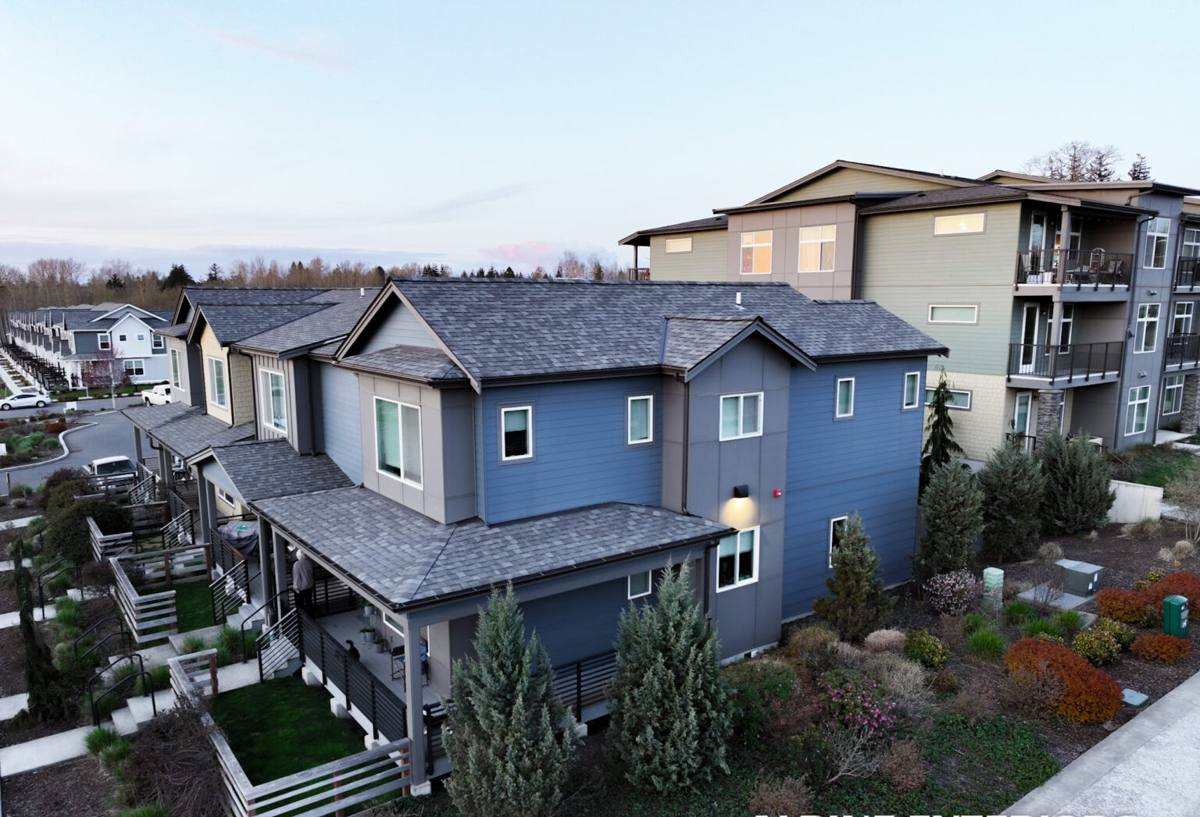
What Birch Bay's Climate Actually Does to Siding
Salt Air
Airborne salt from Birch Bay and the Strait of Georgia accelerates corrosion on fasteners, flashing, and any metal trim that isn't rated for coastal exposure. It also degrades cheaper paint films faster than inland areas, which is part of why we care about factory-applied, baked-on finishes rather than field-applied paint that has to fight salt exposure from day one.
Driving Rain
Wind-driven rain off the water doesn't just fall on a wall — it gets pushed sideways into laps, seams, and penetrations. Siding that relies on face-sealing (caulk and paint alone) to keep water out eventually fails here, because caulk joints move, crack, and let water behind the cladding. The house needs a real drainage plane behind the siding, not just a well-caulked face.
Moss and Algae Season
Shaded north and west-facing walls in Birch Bay stay damp for extended stretches much of the year. Organic growth needs sustained moisture and shade, and this neighborhood offers plenty of both. Porous or absorbent siding materials hold that moisture longer and give moss and algae more to grab onto; dense, factory-finished fiber cement resists it far better.
Why We Install James Hardie Fiber Cement and Nothing Else
We standardized on James Hardie fiber cement siding for every job we do, including Birch Bay, and we don't install vinyl, LP SmartSide, primed spruce, cedar, or other fiber cement brands like Cemplank or Allura. That's not a marketing position — it's what we've decided actually holds up to the trade-offs a coastal Whatcom County home presents.
- Non-combustible: Fiber cement doesn't feed a fire the way wood-based products can, which matters for insurance and peace of mind alike.
- Dimensionally stable in wet-dry cycling: Hardie's cement-and-cellulose composition doesn't swell and shrink with moisture the way wood or wood-composite sidings do, so caulk joints and paint lines stay intact longer under Birch Bay's rain-and-dry cycles.
- ColorPlus factory finish: A baked-on finish applied and cured in a controlled plant environment resists salt-air fade and chalking better than field-applied paint, and it typically carries its own finish warranty separate from the substrate warranty.
- HZ5 climate engineering: Hardie makes region-specific product formulations; the HZ5 line is engineered for wetter, colder climates like ours, rather than a one-size-fits-all national product.
We're not going to pretend other products don't have their place — vinyl is inexpensive and low-maintenance in mild climates, and cedar has real curb appeal for the right buyer who's willing to keep up with it. But for a Birch Bay home taking on salt air, driving rain, and long moss seasons every year, we've found the trade-offs on those alternatives (maintenance burden, moisture sensitivity, or finish durability) aren't worth it. Hardie is what we're willing to warranty and stand behind.
What Correct Installation Involves Here
Material choice only gets you halfway. Most siding failures we see in coastal Whatcom County neighborhoods trace back to installation shortcuts, not the product itself. A correct Birch Bay installation includes:
Weather-Resistive Barrier and Drainage Plane
A properly lapped and sealed weather-resistive barrier behind the siding, ideally with a drainage gap or rainscreen furring, so any water that does get past the cladding has somewhere to go instead of sitting against the sheathing.
Flashing at Every Penetration
Windows, doors, hose bibs, light fixtures, and vents all need proper flashing integrated with the water-resistive barrier — not just caulked around after the fact. Caulk is a backup layer, not the primary defense, especially under driving rain conditions.
Correct Fastening and Clearances
Hardie specifies fastener type, spacing, and minimum clearances from grade, roof lines, and decks. Skipping these specs voids the manufacturer warranty and is exactly the kind of shortcut that shows up as problems in three to five years, not immediately.
Butt Joint and Corner Detailing
Joints and corners are where water intrusion most often starts. We treat butt joints with proper flashing or H-molding per spec and use corner details that shed water rather than trap it.
Our Process for Birch Bay Jobs
- On-site assessment: We look at your home's specific exposure — how close to the water, which walls take the worst of the wind-driven rain, where moss has already established itself — and identify any existing moisture or rot damage behind the current siding.
- Scope and product selection: We walk through Hardie plank profiles, textures, and colors, and explain what HZ5 engineering means for a house in your specific spot in Birch Bay.
- Tear-off and sheathing check: Once old siding is off, we inspect sheathing for hidden water damage before anything new goes up — this is often where problems from a prior installation surface.
- Weather barrier and flashing installation: Done to spec before a single piece of siding goes on, since this layer is invisible once the job is finished but does most of the actual work keeping water out.
- Siding installation: Fastened, spaced, and jointed to James Hardie's published specifications, not shortcuts.
- Final walkthrough: We go over the finished job with you, including caulking, paint touch-up at cut edges, and trim details, before calling it done.
Comparing Installation Approaches
| Approach | Face-Sealed / Minimal Drainage | Drainage Plane + Proper Flashing |
|---|---|---|
| How it handles driving rain | Relies on caulk staying intact | Manages incidental water behind the cladding |
| Risk in Birch Bay's rain exposure | Higher — caulk fails over time | Lower — designed to handle some intrusion |
| Long-term maintenance | Frequent recaulking and monitoring | Standard periodic inspection |
| Warranty implications | Can void manufacturer coverage if underlayment specs skipped | Meets Hardie installation requirements |
Why Hiring a Crew That Already Works Birch Bay Matters
Installation quality depends on judgment calls that a spec sheet can't fully capture — how much rainscreen gap to build in on a wall that takes the worst of the wind, how aggressively to flash a window on the water-facing side versus a sheltered wall, which corners of a specific lot tend to hold moisture longer. A crew that's already worked houses in this neighborhood has seen how the local conditions actually play out on real walls, not just in a manufacturer's installation manual. That local pattern recognition is part of what you're paying for, along with the labor itself.
It also matters for accountability. A crew based in the area and working Ferndale and Whatcom County regularly is going to be around if a question comes up two or five years after the job — not just during the install.
What to Check Before Hiring Anyone for This Job
- Are they licensed and insured in Washington State, and will they show you proof without you having to ask twice?
- Do they install to James Hardie's published fastening, clearance, and flashing specifications — not a shortcut version?
- Will they inspect sheathing for hidden moisture damage before installing new siding over it?
- Do they explain drainage plane and flashing details, or just talk about the visible siding product?
- Can they speak specifically to coastal exposure conditions, or do they treat every job the same regardless of location?
- Is the estimate written and itemized, or vague about what's actually included?
Get a Straight Answer for Your Birch Bay Home
Every Birch Bay property sits a little differently relative to the water, tree cover, and prevailing wind, and that affects what your siding actually needs to hold up. If you'd like a no-pressure look at your home's current siding and a straight assessment of what a correct James Hardie installation would involve, request a free estimate using the form below.