 Ferndale Siding
 Siding Replacement for Sandy Point Homes
Sandy Point sits right on the water in the Ferndale service area, and that waterfront position shapes almost everything about how a home's exterior ages there. It's a different set of conditions than an inland Whatcom County lot faces — salt-laden air moving off the water, driving rain that gets pushed sideways by wind coming across open water, and a moss season that runs long even by the standards of the western part of the county. We work in Sandy Point and the surrounding Ferndale area regularly, and the way we approach siding, trim, and roofing here is built specifically around what that combination does to a home over years, not just how a product looks on install day.
We install James Hardie fiber cement siding exclusively. For a waterfront property dealing with salt exposure, sustained wind-driven rain, and a wet climate that doesn't let up for much of the year, it's the material we recommend without hesitation.
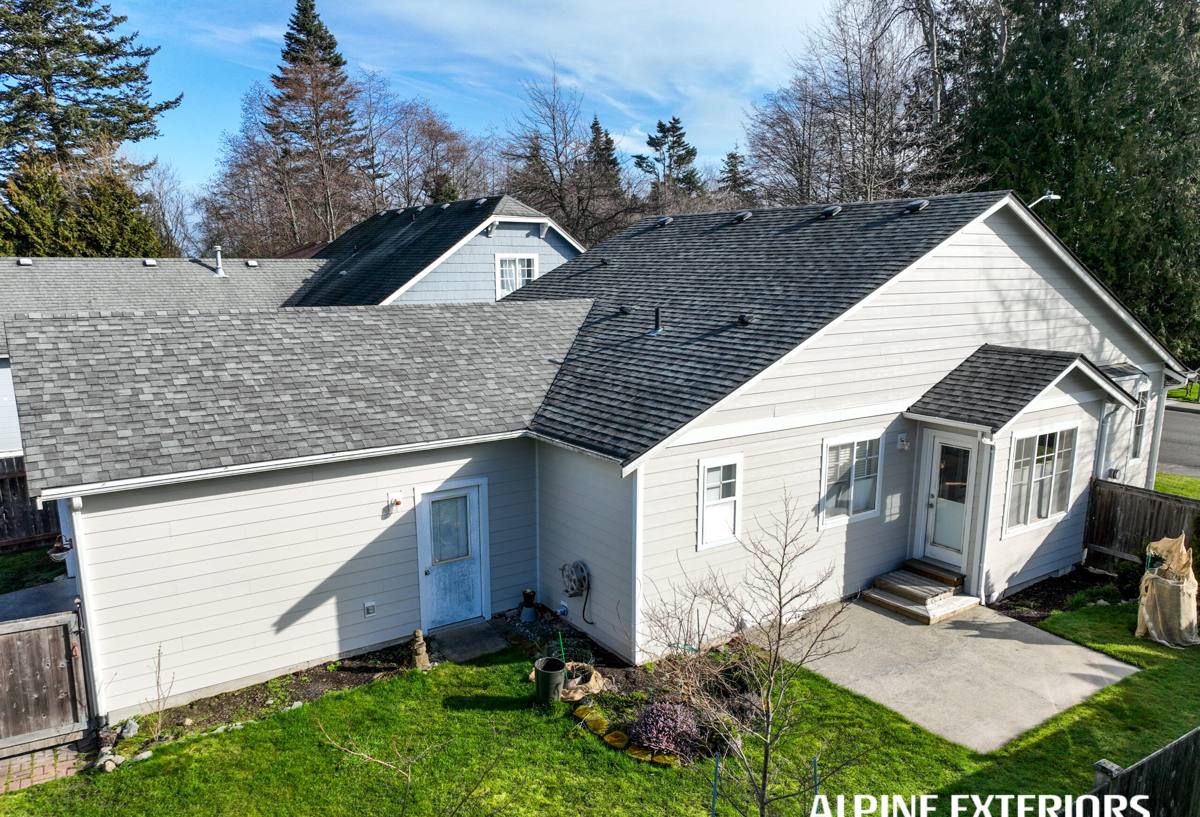
What the Sandy Point Climate Does to a Home's Exterior
Salt Air and Corrosive Exposure
Homes close to the water take on airborne salt that inland properties simply don't deal with. Salt is corrosive to metal fasteners, flashing, and trim, and it can also accelerate the breakdown of paint finishes and lower-grade siding materials over time. A material and finish system that isn't built to hold up under that kind of exposure tends to show its age faster on a waterfront lot than the same product would a few miles inland.
Driving Rain Off the Water
Open water means less wind resistance than a home would get from trees or terrain further inland, and that translates into rain that hits siding and trim at an angle rather than falling straight down. Wind-driven rain finds its way into seams, corners, and window and door openings that aren't detailed correctly, and on an exposed waterfront lot that kind of wind event is a regular occurrence rather than an occasional storm.
A Long Moss and Mildew Season
Persistent dampness, mild temperatures, and shaded or north-facing walls add up to a moss and mildew season that stretches across much of the year in this part of Whatcom County, and waterfront humidity tends to make it worse. It usually shows up first as staining or green growth on siding and trim, and left alone it holds moisture directly against the wall assembly — which is exactly the condition that leads to hidden rot behind the surface.
Wind Load
Because Sandy Point sits exposed along the water with little natural windbreak in some directions, homes there see higher sustained wind loads than a sheltered inland lot. That matters for how siding is fastened and how trim and flashing details are installed — a system that's marginal under calm conditions can fail faster when it's tested by wind on a regular basis rather than occasionally.
Freeze-Thaw Cycling
Whatcom County sees enough hard frosts each winter to matter, and when moisture has already worked its way into a porous or poorly sealed material, freezing conditions expand that trapped water and accelerate cracking and material failure. It's a secondary effect layered on top of everything else a waterfront property already deals with, but it's a real one.
Why James Hardie Is What We Install
We used to offer a wider range of siding products before narrowing to one system. That decision came out of watching, job after job across Whatcom County, which materials genuinely held up under sustained coastal moisture and salt exposure and which ones quietly turned into maintenance problems within a decade. For a Sandy Point property specifically, dealing with salt air, wind-driven rain, and a long wet season, the case for fiber cement is straightforward.
- Non-combustible core: Fiber cement doesn't feed a fire the way wood-based or wood-derived siding products can, which matters for household safety and can matter for insurance underwriting as well.
- Factory-applied ColorPlus finish: The color is baked on under controlled factory conditions rather than brushed on in the field, so it resists fading, chalking, and moisture intrusion far longer than site-applied paint — a real advantage in a salt-air environment that's hard on ordinary finishes.
- Climate-engineered HZ product lines: Hardie builds different formulations for different climate zones, including versions engineered for regions with sustained moisture exposure, and that engineering is a genuine match for a waterfront Ferndale property.
- Dimensional stability: Fiber cement doesn't swell, cup, or warp the way engineered wood siding can after repeated wet-season moisture cycles, which matters more here given how long that wet season runs.
- Strong transferable warranty: Hardie backs its products with a solid warranty structure, provided the installation follows spec, which gives a homeowner real protection rather than a marketing claim.
We don't install LP SmartSide, vinyl siding, Cemplank, Allura, primed spruce, or cedar. Each of those has a place in the broader market, and plenty of homeowners elsewhere are satisfied with them. But we made a professional call that one system we trust completely, installed correctly, is worth more to a homeowner than a cheaper option that quietly shifts maintenance risk back onto them a few years down the road — especially on a waterfront lot that doesn't forgive shortcuts.
How Salt Exposure Should Change an Installation
Salt air doesn't just affect the siding panel itself — it affects every metal component in the wall assembly, and a waterfront installation needs to account for that from the start.
Fastener and Flashing Selection
Fasteners, flashing, and trim hardware all need to be rated for coastal or corrosive exposure rather than standard-grade materials. Using the wrong fastener on a waterfront home is a slow-motion problem — it looks fine for a year or two, then starts staining, weakening, or failing well ahead of schedule.
Caulking and Sealant Choices
Sealants around windows, doors, and trim joints see more UV, salt, and moisture cycling on a waterfront property, so we use products rated for that kind of exposure rather than a general-purpose caulk that might be fine on a sheltered inland lot.
Drainage Plane and Ventilation Detailing
A correctly built drainage plane behind the siding — with proper house wrap, flashing laps, and a ventilated air gap — matters everywhere, but it matters more on a property that's fighting both wind-driven rain and persistent ambient humidity at the same time. Water that gets behind the cladding needs a clear path out, and that detail is easy to shortcut and hard to fix later without removing siding.
How We Approach a Sandy Point Project
Every project starts with an in-person walk-through, not a phone quote. We look at the home's orientation relative to the water and prevailing wind, the condition of the existing siding and trim, any signs of past moisture intrusion around windows, doors, or roof lines, and the overall structure underneath before recommending anything. A full re-side is sometimes the right call, but not always — some homes need targeted repair and moisture remediation more than a wholesale replacement, and we'll tell you honestly which situation you're in.
Once we're doing the work, that means:
- Removing old siding and inspecting the sheathing underneath for hidden rot or moisture damage before anything new goes up
- Correcting any drainage plane, flashing, or house wrap issues we find rather than covering them over
- Installing James Hardie panels and trim to manufacturer spec, with corrosion-rated fasteners appropriate for a coastal setting
- Coordinating siding work with roofing, window, or deck work when a project touches more than one part of the exterior, so flashing and transitions between systems are handled correctly rather than as an afterthought
Cost Factors for a Sandy Point Siding Project
Every home is different, and we don't quote real numbers without seeing the property, but a few factors consistently move the price on a project like this:
| Factor | Why It Matters |
|---|---|
| Home size and wall complexity | More square footage and more corners, dormers, or roof intersections mean more material and more labor-intensive trim work. |
| Extent of hidden damage | Rot or moisture damage found once old siding comes off can add scope that isn't visible during an initial walk-through. |
| Existing substrate condition | Sheathing that needs repair or replacement before new siding goes on adds material and labor beyond the siding itself. |
| Trim and detail level | Corner boards, window and door trim, and architectural details all affect labor time independent of the siding panels themselves. |
| Access and site conditions | Waterfront lots can have tighter staging areas or limited equipment access compared to a standard in-town lot, which affects labor time. |
| Scope beyond siding | Coordinating roofing, window, or deck work into the same project can create efficiencies but also adds to total project cost. |
Exact costs depend on the specific property and its exposure, which is why we walk the home in person before giving a real number instead of quoting off a generic price sheet.
Signs a Sandy Point Home May Need Exterior Attention
- Persistent staining, streaking, or green growth on siding that keeps returning after cleaning
- Soft or spongy spots when pressing on siding or trim, especially near ground level or window sills
- Visible corrosion or rust staining around fasteners, flashing, or hardware
- Paint that's peeling, bubbling, or chalking faster than it should for its age
- Gaps opening up at trim joints, corner boards, or around window and door casings
- Warping, cupping, or visible movement in siding panels, particularly on wood-based or engineered wood products
Any one of these on its own might be minor. Several showing up together, especially on a wall that faces the water or prevailing wind, is usually a sign that moisture has already gotten past the surface and it's worth having someone take a real look before it turns into a larger repair.
Why a Local Crew Matters in Sandy Point
A crew that works this stretch of the Ferndale coastline regularly understands how salt exposure, wind-driven rain, and a long moss season actually behave on real homes here over a full year, not just how a product performs on a spec sheet. That experience shapes practical decisions on install day — which walls take the worst of the salt air and wind, where corrosion-rated hardware is worth the added cost, and which flashing details are worth the extra time so a homeowner isn't dealing with a callback after the next winter storm off the water. Sandy Point's waterfront exposure is different enough from a typical inland Ferndale lot that a one-size-fits-all approach built for calmer conditions doesn't hold up as well here, and a crew with real local experience treats that seriously.
What to Expect When You Call Us
- A walk-through of the home, inside and out where relevant, to look at siding, trim, roofing, windows, and any deck connections together
- An honest assessment of whether you're looking at a repair, a partial replacement, or a full re-side
- A clear explanation of why we recommend James Hardie for a property with this kind of exposure
- A written estimate with no pressure to sign on the spot
If your Sandy Point home needs new siding, roofing, windows, decking, or just an honest second opinion on what's happening behind an aging wall, we're glad to take a look. Reach out using the form below to schedule a free, no-pressure estimate.