 Ferndale Siding
 Marietta's Exterior Challenge: Water on Three Sides
Marietta sits low and close to Bellingham Bay, part of the broader Ferndale community in Whatcom County. That waterfront position is what makes the area feel distinct from the rest of Ferndale — and it's also what makes exterior materials work harder here than almost anywhere else in the county. Homes in Marietta deal with a combination most inland neighborhoods never see: salt-laden air off the bay, near-constant marine humidity, driving rain that comes in sideways off the water during winter storms, and low elevation that keeps moisture sitting on siding, trim, and roofing longer than it would on a hillside lot.
None of that is a reason to avoid building or maintaining a home here. It's simply the reality that should drive material choices. We've built our whole approach around exteriors that are engineered for exactly this kind of exposure, not general-purpose products that happen to work "well enough" in a gentler climate.
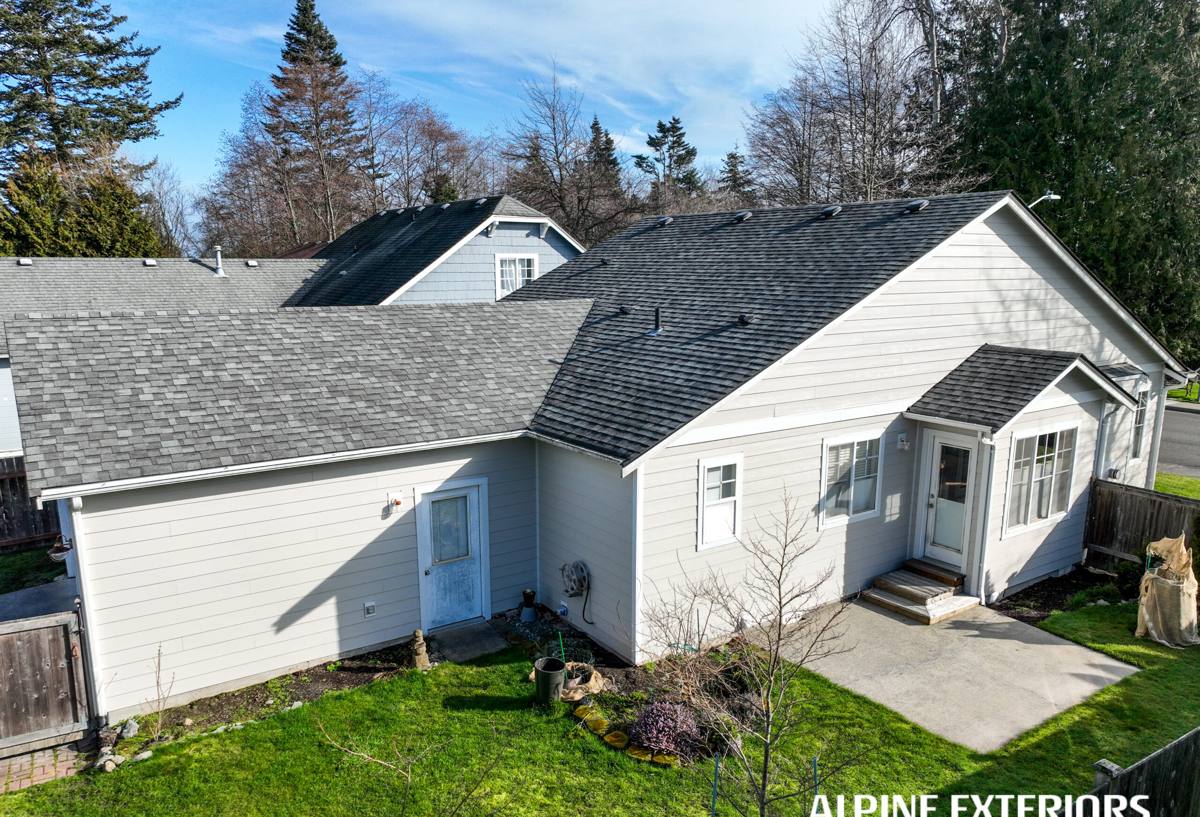
What Salt Air and Moisture Actually Do to a House
It helps to understand the mechanics, not just the symptoms. Salt air isn't just "humid air" — airborne salt is hygroscopic, meaning it pulls moisture out of the atmosphere and holds it against whatever surface it lands on. Combine that with Whatcom County's long wet season and you get building materials that stay damp far longer than their manufacturer's testing usually assumes.
Common failure points we see on waterfront and near-waterfront homes
- Fasteners and metal flashing corroding faster than inland equivalents, especially uncoated or under-spec hardware
- Wood-based siding and trim swelling, cupping, or delaminating at butt joints and end cuts where moisture wicks in
- Paint and factory finishes chalking or failing early on south- and west-facing walls that take the brunt of wind-driven rain
- Moss and algae establishing on north-facing walls and anywhere shade keeps a surface from drying out between storms
- Caulk joints breaking down faster than their rated lifespan, opening small gaps that let water behind the cladding
Individually, these are manageable. Left unaddressed over several wet seasons, they compound — moisture behind siding leads to sheathing rot, and by the time it shows on the surface, the repair is bigger than it needed to be.
Why We Install Only James Hardie Fiber Cement
We made a decision as a company to install one siding system: James Hardie fiber cement. We don't install vinyl, LP SmartSide, Cemplank, Allura, primed spruce, or cedar. That's not a marketing position — it's a response to what we've seen hold up (and not hold up) in exactly the kind of coastal, high-moisture environment Marietta sits in.
Fiber cement is cement, sand, and cellulose fiber. It doesn't have the wood content that gives engineered wood siding its moisture vulnerability, and it doesn't have the thermal expansion and contraction issues that plague vinyl in a climate with big seasonal temperature and humidity swings. James Hardie's ColorPlus factory-applied finish is baked on under controlled conditions, which gives it better adhesion and UV resistance than field-applied paint — a real advantage on the sun-exposed walls that fail first here.
What matters specifically for a Marietta property
- Non-combustible core — relevant given Whatcom County's dry-season wildfire risk, even this close to the water
- HZ5 and climate-engineered product lines — Hardie manufactures regional formulations for moisture and freeze-thaw exposure, and the Pacific Northwest lines are built around exactly this weather pattern
- Dimensional stability — fiber cement doesn't swell and shrink with humidity the way engineered wood panels can, which keeps joints and caulk lines intact longer
- Transferable warranty — a real asset if the home changes hands, which matters in a desirable waterfront-adjacent market
We'll say plainly: fiber cement isn't magic, and it isn't maintenance-free. It still needs correct flashing, proper caulking, and periodic washing to keep moss and salt residue from building up. But it starts from a material base that resists the specific failure modes we see over and over in this location, and that's the difference that shows up ten and twenty years down the road.
Siding Installation Details That Matter Here
The material is only half the equation. Installation quality determines whether any siding system performs to spec, and in a wind-driven-rain environment like Marietta, the details matter more than usual.
What correct installation looks like
- Weather-resistant barrier installed and lapped correctly behind the siding, with all penetrations properly sealed
- Rainscreen or drainage gap where conditions call for it, so any moisture that does get behind the cladding can drain and the wall can dry
- Corrosion-resistant fasteners driven to Hardie's specified depth and spacing — overdriven or underdriven nails are a leading cause of early siding problems
- Proper clearance between siding and grade, decks, and roof lines to keep splash-back and standing water away from the bottom edge
- Factory-mitered or properly caulked joints, since a poorly sealed butt joint is where most moisture intrusion starts
We follow Hardie's published installation specifications, not shortcuts. It's a slower process than a quick vinyl re-side, but it's the process that determines whether the material actually delivers the 30-50 year performance it's capable of.
Roofing, Windows, and Decks for the Same Conditions
Siding doesn't work in isolation — a house is a system, and every exterior component in Marietta faces the same salt air, rain, and moss exposure.
Roofing
Roof coverings and flashing details in this area need to handle sustained wind-driven rain and heavy moss pressure on shaded slopes. Metal flashing quality and proper ventilation matter as much as the roofing material itself — poor attic ventilation traps moisture that condenses and damages roof sheathing from the inside, a problem that shows up faster in a marine climate.
Windows
Window flashing and sealant integration with the siding plane is one of the most common leak sources we find on older homes near the water. When we replace siding, we integrate the window flashing correctly rather than caulking around the existing gaps — caulk is a maintenance item, not a waterproofing strategy.
Decks
Decks facing the bay take direct salt spray and sun exposure that ages fasteners, connectors, and decking material faster than a sheltered deck elsewhere in Ferndale. Structural hardware rated for coastal exposure and proper ledger flashing where the deck meets the house are non-negotiable details for anything built this close to the water.
Cost Factors for Marietta Exterior Projects
Every home is different, but a few factors consistently move the price on jobs in this area more than they would inland.
| Factor | Why it affects Marietta projects |
|---|---|
| Substrate condition | Older waterfront homes more often need sheathing repair once old siding comes off, due to accumulated moisture exposure |
| Access and staging | Waterfront lots and tighter streets can limit equipment access, affecting labor time |
| Flashing and drainage detailing | Correct rainscreen and flashing work takes longer than a basic install, but it's what makes the siding last in this climate |
| Hardware and fastener grade | Corrosion-resistant fasteners and connectors cost more than standard-grade hardware, but they're necessary this close to salt air |
| Trim and color selection | ColorPlus factory finishes vs. field-painted trim affect both material cost and long-term maintenance |
Why a Local Crew Matters
A contractor working across a wide, generic service radius treats Marietta the same as a dry inland subdivision two counties over. That's how you end up with standard-spec installation details on a house that needed coastal-grade attention. We work throughout Whatcom County and see this specific set of conditions — bay-adjacent exposure, long wet seasons, moss pressure — regularly enough that it shapes how we flash a window or space a fastener, not just what material we recommend.
Local also means being reachable after the job is done. Salt air and moss don't stop testing a house the day the crew leaves, and a company that's still local next year is a company that stands behind the work.
What to Look For When Vetting a Contractor Here
- Washington state contractor license and current liability insurance, verifiable through the L&I lookup
- Manufacturer training or certification specific to the siding system being installed
- A written scope that specifies flashing, drainage, and fastener details — not just "install siding"
- Willingness to explain why they use the products they use, including trade-offs
- Local references or a project history in the Ferndale / Whatcom County area
- A clear warranty structure covering both material and workmanship
If you're weighing a siding, roofing, window, or deck project on a Marietta property, we're happy to walk the exterior with you, point out what the current materials are telling us, and put together a straightforward, no-pressure estimate.