 Ferndale Siding
 Exterior Siding in Fairhaven: A Different Kind of Climate Test
Fairhaven sits close enough to the water that homes here deal with a combination most inland properties never see: salt-laden air rolling off the bay, long stretches of driving rain, and a moss season that can run for months out of the year. Any one of those on its own is manageable. Together, over years, they're exactly the kind of conditions that separate exterior materials that hold up from ones that don't.
We work throughout Whatcom County, and we've come to treat coastal-adjacent neighborhoods like Fairhaven as their own category when we're scoping a siding job. The recommendations we make here are shaped by what actually happens to a house sitting a short distance from saltwater, not by generic siding advice that assumes a dry inland climate.
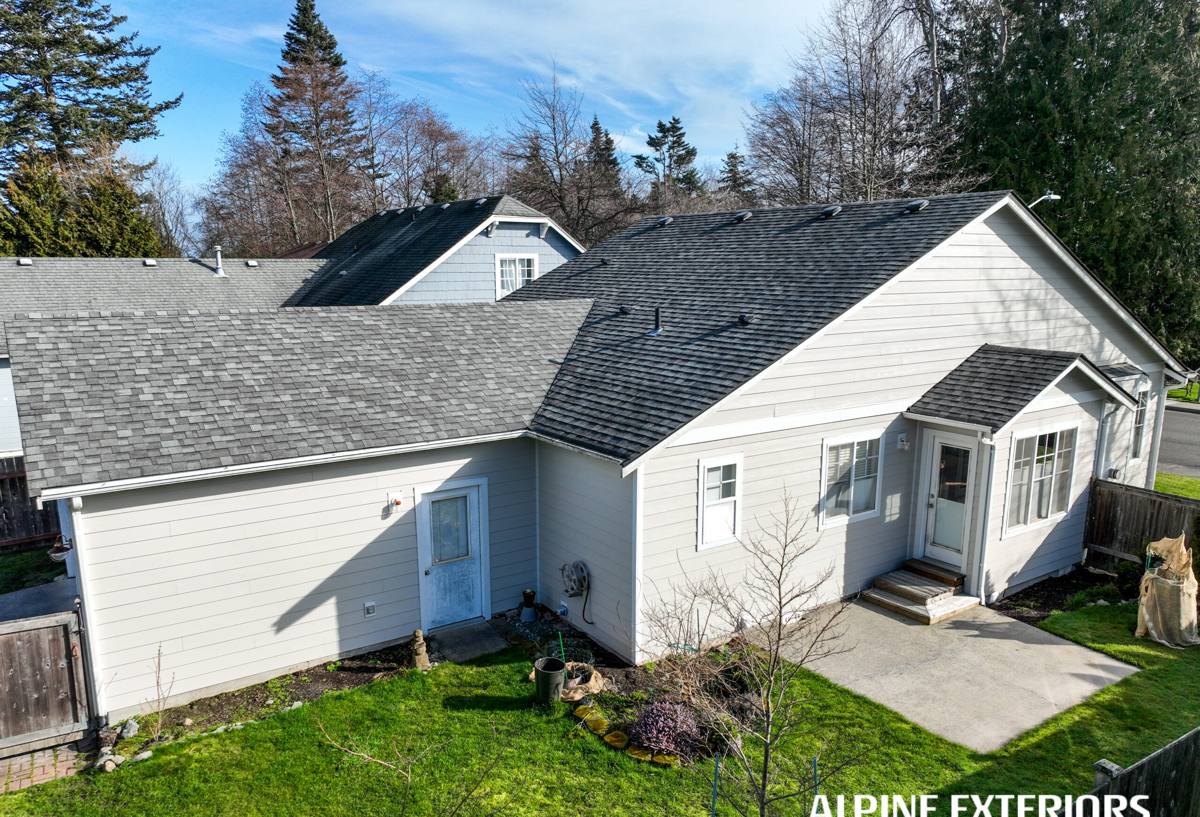
What Salt Air and Driving Rain Actually Do to a House
Salt air doesn't just smell like the coast — it's corrosive. Fine salt particles settle on exterior surfaces and fasteners, and combined with our region's humidity, they accelerate corrosion on anything metal that isn't rated for it: nails, flashing, hose bibs, light fixtures. Over time, that corrosion can compromise the very fasteners holding your siding to the wall.
Driving rain adds a second layer of stress. This isn't gentle drizzle — wind-driven rain in this part of Washington gets pushed sideways into wall assemblies, seams, and butt joints. Siding materials and installation details that work fine in a calm, dry climate can fail here specifically because water is being forced into gaps it would never reach elsewhere. That's why lap spacing, caulking choices, flashing details, and water-resistive barriers matter more in Fairhaven than they would fifty miles inland.
The combination is what does the real damage: salt accelerates metal fatigue, rain finds every weak point, and a house exposed to both for years starts showing it in ways that are expensive to reverse — rot at trim boards, rust streaking below fasteners, and paint or coatings breaking down faster than the label promised.
Moss Season and Why It's Longer Here Than Homeowners Expect
Whatcom County's mild, wet winters and shaded, moisture-holding microclimates near the water give moss and algae a long runway to establish themselves on north-facing walls, under eaves, and anywhere sun doesn't reach consistently. Moss isn't just cosmetic. It holds moisture directly against the siding surface, and prolonged moisture contact is one of the most common ways wood-based and wood-composite siding products begin to fail — through swelling, delamination, or rot at the edges and seams.
A siding material that can't shed moisture well, or that absorbs it into its core, is fighting a losing battle in a moss-prone environment. This is one of the biggest reasons our material recommendations for Fairhaven lean hard toward products engineered specifically to resist moisture absorption rather than simply resist it in dry conditions.
Why We Install Only James Hardie Fiber Cement Siding
We made a decision as a company to install James Hardie fiber cement siding exclusively — not vinyl, not LP SmartSide, not Cemplank or Allura, not primed spruce or cedar. That's a narrower lineup than most siding contractors offer, and we think that's the point.
Fiber cement is a blend of cement, sand, and cellulose fibers, engineered to be dimensionally stable and non-combustible. It doesn't absorb moisture the way wood-based products do, which matters directly in a climate with a long wet season and heavy moss pressure. It holds paint and factory finishes longer than wood substrates because it isn't expanding and contracting with every moisture cycle the way wood fibers do. And because it's cement-based, it isn't a food source for the organic growth — moss, algae, mildew — that thrives in shaded, damp coastal conditions.
James Hardie backs its siding with a factory-applied ColorPlus finish, which is baked on under controlled conditions rather than field-painted, and the company offers HZ5 and similar climate-engineered product lines built for exactly the wet, marine-influenced conditions we have here. The warranty is transferable, which matters to homeowners who may sell before they've fully recouped the investment.
None of this means every other product is a bad choice in every setting. Vinyl is inexpensive and low-maintenance in mild, dry climates. Cedar has real aesthetic appeal and a long history in the Northwest. LP SmartSide and similar engineered wood products have improved over the years. But we've chosen not to install them, because in a salt-air, high-rain, long-moss-season environment like Fairhaven's, we don't think they hold up as consistently as fiber cement does — and we'd rather stand behind one product system we trust completely than offer several we have reservations about.
How Common Siding Materials Compare in This Climate
| Material | Moisture Behavior | Salt Air / Coastal Durability | Maintenance |
|---|---|---|---|
| James Hardie fiber cement | Does not absorb/swell; sheds water well | Non-combustible, holds factory finish well near salt air | Low — occasional wash, no repainting cycle |
| Vinyl siding | Doesn't rot, but can warp/fade with UV and temperature swings | Fasteners and trim details still vulnerable | Low, but limited repair options if damaged |
| Cedar / wood siding | Absorbs moisture; prone to swelling, checking, rot | High upkeep in wet, moss-prone conditions | High — regular sealing/painting required |
| Engineered wood (LP SmartSide, etc.) | Better than raw wood but still moisture-sensitive at cut edges and seams | Sensitive to installation quality and moisture intrusion | Moderate — edge sealing and inspection matter |
What Correct Installation Looks Like Near the Water
Material choice only solves half the problem. Fiber cement siding installed with the wrong flashing details, insufficient clearance at grade, or gaps in the water-resistive barrier can still let moisture into a wall assembly — and once water gets behind siding in a climate this wet, it doesn't dry out quickly. On every Fairhaven-area job, we pay particular attention to:
- Proper flashing at windows, doors, and any wall penetrations, so wind-driven rain can't track behind the siding
- Correct fastener spacing and nailing patterns per manufacturer specification, since improperly fastened panels are more prone to movement and water intrusion
- Adequate clearance between siding and grade, decks, and roof lines to reduce splash-back and standing moisture
- Weather-resistive barrier continuity behind the siding, not just the siding itself
- Corrosion-resistant fasteners and flashing appropriate for a salt-air environment
These details rarely show up in a sales pitch, but they're the difference between siding that performs for decades in a coastal climate and siding that looks fine for a few years before problems start showing up at the seams.
Beyond Siding: Roofing, Windows, and Decks
Salt air and driving rain don't stop at the wall. The same conditions that stress siding put real demands on roofing, window seals, and any exterior deck structure. We handle all four — siding, roofing, windows, and decks — because they function as one connected exterior system, not four separate products bolted together.
A roof with failing flashing can send water down behind siding that's otherwise in great shape. Window units with degraded seals let moisture into wall cavities from the inside out. A deck built without proper ledger flashing can rot the wall it's attached to. When we're on a Fairhaven property, we look at the whole exterior envelope, not just the piece the homeowner called about, so a fix in one area doesn't leave a gap somewhere else.
A Practical Maintenance Checklist for Fairhaven Homes
Whatever siding material is currently on a home, a few habits go a long way in this climate:
- Rinse siding annually, especially north- and shade-facing walls where moss and algae take hold first
- Inspect caulking and sealant at trim, windows, and corners each fall before the wet season sets in
- Check for rust staining below fasteners or hardware, which can signal corrosion starting on metal components
- Keep gutters clear so overflow isn't running down and saturating wall sections repeatedly
- Trim back vegetation that keeps a wall section shaded and damp longer than the rest of the house
- Address any soft spots, discoloration, or bubbling paint promptly rather than waiting for a full season to pass
Why a Local Crew Matters
Whatcom County's coastal-adjacent neighborhoods don't behave like the rest of the region, and a crew that works here regularly recognizes the early warning signs — moss patterns, corrosion at fasteners, water staining at specific wall orientations — faster than a crew unfamiliar with this microclimate. That familiarity shapes real decisions: where extra flashing attention goes, which wall faces need closer inspection, and how a job should be sequenced around our wet season rather than fighting it.
Local also means accountability. We're not driving in from out of the area for a one-time job — we're a crew that homeowners in this county can call back if a question comes up after the work is done.
Getting Started
If your Fairhaven-area home is showing signs of moss buildup, failing paint, soft trim, or siding that's simply reached the end of its service life, we're happy to take a look. We'll give you an honest read on what's actually going on with your exterior — siding, roofing, windows, or decks — and what it would take to fix it right for this climate. Reach out for a free, no-pressure estimate using the form below.