 Ferndale Siding
 Why Birch Bay Windows Take More Punishment Than Most
Birch Bay sits right on the water, and that changes what a window has to survive compared to a house a few miles inland in Ferndale or elsewhere in Whatcom County. Wind off the Strait carries salt spray onto siding and glazing, driving rain gets pushed sideways into every gap a builder left loose, and the long gray stretch of fall and winter keeps wood trim and window sills wet enough, long enough, for moss and mildew to take hold. None of that is dramatic on its own. It's the cumulative effect — years of salt film breaking down finishes, years of wind-driven moisture finding the one seam that wasn't sealed right — that eventually shows up as fogged glass, soft trim, or a window that won't latch square anymore.
A window that would be fine on a sheltered inland lot can fail early in Birch Bay if it wasn't installed with that exposure in mind. That's not a knock on any particular product — it's just the reality of building this close to salt water, and it's the first thing we think about before we ever talk about brands or styles.
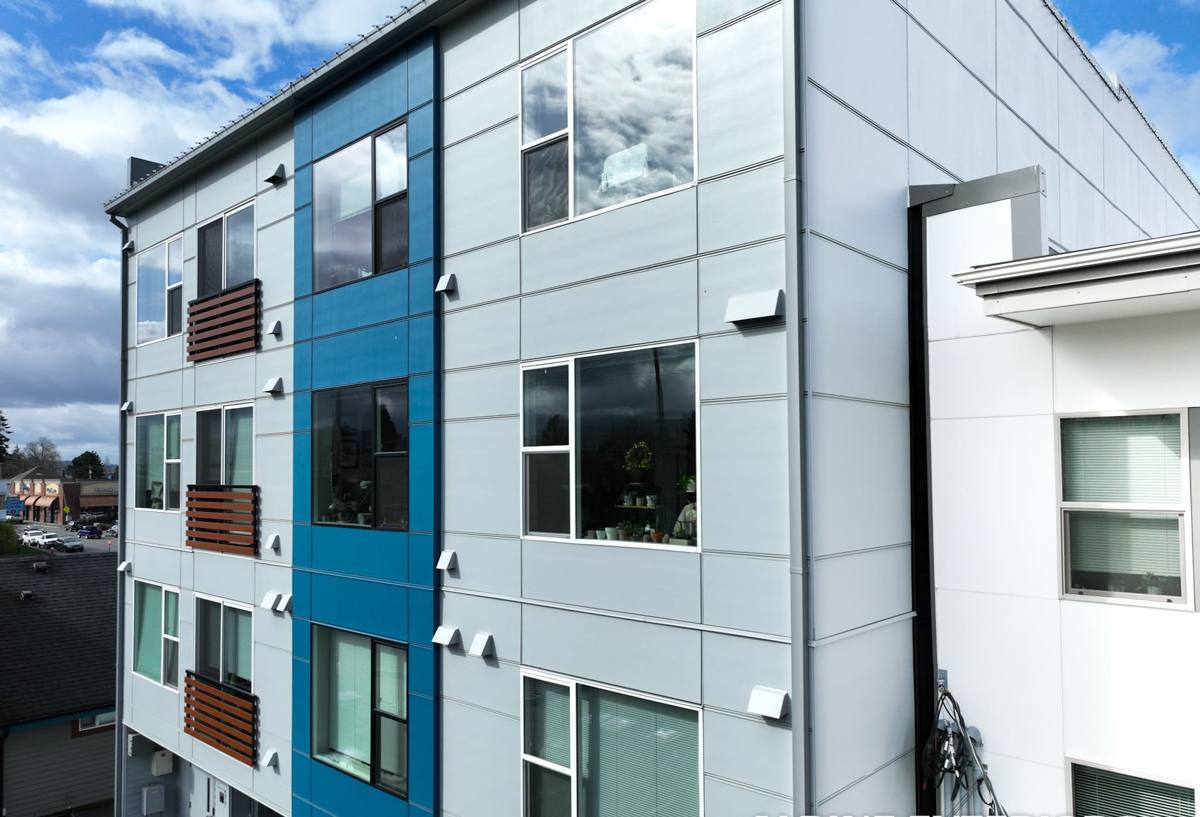
What a Correct Installation Actually Involves
Window installation gets treated like a simple swap — pull the old one, drop in the new one, caulk the edges. Done that way, a window can look fine for a year or two and still leak. The parts that actually determine whether a window holds up in a coastal climate are mostly invisible once the trim goes back on.
Flashing and Weather Barrier Integration
The window has to be tied into the house's weather-resistive barrier correctly, not just caulked around the outside. Flashing tape and building paper need to be lapped so water sheds down and out, never sideways into the wall cavity. In a driving-rain climate, this is the single biggest factor in whether a window leaks five years from now.
Sill Pan and Drainage
Every window opening should have a sloped, sealed pan under the sill so that any water that does get past the glazing or trim has somewhere to go besides the framing. This matters more here than in drier parts of the state, simply because wind-driven rain gets past even good caulking more often on an exposed bay-front lot.
Fastening, Shimming, and Insulation
A window needs to be shimmed plumb, level, and square before it's fastened, with the gap between the frame and rough opening properly insulated — not stuffed tight with fiberglass, which restricts the window's ability to move slightly with temperature and humidity swings. Over-driven or under-driven fasteners are a common cause of warped frames and windows that stop operating smoothly within a few years.
Sealants Rated for Coastal Exposure
Not every exterior sealant holds up to salt air and UV exposure the same way. We use sealants and finishes rated for marine or coastal exposure at door and window openings that face the water directly, because a bead of the wrong caulk breaking down in three years defeats everything else done correctly underneath it.
Choosing the Right Window Material for a Birch Bay Home
There's no single "best" window material — there are trade-offs, and which one makes sense depends on how exposed your home is, how much upkeep you want to do, and your budget. Here's how the common options actually perform in this environment.
| Material | Coastal / Salt-Air Performance | Maintenance | Typical Cost Range (installed, per window) |
|---|---|---|---|
| Vinyl | Good — won't corrode or rot; UV-stable frames hold color well | Low; occasional cleaning | Lower-to-mid |
| Fiberglass | Very good — dimensionally stable, resists salt and moisture, doesn't expand/contract much with temperature | Low | Mid-to-upper |
| Wood, clad exterior | Fair — interior wood needs the exterior cladding to stay intact; any breach invites rot near salt air | Moderate to high; watch cladding seams | Upper |
| Aluminum (uncoated or poorly finished) | Poor near salt water without a marine-grade finish; prone to pitting and corrosion over time | Moderate; finish needs monitoring | Varies |
For homes directly exposed to bay winds, we generally steer people toward vinyl or fiberglass for the frame material — not because wood-clad or aluminum windows are bad products, but because the maintenance burden of keeping a cladding seam or a metal finish intact against years of salt spray is a real, ongoing cost that a lot of homeowners underestimate when they're only comparing sticker prices.
Glass Package Matters as Much as Frame Material
Whatever frame you choose, ask about the glass package. Dual-pane with a low-E coating and argon fill is the practical baseline for this climate — it cuts down on condensation on cold, damp mornings and helps with the temperature swings between a wet December night and a sunny August afternoon. Impact-rated or laminated glass is worth discussing for windows that take direct wind exposure, though it's a real cost increase and not something every home needs.
Signs Your Current Windows Are Losing the Fight
Coastal wear shows up gradually, and homeowners often adjust to it without noticing until it's a bigger repair than a replacement would have been. Watch for:
- Fogging or moisture trapped between the panes — the seal has failed and the insulating gas is gone
- Visible gaps or daylight around the frame when the window is closed
- Soft, discolored, or crumbling wood trim or sill, especially on the side facing the water
- Moss or dark streaking building up on the sill or lower frame faster than on the rest of the house
- Windows that stick, won't latch flush, or have started to warp out of square
- A noticeable draft or cold spot near the window on windy days
- Paint or finish that's chalking, peeling, or pitting on metal hardware
One or two of these on a single window might just mean that window needs attention. Several of these showing up across multiple windows on the same side of the house is usually a sign the whole run is reaching the end of its service life at roughly the same time — which is common, since they were all installed together and exposed to the same weather since.
Our Process for Birch Bay Window Installation
The steps themselves aren't unusual — what matters is doing each one with this climate in mind.
- Walk-through and assessment. We look at each opening, the exposure it faces, current condition of the trim and sheathing behind it, and talk through what you actually want out of the replacement — energy performance, low maintenance, appearance, or some balance of all three.
- Material and glass recommendation. Based on how exposed the home is to bay wind and rain, we recommend frame material and glass package honestly, including telling you when a cheaper option is genuinely fine for a sheltered opening.
- Removal and structural check. Old windows come out carefully so we can inspect the rough opening and surrounding framing for hidden rot or moisture damage before anything new goes in. This is where problems from a prior bad installation usually surface.
- Repair as needed. Any soft framing, damaged sheathing, or failed weather barrier gets addressed before the new window goes in — installing a good window into a compromised opening just delays the same failure.
- Install with proper flashing and sill pan. Flashing, sill pan, shimming, and fastening are done to hold up against wind-driven rain, not just to pass a quick visual check.
- Seal, trim, and finish. Coastal-rated sealants at every joint, trim reinstalled or replaced, hardware set and tested for smooth operation.
- Walk-through and cleanup. We test every window with you, go over care and warranty information, and clean up the site before we leave.
Cost Factors Worth Understanding
Two houses with the same number of windows can end up with very different quotes. The line items below are usually why.
| Factor | Why It Matters |
|---|---|
| Number and size of openings | Larger or custom-sized windows cost more in both materials and labor |
| Frame material chosen | Vinyl, fiberglass, and clad options carry different material costs, as shown above |
| Glass package | Low-E coatings, argon fill, and impact-rated glass each add cost but address specific needs |
| Condition of the existing opening | Hidden rot or a failed weather barrier means repair work before installation, not just replacement |
| Full-frame vs. insert replacement | Inserts reuse the existing frame and are cheaper; full-frame replacement is more thorough but costs more and is often the better call on badly deteriorated openings |
| Exposure of that wall | Openings facing the bay directly may warrant a heavier-duty sealing approach than a sheltered side of the house |
Rather than quote a flat per-window number that doesn't mean much without seeing your house, we walk each opening and give you a real number based on what's actually there — including telling you upfront if an insert replacement is a reasonable option instead of the more expensive full-frame approach.
Permits and Local Considerations
Window replacement in Whatcom County generally requires a permit when you're changing the size of an opening, altering a bedroom egress window, or doing structural work around the opening — a straightforward same-size swap often doesn't. Egress requirements matter in particular for bedroom windows; if a replacement would reduce the opening below code minimums for size or sill height, that needs to be addressed as part of the job, not discovered afterward. We handle the permit question as part of the initial walk-through so there are no surprises once work starts.
Why Hire a Crew That Already Works Birch Bay
A contractor who mostly works dry, sheltered neighborhoods and a crew that regularly works Birch Bay's exposed, salt-air lots will make different default choices — on flashing detail, sealant selection, and which frame materials they'll actually recommend for a water-facing wall. That's not about one crew being more skilled than another in the abstract; it's about pattern recognition built from seeing what actually fails out here versus what holds up. We've done enough window work along this stretch of Whatcom County to know which details aren't optional on an exposed lot, and we'd rather tell you that upfront than have you find out the hard way in a few years.
If you're weighing whether it's time to replace windows on a Birch Bay home, we're glad to come take a look and give you a straight answer — including telling you if repair or a partial replacement makes more sense than doing the whole house at once. Reach out for a free, no-pressure estimate using the form below.