 Ferndale Siding
 Exterior Work in the Nooksack Area
Nooksack sits in the river valley of northern Whatcom County, a stretch of the county where farmland, timber, and small residential pockets meet the base of the foothills. Homes out here run the gamut from older farmhouses to newer builds on acreage, and most of them share one thing in common: they take a beating from weather that doesn't let up for much of the year. We're a Ferndale-based crew that works this whole corner of the county, and Nooksack is part of our regular service area for siding, roofing, windows, and decks.
We're not a call center dispatching whoever's available. When you call, you're talking to the same crew that shows up to measure, quote, and eventually do the work. That matters more in a rural service area like Nooksack, where driveways are long, property lines aren't always obvious, and a contractor who doesn't know the area can waste a half day just finding the place.
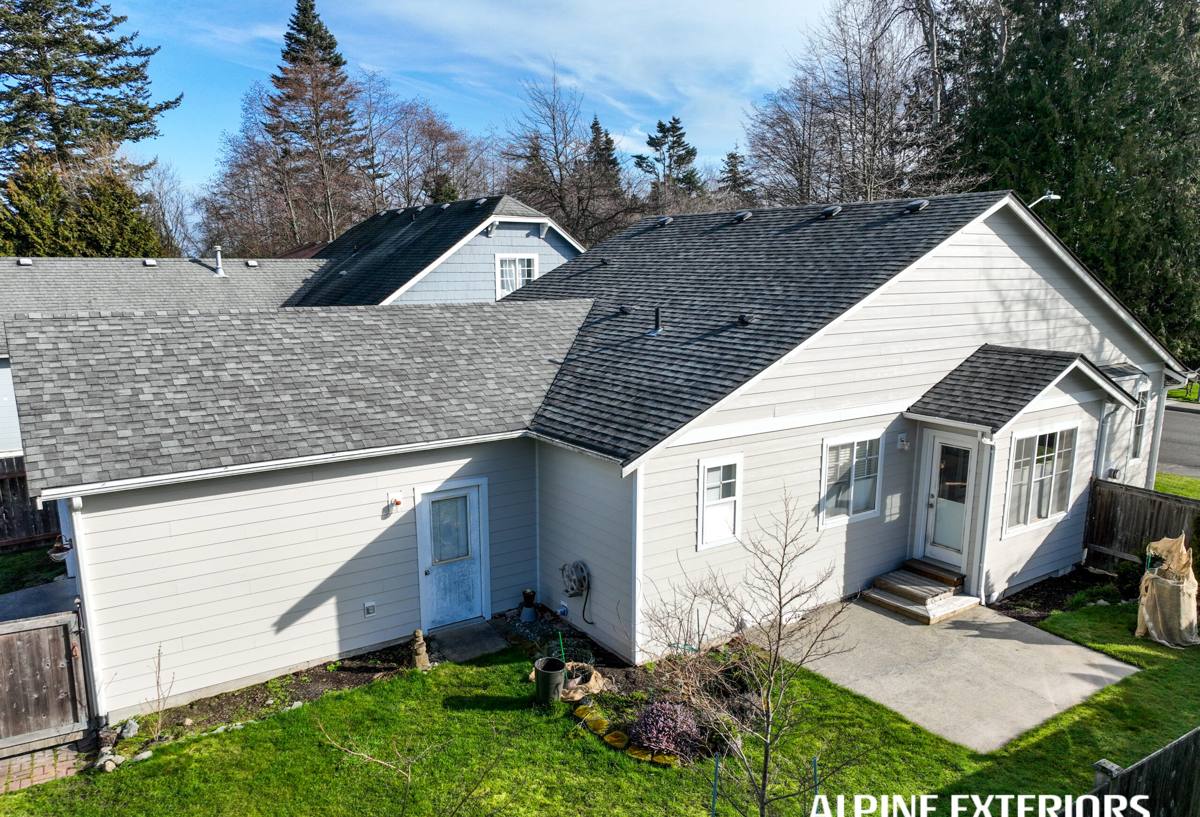
What the Climate Does to Siding Out Here
Whatcom County's marine climate doesn't stop at the coastline — the same weather systems that bring salt-laden air and driving rain into Ferndale and Bellingham push inland through the valley and settle around Nooksack too, layered on top of the moisture that collects naturally near the river. The result is a long wet season, high ambient humidity, and a moss and algae problem that's hard to escape if your siding gives it any foothold.
The specific pressures
- Sustained moisture exposure: Fall through spring, siding here rarely gets a full dry-out period. Materials that absorb water or swell at the edges stay damp longer than they were designed to.
- Moss and algae growth: Shaded, north-facing walls and anything near tree cover develop moss quickly. Left alone, it holds moisture against the siding surface and accelerates whatever damage is already happening underneath.
- Wind-driven rain: Storms coming through the valley don't just fall straight down — rain gets pushed sideways into wall assemblies, seams, and butt joints, which is where poor installation or the wrong material shows its weaknesses first.
- Temperature swings: Warm afternoons followed by cold, damp nights cause expansion and contraction. Materials that aren't dimensionally stable can crack, cup, or pull away from fasteners over years of that cycle.
None of this is unique to any one street or property — it's the baseline reality of siding a home in this part of Whatcom County. The material you choose, and how well it's installed, determines whether that reality is a minor annoyance or a slow-motion repair bill.
Why We Only Install James Hardie Fiber Cement
We made a deliberate decision years ago to install James Hardie fiber cement siding exclusively — not vinyl, not LP SmartSide, not cedar, not other fiber cement brands. That's not a marketing angle; it's what we've seen hold up in this climate and what we're willing to put our name behind.
Fiber cement is a blend of cement, sand, and cellulose fiber. It doesn't absorb and swell the way engineered wood products can, and it doesn't have the seam and expansion issues that come with vinyl in temperature swings. It's also non-combustible, which matters more every year as wildfire smoke and dry-season fire risk become a bigger part of Pacific Northwest summers, even in a generally wet county like this one.
James Hardie specifically engineers different product lines for different climate zones — the HZ5 line used in this region is formulated for cold, wet Pacific Northwest conditions rather than a generic national spec. The factory-applied ColorPlus finish is baked on under controlled conditions, which holds color and resists the fading and moisture penetration that field-applied paint struggles with over time, especially on a house that spends half the year damp.
We go into more depth elsewhere on our site about why we walked away from vinyl and engineered wood siding — the short version is that we got tired of seeing those materials fail in exactly the ways this climate exploits, and we didn't want to keep installing something we couldn't stand behind for the long haul.
What a Siding Project Looks Like Out Here
Assessment and quote
We start with an on-site look at the current siding, the wall assembly underneath if it's exposed anywhere, and any trouble spots — soft siding, staining, moss buildup, gaps around windows and trim. For a rural property, we also factor in access: how the crew and material delivery will work on your specific driveway and lot layout.
Tear-off and inspection
Once old siding comes off, we check the sheathing and house wrap underneath. This is often where hidden moisture damage from years of a compromised siding system shows up. Any rot or soft sheathing gets addressed before new siding goes on — covering over a wet wall assembly just hides the problem.
Weather barrier and flashing
Correct water management behind the siding matters as much as the siding itself, arguably more in a climate like this. Proper house wrap, flashing at windows and doors, and correct overlap and drainage planes are what actually keep wind-driven rain from finding its way into the wall.
Installation to manufacturer spec
James Hardie siding has specific installation requirements around fastening, clearances, and caulking that affect both performance and warranty coverage. We install to that spec, not to whatever's fastest.
Final walkthrough
We walk the finished job with you, point out anything you should know for long-term care, and make sure you're clear on what's covered under warranty.
Beyond Siding: Roofing, Windows, and Decks
Siding is our main focus, but we also handle roofing, window replacement, and deck work — and in a climate this hard on exteriors, those systems are connected. A roof with failing flashing can send water down behind siding that's otherwise in good shape. Old windows with degraded seals can rot the wall framing around them regardless of what siding is installed over it. A deck built without the right ledger flashing can rot into the house band board.
Being able to look at a home's exterior as one system, rather than four separate trades, is part of the value of using a local crew that does all of it. If we're on your property for a siding quote and notice a roofing or window issue that's going to undermine the new siding, we'll tell you before you spend money on siding that's fighting a losing battle against a leak somewhere else.
Comparing Exterior Siding Options
| Material | Moisture Behavior | Maintenance | Typical Lifespan | Fire Resistance |
|---|---|---|---|---|
| James Hardie Fiber Cement | Dimensionally stable, resists swelling and warping | Occasional wash; factory finish holds up | 30+ years with proper install | Non-combustible |
| Vinyl | Doesn't absorb water but seams and edges can allow moisture behind panels | Low, but cracks/fades and can't be easily repaired in sections | 20-30 years, shorter in harsh sun/cold cycles | Combustible, can melt/warp near heat |
| LP SmartSide (engineered wood) | Treated to resist moisture but vulnerable at cut edges and joints if not sealed correctly | Requires diligent caulking/paint maintenance | 20-30 years if maintained closely | Combustible, treated for ignition resistance |
| Cedar | Natural material, absorbs and releases moisture; prone to rot without upkeep | High — regular staining/sealing needed | Variable, often 15-25 years in wet climates | Combustible |
This isn't about declaring other materials worthless — vinyl, engineered wood, and cedar all have legitimate use cases and real advantages in the right setting. It's about why, for the specific moisture and moss conditions we deal with in Whatcom County, we standardized on one material we trust to perform without babysitting.
Choosing a Contractor for a Rural Property
Nooksack properties often come with larger lots, longer driveways, outbuildings, and sometimes wells or septic systems that a contractor needs to be aware of before staging equipment or material. A few things worth checking before you hire anyone for exterior work out here:
- Ask whether they're licensed and insured in Washington, and ask to see proof — not just take their word for it.
- Ask who's actually manufacturer-certified to install the siding brand they're proposing. Fiber cement installed off-spec can void the warranty even if the material itself is sound.
- Ask how they handle rural access — material staging, driveway protection, and whether they need anything from you (gate codes, dog containment, parking space) ahead of time.
- Get the scope in writing: tear-off, disposal, house wrap and flashing details, trim work, and cleanup — not just "siding replacement" as a line item.
- Ask about the warranty structure — both the manufacturer's material warranty and the contractor's workmanship warranty, and what voids each one.
Caring for James Hardie Siding in This Climate
Fiber cement is low-maintenance, not no-maintenance. A rinse once or twice a year knocks back moss and algae before it establishes, especially on shaded or north-facing walls. Keep an eye on caulking around windows, doors, and trim — that's the first place small gaps show up, and catching it early is a five-minute fix instead of a moisture problem down the line. Trim back vegetation that's holding shade and damp air against the wall, and make sure gutters are clear so water isn't sheeting down the siding face during heavy rain.
Get a Free, No-Pressure Estimate
If you're in Nooksack or anywhere else in our Whatcom County service area and thinking about new siding, a roof, windows, or a deck, we're happy to come take a look and give you a straight answer about what your home actually needs. There's no pressure and no obligation — just an honest assessment from a crew that works this climate every day. Use the form below to request your free estimate.