 Ferndale Siding
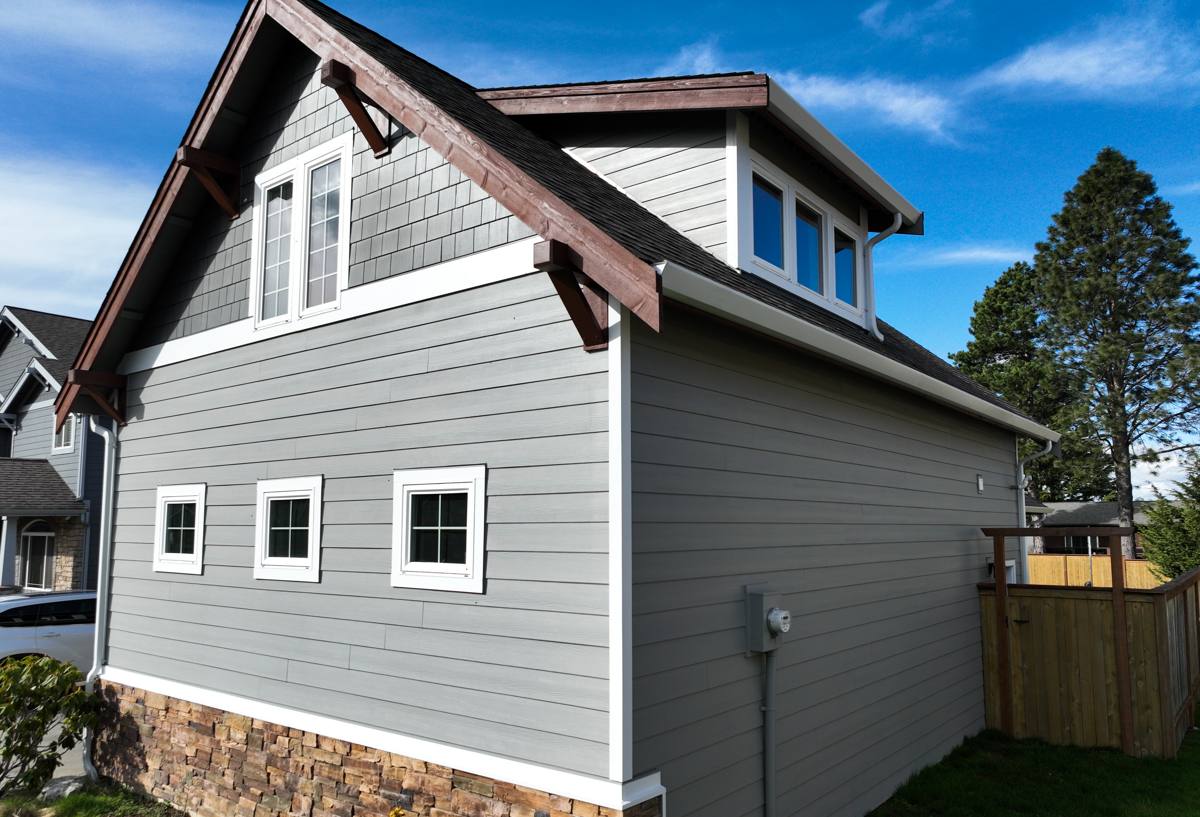
 Exterior Work for Cordata, Built by a Local Crew
Cordata sits in the growing north end of the Bellingham-Ferndale corridor, one of the faster-changing residential pockets in Whatcom County. New construction sits next to homes that have been through three or four decades of Pacific Northwest weather, and both types of homes end up calling us for the same reason: the exterior of a house here works harder than it does almost anywhere else in the state. We handle siding, roofing, windows, and decks for homeowners in this area, and we've built our whole approach around what this specific climate does to a house over time.
This page is about what Cordata homes actually face, how we approach each part of the exterior envelope, and why we standardized on one siding product instead of offering a menu of options.
What Whatcom County's Marine Climate Does to a House
Cordata's weather isn't dramatic — it's persistent, and persistence is what causes damage. Three things define the exterior maintenance picture out here:
Salt Air
Proximity to Bellingham Bay and the broader Puget Sound means airborne salt is a factor for homes throughout this part of the county, not just waterfront properties. Salt-laden moisture accelerates corrosion on fasteners, flashing, and any metal component on the exterior, and it speeds up the breakdown of paint films and lower-grade siding materials that aren't engineered to resist it.
Driving Rain
This isn't a light-drizzle climate. Storms coming off the Sound and through the Strait of Georgia bring wind-driven rain that hits siding and windows at an angle, not straight down. That matters because it pushes water into laps, seams, and trim joints that a vertical rain would never reach. Homes here need water management details — flashing, house wrap, proper caulking sequence — done correctly, not just materials that look good.
A Long Moss Season
Whatcom County's combination of moisture, mild temperatures, and tree cover gives moss and algae a season that runs most of the year, not just a few wet months. Moss on a roof holds water against shingles and accelerates granule loss. Algae streaking on siding is mostly cosmetic, but on lower-quality materials it can also be a sign that moisture is sitting in the substrate longer than it should.
Siding: Why We Install Only James Hardie Fiber Cement
We get asked fairly often why we don't offer vinyl, LP SmartSide, or one of the other fiber cement brands like Cemplank or Allura. The honest answer is that we made a standardization decision, not a marketing decision, and it's rooted in what actually holds up in this climate over 20-plus years rather than the first five.
Vinyl siding is inexpensive and easy to install, but it's a petroleum-based product that expands and contracts significantly with temperature swings, and in driving rain it relies almost entirely on lap geometry — not sealed seams — to keep water out. Over time in a wet climate, that's a maintenance liability we don't want attached to our name.
LP SmartSide and primed wood-based products are engineered wood. They're treated to resist moisture, but "resist" isn't "immune," and any breach in the factory coating — a nail pop, a cut edge left unsealed, a scuff during installation — gives moisture a path into a wood-fiber substrate that can swell, delaminate, or rot from the inside out. In a climate with this much sustained moisture exposure, that's a slow-motion problem that often isn't visible until it's expensive.
Cemplank and Allura are both fiber cement, and fiber cement as a category is the right call for this region — it's non-combustible, dimensionally stable, and doesn't feed rot. But we standardized specifically on James Hardie because of the combination of their HZ5 climate-engineered formulation, the ColorPlus factory finish (baked-on color that resists the fading and chipping that field-painted or lower-tier factory finishes are prone to), and a warranty structure we're comfortable standing behind. Running one product line also means our crews install it the same correct way on every job, every time — no second-guessing a different manufacturer's spec sheet mid-project.
What Hardie Actually Costs vs. the Alternatives
| Material | Upfront Cost | Moisture Behavior | Typical Maintenance |
|---|---|---|---|
| Vinyl | Lowest | Doesn't absorb water, but seams and laps are the weak point in driving rain | Cracks/fades in UV and cold; not repairable, only replaceable |
| LP SmartSide / primed wood | Low-Mid | Engineered wood — vulnerable at cut edges and coating breaches | Repaint cycle, edge sealing, moisture monitoring |
| Cemplank / Allura fiber cement | Mid | Non-combustible, stable, but finish quality varies by product line | Repaint eventually if not factory-finished |
| James Hardie (ColorPlus) | Mid-High | Non-combustible, HZ5-engineered for wet Pacific Northwest conditions | Occasional wash; factory finish holds color for years |
Roofing: Managing Moss and Water in a Wet Climate
Roofing in Cordata isn't just about the shingle — it's about how the whole system sheds water and resists moss buildup. We look at ventilation, underlayment quality, and flashing details around every penetration and valley, since those are the points where a long moss season and driving rain do the most damage over time. A roof that's watertight on day one but poorly ventilated will trap moisture underneath the shingles, which shortens its life regardless of the shingle brand.
We also talk with homeowners honestly about moss management as an ongoing maintenance item, not a one-time fix — it's a reality of living under this much tree cover and moisture, and staying ahead of it protects the roof investment.
Windows: Where Wind-Driven Rain Finds Weak Points
Window failures in this climate are rarely about the glass — they're about the flashing and sealant detail around the frame. Wind-driven rain will find any gap in the water-resistive barrier at a window opening, and once water gets behind a window it can travel and cause rot well away from the visible leak. When we replace windows, we treat the flashing and integration with the siding as seriously as the window unit itself, because that's usually where old installations failed in the first place.
Decks: Built for Standing Water and Freeze-Thaw
Decks in Whatcom County deal with two related problems: prolonged wet exposure most of the year, and occasional freeze-thaw cycles in winter. Proper decking work here means attention to ledger board flashing, joist protection, and drainage so water doesn't pool against framing members. We build and repair decks with that moisture reality in mind rather than treating deck framing as an afterthought behind whatever decking surface a homeowner picks.
Why a Local Crew Matters in Cordata
Exterior work in this climate rewards contractors who see the same weather patterns, the same moss and algae issues, and the same wind-driven rain problems repeatedly across a small area. A crew based in this region knows what correct flashing sequence looks like for a driving rainstorm off the Sound, and knows that a roof or siding job finished in July needs to be able to handle a wet November without a callback.
Working locally also means we're accountable in the way that matters most to homeowners: we're not a traveling crew that's hard to reach if something needs attention after the first hard storm of the season.
What to Expect From Our Process
- An on-site assessment of your current siding, roofing, windows, or deck condition — not a phone estimate
- A clear explanation of what we find, including any water intrusion or moisture damage already present
- A written estimate with materials specified by name, not vague category descriptions
- Correct installation sequencing — flashing, house wrap, and sealant details done in the right order, not shortcuts hidden behind the finished surface
- A walkthrough at completion so you know what maintenance, if any, to expect going forward
Maintenance Realities for This Climate
No exterior product is maintenance-free in Whatcom County, but the maintenance burden varies a lot by material choice. Fiber cement with a factory finish needs periodic washing to keep algae and grime from building up, but it doesn't need repainting on the schedule that field-painted wood siding does. Roofs need moss treatment or removal on a recurring basis regardless of shingle type. Windows and deck framing benefit from an annual visual check of caulking and flashing, since catching a small gap early is far cheaper than repairing rot that developed behind it over a wet winter.
Get a Straightforward Look at Your Home
If you're in Cordata or elsewhere around Ferndale and want an honest read on your siding, roof, windows, or deck — what's holding up, what's not, and what it would take to fix it right — we're glad to come take a look. The estimate is free, there's no pressure, and you'll get a straight answer about what your home actually needs.