 Ferndale Siding
 Why Birch Bay's Climate Is Hard on Roofs
Birch Bay sits right on the water, and that waterfront position cuts both ways. The same shoreline that makes the area desirable also means homes here take a steady beating that inland Whatcom County properties don't deal with in the same combination. Salt-laden air drifts off the bay and settles on every exposed surface, including the roof. Add Whatcom County's long wet season, driving rain that comes in sideways during winter storms, and shaded, damp conditions that let moss colonize a roof for much of the year, and you've got a climate that shortens the life of the wrong roofing material fast.
Asphalt shingles in particular struggle here. Salt air accelerates the breakdown of the granules that protect the asphalt mat, moss roots into the shingle surface and holds moisture against it, and repeated wet-dry cycling causes premature curling and granule loss. None of that is a defect in any one product — it's just what happens when a roofing material built for a drier, more moderate climate meets a coastal Pacific Northwest one year after year.
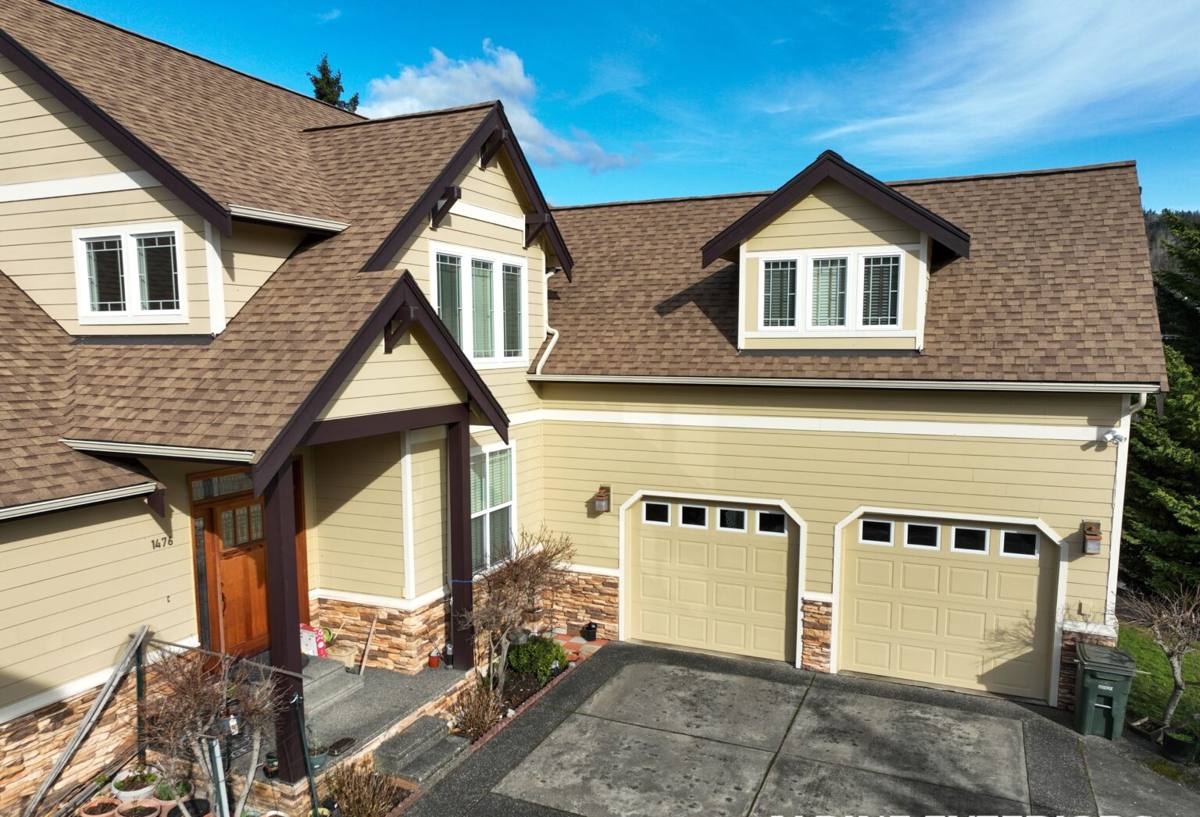
Why Metal Roofing Makes Sense for Birch Bay Homes
Metal roofing was built to shed water fast and resist the kind of biological growth that plagues shingle roofs in shaded, damp environments. A correctly installed metal roof has far fewer laps and seams for wind-driven rain to find, sheds moss and debris more readily because there's no rough surface for spores to grip, and holds up to salt exposure well when the right alloy and coating are specified. That combination matters more in Birch Bay than almost anywhere else we work in the Ferndale area.
It's not maintenance-free — nothing on a coastal roof is — but it shifts the maintenance burden from constant repair to periodic inspection, which is a trade most homeowners here are glad to make once they've dealt with a moss-covered shingle roof through a wet Whatcom County winter.
What Metal Roofing Does Well Here
- Sheds driving rain through fewer seams and a steep, slick surface
- Resists moss colonization far better than shingles or wood
- Handles wind uplift well when fastened and detailed correctly
- Reflects heat in summer and holds up to UV without granule loss
- Lasts multiple decades when the coating and fasteners are matched to a salt-air environment
What a Correct Metal Roof Installation Actually Involves
A metal roof is only as good as the details underneath it. We've re-roofed enough Birch Bay homes that had a metal roof installed by someone unfamiliar with coastal conditions to know exactly where corners get cut, and it's rarely the panels themselves — it's everything around them.
Underlayment and Deck Prep
In a climate this wet, the underlayment matters as much as the metal on top of it. We use a high-temp synthetic or self-adhered membrane suited to metal roofing, with extra ice-and-water protection at eaves, valleys, and any low-slope transitions where wind-driven rain is most likely to work its way back under a panel edge. We also check the deck itself for rot or soft spots before anything goes down — a common issue on older Birch Bay homes where a failing roof has been quietly feeding moisture into the sheathing for years.
Fasteners and Flashing
Salt air is hard on fasteners. We spec corrosion-resistant fasteners and flashing rated for coastal exposure, not the standard hardware that's fine sixty miles inland but starts rusting and staining within a few seasons near the water. Flashing at chimneys, walls, skylights, and valleys gets formed and layered correctly rather than relying on caulk to do the job flashing should be doing — caulk fails, properly lapped metal doesn't.
Ventilation
A metal roof without adequate attic or roof-deck ventilation traps moisture, which defeats a lot of the benefit of switching materials in the first place. We check existing ventilation on every re-roof and correct it where it's undersized, since a roof that can't breathe will condensate and rot from the inside regardless of what's on the outside.
Comparing Metal Roofing Systems for a Coastal Site
Not all metal roofing is the same, and the right choice for a Birch Bay home depends on slope, budget, and how close the home sits to the water.
| System | Best For | Coastal Considerations |
|---|---|---|
| Standing seam (concealed fastener) | Homes directly on or near the waterfront | No exposed fasteners to corrode; best long-term choice in high salt exposure |
| Exposed-fastener panel | Budget-conscious projects, outbuildings, inland lots | Lower upfront cost, but exposed fasteners need periodic inspection and eventual replacement |
| Metal shingle/shake profile | Homes wanting a traditional look with metal's performance | More seams than standing seam; still outperforms asphalt in moss resistance |
For homes within the first few blocks of the water, we generally steer clients toward standing seam. It costs more upfront, but the concealed fastener system removes the single biggest long-term maintenance issue with metal roofing in a salt-air environment.
What Drives the Cost
We don't quote prices without seeing the roof, but the factors that move the number are consistent from job to job.
| Factor | Why It Matters |
|---|---|
| Panel system | Standing seam runs higher than exposed-fastener panel of the same gauge and finish |
| Roof complexity | Valleys, dormers, and multiple planes add flashing labor beyond flat square footage |
| Existing deck condition | Rotted sheathing found during tear-off adds repair cost most owners didn't budget for |
| Coating/finish grade | Higher-grade coatings cost more but resist salt-air fading and chalking longer |
| Access and pitch | Steep or hard-to-access roofs take longer and require more safety setup |
How Our Process Works
We keep the process straightforward because homeowners dealing with a roofing decision usually don't want surprises added on top of it.
- Free on-site inspection. We walk the roof, check the deck and ventilation where accessible, and look at flashing points that tend to fail first in this climate.
- Written estimate. You get a clear scope and price, including panel type, underlayment, and flashing details — not just a square-footage number.
- Tear-off and deck check. We remove the old roofing and inspect the deck before anything new goes down, flagging any rot before we cover it up.
- Underlayment and flashing installation. This is where most of the long-term performance is decided, and where we spend the most care.
- Panel installation. Panels go down to the manufacturer's fastening spec, adjusted for the wind exposure of the specific site.
- Final walkthrough. We review the finished roof with you, including where the flashing and penetrations are, before we call the job done.
Maintaining a Metal Roof in a Salt-Air, Moss-Prone Climate
Metal roofing needs less attention than shingles, but "less" isn't "none." A short annual check catches small issues before they become leaks.
- Clear debris and organic buildup from valleys and low-slope sections where moss and moisture collect
- Check exposed fasteners (if that system was used) for early signs of corrosion or backing out
- Inspect flashing around chimneys, skylights, and wall transitions for gaps or sealant failure
- Look for staining or streaking that can signal a coating starting to break down
- Confirm gutters are clear so water isn't backing up under eave flashing during heavy rain
Why It Matters That We Already Work in Birch Bay
Roofing that has to perform in coastal salt air and near-constant Whatcom County moisture isn't the same job as roofing a dry inland lot, even one twenty minutes away in Ferndale proper. We've seen which fastener finishes hold up on Birch Bay homes and which start showing rust streaks within a couple of years. We know which flashing details actually stop wind-driven rain when a storm is coming straight off the water, and which ones look fine on a dry day and fail the first time the wind picks up. That's knowledge you only get from doing the work here repeatedly, not from a general roofing spec sheet.
We're also familiar with the permitting and inspection expectations that apply to roofing work in this part of Whatcom County, which keeps the project moving instead of stalling on paperwork a crew unfamiliar with the area might not anticipate.
Metal Roofing and Your Siding
Roofing and siding meet at eaves, rakes, and wall flashing, and a lot of the leaks we get called out to inspect in Birch Bay trace back to that intersection rather than the roof field itself. Because we work on both, we can make sure the roof-to-wall transition is detailed as one connected system rather than two separate contractors' work meeting in the middle and hoping it lines up. That matters even more here, where wind-driven rain actively tests every joint on the exterior of the house.
If you're weighing a metal roof for a home in Birch Bay, we're glad to walk the roof with you and give you a straight, no-pressure estimate — just fill out the form below to get started.