 Ferndale Siding
 A Community That Takes Weather Seriously
Point Roberts sits in a spot most homeowners never have to think about: a small peninsula bordered by water on three sides, tucked into a corner of Whatcom County that's geographically separated from the rest of the mainland United States. That kind of exposure isn't just a geography-trivia fact — it shapes what happens to a house here over time. Wind off the water, salt in the air, and rain that comes in sideways as often as it comes straight down all add up to a building envelope that works harder than a similar house set back in a sheltered inland neighborhood.
We're based in Ferndale and work throughout Whatcom County, and Point Roberts is one of those areas where we don't treat siding as a cosmetic upgrade. It's the first line of defense against a climate that's genuinely tougher on exterior materials than most of Western Washington, and the choices made during installation — not just the product itself — determine whether a house holds up or starts showing problems within a decade.
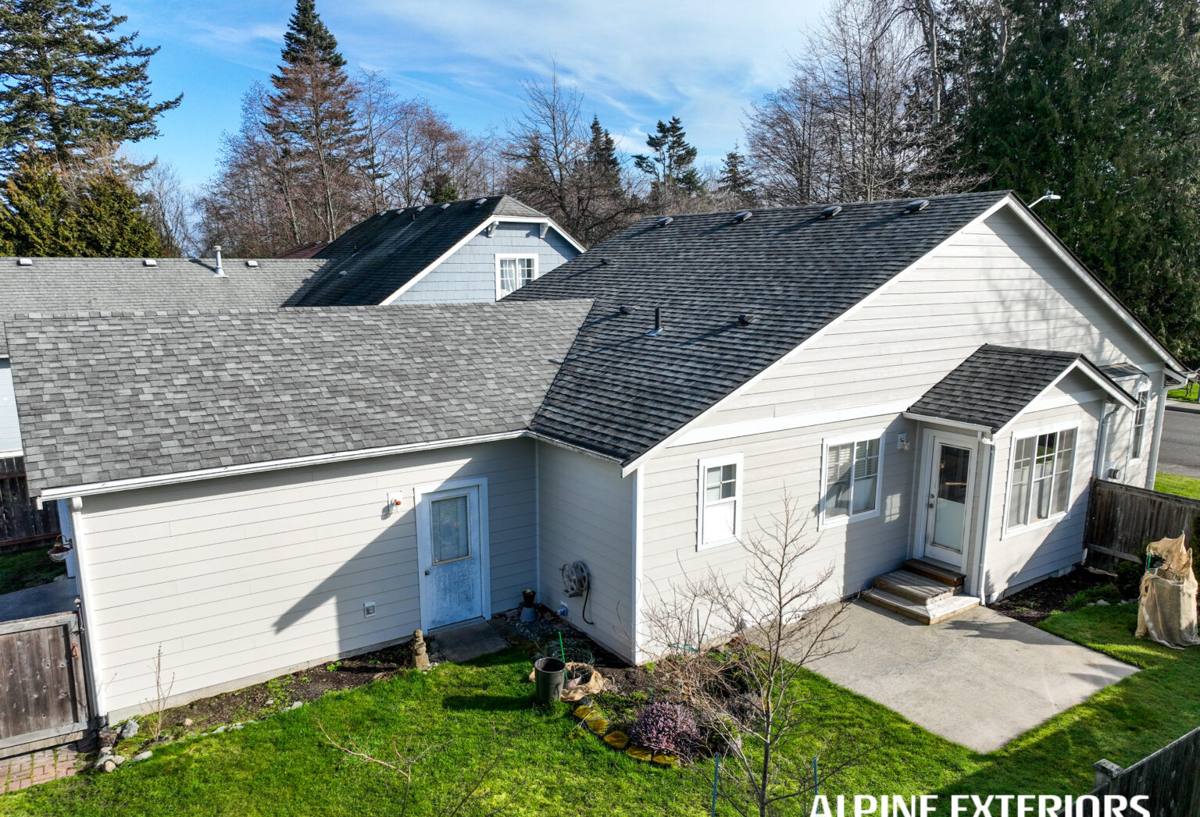
What Point Roberts Homes Actually Face
Salt Air and Corrosion
Homes close to saltwater deal with airborne salt that settles on every exterior surface. Over years, that salt accelerates corrosion on fasteners, flashing, and hardware, and it degrades paint finishes faster than inland exposure does. Siding that isn't engineered or finished to resist that kind of chemical exposure tends to chalk, fade, or fail at the fastener points well before its expected lifespan is up.
Driving, Wind-Driven Rain
Whatcom County gets its share of rain generally, but a peninsula exposed to open water sees more wind-driven rain — the kind that gets pushed sideways into seams, laps, and trim joints rather than just running down a flat wall. That's a different stress than a light, straight-down drizzle, and it exposes weak flashing details or poor caulk joints much faster.
A Long Moss and Mildew Season
Cool, damp conditions for a large part of the year create ideal growing conditions for moss, algae, and mildew on north-facing and shaded walls. Materials that absorb moisture give these organisms something to root into; materials that shed water and resist moisture intrusion make it much harder for growth to take hold and spread.
Why the Siding Choice Matters More Here Than Elsewhere
In a sheltered, dry climate, a wider range of siding products can perform acceptably for a long time. On an exposed peninsula, the margin for error shrinks. Moisture-sensitive materials, thin factory finishes, and fastener systems not rated for coastal exposure all get exposed faster here than they would in a typical inland subdivision. That's a big part of why we've standardized on one product system rather than offering a menu of options and letting exposure sort out the winners and losers after the fact.
Our Standard: James Hardie Fiber Cement, Exclusively
We install James Hardie fiber cement siding and nothing else. We don't install vinyl, LP SmartSide, Cemplank, Allura, or raw wood siding like primed spruce or cedar. That's a deliberate professional standard, not a sales pitch, and it's worth explaining honestly rather than just asserting it.
- Non-combustible core: Fiber cement doesn't burn, melt, or warp from heat exposure the way vinyl can, which matters for long-term durability regardless of wildfire risk.
- Moisture-stable composition: Unlike raw wood products, Hardie's cement-based board doesn't swell, rot, or delaminate from repeated wetting and drying cycles — the exact cycle a peninsula climate puts siding through year after year.
- Climate-engineered product lines: Hardie manufactures regional HZ formulations specifically adjusted for wet, temperate climates like ours, rather than a one-size-fits-all board.
- Factory-applied ColorPlus finish: A baked-on finish resists fading and chalking far better than field-applied paint, which matters in salt air where UV and salt exposure both work against a painted surface.
- Transferable warranty backed by a large manufacturer: Homeowners get a real, standardized warranty structure rather than a patchwork of shorter or more conditional coverage.
None of this means other products are junk — vinyl is inexpensive and low-maintenance in mild conditions, and cedar has real aesthetic appeal that some homeowners genuinely prefer. But when we weigh moisture behavior, fastener corrosion resistance, finish durability, and long-term maintenance burden against what a Point Roberts exterior actually experiences, fiber cement is the product we're willing to put our name behind.
Installation Details That Matter in a Coastal Environment
A good product installed poorly will still fail early, and coastal exposure punishes installation shortcuts faster than inland jobs do. A few specifics we treat as non-negotiable on Point Roberts jobs:
- Stainless steel or hot-dip galvanized fasteners rated for coastal exposure — not standard fasteners that will rust and streak over a salt-air lifespan.
- Correct flashing and kick-out details at every roof-wall intersection, window head, and deck ledger — the places wind-driven rain finds first.
- Proper clearance between siding and grade, decks, and roof surfaces so moss and moisture don't get a foothold at the bottom edge.
- Manufacturer-specified fastener spacing and butt-joint treatment, since Hardie's warranty coverage depends on installation matching their published specs.
- Rainscreen or drainage-plane detailing appropriate to the exposure level of the specific wall, since not every elevation of a house sees the same weather.
The Logistics of Working on a Peninsula
Point Roberts' geography creates a practical wrinkle that a lot of contractors don't plan for: getting crews, equipment, and material staging coordinated efficiently for a location that's somewhat separated from the rest of the county. It's not a barrier to doing the work right, but it does mean scheduling and material logistics need to be planned deliberately rather than treated as an afterthought. A crew that's done this before builds that planning into the estimate and the timeline up front, so there are no surprises mid-project.
A Full Exterior Envelope, Not Just Siding
Siding doesn't work in isolation — it's one piece of a home's exterior envelope alongside the roof, windows, and any attached structures like decks. We handle all four because they interact directly with each other in exactly the conditions Point Roberts sees:
- Roofing: A roof in poor condition sends water down onto siding and trim, undermining even a well-installed wall system.
- Windows: Window flashing integrates directly with the siding around it; mismatched or aging window seals are a common source of the "siding failure" homeowners actually notice.
- Decks: Deck ledgers and attached structures create some of the highest-risk moisture intersections on a house, and they need to be flashed and detailed correctly against the wall.
Coordinating these trades under one crew means the flashing and moisture details at every intersection are handled by people who understand how the whole envelope needs to work together, rather than four separate contractors each assuming someone else covered the transition.
Comparing Siding Options for Coastal Exposure
| Factor | James Hardie Fiber Cement | Vinyl | Untreated Wood (cedar, primed spruce) |
|---|---|---|---|
| Moisture/rot resistance | High — cement-based, doesn't rot | High (doesn't absorb water) but can warp/crack in temperature swings | Low without diligent, ongoing maintenance |
| Salt air performance | Strong; factory finish resists chalking/fading | Can become brittle and discolor over time | Finish breaks down faster; repainting cycle shortens |
| Fire resistance | Non-combustible | Combustible, can melt/deform | Combustible |
| Typical maintenance | Occasional wash and caulk check | Low, but repairs can be visible/hard to match | Regular repainting/resealing, more frequent inspection |
| Warranty structure | Manufacturer-backed, transferable | Varies widely by manufacturer | Typically none beyond installer workmanship |
Signs a Home in a Coastal Area May Need Siding Attention
- Persistent moss or dark streaking on north- or shade-facing walls that keeps returning after cleaning
- Paint that's chalking, peeling, or fading noticeably faster on the water-facing side of the house
- Soft spots, bubbling, or visible warping near the bottom edges of siding or around window trim
- Rust streaks running down from fastener heads or flashing
- Gaps opening up at butt joints, corners, or trim where caulk has failed
- A musty smell or visible mildew developing along interior walls that back up to exterior siding
Why a Local Crew Makes a Difference
A contractor based elsewhere in Western Washington can certainly install siding correctly, but a crew that regularly works Whatcom County's coastal and peninsula properties has already seen how salt air, wind exposure, and moss season play out over years on real houses, not just in a manufacturer's spec sheet. That translates into better judgment calls on flashing details, fastener selection, and where to spend extra attention on a given elevation — decisions that matter more here than they would on a sheltered inland lot.
If you're weighing a siding project on Point Roberts, or want a second opinion on what your current siding is telling you, we're happy to take a look. We offer free, no-pressure estimates and can walk through what we're seeing on your specific exposure before you decide on anything.