 Ferndale Siding
 What LP SmartSide Actually Is
LP SmartSide is an engineered wood siding product. Instead of solid lumber, it's made from wood strands that are bonded together with resin under heat and pressure, then coated with a wax-based moisture treatment and zinc borate to resist fungal decay and insects. The panels or lap boards are factory-primed and meant to be field-painted by the installer or homeowner within a set window after installation.
It's a legitimate product with a real engineering pedigree, and it has a place in the siding market. We're not here to tell you it's junk. We're here to explain why, as a company that has standardized on one siding system, we don't put it on Ferndale homes — and what that decision is actually based on.
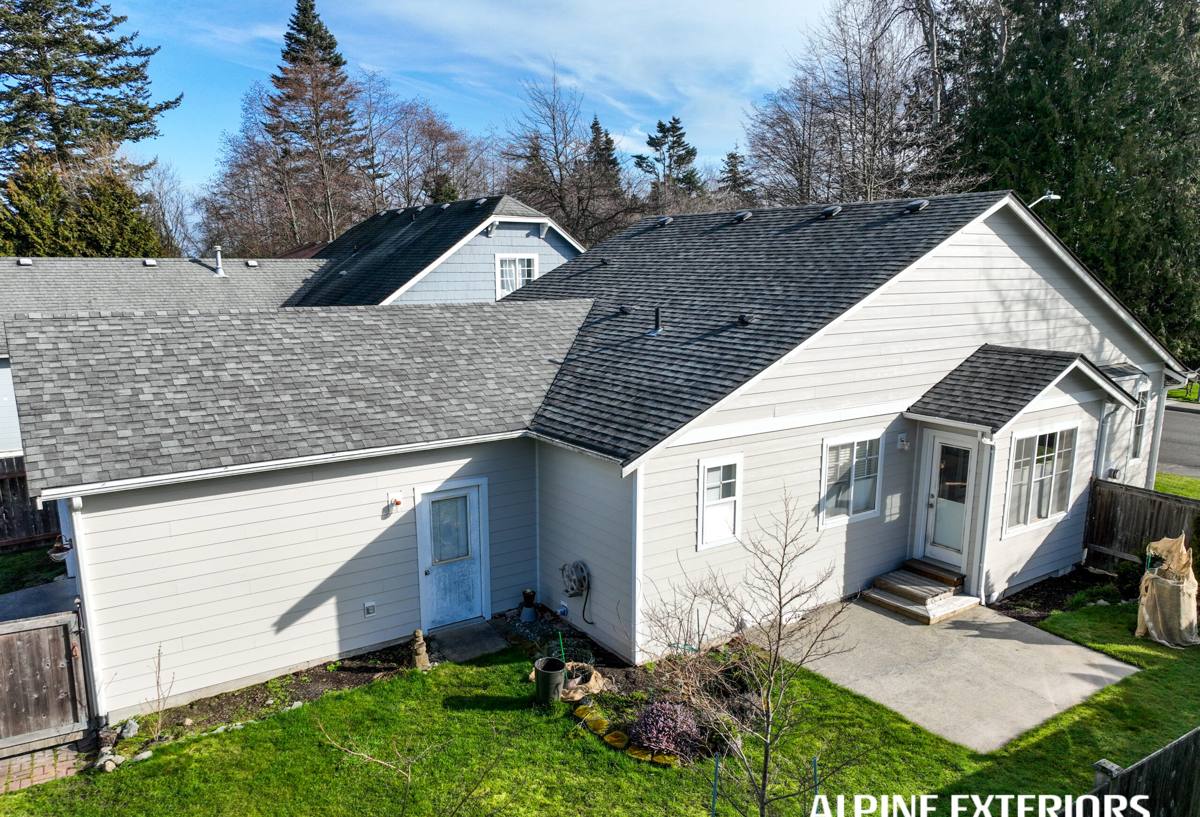
What LP SmartSide Gets Right
Fair is fair. LP SmartSide has real advantages that explain why it's popular:
- Workability: It cuts, nails, and handles more like traditional wood than fiber cement does, which some crews find faster to install.
- Impact resistance: The strand construction holds up well against hail and incidental impact compared to some other engineered products.
- Upfront cost: It's typically less expensive per square foot than fiber cement, both in material and often in labor.
- Wood-grain appearance: For homeowners who want a traditional lap or panel look with visible wood texture, it delivers that without the cost of real cedar.
Those are genuine strengths. If a homeowner asked us to name the honest case for LP SmartSide, that's it. Where it runs into trouble is what happens after installation day — and that's the part that matters most in a place like Ferndale.
Why We Don't Install It
Moisture Is the Long Game With Engineered Wood
Any wood-based siding, no matter how well it's treated, is still wood at its core. The zinc borate treatment resists rot and insects, but it doesn't make the substrate waterproof — it makes it more resistant to decay once moisture gets in. The real vulnerability shows up at cut ends, butt joints, and fastener penetrations, where the factory coating is broken and raw substrate is exposed. If those cuts and joints aren't field-sealed correctly and maintained over time, moisture works its way in and the strand substrate can swell, delaminate at the edges, or soften.
This isn't a defect unique to one brand — it's the nature of engineered wood as a category. Fiber cement doesn't have this failure mode because there's no wood fiber to swell or rot in the first place.
Maintenance Isn't Optional
LP SmartSide is a paint-grade product. That means the finish is a maintenance item, not a one-time installation step. Manufacturers typically require the primed panels to be painted within a defined window after installation, and then repainted on a regular cycle after that — often every 5 to 8 years depending on exposure, sometimes sooner on sun- or weather-exposed elevations. Skipping that cycle, or letting caulking joints fail without resealing them, is exactly what shortens the product's real-world life.
We install exterior products for homeowners who want to spend their weekends doing something other than re-caulking and repainting siding every few years. That's a legitimate lifestyle preference, and it's a big part of why we standardized on a factory-finished product instead.
Installation Sensitivity
Because so much of an engineered wood siding's long-term performance depends on how well the field details are executed — caulking every joint, priming and painting cut edges before they go up, correct fastener placement, proper clearance from grade and roofing — the gap between a well-installed job and a mediocre one is large. A crew in a hurry, or one that isn't rigorous about sealing every cut edge, can install a product that looks identical on day one but performs very differently five years out. We didn't want to run a business where the outcome depended that heavily on catching every small detail on every single board, every single time.
Warranty Structure
Engineered wood warranties are often structured with maintenance requirements built into the fine print — meaning coverage can be reduced or voided if the repainting schedule or caulking maintenance wasn't documented and followed. That puts the burden of proof on the homeowner years down the road, often long after the original installer is out of the picture. We'd rather stand behind a product with a warranty structure that doesn't hinge on a homeowner keeping years of maintenance receipts.
Why Ferndale's Climate Makes This a Real Factor, Not a Theoretical One
This isn't a generic siding lecture — it's specific to what a house faces in this part of Whatcom County. Ferndale sits close enough to the Strait of Georgia and Bellingham Bay that salt-laden air is a real, ongoing exposure for homes near the water, and salt air accelerates the breakdown of caulking, sealants, and painted finishes faster than it does inland. Add in the driving, wind-blown rain that comes through the Nooksack lowlands during fall and winter storms, and you have conditions that push moisture into every joint, seam, and cut edge on a house — exactly the weak points of a wood-based siding system.
Then there's moss. Whatcom County's long, cool, damp season and heavy tree canopy on a lot of Ferndale properties create ideal conditions for moss and algae growth on north-facing and shaded siding. Moss holds moisture directly against the siding surface for extended periods, which is a slow, steady stress test on any paint-grade or wood-based product. On fiber cement, that's a cleaning issue. On engineered wood, sustained moisture contact against a compromised joint or coating is a much bigger deal.
None of that means LP SmartSide will fail on every Ferndale home. It means the maintenance discipline required to keep it performing well is higher here than it would be in a dry inland climate — and we've made a business decision not to install a product whose long-term success depends that heavily on conditions we know are working against it.
LP SmartSide vs. James Hardie Fiber Cement: A Straight Comparison
| Factor | LP SmartSide (engineered wood) | James Hardie (fiber cement) |
|---|---|---|
| Core material | Wood strand substrate with resin binder | Cement, sand, and cellulose fiber — non-combustible |
| Finish | Factory-primed, field-painted | ColorPlus factory-baked finish (or field-painted option) |
| Moisture vulnerability | Cut edges, joints, and fastener points if not sealed/maintained | Not organic material — no rot or swelling at cut edges |
| Repainting cycle | Typically every 5-8 years | ColorPlus finish: often 15+ years before repaint is needed |
| Fire rating | Combustible (treated for decay/insects, not fire) | Non-combustible material |
| Warranty structure | Often maintenance-dependent | Long transferable warranty, less maintenance-contingent |
| Upfront material cost | Generally lower | Generally higher |
What We Install Instead: James Hardie
We install James Hardie fiber cement siding exclusively, and it's not a brand-loyalty thing — it's because the material itself solves the problems above at the root. Fiber cement has no wood fiber to absorb moisture, swell, or rot, so cut edges and joints don't carry the same long-term risk. Hardie's HZ5 product line is specifically engineered for regions with cold, wet weather cycles like ours, and the ColorPlus factory finish is baked on under controlled conditions rather than applied on a jobsite, which gives a more consistent, longer-lasting color bond than field-applied paint.
It's also non-combustible, which matters increasingly to insurers and to homeowners paying attention to wildfire smoke seasons even on the wet side of the state. And Hardie backs it with a strong transferable warranty that isn't built around a homeowner proving they repainted on schedule.
None of that makes Hardie maintenance-free forever — no exterior product is. But it shifts the maintenance burden from "repaint and re-caulk on a clock or risk failure" to "wash it periodically and keep an eye on caulking at trim lines," which is a fundamentally lighter lift for a homeowner over a 30-, 40-, or 50-year house life.
What to Ask Any Contractor Before Choosing a Siding Material
Whether you go with us or someone else, these are the questions that actually separate a good siding decision from a regretted one:
- What is the manufacturer's required maintenance schedule for this product, in writing?
- Does the warranty require proof of maintenance (repainting, caulking) to stay valid?
- How is this product rated for fire — combustible or non-combustible?
- What's the manufacturer's climate zone recommendation, and does it match our region?
- Is the finish factory-applied or field-applied, and what's the expected repaint interval?
- How does the installer handle cut edges and joints during installation — sealed, primed, or left exposed?
- Is the warranty transferable if I sell the home?
If a contractor can't answer these clearly, that's worth noting before you sign anything.
Talk to Us About Your Ferndale Home
We're happy to walk through your specific house, your exposure to weather and shade, and what a Hardie installation would look like and cost compared to what you're currently considering. There's no pressure and no obligation — just a straight conversation about what will actually hold up on your home. Request a free estimate using the form below and we'll set up a time to take a look.