 Ferndale Siding
 Exterior Work Built for the Semiahmoo Area
Homes along the Semiahmoo shoreline and the surrounding Whatcom County waterfront live in a different exterior environment than homes even a few miles inland. Proximity to the Salish Sea means salt-laden air moving across siding and trim almost year-round, wind-driven rain that hits walls at an angle instead of falling straight down, and a mild, wet climate that keeps moss and algae active for most of the year. We work throughout the Ferndale area, and the coastal properties near Semiahmoo Bay are some of the toughest testing grounds we see for exterior materials.
That's not a knock on the area — it's a beautiful place to live, and it's exactly why we're careful about what we put on these homes. A siding, roofing, window, or decking product that performs fine in a dry inland climate can fail faster here, sometimes years before its rated lifespan, simply because the coastal conditions are more demanding.
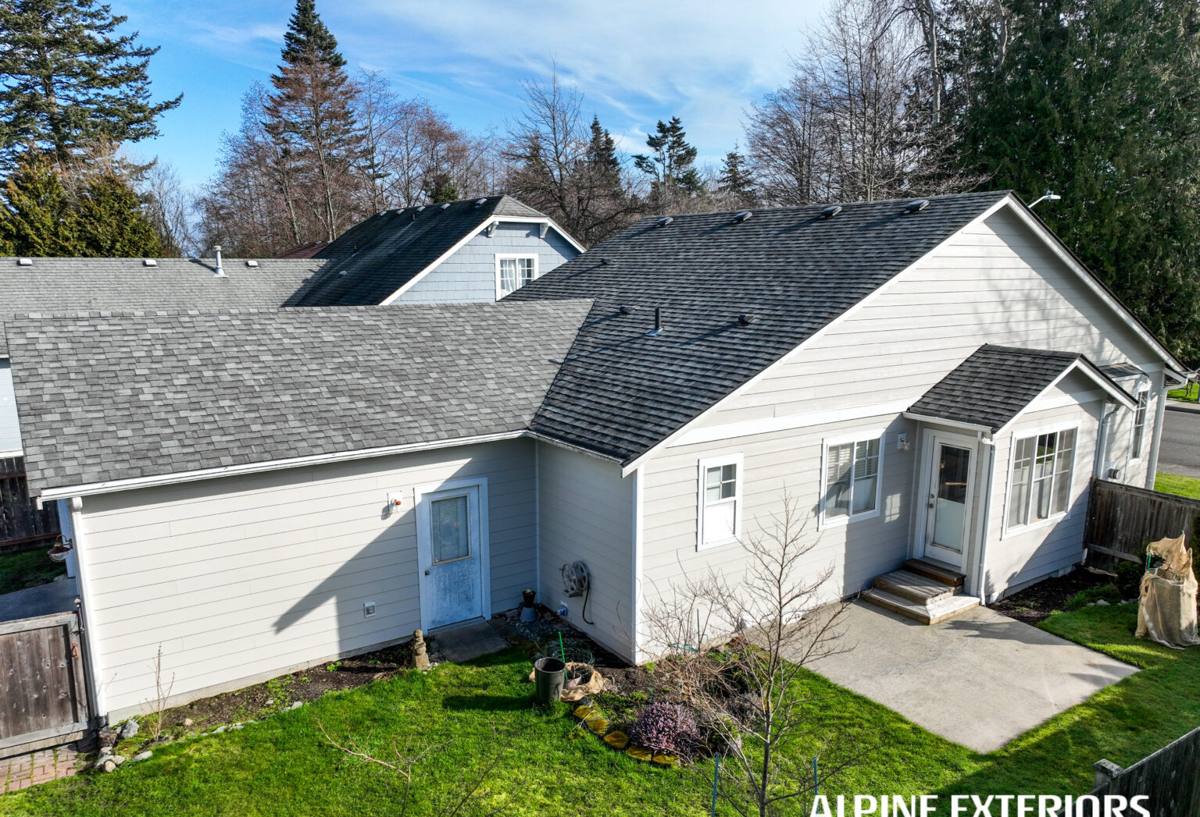
What Salt Air Actually Does to a House
Salt air isn't just a smell that rolls in off the water. Airborne salt is corrosive to metal fasteners, flashing, and hardware, and it's abrasive to painted and coated surfaces over time. On a home near Semiahmoo Bay, that means:
- Metal fasteners and flashing corrode faster unless they're rated for coastal exposure
- Paint films chalk, fade, and lose adhesion sooner than the same paint would inland
- Caulking and sealants around windows and trim break down faster, opening the door to moisture intrusion
- Wood-based siding products absorb salt-laden moisture into the grain, accelerating rot at seams and end cuts
None of this means a coastal home is doomed to constant repair — it means the materials and the installation details have to be chosen with salt exposure in mind from the start, not treated as an afterthought.
Driving Rain and Wind Exposure
Open water exposure near Semiahmoo also means wind-driven rain hits vertical wall surfaces harder and more often than it does on a sheltered inland lot. Rain that would simply run off a roof and down a wall elsewhere gets pushed sideways into seams, laps, and penetrations. Every joint, window opening, and siding overlap on a coastal home is a place water is actively trying to get behind the cladding — which is why weather-resistive barrier detailing, flashing, and caulk lines matter more here than almost anywhere else in the county.
Moss, Algae, and Whatcom County's Long Wet Season
Whatcom County's mild, moisture-heavy climate keeps moss and algae growth active for much of the year, and shaded, north-facing, or tree-lined lots near Semiahmoo see it worst. Moss and algae hold moisture directly against a wall surface, which is a problem for almost any siding material — but it's a bigger problem for wood-based and engineered wood products, where trapped moisture at the surface can eventually work its way into the substrate. Fiber cement siding doesn't stop moss or algae from landing on it, but it isn't harmed by that surface growth the way an organic or wood-fiber product can be, and it holds up to routine cleaning without the coating or substrate breaking down.
Why We Install Only James Hardie Fiber Cement Siding
We get asked fairly often why we don't offer vinyl, LP SmartSide, primed spruce, cedar, or other fiber cement brands. It's a fair question, and the honest answer is that after years of doing exterior work in this climate, we standardized on one product system because it consistently holds up where others don't.
Vinyl
Vinyl is inexpensive and low-maintenance in mild climates, but it's a petroleum-based product that expands and contracts significantly with temperature swings, and it can become brittle over time. Near open water, wind loads and driving rain put more stress on vinyl's lap joints and fastening system than it faces inland, and it's not a non-combustible material.
LP SmartSide and Wood-Based Products
Engineered wood siding has improved a lot over the years, but it's still a wood-fiber product at its core, which means any breach in the factory coating or field-cut edge is a path for moisture to reach absorbent wood fiber. In a salt-air, high-rainfall environment like Semiahmoo, that's a maintenance burden we don't think is worth the upfront savings for most homeowners.
Cedar and Primed Spruce
Natural wood siding is beautiful, and some homeowners genuinely want that look. But it requires ongoing refinishing, is vulnerable to rot and insect damage, and is combustible — three factors that all get harder to manage in a coastal, wet climate.
Other Fiber Cement Brands
Products like Cemplank and Allura are also fiber cement and share some of Hardie's core durability advantages. Our decision to standardize on James Hardie specifically comes down to their ColorPlus factory-applied finish, their HardieZone engineered product lines built for specific climate exposures, and a warranty structure we've found to be strong and genuinely transferable. Fiber cement is fiber cement, but for us, Hardie's specific formulation and finish system has been the most consistent performer.
James Hardie fiber cement is non-combustible, dimensionally stable across temperature and moisture swings, and engineered in climate-specific HZ formulations for exactly the kind of wet, marine-influenced weather that Semiahmoo sees. The ColorPlus factory finish is baked on under controlled conditions rather than field-applied, which means far better resistance to fading, chipping, and the chalking that salt air accelerates on site-painted surfaces.
Comparing Siding Options for a Coastal Whatcom County Home
| Factor | Vinyl | LP SmartSide | Cedar / Primed Wood | James Hardie Fiber Cement |
|---|---|---|---|---|
| Salt air resistance | Moderate | Fair, coating-dependent | Poor without upkeep | Strong |
| Moisture/moss tolerance | Good | Fair — wood-fiber core | Poor | Strong |
| Combustibility | Combustible | Combustible | Combustible | Non-combustible |
| Finish durability | Fades over time | Field or factory paint | Requires refinishing | Factory ColorPlus finish |
| Typical maintenance | Low | Moderate | High | Low |
This is a general comparison, not a claim that any of these products are unsafe or unusable — plenty of homes wear them successfully. It's simply the trade-off analysis that led us to install one product system rather than several.
Beyond Siding: Roofing, Windows, and Decks Near the Water
Siding is only part of a coastal home's exterior envelope. Roofing near Semiahmoo deals with the same wind and driving rain, so proper underlayment, flashing at valleys and penetrations, and secure fastening matter as much as the roofing material itself. Windows in a salt-air environment need well-sealed, properly flashed installations — a poorly flashed window is one of the most common sources of hidden water damage we find behind old siding on coastal homes. Decks facing open water take direct sun, salt spray, and rain exposure on horizontal surfaces, which wears fastener finishes and decking materials faster than a sheltered, inland deck. We handle all four — siding, roofing, windows, and decks — because on a coastal property, they're really one connected system for keeping water out.
What Correct Installation Looks Like Here
A quality product installed poorly will still fail early, especially in a demanding coastal environment. On every Semiahmoo-area project, correct installation means:
- Proper weather-resistive barrier and flashing details at every window, door, and penetration
- Fasteners and flashing rated for corrosion resistance in salt-air exposure
- Correct field-cut edge sealing on fiber cement to maintain the factory finish's protection
- Appropriate clearance and drainage at grade, decks, and roof-to-wall intersections
- Caulk and sealant work sized for the movement and exposure this climate creates
These details rarely get noticed by a homeowner at project completion — they get noticed five or ten years later, when a correctly installed home is still performing and a poorly installed one is showing rot, staining, or paint failure.
Signs Your Current Siding May Be Struggling
- Persistent moss or algae staining that returns quickly after cleaning
- Soft spots, bubbling, or visible swelling, especially near the bottom edge or seams
- Paint that's chalking, peeling, or fading faster than expected
- Visible gaps or cracking at caulk lines around windows and trim
- Musty odors or interior staining near exterior walls
Why a Local Crew Matters for a Semiahmoo Property
A crew that works throughout Ferndale and the surrounding Whatcom County coastline knows how differently a property a mile from the water behaves compared to one further inland. That local knowledge shows up in the small decisions — which side of the house takes the worst wind-driven rain, where moss builds up fastest, how much clearance a deck needs at grade for proper drainage. It's the kind of judgment that only comes from doing exterior work in this specific climate, on this specific coastline, project after project.
Planning Your Project
If you're weighing a siding replacement, a roofing project, new windows, or a deck for a home near Semiahmoo, we're happy to take a look and talk through what your specific property is facing — sun exposure, wind direction, existing moisture issues, and what a James Hardie system would look like for your home. Reach out for a free, no-pressure estimate, and we'll walk the property with you and answer your questions honestly, whether or not you end up hiring us.