 Ferndale Siding
 Decking on the Water Side of Whatcom County
Birch Bay sits right where the marine layer meets the shoreline, and that changes what a deck has to survive. Homes here deal with salt-laden air blowing off the water, long stretches of driving rain through fall and winter, and a moss and algae season that can run eight months or more if a deck surface never fully dries out. A deck built without that in mind will show it early: fading, staining, slick spots in the shade, and fasteners that start weeping rust stains into the boards within a couple of years.
Composite decking, installed correctly, holds up to that combination better than most alternatives, but "installed correctly" is doing a lot of work in that sentence. The material choice matters less than the framing, drainage, and fastening decisions underneath it. That's the part of the job that determines whether a deck looks good for two years or twenty.
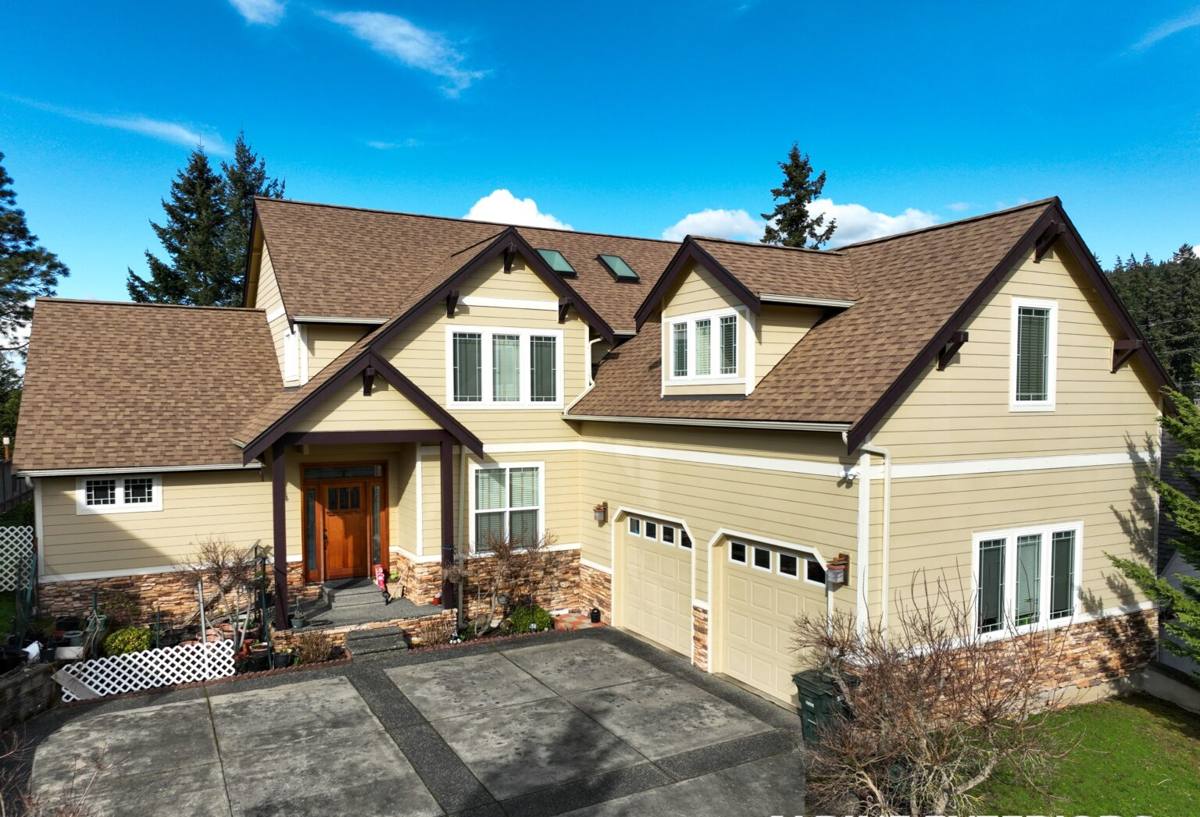
What Birch Bay's Climate Actually Does to a Deck
Salt Air and Metal Fatigue
Salt in the air accelerates corrosion on anything metal — screws, joist hangers, post bases, railing brackets. Standard galvanized hardware can start breaking down faster near the water than it would further inland in Ferndale proper. Over time, corroding fasteners loosen boards, stain the decking around the screw heads, and eventually fail structurally at connection points, which is the part homeowners usually don't see coming.
Driving Rain and Trapped Moisture
Rain here doesn't just fall straight down — wind off the bay pushes it sideways, which means it gets up under rail caps, into end-grain cuts, and behind ledger boards in ways a calmer climate wouldn't force. If a deck's framing doesn't shed and drain that water efficiently, it sits, and sitting water is what rots joists and beams even when the decking surface itself is fully synthetic.
Moss, Algae, and Shaded Surfaces
Whatcom County's moss season is long, and Birch Bay's proximity to the water keeps humidity up even on days without active rain. Any deck surface that stays damp and shaded — under trees, on the north side of a house, or in low-airflow spots near fences — will grow moss and algae film if it isn't textured and gapped to drain and dry. That film isn't just cosmetic; it's a slip hazard on stairs and landings.
Why We Recommend Composite for This Location
We install composite decking in Birch Bay because it removes several of the failure points that wood decks struggle with in this exact climate. It doesn't absorb moisture into the board itself the way wood does, so it isn't prone to cupping, splintering, or rot at the surface. It doesn't need annual staining or sealing to keep water out. And modern composite boards hold color better under the gray, UV-filtered light typical of this part of the Pacific Northwest than untreated wood does.
That said, composite isn't maintenance-free, and we don't pretend it is. It still needs to be kept clear of debris, cleaned periodically to prevent surface algae, and — critically — it still relies entirely on the wood or steel framing underneath it being built to shed water. A composite deck on poorly ventilated framing will fail from the bottom up even if the surface looks fine.
Composite vs. Wood vs. PVC — Honest Trade-Offs for This Climate
| Material | Salt Air / Moisture Resistance | Maintenance | Typical Trade-Off Here |
|---|---|---|---|
| Pressure-treated wood | Moderate — absorbs moisture, needs sealing | Annual staining/sealing | Lowest upfront cost, shortest lifespan in wet, salty air |
| Composite (capped) | Strong — non-porous surface, doesn't absorb water | Periodic washing | Higher upfront cost, long service life, minimal upkeep |
| PVC/cellular decking | Very strong — fully synthetic | Periodic washing | Premium cost, can look less natural, very stable in wet climates |
What a Correct Composite Deck Build Involves Here
Framing and Ledger Details
The framing is where a Birch Bay deck earns its lifespan. We use fasteners and hardware rated for coastal or high-corrosion environments rather than standard-grade galvanized parts, because the difference in cost is small compared to the cost of a rusted-out ledger connection down the line. Ledger boards attached to the house get proper flashing so wind-driven rain can't track behind them and into the wall assembly — a common failure point on older decks in this area that were built before that detail was standard practice.
Drainage and Airflow Underneath
Composite boards need airflow beneath them to dry out after rain, especially on lower decks close to grade. We plan joist spacing, ventilation gaps, and — where the deck is low to the ground — drainage grading underneath so water doesn't pool and stay trapped against the framing. This is the single biggest difference between a composite deck that looks new in year ten and one that's developed soft spots in the substructure nobody can see from the top.
Board Selection and Layout
We pick board profiles with grain or texture patterns that resist showing water film and provide better slip resistance on stairs and shaded landings, which matters more in a moss-prone climate than it does inland. Board run direction and expansion gaps are set to manufacturer spec, since composite expands and contracts with temperature more than people expect, and tight installs are a common cause of buckling.
Railings, Fasteners, and Hidden Hardware
Where possible we use hidden fastening systems rather than face-screwing boards, both for appearance and because exposed screw heads are exactly where corrosion and staining start first in salt air. Railing posts and hardware get the same corrosion-resistant treatment as the framing — a deck is only as durable as its weakest connection point.
Our Process for Birch Bay Deck Projects
- On-site assessment of the existing structure (if replacing a deck) or the site conditions (grade, sun exposure, wind exposure off the bay) for new builds
- Framing plan built around drainage and airflow, not just span tables
- Corrosion-resistant hardware and fastener spec appropriate for a coastal-influenced site
- Proper ledger flashing and house-side moisture management
- Composite board selection matched to sun/shade exposure and slip-resistance needs
- Expansion gaps and fastening set to manufacturer spec for our temperature swings
- Final walk-through covering realistic maintenance expectations — what composite still needs and what it doesn't
Maintenance Expectations We're Upfront About
A composite deck in Birch Bay isn't zero-maintenance, and we'd rather set that expectation honestly upfront than have a homeowner surprised later. Periodic washing — a garden hose and a soft brush, or an occasional gentle wash — keeps salt residue and organic film from building up, especially on shaded sections. Gutters and downspouts near the deck should stay clear so runoff isn't dumping extra water onto or under the structure. Furniture feet and planters should allow airflow underneath rather than sitting flush and trapping moisture against the boards.
None of that is difficult, but it's different from the "install it and forget it forever" pitch some contractors use. We'd rather a homeowner know what to expect than deal with a surprise a few years in.
Repair, Replacement, or New Build
Not every project here is a new deck. A lot of our Birch Bay work is replacing wood decks that have reached the end of their service life from years of moisture exposure, or rebuilding decks where the framing failed even though the surface boards looked serviceable. In those cases we evaluate the substructure first — if joists, beams, or ledger connections show rot or corrosion damage, replacing the surface boards alone just delays the same problem. We'll always tell you plainly whether a deck is a repair candidate or needs a full rebuild, and why.
Why a Crew That Already Works Birch Bay Matters
Deck-building fundamentals don't change by zip code, but the details that determine longevity do. A contractor who mostly works drier, inland sites can build a technically sound deck that still underperforms here because the hardware spec, drainage plan, or ledger detailing wasn't sized for wind-driven rain and salt exposure. We work this stretch of Whatcom County regularly, so the corrosion-resistant hardware, the drainage-first framing approach, and the board selection suited to shaded, damp conditions aren't afterthoughts — they're the default spec we start from.
If you're planning a new composite deck or need an honest look at an aging one, we're happy to come out and take a look. There's a free, no-pressure estimate form below — we'll walk the site, talk through what your home's exposure actually needs, and give you a straightforward assessment either way.