 Ferndale Siding
 Cedar siding has a real following, and it's easy to see why. It looks warm, it smells great during installation, and there's something appealing about putting a natural, renewable material on your home instead of a manufactured product. We get asked about it regularly by Ferndale homeowners who've seen it on older farmhouses along Portal Way or on newer builds trying to capture a Pacific Northwest cabin look. But after years of working on homes throughout Whatcom County, we made a deliberate decision: we don't install cedar siding. This page explains why, honestly, without pretending cedar is a bad product — it isn't. It's just not a good match for what this climate does to a home over twenty or thirty years, and it's not a product we're willing to put our name behind anymore.
What Cedar Siding Actually Gets Right
Before explaining our reasoning, it's worth being fair to the product. Western red cedar has natural oils that resist decay and insects better than most softwoods. It takes stain and paint well, it's lightweight and easy to mill into different profiles (shingles, shiplap, board-and-batten), and when it's new, nothing quite matches its look. It's also a regional material — a lot of it is grown and milled in the Pacific Northwest, which appeals to homeowners who want something that feels local. None of that is marketing spin. Those are legitimate strengths, and they're why cedar has been used on homes here for generations.
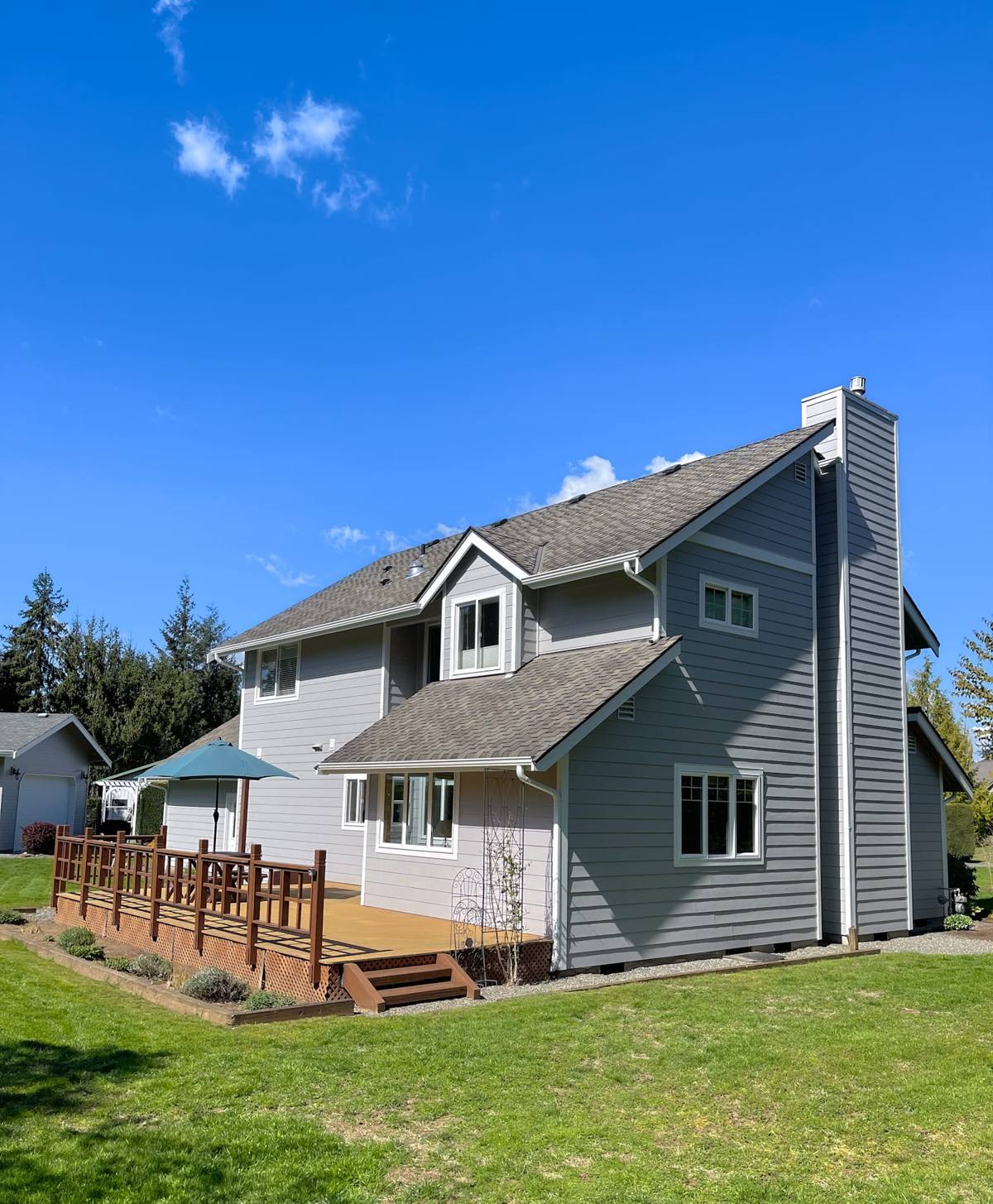
Where Cedar Runs Into Trouble in This Climate
Moisture Is the Core Problem
Ferndale sits close enough to the Salish Sea that salt air is a constant factor, and Whatcom County as a whole gets long stretches of driving rain in the fall and winter, followed by a spring "moss season" that can run for months. Wood siding needs to dry out between wet periods to stay stable. In a lot of the country, siding gets that recovery time. Here, it often doesn't — one wet system rolls into the next, especially on north-facing walls or anything shaded by mature trees, which are common on the wooded lots around Ferndale and out toward Lynden and Custer.
When cedar can't dry out consistently, several things start happening: cupping and warping of individual boards, checking (surface cracks) that let water track deeper into the wood, and — the big one — moisture getting behind the siding at laps, joints, and fastener penetrations. Once water gets behind wood siding, it doesn't just damage the siding. It can migrate into the wall assembly, which is a far more expensive problem than replacing a few boards.
Moss, Mildew, and the Maintenance Cycle
Salt-laden, moisture-heavy air is exactly the environment moss, algae, and mildew like. On cedar, that's not just cosmetic. Organic growth holds moisture against the wood surface, which accelerates decay and breaks down finishes faster than in a drier climate. Keeping cedar looking good here isn't a one-time sealing job — it's an ongoing cycle of washing, re-staining or re-painting, and periodically replacing boards that have gone past the point of refinishing. Most manufacturers and painting professionals recommend refinishing cedar every 3-5 years in a climate like this, sometimes sooner on sun-and-rain-exposed elevations.
The Real Cost of Cedar Over Time
Cedar's upfront material cost is often comparable to or even less than a premium fiber cement product, so it can look like the more affordable option on day one. The real cost shows up over the ownership period, mostly in labor — refinishing a full house isn't cheap, and it needs to happen repeatedly, not once. Homeowners also don't always budget for the harder-to-predict cost: localized board replacement when a section rots out from a chronic leak point, which is common near window trim, dryer vents, and anywhere flashing wasn't detailed perfectly the first time.
| Factor | Cedar Siding | James Hardie Fiber Cement |
|---|---|---|
| Refinishing cycle | Every 3-5 years in this climate | ColorPlus finish backed by a separate finish warranty; typically no repainting for many years |
| Moisture behavior | Absorbs water; prone to cupping, warping, checking | Engineered to resist moisture intrusion and dimensional swelling |
| Combustibility | Combustible | Non-combustible core material |
| Insect/rot vulnerability | Natural resistance, but degrades with age and finish failure | Not a food source for insects; not subject to wood rot |
| Typical warranty structure | Varies by supplier; often limited or none on the wood itself | Manufacturer warranty, transferable, specific to climate-engineered HZ product lines |
| Ongoing labor cost | Recurring wash/refinish/replace cycle | Occasional wash; no refinishing cycle |
Installation Sensitivity Nobody Talks About
Cedar siding is far less forgiving of installation shortcuts than people assume. Back-priming (sealing the backside of every board before installation) is essential in a wet climate, but it's frequently skipped because it adds labor time and most homeowners can't see whether it was done. Gaps at butt joints need to be caulked and maintained correctly, fastener placement matters more than with rigid products because wood moves seasonally, and any deviation from proper flashing details at penetrations becomes a moisture entry point years down the road. We've been called out to homes in Ferndale and nearby Bellingham where cedar siding was failing not because cedar is inherently bad, but because the installation didn't account for how much this climate would stress the material. That's a hard thing to guarantee across every job, every crew, every year — and we'd rather not put our name on a product whose long-term performance depends that heavily on perfect execution and a homeowner's willingness to keep up a demanding maintenance schedule.
Signs Existing Cedar Siding Is in Trouble
- Soft or spongy spots when pressed, especially near the bottom courses or around window and door trim
- Persistent dark staining or streaking that returns quickly after cleaning
- Visible cupping or bowing in individual boards
- Peeling or bubbling paint/stain, particularly on north- or shade-facing walls
- Moss or algae buildup that regrows within a season of cleaning
- Gaps opening up at butt joints or around trim as boards shrink and swell
Why We Standardized on James Hardie Instead
After weighing the maintenance burden, moisture risk, and installation sensitivity of wood siding against the alternatives, we made James Hardie fiber cement our only product. It's not a marketing decision — it's a practical one based on what holds up in Whatcom County's specific mix of salt air, sustained rain, and shaded, moss-prone lots.
What Makes Hardie Different
Hardie's fiber cement is engineered from cement, sand, and cellulose fibers, which makes it dimensionally stable — it doesn't absorb and release moisture the way wood does, so it isn't prone to the same cupping, warping, and checking. It's also non-combustible, which matters increasingly to insurers and homeowners in the Pacific Northwest. Hardie manufactures specific HZ5 product lines engineered for regions with significant moisture exposure, which fits this part of Washington well.
ColorPlus and the Warranty Structure
Rather than relying on field-applied paint or stain that has to be redone every few years, Hardie's ColorPlus finish is baked on in a factory-controlled process, backed by its own finish warranty separate from the product warranty. That combination — engineered substrate plus factory finish plus a transferable warranty — is what lets us tell a homeowner what to expect ten and twenty years out, not just what the house will look like the day we finish the install.
What This Means If You're Planning New Siding
If you're set on the look of natural wood, we understand the appeal, and we won't try to talk you out of liking it. What we will tell you honestly is that we're not the right contractor for a cedar installation, because we don't believe we can deliver a maintenance experience that matches what most homeowners actually want out of new siding: something that looks good and stays that way without becoming a recurring project. If a low-maintenance, long-term exterior is the priority — which it is for most people replacing siding — Hardie fiber cement gets you a wood-look profile (lap, shingle, or board-and-batten) without the refinishing cycle or moisture risk that comes with real cedar in this climate.
Questions Worth Asking Before You Decide
- How often am I realistically willing to wash, inspect, and refinish my siding?
- Does my lot have shaded or low-airflow walls where moisture and moss are already a problem?
- What warranty coverage actually exists on the material itself, not just labor?
- Am I choosing wood for its look, or because I believe it will save money over time?
- Is fire resistance a factor for my insurance or my own peace of mind?
If you're weighing cedar against fiber cement, or you're dealing with cedar siding that's already showing its age, we're happy to take a look and talk through what we're seeing — no pressure, no obligation. Reach out for a free estimate and we'll give you a straight answer about what your home actually needs.