 Ferndale Siding
 Why Birch Bay's Waterfront Climate Is Hard on a Roof
Birch Bay sits right on the water, and that location shapes everything about how a roof ages there. Homes closer to the shoreline take on salt-laden air that settles into shingle granules, metal flashing, and fasteners year-round. Add in the wind-driven rain that comes off the Strait during fall and winter storms, and you have moisture finding its way into every gap, nail hole, and lap joint that isn't sealed correctly the first time. Then there's the shade: a lot of Birch Bay lots have mature evergreens and are tucked along the water where afternoon sun doesn't dry the roof deck out the way it does further inland in Whatcom County. That combination — salt exposure, sideways rain, and shade — is exactly the recipe that grows moss and shortens the life of an asphalt shingle roof that wasn't built for it.
None of this means asphalt shingles are the wrong choice for Birch Bay. They're still one of the most practical, cost-effective roofing materials for this climate. It means the installation details matter more here than they would in a drier, sunnier part of the state, and cutting corners on underlayment or ventilation shows up faster on a Birch Bay roof than almost anywhere else in the county.
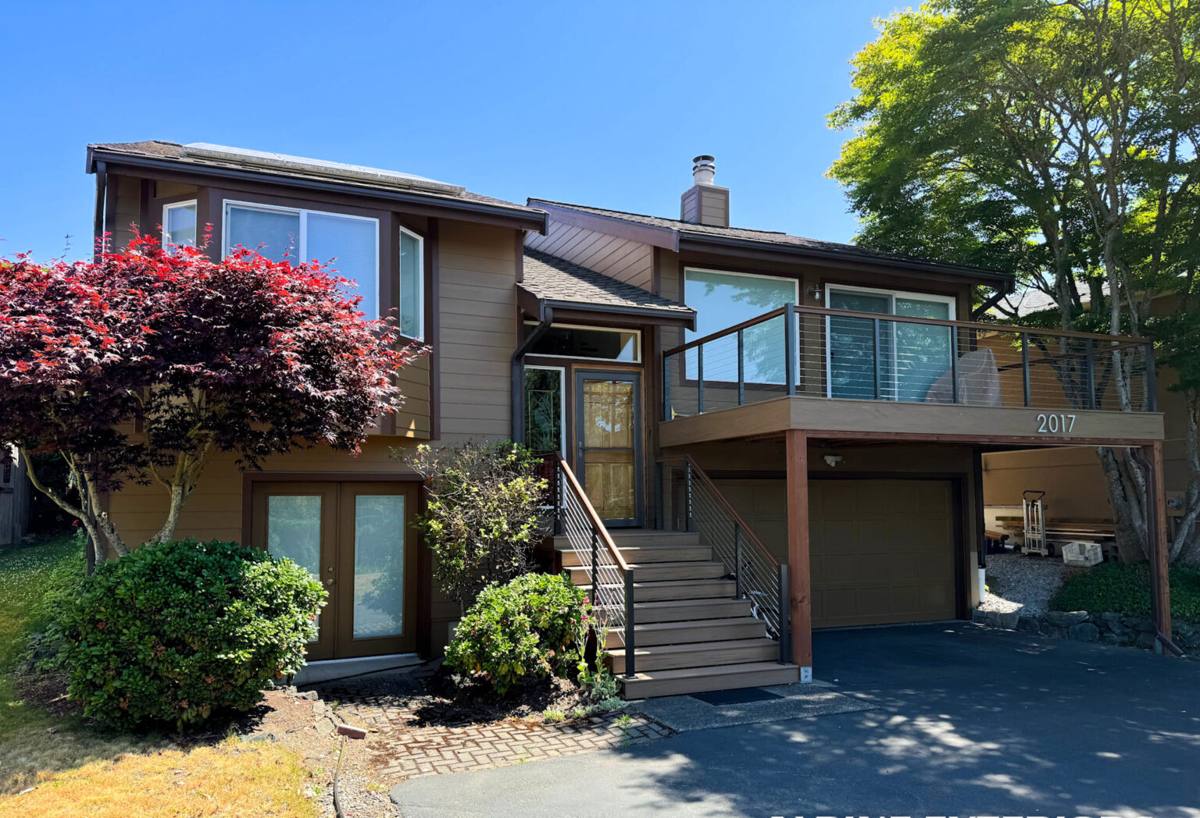
What a Correctly Installed Asphalt Shingle Roof Needs Here
A shingle roof that's going to hold up on the Birch Bay waterfront needs a few things baked in from day one, not added later as a fix:
- A fully sealed water-resistant underlayment, not just felt paper stapled down and hoped for the best
- Ice-and-water shield at eaves, valleys, and any low-slope transitions, since wind-driven rain in this area behaves more like standing water at the edges than a straight vertical rain
- Corrosion-resistant flashing and fasteners around chimneys, vents, and skylights — salt air is unkind to bare or lower-grade metal over time
- Balanced intake and exhaust ventilation so moisture-laden air isn't trapped against the underside of the deck, which is one of the biggest hidden causes of premature shingle failure and deck rot in this climate
- Shingles rated for algae resistance, since moss and algae pressure here is higher than in drier parts of Whatcom County
Skip any one of these and the roof might look fine for a year or two, but the underlying problems — trapped moisture, rusting fasteners, moss establishing itself in the granule layer — build quietly until they show up as leaks, sagging, or granule loss well before the shingle's rated lifespan is up.
Underlayment, Flashing, and Ventilation: The Parts You Don't See
Underlayment
On a waterfront property, we treat underlayment as the actual water barrier, not a backup. Synthetic underlayments hold up better than old-style felt in wind and repeated wet-dry cycling, and they don't sag or tear as easily during install on a breezy day — which is a real consideration on an open Birch Bay lot.
Flashing
Flashing failures are one of the most common causes of roof leaks we find on re-roof jobs, and they're rarely the shingles' fault. Step flashing at walls, counter-flashing at chimneys, and valley metal all need to be installed in the correct sequence with the shingle courses — not caulked over as an afterthought. In salt air, we also pay attention to the metal itself; some lower-grade galvanized flashing corrodes faster this close to the water than it would a few miles inland.
Ventilation
A hot, humid attic in summer and a cold, damp one in winter both work against an asphalt shingle roof from underneath. Proper soffit intake paired with ridge or box vent exhaust keeps the deck at a more even temperature and moisture level, which reduces shingle curling, deck rot, and the kind of trapped condensation that feeds moss growth on the underside of the sheathing — a problem homeowners rarely think to check for.
Choosing the Right Shingle for Salt Air and Moss Pressure
Not every asphalt shingle product handles this environment the same way. We steer homeowners toward options built for algae and moisture resistance rather than the cheapest available product, because the cost difference is modest compared to the difference in how the roof performs over 15-20 years near the water.
| Shingle Type | Typical Lifespan | How It Handles Birch Bay Conditions |
|---|---|---|
| Standard 3-tab | 15-20 years | Lower upfront cost, but less wind resistance and no built-in algae protection — moss and streaking tend to show up sooner in shaded, damp spots |
| Architectural (laminated) | 25-30 years | Heavier, better wind rating, more resistant to lifting in driving rain and gusts off the water |
| Algae-resistant architectural | 25-30 years | Copper or zinc-infused granules resist moss and algae growth — our default recommendation for Birch Bay's shaded, moist lots |
| Impact-rated architectural | 25-30 years | Added durability for homes near overhanging trees or debris exposure; worth discussing case by case |
We don't push one manufacturer over another based on brand loyalty. What matters is the product's wind rating, algae-resistant granule technology, and warranty structure — and whether it's installed to that manufacturer's specifications, since an improperly installed premium shingle can void the warranty just as easily as a cheap one.
Our Process for a Birch Bay Re-Roof or Repair
- On-site inspection — we look at the existing shingles, decking condition, flashing, ventilation, and any visible moss or moisture staining before quoting anything.
- Honest scope — full replacement isn't always necessary. If the deck is sound and the issue is isolated flashing failure or storm damage, we'll say so.
- Tear-off and deck check — on full replacements, we remove old material down to the deck and inspect for rot or soft spots before anything new goes down, since covering a bad deck just hides the problem.
- Underlayment and flashing installed to spec — including ice-and-water shield at vulnerable points, given the wind-driven rain typical of this stretch of coastline.
- Shingle installation — proper nailing pattern and exposure, matched to the manufacturer's wind and warranty requirements.
- Ventilation check — we confirm intake and exhaust are balanced, adding or correcting vents where the existing setup is inadequate.
- Final walkthrough — cleanup, debris check (including magnetic nail sweep), and a plain-language explanation of what was done.
Moss, Algae, and Maintenance: Realistic Expectations
Even a correctly installed, algae-resistant roof in Birch Bay will need periodic attention — that's just the reality of a long moss season this close to the water and under tree cover. What changes with a good install and the right materials is how often you need to deal with it and how serious the consequences are if you fall behind.
- Have moss and debris cleared from valleys and gutters at least once a year, more often under heavy tree cover
- Avoid pressure washing shingles directly — it strips protective granules and can shorten shingle life; soft brushing or approved treatments are safer
- Check attic ventilation isn't blocked by insulation or debris, since blocked vents accelerate moisture problems
- Address small flashing leaks or lifted shingles quickly — they're inexpensive to fix early and expensive once they've caused deck rot
We're upfront that no shingle roof in this climate is maintenance-free. The goal is a roof that ages predictably and gives you plenty of warning before anything becomes a real problem.
Cost Factors for Asphalt Shingle Roofing in Birch Bay
Every roof is different, but the main variables that move the price on a Birch Bay project are consistent enough to lay out honestly:
| Factor | Why It Matters Here |
|---|---|
| Roof size and pitch | Steeper roofs and larger square footage mean more material and labor time |
| Deck condition | Rot from long-term moisture exposure means added repair or replacement before new shingles go down |
| Shingle grade | Standard vs. algae-resistant architectural shingles carry a real but moderate cost difference |
| Flashing and ventilation upgrades | Older homes often need flashing or vent corrections that weren't part of the original build |
| Access and site conditions | Waterfront lots, tree cover, or limited driveway access can affect setup and disposal logistics |
We'll walk through actual numbers for your specific roof during an in-person estimate rather than quoting blind — too many of these factors depend on what we find once we're actually on the roof and in the attic.
Signs You Need a Roof Inspection or Replacement
- Granules collecting in gutters or at downspout outlets
- Shingles curling, cupping, or showing bare spots
- Moss buildup thick enough to hold moisture against the shingle surface
- Dark streaking that doesn't wash off with light cleaning
- Daylight visible through the attic roof deck
- Soft spots or sagging when walking the roof (or observed from the ground)
- Water stains on interior ceilings, especially near chimneys, skylights, or valleys
Any one of these is worth a look before the next storm season rather than after a leak has already started.
Why Hire a Crew That Already Works Birch Bay
Roofing crews that mostly work drier, inland areas of Whatcom County don't always build in the extra margin that Birch Bay's salt air and wind-driven rain require. We install here regularly, which means we already account for corrosion-resistant hardware, the right underlayment for driving rain, and ventilation that accounts for the shade and humidity common on waterfront lots. It also means we're familiar with how local permitting and inspection work for this area, so there aren't delays or surprises partway through the job.
If you're weighing a repair against a full replacement, or just want a straight answer about how much life is left in your current roof, we're happy to take a look. Reach out for a free, no-pressure estimate using the form below.