 Ferndale Siding
 Why Birch Bay Siding Wears Differently Than Inland Ferndale
Birch Bay sits right on the water, and that changes what siding has to survive. A few miles inland in Ferndale, siding mostly deals with rain and the general damp of a Whatcom County winter. On the bay, you add salt-laden air, steady onshore wind, and driving rain that hits walls at an angle instead of falling straight down. That combination finds every weak seam, every gap in caulking, and every spot where the original installation cut a corner.
Salt air is corrosive to exposed fasteners and trim hardware, and it accelerates the breakdown of finishes that aren't built for coastal exposure. Wind-driven rain doesn't just wet the surface of a wall — it pushes moisture up and under laps, into joints, and behind trim if the water-resistive barrier and flashing details weren't done right the first time. And because Birch Bay stays shaded, cool, and moist for long stretches of the year, moss and algae get a running start on any siding that holds water or organic debris against its surface.
None of this means Birch Bay homes need exotic materials or unusual techniques. It means siding repair here has to treat moisture management as the whole point of the job, not an afterthought to a cosmetic patch.
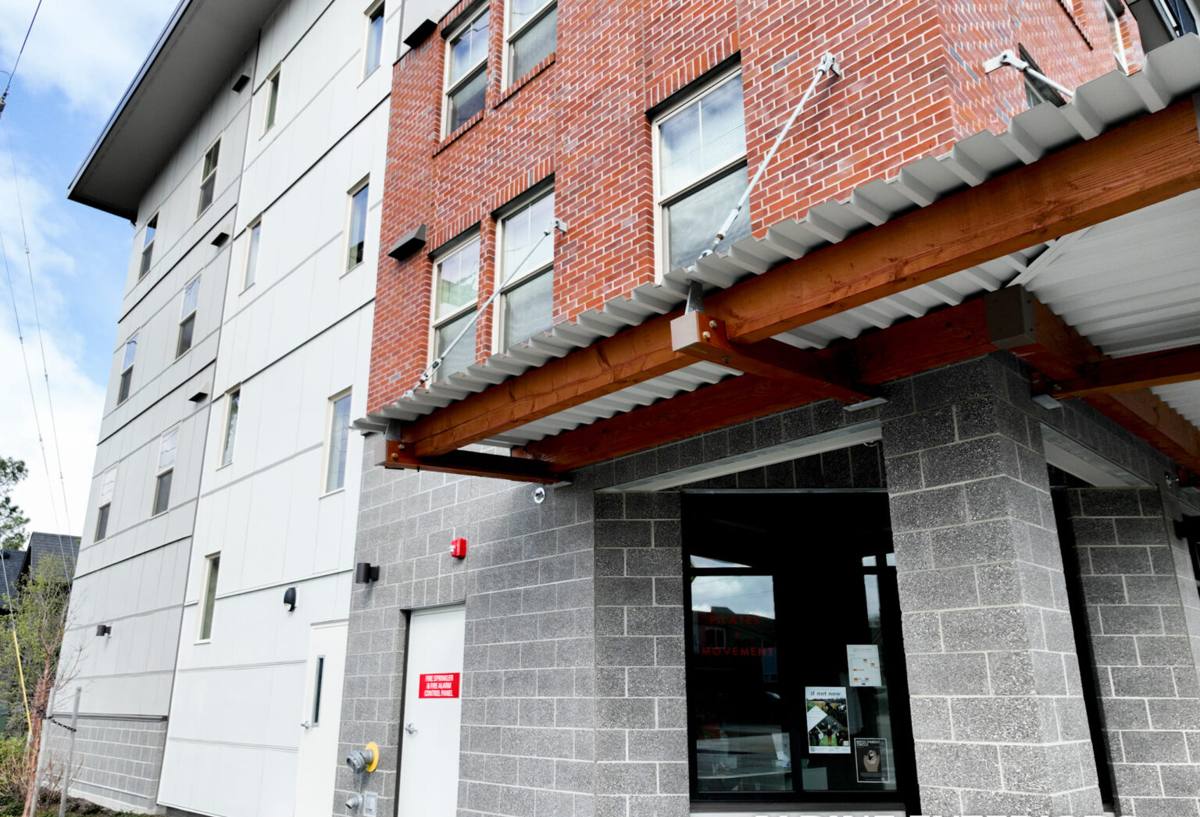
Signs a Birch Bay Home Needs Siding Repair
Because coastal exposure accelerates wear, it's worth checking siding more often here than you would on a sheltered inland lot. Common warning signs we see on repair calls in this area include:
- Soft or spongy spots when you press on siding near the bottom courses or around window and door trim
- Persistent moss or dark streaking that keeps coming back within weeks of cleaning
- Visible gaps, cracked caulk, or separation at butt joints and corner boards
- Rust staining running down from fasteners or metal trim pieces
- Paint that's bubbling, peeling, or chalking faster than the rest of the house
- Warped, cupped, or delaminating boards, especially on the side of the house that faces the water or prevailing wind
Any one of these can be a small, contained fix if it's caught early. Left alone through another wet season, most of them turn into rot that spreads behind the siding and into sheathing or framing — a much bigger and more expensive repair.
What a Correct Repair Actually Involves
It starts with diagnosis, not patching
A repair that just covers up damaged siding without finding out why it failed is a repair that fails again. Before we replace a single board, we look at what let moisture in — failed caulking, a flashing detail that was never installed correctly, a gap where two trades' work didn't meet up cleanly, or simply age and sun/salt exposure on the finish. If the underlying cause isn't fixed, new siding over the same problem buys a homeowner a year or two, not a lasting repair.
It protects what's behind the siding
Once damaged material is removed, we check the water-resistive barrier and sheathing underneath. Coastal wind-driven rain is exactly the condition WRB and flashing systems are designed to handle, so any tears, gaps, or missed laps get corrected before new siding goes back on. Skipping this step is the single most common reason a repair looks fine for a season and then fails again in the same spot.
It matches, not just fills
Repaired sections need to match the existing siding in profile, exposure, and finish as closely as possible. A mismatched patch stands out immediately and can also create a seam that behaves differently in weather than the rest of the wall — a new weak point in exactly the place you just fixed.
Why We Repair With James Hardie Fiber Cement, Not Vinyl or Wood
We install and repair with James Hardie fiber cement exclusively — we don't install LP SmartSide, vinyl, Cemplank, Allura, primed spruce, or cedar. For a coastal environment like Birch Bay, that standard isn't arbitrary. Each of the common alternatives has a real weakness that shows up faster in salt air and constant moisture than it would somewhere drier and more sheltered.
| Material | How it holds up in salt air & wind-driven rain |
|---|---|
| Vinyl siding | Can warp or distort under prolonged UV and heat cycling, and seams/laps are more prone to moisture intrusion in driving rain; color is not repairable if damaged |
| Untreated or primed wood/cedar | Absorbs moisture readily, feeds moss and rot in a shaded, damp coastal setting, and needs frequent repainting to keep ahead of the salt and wet cycle |
| Engineered wood (LP SmartSide) | Wood-based core is sensitive to sustained moisture exposure at cut edges and joints if sealing isn't maintained exactly to spec |
| James Hardie fiber cement | Non-combustible cement composite that doesn't feed moss growth as an organic food source, holds a factory ColorPlus finish through UV and salt exposure, and is engineered in HZ product lines for wet, coastal climates like this one |
Hardie's ColorPlus finish is baked on in a factory setting, which gives it more consistent, longer-lasting color performance than field-applied paint — a real advantage on a coastline where sun and salt both work against a painted surface. The HZ5 product line in particular is engineered for wetter climate zones, which describes Birch Bay and the broader Whatcom County coast well. When we do a repair, we can match into existing Hardie siding cleanly, and if a homeowner is repairing an older wood or vinyl exterior, we'll say plainly that a full re-side in Hardie is often the more durable long-term answer than repeatedly patching a material that's fighting the local climate by design.
Our Repair Process
- On-site inspection. We look at the damaged area and the surrounding siding, check for moisture intrusion behind the surface, and identify the root cause.
- Honest scope. We tell you plainly whether this is a contained repair or whether the damage extends further than it looks — coastal rot often travels further behind the wall than it shows on the surface.
- Material match. We source Hardie board and ColorPlus finish that matches your existing siding as closely as possible in profile and color.
- Correct the cause. Flashing, caulking, and WRB details get fixed as part of the repair, not left as-is under new boards.
- Install to spec. Fasteners, clearances, and joint treatment follow Hardie's installation requirements, which matter more in wind-driven rain than in calmer inland conditions.
- Clean handoff. Site cleanup and a final walk-through so you know exactly what was done and why.
Repair or Replace? What Actually Decides It
Not every damaged section needs a full re-side, and not every repair is worth doing instead of replacement. The honest answer depends on a few factors:
| Factor | Leans toward repair | Leans toward full replacement |
|---|---|---|
| Extent of damage | Isolated to one or two areas | Recurring problems across multiple walls or elevations |
| Age of existing siding | Relatively recent, otherwise sound | Original siding is old, faded, or already showing widespread wear |
| Underlying material | Existing Hardie siding, straightforward match | Existing material is wood, vinyl, or another product not suited to this exposure |
| Moisture history | Cause identified and fully correctable | Evidence of long-term water intrusion behind multiple sections |
We'll walk your specific situation through this with you rather than defaulting to the bigger job — a well-executed repair on sound Hardie siding can hold up for years, and there's no reason to replace more than is actually failing.
Why a Crew That Already Works Birch Bay Matters
Siding repair on the water isn't the same job as siding repair a few miles inland, and a crew that mostly works drier, more sheltered lots can miss things that are obvious to someone who repairs coastal exposure regularly. Knowing which elevations of a Birch Bay home typically take the worst of the wind and salt, recognizing early moss patterns before they become structural rot, and understanding how Whatcom County's coastal wet season stresses flashing and joints all come from doing this work here repeatedly — not from a general siding background.
We're a Ferndale-based crew, and Birch Bay is part of our regular service area, not a special trip. That means we're familiar with the local building department, the typical exposure conditions on bayfront and near-bayfront lots, and the seasonal rhythm of when siding damage tends to show up and when it's best addressed before winter storms make it worse.
Keeping Repaired Siding Ahead of Moss Season
Once a repair is done right, a little seasonal attention keeps it that way. In a moss-prone coastal environment like Birch Bay, we recommend:
- Rinsing siding gently once or twice a year to clear salt residue, pollen, and organic buildup before it takes hold
- Trimming back vegetation and tree cover that keeps siding shaded and damp longer than it needs to be
- Checking caulking at trim, corners, and penetrations annually — this is usually the first thing to give way in wind-driven rain
- Watching for early moss or algae spotting and addressing it before it spreads, rather than after a full season of growth
- Keeping gutters and downspouts clear so roof runoff isn't adding extra water load onto the siding below
None of this is difficult, but it matters more here than it would inland, simply because Birch Bay's exposure gives moisture and salt more chances to find a way in.
Get a Straight Answer on Your Siding
If you're seeing soft spots, recurring moss, cracked caulking, or damage anywhere on a Birch Bay home's exterior, it's worth having a local crew take an honest look before another wet season adds to the problem. We'll tell you plainly whether it's a contained repair or something bigger, and what a correct fix actually involves. Reach out for a free, no-pressure estimate using the form below.