 Ferndale Siding
 Why Marietta Homes Need a Different Approach to Window Replacement
Marietta sits close enough to the water that homes here take on a different kind of weathering than houses further inland in Whatcom County. Salt-laden air works its way into aluminum frames and steel hardware over the years, driving rain off the Strait finds every gap in a tired window's seal, and the long, damp moss season keeps humidity pressed up against exterior walls for months at a time. None of that is dramatic on its own, but stacked together, year after year, it's what turns a fifteen-year-old window into a drafty, foggy, hard-to-operate liability well before its time.
Replacing windows in Marietta isn't just a matter of swapping old glass for new. It means choosing frame materials and seal systems that actually hold up to salt exposure, sizing units so they perform in wind-driven rain, and installing them in a way that accounts for how moisture moves through a wall assembly in this specific microclimate. A window that's rated fine for a dry inland suburb isn't automatically the right call two miles from saltwater.
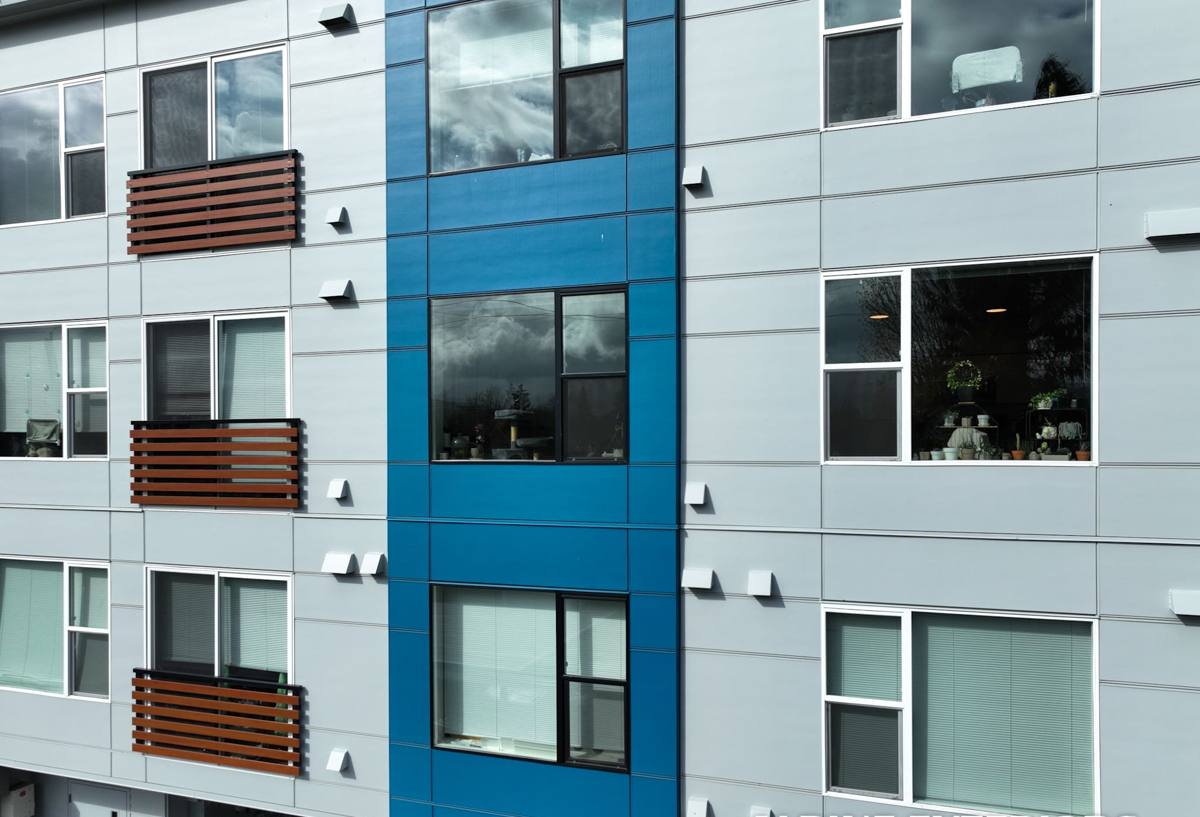
What Salt Air and Driving Rain Actually Do to a Window Over Time
It helps to understand the failure pattern, because it explains why some window replacements last decades and others start failing in year eight.
- Corrosion at hardware and frame joints — salt accelerates oxidation on screws, hinges, balance mechanisms, and unprotected aluminum, which is why hardware quality matters as much as the glass package.
- Seal breakdown from repeated wetting — driving rain forces water against weatherstripping and sill flashing far more often here than in a typical inland install, so seals that are "good enough" elsewhere wear out faster in Marietta.
- Trapped moisture behind trim and cladding — moss season isn't just about roofs and siding; the same sustained dampness sits against window flanges and can rot sheathing if flashing was never done correctly the first time.
- Condensation and fogging — once a seal starts to go, double-pane units fog between the panes. That's a sign the insulated glass unit has failed, not something a cleaning will fix.
None of this means Marietta is a hostile place to own a house. It means the install has to be built for the actual conditions, not generic manufacturer defaults.
Signs a Marietta Home Is Overdue for Replacement
Homeowners usually notice a handful of symptoms before they think "window problem." Worth checking for:
- Visible fog or moisture between panes of double-pane glass
- Windows that are hard to open, close, or lock — often a sign the frame has shifted or hardware has corroded
- Cold drafts near the frame even when the window is fully latched
- Soft or discolored trim and sill wood, a common sign moisture has been getting behind the frame
- Visible condensation on the inside of glass during cool, damp mornings — more than what's normal for the season
- Chalky, pitted, or corroded aluminum frames, especially on the side of the house facing prevailing weather
Any one of these on its own might just mean routine maintenance. Two or three together, especially on the weather-facing side of the house, usually means the window has reached the end of its useful life.
What a Correct Window Replacement Involves
Window replacement done right is mostly about what happens before and after the window itself goes in — the unit is only part of the job.
Removal and Opening Assessment
Old windows come out carefully so we can actually see the condition of the rough opening — sheathing, sill, and framing — before anything new goes in. In a salt-air, high-rain environment this step matters more than usual, because hidden rot or old, improperly lapped flashing is exactly the kind of thing that's easy to cover up and hard to catch later.
Flashing and Water Management
This is the step that determines whether a window replacement lasts one decade or three. Proper flashing means water that reaches the window is directed back out and down, never trapped behind cladding. In driving rain and moss-season humidity, a flashing detail that's just "close enough" is where most long-term water damage originates — not from the window unit itself.
Air Sealing and Insulation
The gap between the window frame and the rough opening gets sealed and insulated properly, not just foamed and forgotten. This is what actually stops drafts and controls condensation on the interior side of the glass during cold, damp mornings.
Frame, Glass, and Hardware Selection
We steer homeowners toward frame materials and hardware finishes that are known to hold up to coastal-adjacent salt exposure, and glass packages (typically Low-E, double or triple pane depending on orientation and budget) sized for the wind and rain loads this side of the county actually sees.
Finish Work
Trim, caulking, and interior finish work get done to match the existing house, so the replacement doesn't look like a patch job.
Frame Material Comparison for a Marietta Property
| Frame Material | Salt Air / Coastal Performance | Maintenance | Typical Lifespan |
|---|---|---|---|
| Vinyl | Good — won't corrode, some UV fading over decades | Low | 20–30 years |
| Fiberglass | Very good — dimensionally stable, resists moisture and salt well | Low | 30–40+ years |
| Aluminum (uncoated/older style) | Poor to fair — prone to pitting and corrosion near salt air over time | Moderate to high | 15–20 years in this climate |
| Wood (unclad) | Fair — needs diligent upkeep, vulnerable during long damp moss season | High | Varies widely with maintenance |
| Wood-clad (aluminum or vinyl exterior) | Good — protected exterior face with interior wood warmth | Moderate | 25–35 years |
We don't push one material for every home. A lot of it comes down to the home's exposure — how directly a given elevation faces prevailing wind and rain — plus budget and the look the homeowner wants to keep or change.
What Drives the Cost of a Window Replacement Project
Every Marietta home is different, so instead of a flat number, here's what actually moves the price:
| Factor | Why It Matters |
|---|---|
| Number and size of openings | More or larger windows mean more material and labor |
| Frame material chosen | Fiberglass and higher-end vinyl cost more upfront but need less upkeep |
| Glass package | Double vs. triple pane, Low-E coatings, and impact considerations for exposed elevations |
| Condition of the rough opening | Hidden rot or old flashing failures found during removal add repair time |
| Full-frame vs. insert replacement | Full-frame replaces everything down to the studs; inserts reuse the existing frame and cost less but only make sense when that frame is still sound |
| Trim and interior finish work | Matching existing trim profiles or repainting adds labor |
We walk every home in person before quoting, because "how many windows" is rarely the whole story — a home with old flashing problems needs a different scope than one that's just due for an upgrade.
Full-Frame vs. Insert Replacement: Which Makes Sense
This is one of the most common questions we get, and the honest answer is "it depends on the opening, not the homeowner's preference."
- Insert (pocket) replacement makes sense when the existing frame and flashing are still structurally sound and dry. It's faster and less invasive.
- Full-frame replacement is the right call when there's any sign of water intrusion, rot, or old flashing that was never done correctly — which we see fairly often on the weather-facing side of homes in this area given the rain patterns.
We won't recommend an insert over a full-frame replacement just because it's cheaper if the opening shows signs of moisture damage. Covering up a wet frame with a new window is the kind of shortcut that causes expensive problems five or ten years down the line.
Our Process, Start to Finish
- In-home assessment — we look at every opening being replaced, note exposure and existing condition, and talk through material and glass options.
- Written estimate — a clear scope of work and pricing, no surprise add-ons once work begins unless we find hidden damage we couldn't see beforehand.
- Careful removal — old units come out without damaging surrounding siding or trim, and we inspect the opening before anything new goes in.
- Proper flashing and air sealing — done to manage water the way this climate demands, not the bare minimum.
- Installation and finish work — new units set plumb and level, trim and caulking finished to match the home.
- Final walkthrough — we test operation, check seals, and make sure the homeowner knows how to maintain the new windows.
Why a Crew That Already Works Marietta Matters
A contractor who works this part of Whatcom County regularly already knows which elevations tend to take the worst of the driving rain, what moss-season humidity does to sheathing over time, and which frame materials hold up versus which ones look fine in the showroom and struggle five years in. That's not something you get from a national installer working off a generic spec sheet — it comes from having opened up enough old window frames in this specific area to know what's actually behind the wall before we even start.
It also means we're not guessing about local permitting expectations or how a given home's construction era typically holds up. A house built decades ago has different framing and moisture behavior than something built in the last ten years, and we adjust the approach accordingly rather than treating every job the same.
Maintenance That Extends the Life of New Windows
Even a properly installed, well-chosen window benefits from a little seasonal attention in this climate:
- Rinse salt residue off exterior frames periodically, especially on elevations facing prevailing wind
- Check and clear weep holes so condensation and rain can drain properly
- Inspect caulking and weatherstripping annually, ideally before the wet season sets in
- Keep gutters and downspouts clear so runoff isn't sheeting down against window frames
- Wipe down interior sills during damp stretches to prevent moisture buildup
None of this is heavy maintenance — it's the kind of thing that takes an afternoon once or twice a year and meaningfully extends the life of the investment.
Ready to Talk Through Your Windows?
If your Marietta home has windows that fog, stick, draft, or just feel like they're not keeping up with the weather anymore, we're happy to take a look and give you an honest read on what's going on — no pressure, no hard sell. Fill out the form below and we'll get a free estimate scheduled.