 Ferndale Siding
 Why Decks Near Sudden Valley Wear Out Faster Than People Expect
Homeowners in and around Sudden Valley often assume a deck failing at 12 or 15 years is normal wear and tear. In this part of Whatcom County, it usually isn't just age — it's the combination of factors decks here have to deal with every year. Salt-laden air off the Strait moves inland on prevailing winds, driving rain comes in sideways for weeks at a stretch in fall and winter, and a long, damp moss season keeps horizontal surfaces wet far longer than they would stay in a drier climate. A deck built with standard-grade materials and standard fastening in a dry-climate town might last twice as long as the same deck here, simply because it isn't fighting the same conditions.
None of that means a deck is doomed — it means a deck built or replaced for this region needs to be built differently than a catalog spec sheet assumes. That's the difference between a deck that needs full replacement again in a decade and one that just needs normal upkeep for twenty-plus years.
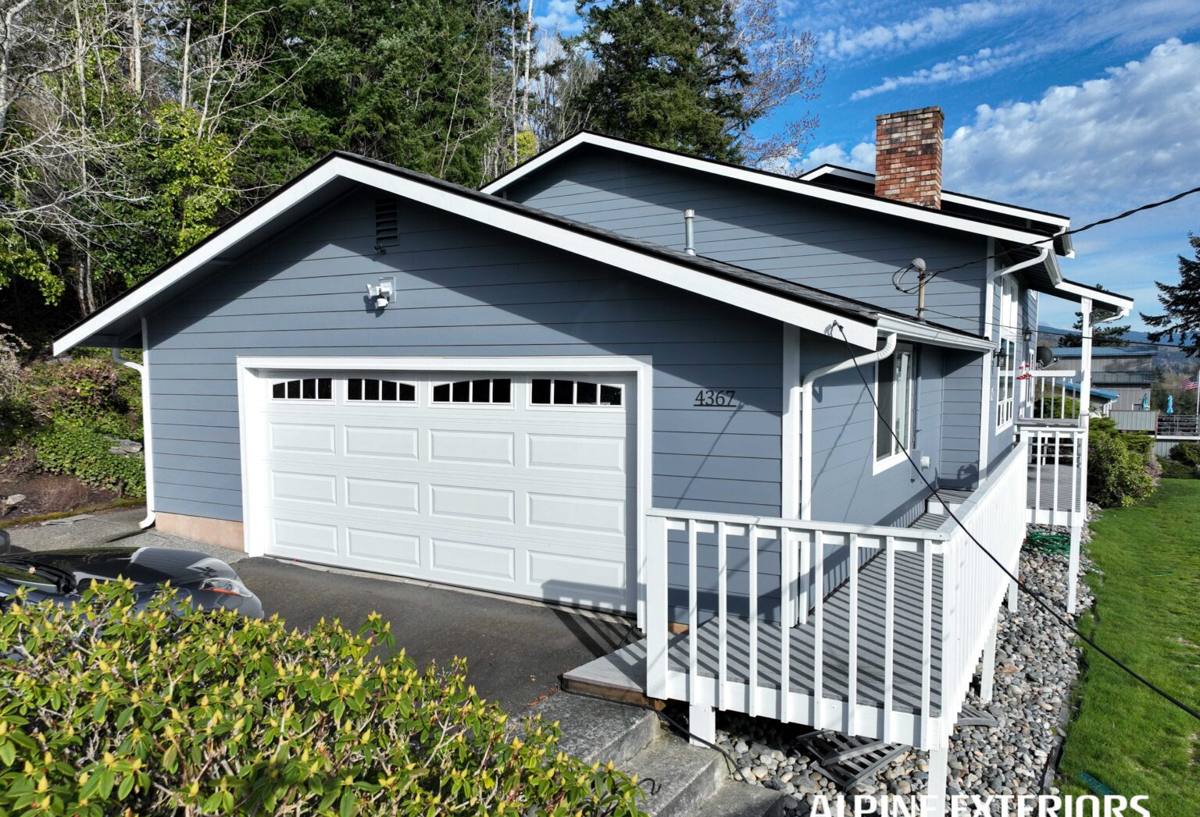
Signs a Deck Needs Replacement, Not Just Repair
Repair makes sense when the problem is isolated. Replacement makes sense when the problem is structural or spreading. A few signs point clearly toward replacement:
- Soft, spongy, or spring-loaded decking boards in more than one area, not just a single plank
- Visible rot or dark staining at the ledger board where the deck attaches to the house
- Rust streaking from fasteners, which usually means the fastener itself is failing internally
- Posts or footings that have shifted, settled unevenly, or show cracking at the base
- Persistent moss or algae growth that comes back within weeks of cleaning, which often signals moisture trapped underneath rather than just surface growth
- Railings that flex or feel loose under normal weight — a code and safety issue, not a cosmetic one
If the issues are limited to a few boards or a railing section, repair is the honest recommendation and we'll say so. Replacement is worth the investment when the frame, ledger, or footings are compromised, because at that point new decking on old structure just hides the real problem.
What a Correct Deck Replacement Involves
Framing and Structure First
The part of a deck nobody sees is the part that determines how long it lasts. Joists, beams, and posts need to be sized correctly for the span and load, and in a climate this wet, the framing lumber and its protection matter as much as the visible decking. We inspect and, where needed, rebuild the substructure before a single new board goes down — replacing decking over a compromised frame is a cosmetic fix, not a real one.
The Ledger Board Connection
Most deck failures that make the news start at the ledger — the board that bolts the deck to the house. Done wrong, water gets trapped between the ledger and the siding and rots both from the inside out, invisibly, for years. A correct ledger installation uses proper flashing that sheds water away from the house, not toward it, along with structural fasteners rated for the load — not deck screws pressed into service as structural bolts.
Decking Material
Material choice is where most of the long-term maintenance decision gets made. There's no single right answer for every homeowner — it depends on budget, how much upkeep you want to do, and how the deck gets used.
| Material | Upfront Cost | Moisture & Moss Behavior Here | Maintenance |
|---|---|---|---|
| Pressure-treated fir/pine | Lowest | Absorbs moisture readily; needs sealing to resist rot and moss staining | Annual cleaning and re-sealing recommended |
| Cedar | Mid | Naturally rot-resistant but still needs regular sealing in this climate to hold its color and resist moss | Sealing every 1–2 years |
| Composite decking | Higher | Doesn't absorb water or rot, but can still grow surface moss/algae in shaded, damp spots without regular cleaning | Periodic washing, no sealing needed |
| PVC decking | Highest | Fully moisture-resistant; least prone to moss retention of the common options | Occasional washing only |
We install all of the above and will walk you through honest trade-offs for your specific deck rather than pushing whichever product carries the best margin. A shaded, tree-covered lot near the lake behaves differently than an open, sun-exposed one, and that should factor into the recommendation.
Fasteners and Hardware
In coastal-influenced air, standard fasteners corrode faster than people expect, and corroding fasteners are one of the most common causes of premature deck failure. We use fasteners and structural hardware rated for exterior, corrosive-exposure use — stainless or coated hardware where it matters most, particularly at structural connections and anywhere fasteners are exposed to standing moisture.
Our Deck Replacement Process
- On-site assessment. We inspect the existing deck's framing, ledger, footings, and decking to determine what's actually failing and why, not just what's visible on top.
- Honest recommendation. If repair genuinely solves the problem, we'll tell you that. If replacement is the right call, we'll explain what's driving that recommendation in plain terms.
- Written estimate. Material options, scope, and timeline laid out clearly before any work starts — no surprise change orders for things we could have caught up front.
- Permitting. Deck replacement, especially structural rebuilds, often requires a permit. We handle that process rather than leaving it on the homeowner.
- Demolition and structural rebuild. Old decking and, where needed, framing removed; new structure built to current code and sized for the climate.
- Decking, railing, and finish work. Installed to manufacturer spec for whichever material you've chosen, with attention to drainage and airflow underneath.
- Final walkthrough. We go over the finished deck together, including basic care guidance specific to the material installed.
Permits and Whatcom County Considerations
Deck replacement that involves structural changes — new footings, altered framing, or a change in deck height or footprint — generally requires a building permit locally. Even straightforward like-for-like replacements can trigger permitting requirements depending on the deck's size and attachment to the house. Skipping this step is a common shortcut that creates real problems at resale, when a lender or buyer's inspector flags unpermitted structural work. We pull the permits a project actually requires as part of the job, not as an upsell.
Living With a New Deck in a Long Moss Season
Even a well-built deck needs some seasonal attention here. A few habits go a long way toward protecting the investment:
- Sweep leaves and debris off the deck regularly in fall — trapped organic matter is what moss and algae feed on
- Keep gutters and downspouts near the deck clear so runoff isn't dumping extra water onto or under it
- Rinse or wash the surface periodically through the wet months, especially in shaded corners that stay damp longest
- Check railings and stair connections once a year for looseness — hardware that's still tight in year one can work loose over several wet-dry cycles
- Re-seal wood decking on the schedule appropriate to the product, not just "when it looks dry"
None of this is heavy maintenance, but skipping it is exactly how a well-built deck ends up needing early replacement anyway.
What Drives the Cost
| Factor | Why It Matters |
|---|---|
| Deck size and footprint | More square footage means more material and labor, straightforwardly |
| Framing condition | A deck needing full structural rebuild costs more than one where the frame is sound and only decking needs replacing |
| Material choice | Pressure-treated lumber, cedar, composite, and PVC carry different material costs, as shown above |
| Height and stairs | Elevated decks with stairs and additional railing require more structural work than a low, ground-level deck |
| Site access | Ease of getting materials and equipment to the deck location affects labor time |
| Permitting scope | Structural changes requiring engineering or inspection add time and cost versus a straightforward swap |
Every deck is different, which is why we give a written estimate specific to your project rather than a generic per-square-foot quote pulled from a national average.
Why Hiring a Crew That Already Works This Area Matters
A contractor unfamiliar with Whatcom County's climate can build a deck that looks right and still fails early — using fasteners rated for a drier region, skipping proper ledger flashing because it "isn't usually necessary," or recommending a material that isn't suited to a shaded, moisture-heavy lot. A crew that works Ferndale and the surrounding communities regularly, including neighborhoods like Sudden Valley, already knows what actually holds up here versus what looks fine on paper. That local experience shows up in the small decisions — flashing details, fastener grade, drainage under the deck — that determine whether a deck lasts 15 years or 30.
If your deck is showing signs of trouble, or you'd simply rather replace it now than keep patching it, we're happy to take a look and give you a straight answer about what it actually needs. Reach out for a free, no-pressure estimate using the form below.