 Ferndale Siding
 Windows Built for Life on Sandy Point
Sandy Point sits right up against the water northwest of Ferndale, and that location shapes everything about how a window performs there. Homes here take a different kind of weather than houses a few miles inland in town — more salt-laden air, more direct exposure to wind-driven rain off the Strait, and a longer stretch of damp, shaded months where moss and algae get a foothold on anything that stays wet. Windows that would hold up fine on a sheltered lot in Ferndale proper can fail years early out at Sandy Point if they weren't chosen and installed with that exposure in mind.
"Energy-efficient" gets used as a marketing word a lot. For a waterfront property in Whatcom County, it actually means something specific: a window and installation combination that keeps water and salt air out of the wall assembly, holds its seal through decades of temperature swings and wind loading, and doesn't force your heating system to work overtime every time a marine storm rolls through. That's the standard we hold every Sandy Point job to.
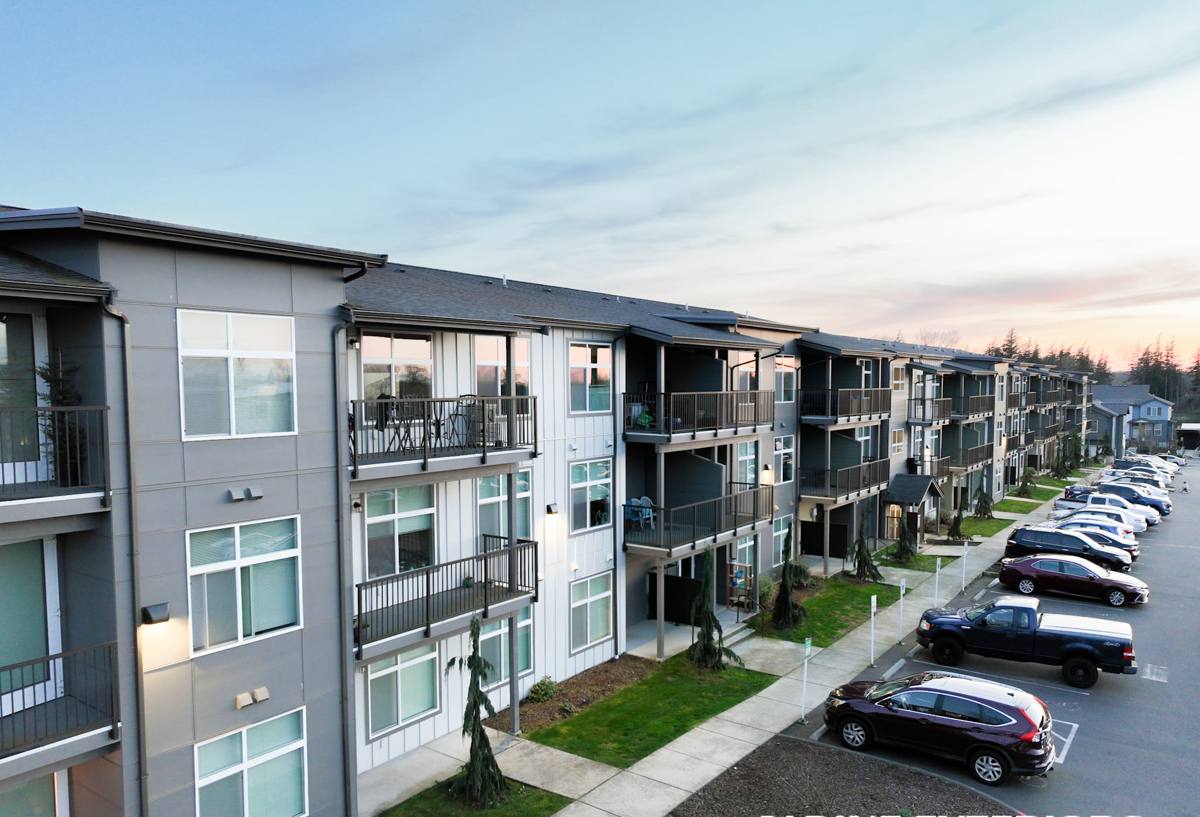
What the Sandy Point Climate Does to a Window Over Time
Salt Air
Airborne salt is corrosive to metal hardware, fasteners, and some window components long before it ever visibly damages glass or vinyl. Locks, hinges, balance mechanisms, and screen frames are usually the first parts to show wear on a waterfront home. Cheaper hardware corrodes, seizes, or pits within a handful of years; better-grade components and proper flashing details slow that process considerably.
Driving Rain
Wind off the water doesn't just fall — it pushes rain sideways into siding and window openings. A window that relies on caulk alone to keep water out, rather than proper flashing and drainage behind the frame, is a leak waiting to happen at Sandy Point. Most of the water damage we find around older windows out there isn't from a single storm; it's from years of small amounts of moisture working past a marginal seal.
Moss Season
Whatcom County's wet season runs long, and Sandy Point's tree cover and marine humidity keep window sills, tracks, and frame corners damp for extended stretches. That's exactly the environment moss and algae need. Beyond the cosmetic issue, sustained moisture sitting in a window track or sill pocket is what rots wood components and breaks down seals from the inside out.
What "Energy-Efficient" Should Actually Include
A window's energy performance comes from a combination of factors working together — not from a single sticker on the glass. For this area, we weigh these in order of real-world impact:
- Low-E glass coatings — reflect heat while still letting daylight through, which matters both for winter heat retention and reducing summer glare off the water
- Multi-pane construction with gas fill — argon-filled double or triple pane units resist heat transfer far better than single-pane or older double-pane units with failed seals
- Frame material and construction — determines how well the window resists corrosion, warping, and thermal transfer through the frame itself
- Weatherstripping and hardware quality — the seal only stays airtight as long as the moving parts still close properly, which is a bigger deal in salt air than most homeowners expect
- Installation detail — flashing, sill pans, and shimming matter as much as the window unit; a great window installed poorly will still leak and lose efficiency
Skip any one of these and you end up with a window that looks fine but underperforms — either on the energy bill, on water resistance, or on how long it lasts before hardware or seals start failing.
Frame Material: What Holds Up on the Water
Frame material is one of the biggest decisions on a Sandy Point job, because it drives both energy performance and how the window handles salt exposure. Here's how the common options compare for this specific environment:
| Frame Material | Salt Air Resistance | Energy Performance | Maintenance |
|---|---|---|---|
| Vinyl | Very good — won't corrode or rust | Strong when multi-chambered with good weatherstripping | Low; occasional cleaning |
| Fiberglass | Excellent — highly stable, resists warping and pitting | Strong; low thermal transfer through frame | Low |
| Aluminum (uninsulated) | Poor without thermal break; prone to corrosion and pitting near the water | Weak — conducts heat and cold readily | Higher; hardware needs regular attention |
| Wood (unclad) | Poor exposed to salt air and moss unless meticulously maintained | Good when dry and sealed | High; repainting and sealing on a strict schedule |
| Wood-clad (vinyl or aluminum exterior) | Good — exterior shell protects the wood core | Strong | Moderate |
We don't push one material on every job — the right call depends on your home's exposure, existing trim details, and budget. But on a straight waterfront lot at Sandy Point, we steer most homeowners away from bare aluminum and unclad wood on exterior-facing openings, simply because the maintenance burden and corrosion risk are higher than most people want to sign up for.
Signs Your Current Windows Are Losing the Fight
Before we recommend replacement, we look for actual evidence the windows are failing — not just their age. Common signs we see on Sandy Point homes:
- Fogging or a permanent haze between panes — the seal has failed and gas fill has escaped
- Visible moss, algae, or black staining building up in the sill or track that keeps returning after cleaning
- Hardware that's stiff, pitted, or won't latch fully closed anymore
- Drafts you can feel near the frame even with the window latched
- Soft or discolored trim, sill, or wall material below or around the window
- Condensation forming on the interior glass regularly, especially in cooler months
- Noticeably higher heating costs compared to similarly sized homes nearby
One or two of these might mean a repair is enough. Several together, especially moisture-related signs, usually point to full replacement being the more cost-effective long-term call.
What a Correct Installation Involves
The window unit itself is maybe half the job. The other half — the part that actually determines whether you get a leak-free, efficient result in a marine environment — is installation detail. On every Sandy Point project we handle, that includes:
- Removing the old unit carefully and inspecting the rough opening for hidden rot or moisture damage before anything new goes in
- Repairing any compromised sheathing or framing we find — installing a new window into a damaged opening just locks the problem behind new trim
- Installing a sill pan and proper flashing so any water that does get past the exterior finish drains back out instead of sitting against the frame
- Setting and shimming the window level and square, which affects both how it operates long-term and how tightly it seals
- Sealing and insulating the gap between the frame and rough opening correctly — not overfilled with expanding foam, not left with gaps
- Finishing the exterior weather barrier so the new window integrates with the existing siding and trim rather than creating a new water entry point at the edges
Skipping steps here is the single biggest reason homeowners end up with a "new" window that still leaks or drafts. It's also the part of the job that's hardest for a homeowner to evaluate just by looking at the finished trim — which is exactly why the installer's track record in this specific environment matters.
How We Handle a Sandy Point Job
Every job starts with an on-site look at the actual exposure your home faces — which direction the prevailing wind and rain hit, how much shade and moisture the openings deal with, and the condition of the existing framing and trim. From there we walk through frame material, glass package, and hardware options that fit your home's exposure and your budget, without overselling features you don't need.
Once we're installing, we treat every opening as a potential water intrusion point until it's properly flashed and sealed — because at Sandy Point, that assumption is usually right. We check moisture levels in surrounding framing before closing anything up, and we don't cut corners on flashing details just to move faster. A window installed right the first time saves you a callback and saves your walls from hidden rot down the line.
What Drives the Cost
Pricing for window replacement varies by home, but the main factors are consistent. Rather than quote a number that won't fit your situation, here's what actually moves the price:
| Factor | Why It Matters |
|---|---|
| Frame material chosen | Vinyl, fiberglass, and clad wood carry different material costs and labor demands |
| Number and size of openings | More or larger windows mean more material and installation time |
| Condition of the rough opening | Hidden rot or framing damage found during removal adds repair work before the new window goes in |
| Glass package | Low-E coatings, triple-pane, and specialty tints add cost but also add performance |
| Access and site conditions | Second-story openings, tight lot access, or extensive trim work affect labor time |
| Full-frame vs. insert replacement | Full-frame replacement addresses flashing and framing issues directly but costs more than an insert into a sound existing frame |
We walk through these with you honestly during the estimate, including which corners are safe to cut for budget reasons and which ones — like flashing and sill pan details — we won't skip regardless of budget, because those are what keep water out of your walls.
Why Local Experience at Sandy Point Matters
A contractor who mostly works inland doesn't necessarily think about salt-air hardware corrosion, wind-driven rain angles off open water, or how aggressively moss builds in a shaded, humid microclimate. Those aren't things you learn from a manufacturer's spec sheet — they're things you learn by installing windows on this exact kind of exposure, seeing what fails first, and adjusting the approach accordingly.
Working regularly in and around Ferndale and Whatcom County's waterfront neighborhoods means we've seen how different frame materials, hardware grades, and flashing details actually hold up out here — not just how they're rated in a lab. That experience shapes every recommendation we make on a Sandy Point job, from the frame material we steer you toward to how much time we spend on flashing details other crews might rush.
If your windows are drafty, fogged, showing moss buildup that won't quit, or just due for an upgrade, we're happy to take a look and walk you through honest options for your home. Reach out for a free, no-pressure estimate — the form below gets you started.