 Ferndale Siding
 New-Construction Windows for Sandy Point Homes
Sandy Point sits close enough to the water that every exterior decision on a new build gets tested by the same three things year-round: salt-laden air off the Strait, wind-driven rain that doesn't just fall but pushes sideways into wall assemblies, and a moss and mildew season that runs longer here than it does even a few miles inland in Ferndale. New-construction windows are one of the few places on a house where you get to do it right from the start — no retrofit compromises, no working around an existing rough opening that was flashed wrong twenty years ago. We treat that as an opportunity, not a formality.
"New-construction" windows are built with a nailing fin (also called a nail flange) that lets the window integrate directly into the wall's water-resistive barrier during framing, before siding goes on. Done correctly, that fin becomes part of a continuous drainage plane. Done carelessly — flashed out of sequence, fin taped over housewrap instead of under it, no sill pan — it becomes the single most common source of hidden water intrusion in coastal Whatcom County construction. We've opened up enough walls in this area to know which mistake shows up most.
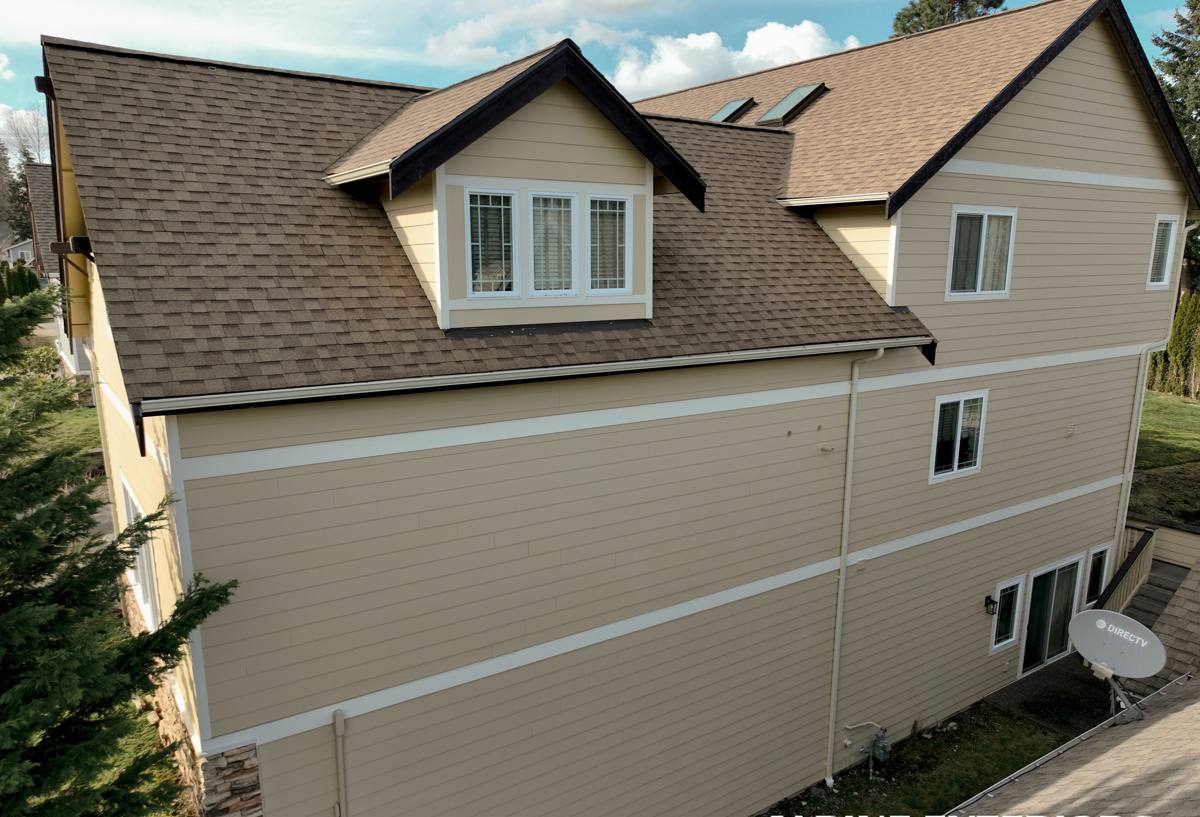
Why Sandy Point's Climate Changes the Job
Salt Air and Hardware Life
Homes within a mile or two of the water see accelerated corrosion on anything that isn't genuinely rated for a marine-adjacent environment — cheap fasteners, unprotected flashing tape edges, and low-grade window hardware all show wear faster here than they would on the same house built ten miles inland. On new construction we choose fastening and flashing materials with that exposure in mind rather than defaulting to whatever's standard for a general Whatcom County build.
Driving Rain and Wind Pressure
Sandy Point gets more direct wind off open water than most of Ferndale's inland neighborhoods. That matters for window installation because wind doesn't just bring rain against the glass — it pressurizes the wall cavity and pushes water sideways and upward at the sill and jambs, past a rough flashing job. A correct sill pan and properly lapped flashing sequence isn't optional trim-out detail here; it's the difference between a dry wall cavity and a slow leak that doesn't show up until the drywall's already stained.
Moss, Mildew, and the Long Wet Season
Whatcom County's wet season runs long, and Sandy Point's humidity stays elevated even between rain events because of the marine influence. That doesn't damage the window unit itself much, but it does mean any organic debris or standing moisture left in a poorly sloped sill or a gap in the flashing has more time each year to do damage before a dry stretch gives it a chance to fully dry out. We grade sills and seal terminations with that longer wet window in mind.
What a Correct New-Construction Window Install Involves
- Rough opening checked for square, level, and correct dimension before any window goes near it
- Sill pan flashing installed and sloped to drain outward, not just a flat strip of tape
- Housewrap or WRB integrated in the correct shingle-lap sequence — sides, then head, over the nailing fin, never taped on top of it in a way that traps water behind the fin
- Window set plumb, level, and square in the opening, then fastened per manufacturer spacing — not "close enough"
- Shims placed only where the manufacturer's structural points call for them, so the frame isn't distorted
- Head flashing lapped over the WRB above the window, with end dams where required
- Backer rod and exterior sealant at the trim-to-siding joint, sized and tooled correctly rather than just caulked over gaps
- Interior air sealing at the rough opening perimeter, separate from the exterior water management
Every one of those steps matters on any new build. On a Sandy Point lot, we don't skip or rush any of them because the consequence of a shortcut shows up faster and worse here than it would on a more sheltered site.
Choosing Window Products for This Location
We install vinyl and fiberglass new-construction windows from established manufacturers, matched to the budget and performance target of the build. Near the water, we lean toward frame materials and hardware finishes with better resistance to salt-air corrosion and steer clients away from options that look fine on day one but show pitting or seal failure early in a coastal environment — that's a maintenance-burden call we make based on how these products actually age here, not a claim about any brand being defective.
| Factor | What to Weigh |
|---|---|
| Frame material | Vinyl performs well and cost-effectively; fiberglass holds up marginally better under sustained UV and temperature swing, at a higher price |
| Glazing package | Double-pane low-E is standard for this climate; argon fill and warm-edge spacers add real performance for the added cost |
| Hardware finish | Corrosion-resistant hardware is worth the upcharge within a mile or two of the water |
| Flashing/fin design | A well-designed integral nailing fin with a proper sill pan detail matters more long-term than the brand name on the sticker |
| Warranty structure | Read what's actually covered — glass seal failure, hardware, and finish often have different terms |
Our Process for Sandy Point Builds
1. Plan Review and Product Selection
We look at the build plans, framing schedule, and exterior finish package together so window selection, siding, and trim details are coordinated before anything gets ordered. Ordering the wrong flange depth or wrong siding-to-window trim reveal is a common and avoidable delay on new builds.
2. Sequencing with the Framer and WRB Installer
Window installation has to happen in the right order relative to the water-resistive barrier and siding trades. We coordinate that sequence directly rather than showing up to whatever state the wall happens to be in, because the flashing lap order is the part that fails silently if it's done out of sequence.
3. Installation
Each opening gets the full sequence — sill pan, side flashing, window set and fastened, head flashing, air sealing. We check each unit for square and function before moving to the next.
4. Final Walkthrough
Before we call it done, every window gets operated, checked for square reveal lines, and inspected for a clean, sealed trim line. We'll walk the exterior with you if you want to see it firsthand.
Why a Crew That Already Works Sandy Point Matters
Flashing details that work fine on a sheltered lot in another part of Ferndale can under-perform on a site that takes direct weather off the water. We already know which orientations on Sandy Point lots take the worst of the driving rain, which slows down our sequencing decisions, and we've dealt with the salt-air corrosion issues that show up on hardware and fasteners that weren't chosen for this environment. That's not something a crew coming from a dry-climate background picks up on the first job — it's local pattern recognition built from doing this work in this specific stretch of Whatcom County.
We're also familiar with how Whatcom County's inspection process treats window flashing and WRB integration on new builds, which keeps the schedule moving instead of stalling on a callback for a detail that could've been right the first time.
Common Questions on New Builds
How many windows can be installed per day?
It depends on opening size, count, and how the framing and WRB sequencing lines up with our crew's schedule on site. A typical single-family home's window package usually installs over one to a few days once the openings are ready and flashing materials are on hand.
Do you coordinate with the general contractor or builder?
Yes — on new construction we work directly with the framer, WRB installer, and siding trade to keep the flashing sequence correct. That coordination is a bigger factor in a dry, leak-free result than the window product itself.
What happens if the rough openings aren't quite right?
We check every opening before setting a window and flag anything out of square or out of tolerance before it becomes a bigger problem. Catching that at rough opening stage is far cheaper than discovering it after siding's on.
Get an Estimate for Your Sandy Point Build
If you're framing a new home or addition on Sandy Point, or planning one, we're happy to walk the plans with you, talk through window selection for this specific site, and give you a straightforward, no-pressure estimate. Use the form below to get started.