 Ferndale Siding
 Siding Built for the Nooksack Area's Weather, Not Just Its Looks
Homes in the Nooksack area sit in one of the wettest, dampest corners of Whatcom County. You're close enough to the water for salt-laden air to work on exposed fasteners and trim, far enough inland to catch driving rain off the foothills, and shaded enough through the fall and winter that moss gets a long, uninterrupted growing season on anything that stays damp. Siding out here isn't just a cosmetic choice — it's the single biggest factor in whether your walls stay dry, your trim stays solid, and your paint job actually lasts as long as it's supposed to.
We install siding across Whatcom County, and the failures we get called out to fix in the Nooksack and greater Ferndale area follow a pattern: it's almost never the siding material itself that fails first. It's the water management behind it — the parts nobody sees until something goes wrong.
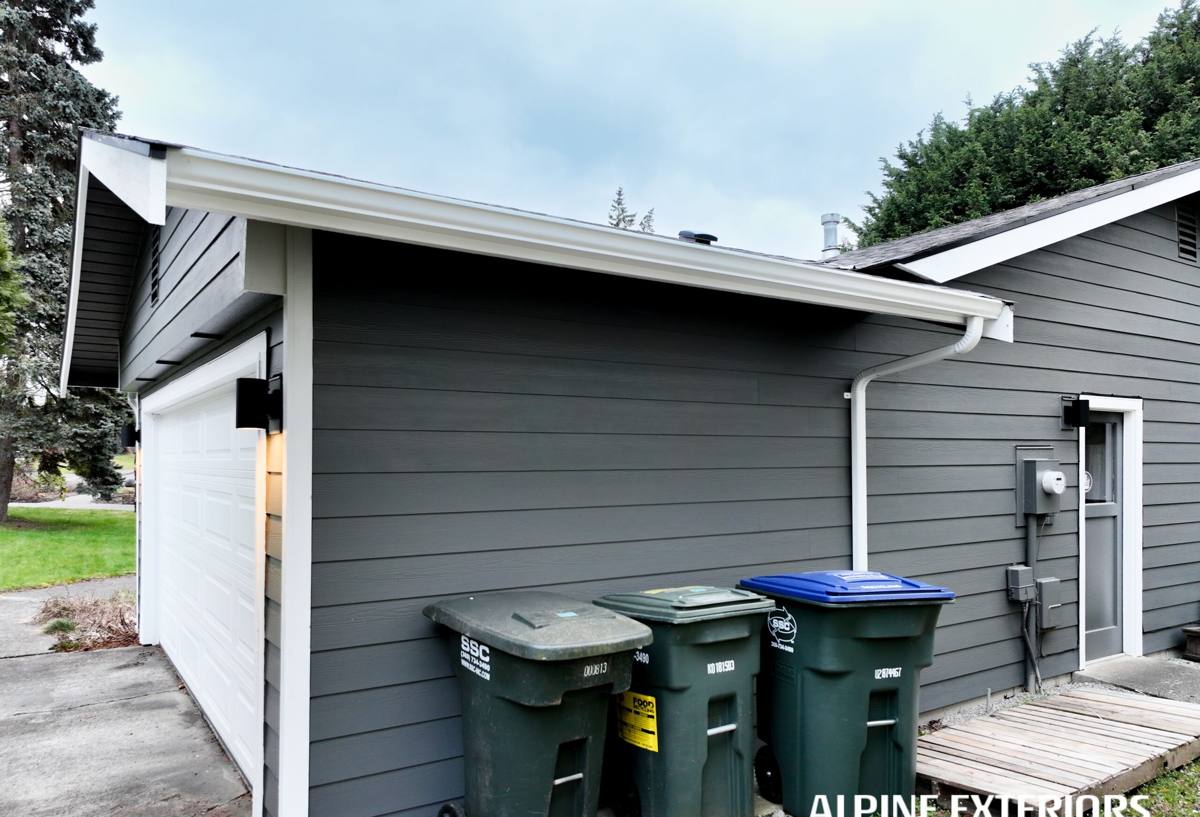
What This Climate Actually Does to a Wall
Salt Air and Corrosion
Even outside the immediate waterfront, prevailing marine air moves fasteners, flashing, and metal trim toward corrosion faster than it would in a dry inland climate. Uncoated or under-spec fasteners are one of the most common causes of early streaking and staining we see on older homes in this part of the county.
Driving Rain and Wind-Driven Moisture
Wind off open ground pushes rain sideways into siding laps, corner boards, and window trim. A siding system that's fine in a calm, dry climate can fail here simply because it wasn't detailed to shed water that's arriving at an angle instead of straight down.
Long Moss Season
Shorter days, persistent overcast, and shaded north and east walls mean moisture sits on siding surfaces for months at a stretch. Anything porous, anything with seams that trap organic debris, or anything that doesn't fully dry between rain events becomes a moss and mildew magnet — which then holds even more moisture against the wall.
What Correct Siding Installation Involves Here
A siding job that's "done right" for this specific climate has a few non-negotiables. Skipping any of them is how a 30-year siding product ends up needing repair in year eight.
- A continuous weather-resistive barrier behind the siding, lapped correctly top-down so water sheds outward at every seam
- Proper flashing at every window, door, and roof-to-wall intersection — not caulk used as a substitute for flashing
- Correct fastener type, length, and spacing driven into framing, not just sheathing, and matched to the siding manufacturer's exact specifications
- A minimum clearance gap between the bottom of the siding and grade, decks, patios, and roof lines so splash-back and standing water can't wick into the material
- Rainscreen or drainage gap detailing on exposures that see the most direct wind-driven rain
- Factory-finished or field-finished surfaces that are fully sealed on cut edges, since an exposed raw edge is where moisture gets in first
None of this is exotic. It's standard trade practice. But it takes longer and costs a little more labor than a fast, minimum-effort install — which is exactly why it gets skipped on the jobs that fail early.
Why We Install James Hardie Fiber Cement — and Nothing Else
We standardized on James Hardie fiber cement siding for every job we do, including in the Nooksack area, and we don't install vinyl, LP SmartSide, or other engineered wood or composite products. That's a deliberate call, not a sales default.
Fiber cement is non-combustible, doesn't swell or delaminate when it takes on moisture the way wood-based products can, and holds its shape and fastener grip in freeze-thaw and constant-damp conditions better than most alternatives. James Hardie's ColorPlus factory finish is baked on under controlled conditions, which gives it more consistent color retention and better resistance to the fading and chalking that field-applied paint eventually shows — a real advantage in a climate where a house rarely gets a long, dry stretch to properly cure field paint anyway. Hardie also engineers its HZ5 product line specifically for wetter, more humid climate zones like ours, and backs it with a transferable warranty that survives a sale of the home.
We're not going to tell you every other siding product is junk — vinyl is cheap and low-maintenance in the right climate, and engineered wood has real fans. But for the moisture load, salt air, and moss exposure this part of Whatcom County deals with year-round, fiber cement installed correctly is the product we're willing to put our name behind. That's the whole reason we don't carry a second option.
Our Installation Process
1. Site and Wall Assessment
Before we talk product, we look at your walls: current siding condition, sheathing and framing condition underneath where accessible, existing moisture damage, roof-to-wall transitions, and which elevations take the worst weather. This tells us where extra flashing detail or drainage planning matters most.
2. Tear-Off and Substrate Check
Old siding comes off cleanly so we can actually see the sheathing. Soft, delaminated, or water-damaged sheathing gets repaired before anything new goes up — installing new siding over a compromised substrate just hides a problem instead of fixing it.
3. Weather Barrier and Flashing
We install a continuous weather-resistive barrier and flash every penetration, window, door, and horizontal transition to shed water outward and downward, matching detailing to whichever elevations of your home take the most direct rain and wind.
4. Hardie Installation to Manufacturer Spec
Panels or planks go up with the fastener type, spacing, and clearances James Hardie specifies for this climate zone — not generic "good enough" spacing. Cut edges get sealed. Clearances at grade, roofs, and decks are held to spec, not shaved down to make a cleaner-looking line.
5. Trim, Caulking, and Finish Details
Corner boards, trim, and caulk joints are finished to shed water rather than trap it, and touch-up on any cut ColorPlus edges is matched to keep the factory finish's protection intact.
6. Final Walkthrough
We walk the finished job with you, elevation by elevation, before calling it done.
Signs an Older Nooksack-Area Home Needs Siding Attention
| What You're Seeing | Likely Cause | Why It Matters Here |
|---|---|---|
| Persistent moss or dark streaking on north/east walls | Moisture not fully drying between rain events | Long moss season keeps walls damp for months at a stretch |
| Rust-colored streaks below fasteners or trim | Corroding fasteners or trim hardware | Salt-influenced air accelerates corrosion on unprotected metal |
| Soft or bubbling spots near window and door trim | Failed flashing or caulk-only water management | Wind-driven rain finds any gap in flashing detail |
| Paint failing faster than expected | Substrate moisture working through from behind | A wet climate punishes any siding system that traps moisture |
| Visible gaps or warping at panel seams | Original installation didn't allow for expansion/contraction | Temperature swings plus constant moisture stress joints over time |
What Siding Installation Costs Depend On
We don't post fixed prices because every home is different, but the real cost drivers on a Nooksack-area project are consistent:
- Home size and elevation count — more wall area and more corners/transitions mean more material and more flashing detail
- Substrate condition — hidden sheathing damage found during tear-off adds repair work before new siding goes on
- Trim and architectural detail — dormers, bump-outs, and multiple roof-to-wall intersections take more labor than a simple rectangular wall
- Siding profile and finish — lap width, texture, and color selection within the Hardie lineup affect material cost
- Access — tight lot lines, fencing, or landscaping that limits staging and scaffolding access
Living With Hardie Siding in a Wet Climate
Fiber cement done right is genuinely low-maintenance, but "low-maintenance" isn't "zero-maintenance" anywhere near this much rain and shade. A rinse-down once or twice a year, especially on north and east walls, keeps moss from ever getting established. Keeping gutters clear and grading water away from the foundation matters as much as the siding itself — most of the moisture problems we find start with water that had nowhere else to go. Because ColorPlus finish is factory-applied, you're not on a repaint cycle the way you would be with a field-painted product, which is one less maintenance task to manage through a Whatcom County winter.
Why It Matters That We Already Work This Area
Siding detailing that's correct for a dry inland climate isn't automatically correct here. A crew that's used to installing in low-moisture conditions can do technically "fine" work that still isn't built for salt air, sideways rain, or months of shaded dampness. Working across Whatcom County regularly means we're not guessing at how a given elevation will perform once winter sets in — we've already seen how homes like yours in this area age, what fails first, and where the extra flashing and drainage detail actually earns its keep.
Questions Worth Asking Any Siding Contractor Before You Hire
- Will you install a continuous weather-resistive barrier and flash every window, door, and roof-to-wall intersection?
- What clearance will you hold between the siding and grade, decks, and roof lines?
- What fastener type and spacing will you use, and is it matched to the manufacturer's spec for this climate zone?
- Will you inspect and repair sheathing before installing new siding, not just over it?
- Is the warranty transferable if you sell the home, and does it cover both material and workmanship?
- Can you explain why you chose the specific siding product you're recommending for this property?
If your siding is showing moss, staining, soft spots, or you're just planning ahead for a home in the Nooksack area, we're happy to take a look and give you an honest, no-pressure assessment. Fill out the form below for a free estimate.