 Ferndale Siding
 Building Decks for the Nooksack Area's Real Conditions
Homes around Nooksack and the greater Ferndale area sit in a stretch of Whatcom County where the weather doesn't do decks any favors. You've got salt-tinged air rolling in off the Strait, long stretches of driving rain in the fall and winter, and a moss season that seems to start earlier every year and stick around longer. A deck built to a generic spec sheet, or one thrown together fast during a dry week in July, tends to show its age within a couple of seasons out here. Soft spots near the house, black staining on the boards, hardware that's rusted before its time, railings that have gone spongy at the post base — we see all of it on decks that were otherwise perfectly good designs.
A deck that's actually built for this area starts with different assumptions than a deck built for, say, eastern Washington. Every water path matters. Every fastener choice matters. And how the deck ties into the house matters more than almost anything else, because that's where most of the expensive failures start.
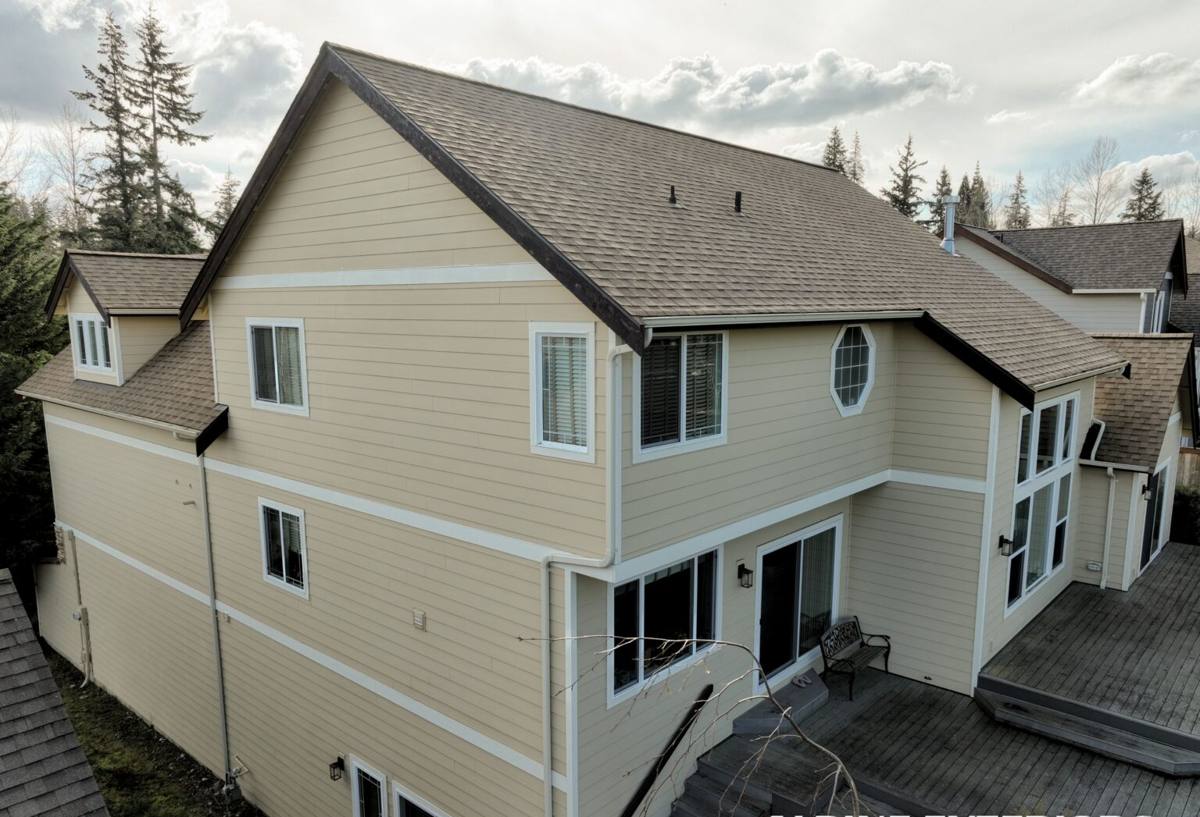
Where Nooksack-Area Decks Actually Fail
The ledger board connection
Most deck damage we find doesn't start in the open field of the deck — it starts where the deck attaches to the house. That ledger board connection is a manufactured water trap if it isn't flashed correctly. In a climate with this much sustained rainfall, water finds its way behind an unflashed or poorly flashed ledger and works into the rim joist and sheathing behind it, often for a year or more before anyone notices a soft spot or a stain on the siding above the deck.
Moss, algae, and trapped moisture
Board spacing and airflow underneath the deck matter more here than in drier climates. Tight-fitting boards with poor drainage below hold moisture right at the surface, which is exactly what moss and algae need to take hold. Once moss establishes on decking, it holds even more water against the wood and turns the surface slick and dangerous in wet weather — which, around here, is most of the year.
Fasteners and hardware
Salt-influenced air corrodes standard fasteners faster than people expect. Screws, joist hangers, and structural connectors that aren't rated for this environment can start rusting within a few years, which weakens connections in ways you often can't see until something moves or squeaks.
What a Correctly Built Deck Involves
A deck that's going to hold up around Nooksack needs the following handled correctly, not just checked off:
- Ledger board flashed with a proper drip cap and self-adhered membrane, never just caulked and bolted
- A code-compliant water/weather barrier between the ledger and the house sheathing
- Footings sized and set below frost depth and bearing on undisturbed or properly compacted soil
- Joist and beam spans sized for the actual decking material and expected loads, not just "close enough"
- Stainless or coated fasteners and connectors rated for ground contact and coastal/wet exposure
- Board spacing that allows real drainage and airflow underneath
- Guardrails and stair railings built to current height and baluster-spacing requirements
- Ventilation and grading underneath the deck so water doesn't pool against posts or footings
Skip any one of these and you're not saving money — you're moving the cost down the road, usually into a repair that's more disruptive and more expensive than doing it right the first time.
Material Choices for This Climate
There's no single "best" decking material — it depends on how much maintenance you want to take on and how the deck sits relative to sun, shade, and rain exposure. Here's how the common options actually behave in a wet, moss-prone climate like ours:
| Material | How it handles our climate | Maintenance |
|---|---|---|
| Pressure-treated lumber | Solid structural choice; framing lumber almost always should be PT regardless of decking choice | Needs periodic sealing/staining to control checking and moisture uptake |
| Cedar | Naturally rot- and insect-resistant, ages to a silver-gray if left unfinished; still needs cleaning to keep moss off | Moderate — occasional cleaning and optional refinishing |
| Composite decking | Doesn't absorb water like wood, resists rot, but still needs cleaning — moss and mildew will grow on the surface film if neglected | Low — periodic washing, no staining/sealing |
| PVC decking | Fully synthetic, very low water absorption, holds up well to sustained wet weather | Lowest — occasional washing |
We'll walk you through the honest trade-offs for your specific deck — sun exposure, tree cover, and how the deck is oriented relative to prevailing rain all change which material makes the most sense.
Our Process for a Nooksack Deck Project
1. On-site assessment
We look at the whole picture — how the deck (new or existing) ties into the house, drainage and grade underneath, sun and shade exposure, and what's driving the project, whether that's a full replacement, an addition, or fixing a deck that's failing.
2. Design and material selection
We talk through layout, railing style, decking material, and stairs, with straight answers about what each choice costs to buy versus what it costs to maintain over the next ten years in this climate.
3. Permitting
Deck permit requirements depend on the height, size, and how the structure attaches to your home. We handle the permitting conversation with the local jurisdiction so nothing gets built that has to be torn out or reworked later.
4. Building it right
Ledger flashing, footings, framing, fasteners, decking, and railings all get built to the standard described above — not the fastest version, the correct version.
5. Walkthrough
Before we call it finished, we walk the deck with you — railings, stairs, drainage, and finish work — so you know exactly what you have and how to take care of it.
Repairing and Rebuilding Older Decks
A lot of our deck calls around the Nooksack area aren't new builds — they're older decks that were fine for years and are now showing real problems: soft or spongy boards, a ledger connection that's clearly been leaking, railings that flex, or footings that were never adequate to begin with. Our approach on these is straightforward: we assess what's structural versus cosmetic, and we're honest about when a repair makes sense versus when the deck has enough underlying issues that a rebuild is the better long-term value. Patching decking over a compromised ledger connection or undersized framing just hides the problem for another season or two.
Signs your existing deck needs a closer look
- Staining or dark streaks on the siding directly above where the deck ledger attaches
- Boards that feel soft, spongy, or give slightly when you walk on them
- Railings or posts that move or flex when leaned on
- Persistent moss or algae that comes back within weeks of cleaning
- Visible rust streaking from fasteners or hardware
- Gaps opening up around the ledger board or house connection
Cost Factors to Understand
Deck pricing swings widely based on size, material, height off grade, and how much structural work is needed. Rather than quoting a number that won't mean much without seeing your project, here's what actually moves the cost:
| Factor | Why it matters |
|---|---|
| Decking material | Composite and PVC cost more upfront than wood but reduce ongoing maintenance |
| Height and footing depth | Taller decks and deeper frost-depth footings mean more structural work and often stairs/railings |
| Ledger and house tie-in complexity | Additional flashing and water management work when siding or existing framing needs attention |
| Railing style | Cable, glass, and custom rail systems cost more than standard wood or composite balusters |
| Site access | Sloped lots, limited equipment access, or tree removal can add labor and time |
We give straight, itemized estimates so you can see exactly where your money is going and where you have room to adjust the scope if needed.
Why a Crew That Already Works This Area Matters
Nooksack and the surrounding Ferndale area have their own conditions — the combination of coastal moisture, sustained rain, and moss pressure isn't the same as what a crew coming from a drier part of the state is used to planning around. A contractor who regularly builds and repairs decks in Whatcom County already knows which details can't be shortcut here: the ledger flashing, the fastener grade, the drainage under the deck. That's not a marketing point, it's the difference between a deck that's still solid in ten years and one that needs real repair work in three or four.
We're not asking you to take our word for it sight unseen. We'll come look at your property, tell you honestly what your deck needs, and give you a clear, no-pressure estimate — free, with no obligation. Fill out the form below and we'll get in touch to schedule a time that works for you.