 Ferndale Siding
 Serving Lynden From a Ferndale-Based Crew
Lynden sits inland from Ferndale but shares the same Whatcom County weather pattern that wears down siding year after year: long wet stretches, salt-tinged air drifting in off the coast, and shaded, moisture-holding stretches where moss gets a foothold and never really leaves. When we send a crew to a Lynden project, they're not driving in blind from out of the area — they're the same installers who work Ferndale roofs and walls week in and week out, applying the same standards to every job regardless of which side of the county line it falls on.
This page is about one thing specifically: installing James Hardie fiber cement siding on homes in and around Lynden. Not a general overview of siding options, not a sales pitch for every material on the market — just what this climate does to a home's exterior, what a correct Hardie installation actually requires, and why we've built our whole business around installing only this product.
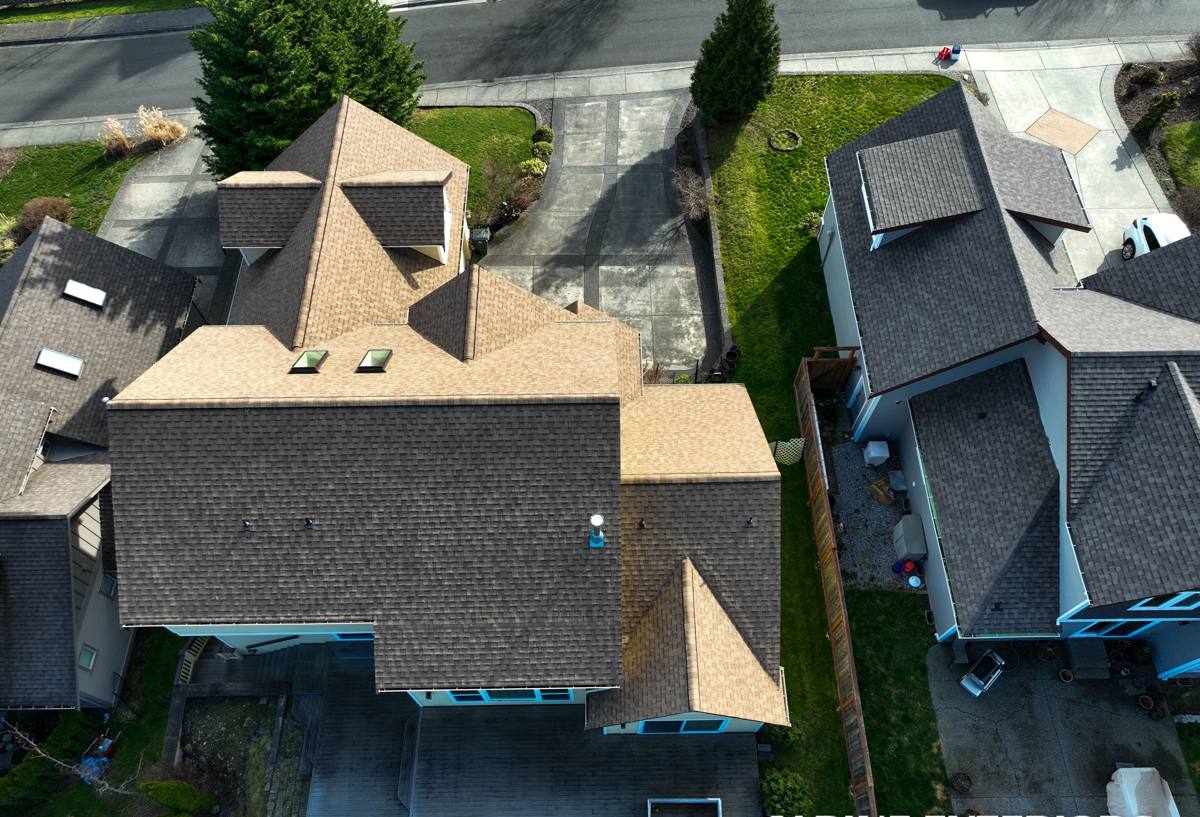
What Whatcom County Weather Does to Siding Over Time
Every siding material eventually meets its limit somewhere in this climate, and the failure points are predictable once you've seen enough of them.
Salt Air and Slow Corrosion
Even away from the immediate waterfront, airborne salt moves inland with weather systems off the Strait of Georgia and Bellingham Bay. Over years, it accelerates corrosion on exposed fasteners, trim edges, and any metal flashing that isn't properly protected. Siding materials that rely on paint film alone for protection start chalking and losing adhesion faster in this environment than they would in a drier inland climate.
Driving Rain and Wind-Driven Moisture
Whatcom County storms don't just drop rain straight down — wind pushes it sideways into wall assemblies, seams, and butt joints. Any siding system with weak lap coverage, undersized overlaps, or poor flashing details will eventually let water behind the cladding. Once moisture gets trapped against sheathing, the clock starts on rot, mold, and structural damage that's expensive to find and worse to ignore.
A Moss Season That Runs Most of the Year
Shaded north walls, tree-lined lots, and the sheer number of damp months mean moss and algae aren't a seasonal nuisance here — they're close to a year-round condition. Porous or textured siding surfaces give moss spores something to grip. Surfaces that hold moisture longer after a storm give it time to establish. The material and the finish both matter more here than they would in a drier climate.
Why We Only Install James Hardie Fiber Cement
We don't install LP SmartSide, vinyl, Cemplank, Allura, primed spruce, or cedar. That's not a marketing angle — it's a standard we hold because of what we've seen these materials do (or fail to do) in exactly the conditions Lynden and Ferndale homes deal with every winter.
- Vinyl expands and contracts with temperature swings, can crack in cold snaps, and offers no real fire resistance — it also tends to look and feel visibly like plastic up close, which matters on higher-end homes.
- Engineered wood products (like LP SmartSide) use wood strand cores that are more moisture-tolerant than raw wood but still wood-based — edge damage or a coating breach can let water in, and once that happens, swelling and delamination follow.
- Primed spruce and cedar are real wood, full stop. Wood swells, checks, and rots when it takes on repeated moisture, and in a climate this wet, "repeated moisture" is just called Tuesday.
- Cemplank and Allura are also fiber cement, and fiber cement as a category is the right call for this climate — but we standardized on James Hardie specifically for its factory-cured ColorPlus finish, its climate-engineered HZ product line built for wet Pacific Northwest conditions, and a warranty structure we can stand behind without caveats.
Fiber cement itself is the honest answer to salt air, driving rain, and moss: it's non-combustible, it doesn't swell and rot like wood, and it holds paint and factory finish far longer than vinyl ever will. Within fiber cement, James Hardie is where we put our name.
James Hardie Product Lines That Fit This Area
Not every Hardie product is right for every home, and part of our job is matching the line to the house — not just the budget.
| Product | Best Fit | Notes for This Climate |
|---|---|---|
| HardiePlank lap siding | Most single-family homes | Available in smooth or cedar-textured finish; the workhorse choice for full re-sides |
| HardiePanel vertical siding | Gable accents, modern facades, shop/garage walls | Clean lines, often paired with lap siding for a mixed-material look |
| HardieTrim boards | Corners, window/door casing, fascia | Matched fiber cement trim avoids the mismatched-material rot points wood trim creates |
| HardieShingle siding | Accent gables, Craftsman-style detailing | Gives a shingle look without the moisture vulnerability of real cedar shingles |
All of these come with the ColorPlus factory finish option — a baked-on, UV-cured coating that holds color and resists fading, chipping, and cracking far better than job-site paint, which matters when the surface is going to spend most of the year damp.
What a Correct Installation Actually Involves
James Hardie siding is a strong product, but it's not installer-proof. A rushed or careless install can undercut the material's climate advantages, and in a wet climate the mistakes show up faster.
Flashing and Water Management
Every window, door, and penetration needs proper flashing integrated with a weather-resistant barrier behind the siding — not caulk used as a substitute for flashing. This is the single most common corner cut on rushed jobs, and it's the one most likely to cause hidden damage.
Clearances and Gaps
Hardie's own installation instructions specify minimum clearances from grade, roof lines, decks, and other siding — typically around a couple of inches minimum from roofing and hard surfaces. Skipping these clearances traps moisture right where the siding meets another surface, which is exactly where moss and rot start.
Fastening
Correct nail placement, spacing, and fastener type (matched to the substrate and climate) keep panels secure without over-driving fasteners, which can crack the material or compromise its water resistance at the fastener head.
Joint Treatment
Butt joints and seams need to be treated correctly — sealed or flashed per manufacturer spec — rather than just butted together and caulked over, which fails first when driving rain hits it sideways.
Our Process, Start to Finish
- Walkthrough and assessment — we look at existing siding condition, moisture damage, trim, and any rot that needs addressing before new siding goes up.
- Product and color selection — matching the right Hardie line and ColorPlus finish to the home's style and exposure.
- Written estimate — clear scope, materials, and timeline before anything is scheduled.
- Prep and tear-off — removing old siding, repairing any damaged sheathing, and installing a proper weather-resistant barrier.
- Installation — siding, trim, and flashing installed to manufacturer spec, not shortcuts.
- Final walkthrough and cleanup — job site cleared, details reviewed with the homeowner.
What Drives the Cost
| Factor | Why It Matters |
|---|---|
| Home size and wall complexity | More corners, gables, and dormers mean more cutting, trim, and labor time |
| Existing damage | Rotted sheathing or framing found during tear-off adds repair scope before new siding goes on |
| Product line mix | Combining lap, panel, shingle, and trim styles costs more than a single uniform siding type |
| Finish choice | Factory ColorPlus finish costs more upfront than primed product but avoids repainting for years |
| Access and site conditions | Tight lots, landscaping, or multi-story walls affect staging and labor time |
We don't quote firm numbers without seeing the home — anyone who does before a walkthrough is guessing. A real estimate accounts for the actual condition of the walls underneath, which you can't know from a drive-by.
Keeping Hardie Siding Looking Right in This Climate
Fiber cement is low-maintenance compared to wood or vinyl, but "low-maintenance" isn't "no-maintenance" in a climate this wet. A few habits go a long way:
- Rinse siding annually, focusing on shaded north- and west-facing walls where moss and algae take hold first
- Keep gutters clear so overflow doesn't run down the wall and hold moisture against a section of siding
- Trim back shrubs and trees that keep a wall shaded and damp longer than the rest of the house
- Check caulking at trim and window joints every year or two and touch up before gaps open
- Address any impact damage (cracked or chipped panels) promptly rather than letting moisture find its way in
Why It Matters That This Crew Already Works Lynden and Ferndale
Siding crews that treat every job as a first encounter with the local climate tend to make the same avoidable mistakes: underestimating clearance needs, using flashing details suited to drier regions, or not accounting for how long moss season actually runs here. A crew that's already installed Hardie siding across Whatcom County walks into a Lynden job already calibrated to salt air, wind-driven rain, and the region's shaded, moisture-prone wall conditions — not learning it on your house.
If you're weighing a full re-side or replacing damaged sections on a Lynden-area home, we're happy to walk the property, look at what's actually going on with your current siding, and give you a straight, no-pressure estimate for doing it right with James Hardie. There's no cost and no obligation to get that conversation started — just fill out the form below.