 Ferndale Siding
 Why Lummi Nation's Waterfront Setting Is Hard on Siding
Homes around Lummi Nation sit close to Bellingham Bay and the open water of the Salish Sea, which means the exterior of a house here is doing more work than a house twenty miles inland. Salt-laden air moves through year-round, wind-driven rain comes in sideways off the water during fall and winter storms, and the shaded, damp stretches of the peninsula stay wet long after a storm has passed. Add in the tree cover found on many lots and you get long stretches of shade that never quite dry out, which is exactly what moss and algae need to take hold.
None of this is unique to any one street or subdivision — it's the general character of the shoreline and low-lying areas around Whatcom County's coast. But it does mean that siding decisions that work fine in a drier, more sheltered part of the county don't always hold up the same way out here. Fiber cement done correctly is one of the few claddings that shrugs off all three stressors — salt, wind-driven moisture, and sustained dampness — without needing constant babysitting.
What "Driving Rain" Actually Does to a Wall
Driving rain isn't just water falling on a wall — it's water being pushed sideways and upward under pressure, forcing its way into laps, seams, and fastener penetrations that would stay dry in a calm rain. On exposed lots near the water, this happens often enough that any siding system without a real drainage plane behind it is eventually going to let moisture into the wall assembly, whether the siding itself is waterproof or not.
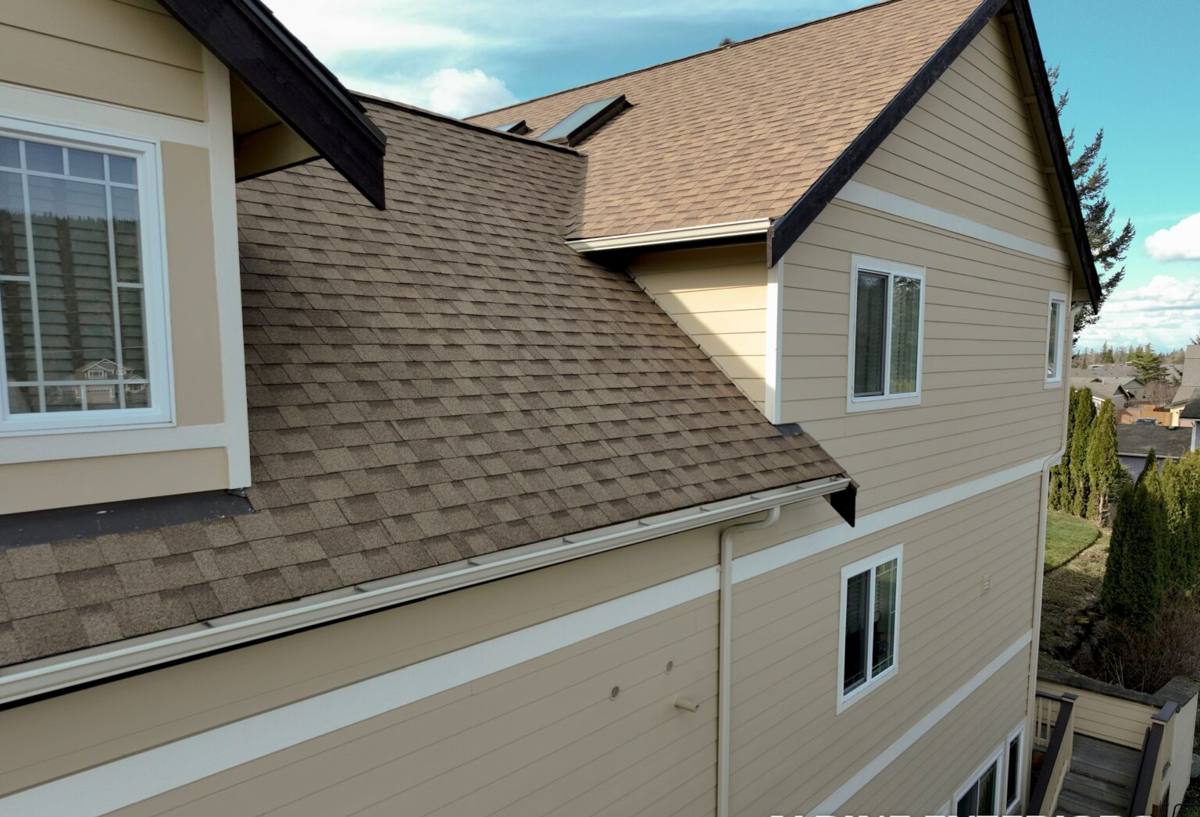
How Salt Air and Moss Season Affect Common Siding Materials
It's worth being honest about how different products actually behave in this environment, because the differences are real and they compound over years, not months.
- Vinyl siding can become brittle and prone to cracking in cold snaps, and salt-laden wind can dull and pit its surface faster than in drier climates. It also expands and contracts more than fiber cement, which opens gaps for moisture and wind to work into.
- Wood and cedar siding looks great new, but constant dampness plus moss growth means more frequent refinishing, caulking, and spot repairs than most owners want to keep up with, especially on shaded elevations.
- Engineered wood products (like LP SmartSide) perform reasonably in drier regions, but resin-saturated wood strand substrates are more sensitive to sustained moisture exposure than fiber cement — and sustained moisture is exactly what this area delivers for months at a stretch.
- Fiber cement is inorganic — it's cement, sand, and cellulose fiber — so it doesn't rot, it doesn't feed mold the way wood-based products can, and it holds up to salt exposure without the surface breakdown you see on some vinyl over time.
That's the short version of why this company standardized on one fiber cement manufacturer rather than installing whatever a homeowner already has in mind. We'll get into the "why James Hardie specifically" question below.
Why We Only Install James Hardie Fiber Cement
We don't install LP SmartSide, vinyl, Cemplank, Allura, or unfinished cedar or spruce siding — not because those products can't be installed well by someone, but because we've made a professional decision to specialize in one system and install it correctly every time, rather than spread our crews thin across several products with different installation rules, different warranty terms, and different long-term track records.
James Hardie fiber cement is non-combustible, holds a factory-applied ColorPlus finish that resists fading and chipping far better than field-applied paint, and comes in HZ5 formulations specifically engineered for wetter, cooler climate zones like ours. The company backs it with a long transferable limited warranty on both the substrate and the finish when it's installed to their specifications — which matters here, because installation quality is the single biggest factor in how well any fiber cement product performs near the water.
What ColorPlus Actually Buys You Here
In a salt-air, high-moisture environment, field-applied paint jobs tend to fail faster at laps, cut edges, and fastener heads — exactly the spots where water sits longest. A factory finish cured under controlled conditions holds its bond and color far longer in this kind of exposure, which means fewer repaint cycles over the life of the siding.
Choosing the Right Hardie System for This Exposure
Not every Hardie product is the right fit for every wall on a waterfront or near-water lot. Part of our job is matching the product line, exposure, and profile to how much weather a given elevation actually takes.
| Product | Best Use Near Lummi Nation | Why |
|---|---|---|
| HardiePlank lap siding (HZ5) | Most walls, standard exposure | Engineered for cold, wet climates; traditional lap profile sheds water well |
| HardiePanel vertical siding | Accent walls, gable ends, modern facades | Fewer horizontal laps means fewer water-catching seams on high-exposure faces |
| HardieTrim boards | Corners, window and door trim, fascia | Matches the siding's moisture resistance so trim doesn't become the weak point |
| HardieSoffit panels | Under eaves near the shoreline | Resists the humidity and salt exposure that break down wood soffit over time |
On the most exposed, wind-facing walls of a waterfront lot, we'll sometimes recommend tighter fastener schedules or extra flashing detail even though the product itself doesn't change — the exposure calls for more attention to the installation, not a different material.
What a Correct Fiber Cement Installation Involves
Fiber cement siding is only as good as the wall assembly behind it. In an area that sees this much wind-driven rain, the details most homeowners never see are the ones that determine whether the siding lasts twenty years or needs repair work in five.
The Non-Negotiables
- A drainage plane and weather-resistant barrier installed and lapped correctly, shingle-style, so water is directed out and down rather than trapped behind the siding.
- A rainscreen gap (furring strips or a purpose-built drainage mat) that lets bulk water drain and lets the wall cavity dry, rather than sealing moisture in against the sheathing.
- Correct fastener type, spacing, and depth per Hardie's published installation instructions — over-driven or under-driven nails are one of the most common causes of premature siding failure.
- Proper flashing at every window, door, and roofline intersection, with head flashing that actually directs water away from the opening rather than just covering it.
- Minimum clearance between the bottom of the siding and grade, decks, patios, and roof lines, so splashback and ponding water don't sit against the plank.
- All factory-cut edges caulked or sealed per spec, since a raw cut edge is more absorbent than the factory-finished face.
Skip any one of these and you can still end up with moisture problems behind fiber cement siding — the material itself isn't the whole story, the assembly is.
Our Process, Start to Finish
1. On-Site Assessment
We walk the exterior, check the condition of the existing siding and sheathing where it's exposed, look at drainage around the foundation, and note which elevations take the worst weather. This tells us where we need extra flashing or drainage detail versus a standard installation.
2. Scope and Estimate
You get a written scope covering product lines, trim details, color, and a real price range — not a vague verbal number. We'll flag anything we find that needs addressing before siding goes on, like soft sheathing or missing flashing, so there are no surprises mid-project.
3. Tear-Off and Prep
Old siding comes off, sheathing is inspected and repaired as needed, and the weather-resistant barrier and rainscreen are installed correctly before a single piece of Hardie board goes up.
4. Installation
Siding, trim, and soffit go on to Hardie's fastening and clearance specifications, with flashing detailed at every penetration and transition.
5. Final Walkthrough
We walk the finished job with you, check caulking and paint touch-up at cut ends, and make sure everything matches the scope you signed off on.
What Drives Cost on a Job Like This
Every home is different, but a few factors consistently move the price up or down on projects in this area:
| Factor | Effect on Cost |
|---|---|
| Amount of tear-off and disposal of old siding | More layers or heavier old material (like stucco over sheathing) adds labor |
| Sheathing or framing repair needed | Moisture damage found underneath old siding adds material and labor |
| Number of window, door, and roof intersections | Each one needs individual flashing and trim work |
| Wall height and access | Two-story and steep-lot homes need more scaffolding and staging time |
| Product mix (plank vs. panel vs. trim vs. soffit) | Custom trim and vertical accent work adds detail time over a straightforward lap job |
| Color and finish choice | Factory ColorPlus finish pricing varies by color line versus primed-for-paint board |
We'll walk through which of these apply to your home during the estimate, so the number you get reflects your actual house, not a generic square-footage rate.
Maintaining Fiber Cement Siding in This Climate
Fiber cement is low-maintenance, not no-maintenance. A little seasonal attention goes a long way toward getting the full lifespan out of it in a salt-air, high-moisture area.
- Rinse the siding down once or twice a year, especially shaded north- and west-facing walls where moss and algae tend to establish first.
- Keep gutters clear so overflow doesn't run down the face of the siding repeatedly in the same spot.
- Trim back shrubs and trees that keep a wall section shaded and damp longer than the rest of the house.
- Check caulking at trim joints and penetrations every year or two and re-caulk if it's cracked or pulling away.
- Touch up any chips or scrapes at the finish promptly so the substrate underneath isn't exposed to standing moisture.
Why It Matters to Hire a Crew That Already Works This Area
Lummi Nation's exposure to salt air and driving rain isn't something you can fully account for by reading a manufacturer's install manual generically — it takes knowing which elevations on a given lot actually take the worst of the weather, where moss tends to establish first, and how much extra flashing detail is worth the added time on a given wall. A crew that's already worked this stretch of Whatcom County's coastline has seen how these details play out over years, not just on install day.
We're a Ferndale-based crew that installs James Hardie fiber cement exclusively, and we bring the same install standards to every wall we touch near the water: proper drainage plane, correct fastening, real flashing detail, and a factory finish built for this climate zone. If you're planning a siding project in Lummi Nation, we're happy to walk the house with you, point out anything the current siding is telling us, and put together a straightforward, no-pressure estimate using the form below.