 Ferndale Siding
 Siding Replacement Built for Everson's Weather, Not Just Its Curb Appeal
Everson sits in the wetter, greener stretch of Whatcom County, and homes here take a different kind of beating than houses in drier climates. It isn't one big storm that wrecks siding out this way — it's the accumulation of hundreds of gray, damp days a year, long stretches where surfaces never fully dry out, and a moss and mildew season that can run from fall through spring. Add in driving rain that comes sideways during winter fronts and the salt-tinged air that moves inland off the Sound on a west wind, and you've got a climate that is genuinely hard on exterior materials, even when a home looks fine from the curb.
Siding replacement in this area isn't just a cosmetic upgrade. Done right, it's a moisture-management project first and an appearance project second. We approach every Everson job that way, and it shapes everything from the product we install to how we detail the flashing.
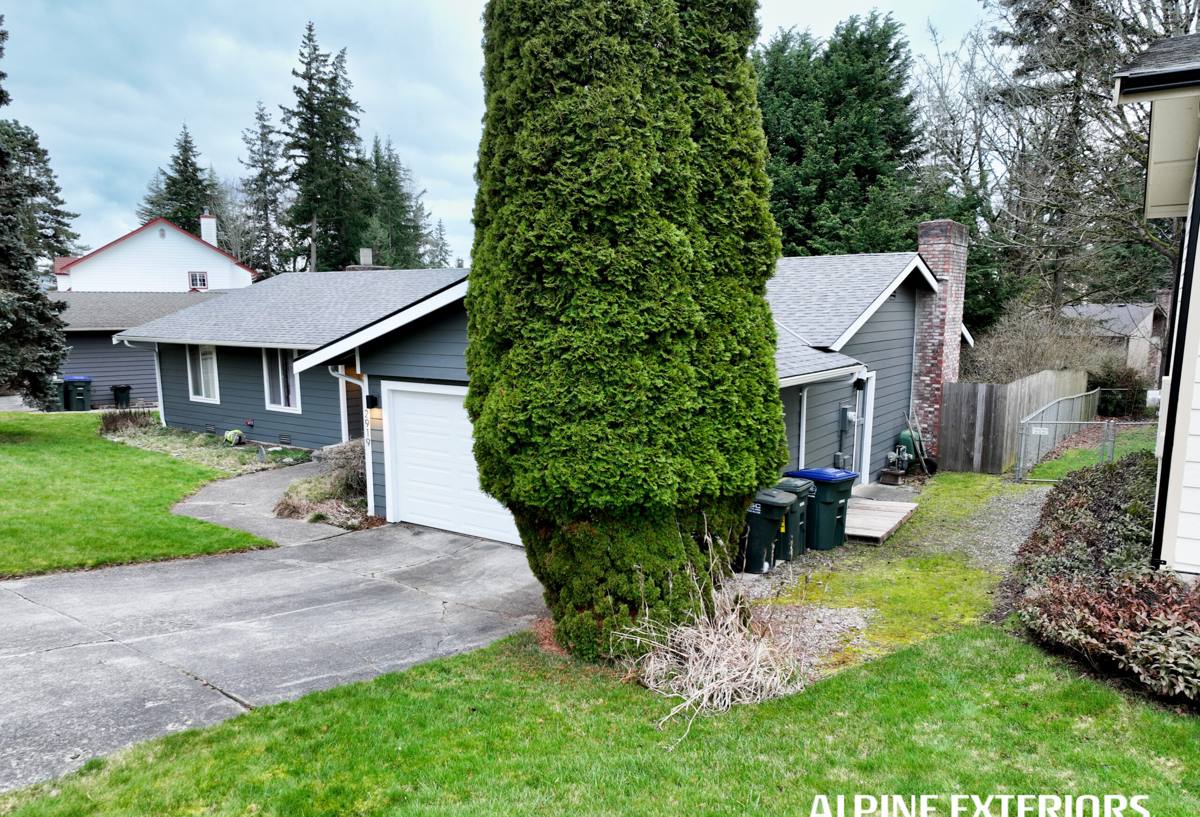
What Everson Homes Are Actually Up Against
A few climate realities drive most of the siding failures we get called out to inspect in this part of Whatcom County:
- Persistent moisture: Long rainy stretches mean siding rarely gets a full dry-out cycle for months at a time, which is exactly the condition that lets rot, mold, and moss take hold.
- Driving, wind-blown rain: Rain that hits siding at an angle finds every gap in caulking, every failed seam, and every place where flashing was skipped or done wrong.
- Moss and mildew growth: Shaded elevations, north-facing walls, and areas near trees or fence lines stay damp longer and grow moss and algae readily on porous or poorly finished surfaces.
- Humidity swings: Damp winters followed by warmer, more humid summer stretches put repeated expansion-and-contraction stress on siding and its fasteners.
- Salt-influenced air: Even away from the immediate shoreline, moisture carrying trace salt content can accelerate corrosion on fasteners, flashing, and hardware that isn't rated for it.
None of this means Everson is an unusually harsh place to own a home — it just means the margin for error on siding material and installation is smaller than it is in a drier climate. Materials and details that would be "fine" somewhere else show their weaknesses here faster.
Signs an Everson Home Needs Siding Replacement Now
Some damage is obvious. A lot of it isn't, especially on siding that still looks acceptable from the street. Before we recommend a full replacement, we look for these warning signs:
- Soft or spongy spots when you press on the siding, especially near the bottom courses or under windows
- Visible cupping, warping, or buckling panels
- Paint that keeps failing within a couple of years no matter how often it's redone
- Persistent moss or dark streaking that comes back shortly after cleaning
- Cracked or missing caulk at seams, corners, and trim joints
- Rust streaks around fasteners or flashing
- Rot or discoloration visible at the bottom edge of siding panels, especially near grade or downspouts
- A noticeable increase in indoor drafts or higher heating bills without another explanation
If you're seeing two or more of these, it's usually a sign the underlying weather barrier — not just the visible siding — has been compromised. That's a job for full replacement, not spot repair.
Why We Only Install James Hardie Fiber Cement Here
We get asked fairly often why we don't offer vinyl, LP SmartSide, or one of the other fiber cement brands on the market. The honest answer is that we've made a standard, and we stick to it because of exactly the conditions described above.
James Hardie fiber cement is engineered specifically to hold up in wet, humid, moisture-heavy climates like ours:
- Non-combustible core: Hardie siding is fiber cement, not an engineered wood product, so it doesn't carry the same moisture-swelling or rot risk that wood-based sidings do at cut edges and exposed seams.
- Climate-engineered HZ product lines: Hardie makes region-specific formulations, and the HZ5 line is engineered for the wetter, more humid climate zones the Pacific Northwest falls into — it's built assuming exactly the kind of prolonged damp exposure Whatcom County delivers.
- ColorPlus factory finish: A baked-on finish applied under controlled factory conditions holds color and resists fading, chalking, and peel far better than field-applied paint, which matters when a home doesn't get many fully dry days to cure fresh paint properly.
- Strong transferable warranty: Hardie's warranty coverage and manufacturer track record give homeowners real backing, which matters more, not less, in a climate that stresses materials constantly.
Vinyl siding is cheaper up front, but it flexes, can crack in cold snaps, and doesn't hold up structurally the way fiber cement does over decades. LP SmartSide and other engineered-wood products perform reasonably in moderate climates, but they're wood-based at the core, and wood-based siding is more sensitive to exactly the sustained moisture exposure that defines an Everson winter. We're not saying those products don't have a place — we're saying we've chosen not to install them on homes in this climate, because we don't want to be back in five years explaining a moisture problem we could have prevented at the material-selection stage.
What a Correct Siding Replacement Actually Involves
Siding replacement is more than swapping old panels for new ones. The parts nobody sees are usually what determines whether the job lasts 30 years or fails in five.
Tear-off and inspection
We remove the old siding down to the sheathing and inspect for rot, soft spots, and existing moisture damage. Any compromised sheathing gets replaced before anything new goes up — covering damaged sheathing with new siding just hides a problem that will keep spreading.
Weather-resistant barrier
A correctly lapped and sealed weather-resistant barrier (WRB) goes on before siding starts. This is the layer that actually stops bulk water from reaching your sheathing and framing if any moisture gets past the siding itself — it matters as much as the siding does in a climate with this much driving rain.
Flashing at every penetration
Windows, doors, hose bibs, vents, and any other penetration through the wall plane need proper flashing and integration with the WRB. This is where a huge share of real-world leaks originate, and it's the detail that separates a durable install from one that looks fine for a couple of years and then doesn't.
Correct fastening and clearances
Hardie siding has manufacturer-specified fastening patterns, gaps, and ground clearances. Skipping these specs to save time is one of the most common ways installers void the manufacturer warranty without the homeowner ever knowing until there's a problem.
Finish detailing
Corners, trim, and caulking joints get sealed with products compatible with fiber cement and rated for our climate, not whatever caulk happens to be on the truck.
Correct Install vs. Shortcut Install
| Detail | Correct Approach | Common Shortcut |
|---|---|---|
| Sheathing condition | Inspected and repaired before new siding goes on | Covered over without inspection |
| Weather barrier | Continuous, properly lapped WRB installed to spec | Reused old barrier or gaps left at seams |
| Window/door flashing | Integrated flashing tied into the WRB | Caulk used in place of proper flashing |
| Fastening | Manufacturer-specified pattern and clearance | Fasteners driven wherever is fastest |
| Ground clearance | Minimum clearance maintained per spec | Siding installed too close to grade or hardscape |
Every item in the "shortcut" column is invisible once the job is finished — until it isn't.
Our Process, From Estimate to Finished Job
- On-site inspection: We walk the exterior, check for existing moisture damage, and look at trouble areas like north-facing walls and low-clearance sections.
- Honest scope and estimate: You get a clear breakdown of what needs replacing, what (if anything) can be left alone, and a straightforward cost estimate — no pressure, no inflated urgency.
- Scheduling around weather: We plan installation windows with Whatcom County's rain patterns in mind so sheathing and WRB aren't left exposed longer than necessary.
- Tear-off and sheathing repair: Old material comes off, damaged sheathing gets replaced, and the wall is prepped correctly.
- WRB and flashing installation: The weather barrier and flashing details go in before a single piece of new siding is hung.
- Hardie installation to manufacturer spec: Fastening, clearances, and joint treatment follow James Hardie's published installation requirements.
- Final walkthrough: We go over the finished job with you and address anything before we consider it done.
What Drives Siding Replacement Cost in Everson
| Factor | Why It Matters |
|---|---|
| Home size and wall complexity | More corners, gables, and dormers mean more cutting, flashing, and labor time |
| Existing sheathing condition | Rot discovered during tear-off adds repair scope before new siding can go on |
| Siding profile and trim choice | Lap width, trim detailing, and accent choices affect material and labor cost |
| Access and site conditions | Tight lots, slopes, or landscaping close to the house can add setup time |
| Number of penetrations | Windows, vents, and fixtures each require correct flashing, which adds labor |
We don't quote a number without seeing the house — anyone who does is guessing, and guesses on siding jobs tend to be wrong in the homeowner's favor only on paper.
Why It Matters to Hire a Crew That Already Works in Whatcom County
A crew that installs siding across Whatcom County day in and day out already knows how this region's weather behaves against a wall — where moss builds up fastest, which elevations take the worst of the driving rain, and how much clearance actually holds up here versus what's written as a bare minimum on a spec sheet. That local pattern recognition shows up in the small decisions made on-site, not just in the finished look of the job. It's the difference between a crew executing a checklist and a crew that's already seen how a shortcut in this climate turns into a callback two winters later.
Caring for New Siding After Installation
Fiber cement is low-maintenance, not no-maintenance. A few habits keep it performing the way it's designed to for decades:
- Rinse siding periodically to keep moss, pollen, and grime from building up, especially on shaded or north-facing walls
- Keep gutters clear so water isn't overflowing directly onto siding runs
- Keep plantings and mulch beds pulled back from the bottom edge of the siding
- Re-caulk trim joints if you notice cracking or gaps developing over time
- Address any impact damage promptly rather than letting it sit exposed
If you're seeing warning signs on your current siding, or you're just planning ahead for a home in Everson, we're happy to take a look and give you a straightforward, no-pressure assessment. Use the form below to request a free estimate.