 Ferndale Siding
 Siding Repair Built for Lummi Island's Marine Climate
Homes on and around Lummi Island sit closer to the water than almost anywhere else we work in Whatcom County, and that changes what "siding repair" actually means out here. A crack or a soft spot that would sit quietly for a few extra years on a house in town can turn into a real problem fast when it's exposed to salt-laden air, wind-driven rain off the water, and the long, damp moss season that Western Washington is known for. Repairing siding on Lummi Island isn't just patching a hole — it's stopping a specific set of exposure problems before they get into the wall behind the siding.
We work throughout the Ferndale area, and Lummi Island is part of that territory. That matters because siding repair done right requires knowing how a specific location behaves — how much wind-driven rain a wall actually sees, how fast moss and algae establish themselves on north-facing and shaded elevations, and how salt air accelerates wear on fasteners, trim, and paint finishes. A crew that shows up once and leaves treats symptoms. A crew that already works this area treats causes.
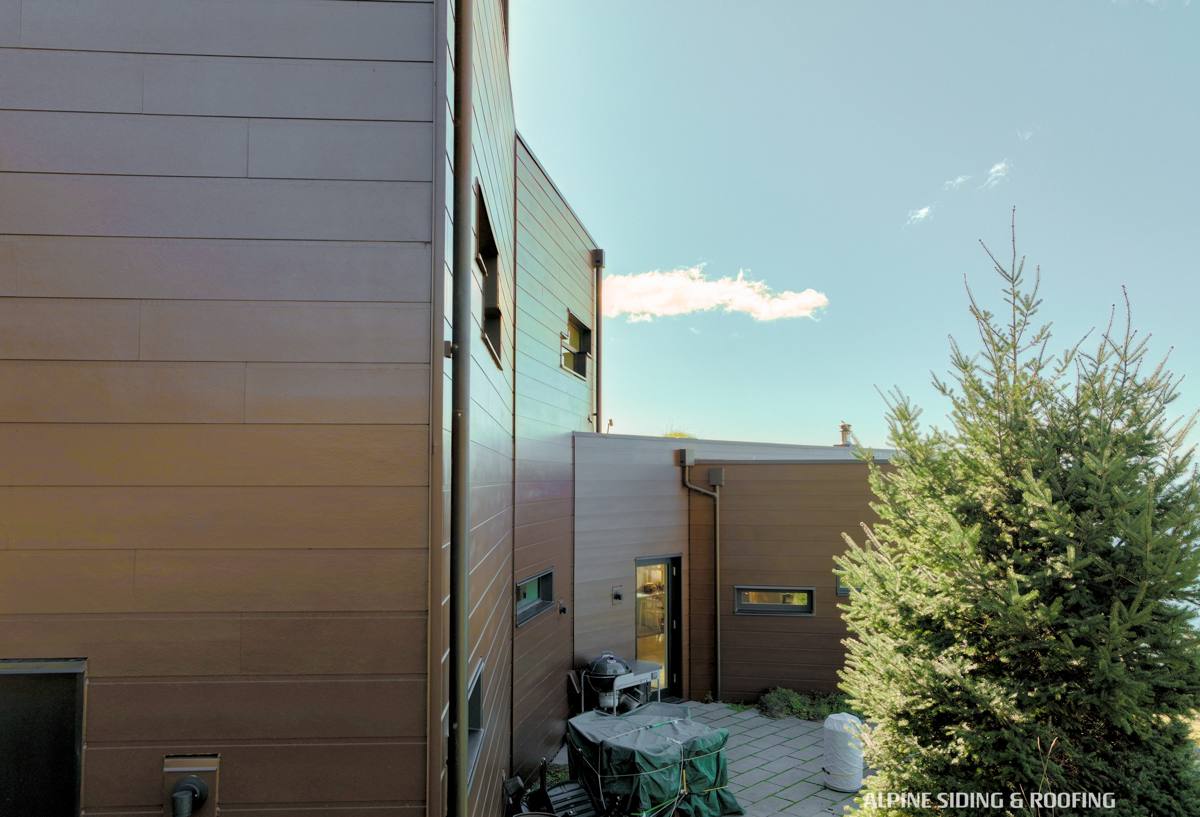
What Salt Air, Rain, and Moss Actually Do to Siding
Understanding the damage mechanism is the difference between a repair that lasts and one that fails again in two years. On Lummi Island and the surrounding shoreline, three factors compound each other:
Salt Air
Airborne salt is corrosive to metal fasteners, flashing, and trim hardware. Once a fastener starts corroding, it loses holding strength, siding panels can work loose, and small gaps open up that let water behind the cladding. Salt exposure also breaks down some paint and caulk formulations faster than they'd wear inland, which is one reason we pay close attention to what products and sealants get used in repairs out here.
Driving Rain
Rain that comes in sideways off the water doesn't behave like rain falling straight down. It gets forced up under laps, into seams, and behind poorly sealed trim. Siding systems are designed to shed water downward — wind-driven rain defeats that design if joints, caulking, or flashing details aren't tight. This is often where hidden rot starts: not from a visible crack, but from water finding its way in at a seam that looks fine from the ground.
Moss and Algae
Whatcom County's wet season runs long, and shaded, north-facing walls near tree cover or water can stay damp for weeks at a time. Moss holds moisture against the siding surface far longer than it would otherwise sit, and organic growth left unaddressed can trap water against seams and fastener heads. On some siding materials, sustained moisture exposure like this leads to swelling and softening; on fiber cement, the material itself doesn't absorb and swell the way wood-based products do, but growth still needs to be cleaned off and the underlying moisture path still needs to be found and closed.
Signs a Lummi Island Home Needs Siding Repair
Because damage often starts behind the siding, not on the surface, we look for indirect signs as much as obvious ones:
- Soft or spongy spots when you press on the siding, especially near the bottom courses or around windows
- Visible gaps opening up at seams, corners, or where siding meets trim
- Persistent moss or algae staining that returns quickly after cleaning
- Paint that's peeling, bubbling, or chalking faster than expected, particularly on water-facing elevations
- Rust streaking below fastener heads or metal flashing
- Warping, cupping, or visible movement in individual boards or panels
- Interior signs — musty smell, discoloration on interior walls near exterior corners — that suggest moisture has already gotten past the cladding
Any one of these on its own might be minor. Several together, especially on a water-facing or shaded wall, usually means it's worth having someone look before the next wet season.
What a Correct Repair Involves
A siding repair that actually holds up in this environment isn't just replacing the damaged board and moving on. It requires a few steps that are easy to skip and expensive to skip wrong:
1. Find the Real Extent of the Damage
The visible damage is rarely the whole story. We pull back siding around the affected area to check the sheathing and water-resistive barrier underneath. If water has been getting behind the cladding, the damaged board is often just the most visible part of a larger moisture path.
2. Repair What's Underneath First
Rotted sheathing, compromised house wrap, or failed flashing has to be addressed before new siding goes back on. Replacing siding over a moisture problem that hasn't been fixed just hides it again — it doesn't solve it.
3. Match Materials and Reseal Properly
New siding sections need to tie into the existing wall correctly, with proper overlaps, fastener placement, and sealant at the joints that will actually see wind-driven rain. This is where a lot of quick patch jobs fail — the repair looks fine on day one but wasn't detailed to handle water moving sideways in a storm off the water.
4. Address the Cause, Not Just the Symptom
If moss growth caused the moisture problem, that usually means trimming back vegetation, improving airflow, or adjusting how water sheds off a roofline above — not just cleaning the wall and replacing boards.
Repair vs. Replacement: How We Make the Call
| Factor | Repair Usually Makes Sense | Replacement Should Be Considered |
|---|---|---|
| Extent of damage | Isolated to one or two areas or elevations | Recurring problems across multiple walls |
| Underlying structure | Sheathing and wrap intact once opened up | Widespread rot or compromised water barrier |
| Siding age | Relatively young siding, isolated failure point | Siding is near or past its expected service life |
| Material condition | Rest of the siding is sound and holding paint well | Material is failing broadly — chalking, warping, or softening throughout |
| Exposure | Sheltered elevations with lower wind-driven rain exposure | Direct water-facing walls with a history of repeated damage |
We'll always tell you honestly which side of that table your home falls on. A targeted repair is the right call far more often than a full replacement — but if we open up a wall and find the damage goes deeper than expected, we'll show you what we found before doing anything else.
Why We Only Repair With and Onto James Hardie Fiber Cement
When a repair involves replacing sections of siding, the material matters as much as the workmanship. We install and repair exclusively with James Hardie fiber cement siding — we don't work with vinyl, LP SmartSide, primed spruce, or cedar. In a marine environment like Lummi Island, that decision is about how each material actually holds up to sustained moisture and salt exposure over decades, not just how it looks the day it goes up.
Fiber cement is non-combustible and doesn't absorb water the way wood-based siding products can, which matters directly in a climate where damp conditions can persist for weeks. James Hardie's ColorPlus factory finish is also engineered to hold color and resist the kind of fading and chalking that salt air and UV exposure accelerate on lower-grade paint jobs — which reduces how often a homeowner near the water needs to think about repainting at all. When we do a repair, patched sections need to match and perform the same as the surrounding siding for years, and that consistency is much easier to deliver with one engineered product system than by mixing repair patches across different materials or grades.
Our Process for Lummi Island Siding Repairs
- On-site assessment — We inspect the affected area and check adjacent sections and elevations that see similar exposure, since problems on one wall often hint at conditions on others.
- Open and evaluate — Where damage is suspected to go deeper than the surface, we open the area to check sheathing, wrap, and flashing before quoting anything.
- Honest scope and estimate — You get a clear explanation of what's actually wrong, what it will take to fix it correctly, and what it will cost — no upsell to a full replacement unless the underlying structure genuinely calls for it.
- Repair and reseal — Damaged material is removed, structure is repaired as needed, and new siding is installed and sealed to handle wind-driven rain, not just look finished.
- Follow-up guidance — We'll flag anything worth watching — vegetation to trim back, drainage to improve — so the same problem doesn't return.
What to Check Before Hiring Anyone for Siding Repair Out Here
- Do they have experience specifically with waterfront or near-waterfront exposure, not just general siding work?
- Will they open up the wall to check for hidden moisture damage, or just patch what's visible?
- Do they explain the actual cause of the failure, not just fix the symptom?
- Are they licensed, insured, and willing to put the scope of work in writing?
- Do they stand behind fiber cement repairs with a warranty that reflects the manufacturer's own coverage, not just their own labor guarantee?
Getting a Repair Estimate
If you're seeing soft spots, recurring moss, gaps at the seams, or paint that's failing faster than it should on a Lummi Island or Ferndale-area home, it's worth having someone look before another wet season passes. We offer a free, no-pressure estimate — we'll tell you honestly what we find, whether it's a straightforward repair or something more, and what it would take to fix it right. You can request one using the form below.