 Ferndale Siding
 Windows in Kendall Take a Different Kind of Beating
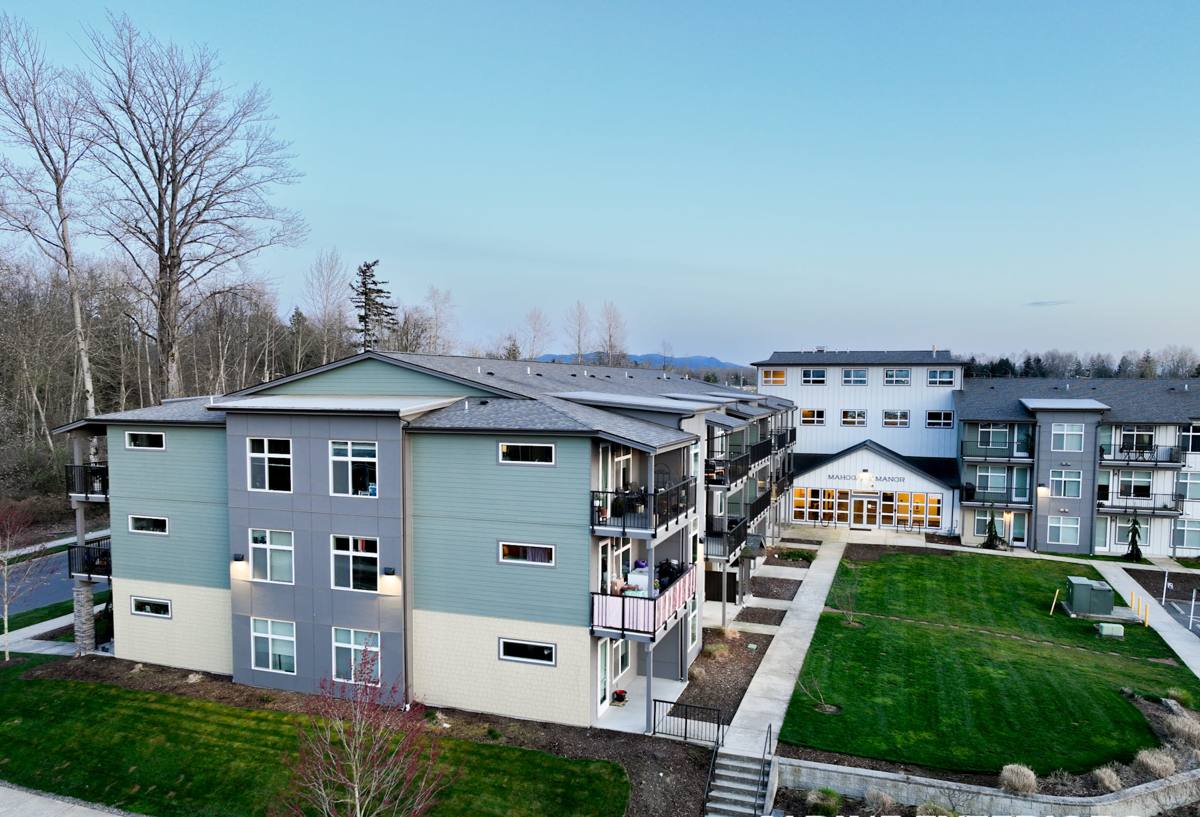
Kendall sits back from the water in the Nooksack River valley, tucked against the timber and foothills that lead up toward Mount Baker. That setting changes what "window installation" actually needs to mean here. You're not fighting salt spray the way a house right on Bellingham Bay might, but you're dealing with something just as tough on windows over time: near-constant humidity off the river and tree cover, long stretches of low sun and shade, driving rain that comes sideways in a storm, and a moss and mildew season that can run most of the year in the shadier lots. Any window install in this area has to plan for water that wants to find a way in and stay there, not just water that falls straight down.
That's the difference between a window that looks fine from the driveway and one that's actually protecting the wall behind it. We've worked enough houses out this way to know which details matter for Kendall specifically, and which generic installation shortcuts fail here faster than they would somewhere drier.
What Whatcom County's Climate Does to Windows Over Time
Every window eventually fails for one of a few reasons: the seals break down, the flashing was never installed correctly in the first place, or moisture gets behind the frame and starts working on the wood framing and sheathing you can't see. In a river-valley, tree-shaded community like Kendall, the timeline on all three of those gets compressed.
- Constant low-grade moisture: Shade and humidity mean surfaces stay damp longer after rain, which speeds up seal breakdown and gives mold and moss more time to establish on sills and trim.
- Driving rain: Wind-driven storms push water sideways against the wall, not just down onto the roof. A window that only sheds water well from the top is going to leak eventually.
- Temperature swings: Cold nights and mild days cause condensation on older, poorly-sealed glass — that moisture cycle is hard on frames and finishes over years.
- Moss and organic growth: Given enough shade and dampness, moss and algae will colonize any surface that stays wet, including window sills, trim, and the caulk lines around a frame. Once it gets a foothold in a gap or seam, it holds moisture against the building instead of letting it dry.
None of this means Kendall is a bad place to own a house — it means the installation has to be done with this climate in mind from the start, not patched later.
Signs Your Kendall Home May Need New Windows
Homeowners usually notice one obvious problem — fogged glass, a window that won't stay open, a draft — and don't realize it's often a symptom of something bigger going on at the frame or sill. Worth checking for before you decide whether to repair or replace:
- Fogging or a visible film between the panes of a double-pane window — the seal has failed and the gas fill is gone
- Soft or discolored wood on the interior sill or exterior trim
- Visible moss, algae, or persistent black mold streaking around the frame
- Paint that's bubbling, peeling, or won't hold near the window opening
- Drafts you can feel with your hand near the frame on a windy day
- Windows that are hard to open, close, or lock — swollen frames often mean moisture intrusion
- A musty smell in the room, especially after rain
- Visible daylight or gaps around the frame from outside
Any one of these can be minor. Several at once, especially on a north- or shade-facing wall, usually means water has been getting behind the window for a while.
What a Correct Window Installation Actually Involves
A window install is mostly invisible work. The window itself is a commodity product — what makes the difference between a ten-year problem and a thirty-year install is what happens at the rough opening before the window ever goes in.
Removal and Opening Prep
Old windows come out carefully so we can inspect the framing underneath. This is the point where hidden rot, past water damage, or bad original flashing gets found — and it needs to get fixed before anything new goes in, not covered over.
Flashing and Moisture Management
This is the step that decides whether a window stays dry for decades or leaks in five years. Proper flashing directs any water that gets past the exterior cladding down and out, away from the framing, using a layered, shingle-style approach — sill pan first, then side flashing, then head flashing, each one overlapping the layer below it. Skipping or shortcutting this step is the single biggest cause of hidden rot behind "new" windows.
Setting, Leveling, and Sealing
The window gets set plumb, level, and square, shimmed correctly so it doesn't bind or sag, and fastened per the manufacturer's specification — not just however fits. Insulation goes in the gap around the frame without overpacking it, and the exterior gets sealed with the right sealant at the right joints — not everywhere, since some joints are actually meant to allow drainage.
Interior and Exterior Finish
Trim, casing, and paint or stain go back on clean, and we check operation — open, close, lock — before calling the job done. Nothing gets buttoned up until the flashing and seal work underneath has been confirmed correct.
Choosing the Right Window for This Climate
There's no single "best" window — the right choice depends on the wall, the exposure, and what you're trying to balance between upfront cost, maintenance, and how long you want it to last without attention.
| Frame Material | Moisture Performance | Maintenance | General Cost Factor | Good Fit For |
|---|---|---|---|---|
| Vinyl | Good — won't rot, handles humidity well | Low — occasional cleaning | Lower | Most standard replacements, budget-conscious projects |
| Fiberglass | Excellent — very stable, minimal expansion/contraction | Low | Higher | Shaded, high-moisture walls or larger openings |
| Wood-clad | Depends heavily on install quality and cladding integrity | Higher — needs monitoring at joints | Higher | Homes prioritizing interior wood appearance, with a plan to maintain the exterior clad seams |
| Aluminum | Fair — conducts cold, can condensate more in this climate | Moderate | Varies | Specific architectural needs; less common for residential retrofits here |
We don't push wood-clad windows on heavily shaded, north-facing walls in this area unless a homeowner understands the maintenance commitment — not because the product is bad, but because any cladding seam that isn't inspected and maintained becomes a moisture trap in a climate like Kendall's. That's a maintenance conversation we'd rather have upfront than an emergency call five years later.
Our Process, Start to Finish
- Free on-site estimate — we look at each window opening individually, not just a house-wide number. Different walls and exposures can call for different answers.
- Written scope and pricing — what's being replaced, what materials, what the flashing and prep plan is, no vague line items.
- Scheduling around weather — openings only stay exposed for as short a window as possible, and we plan install days with rain in mind, not against it.
- Removal and framing inspection — old windows out, opening checked for hidden damage before anything new goes in.
- Flashing, install, and seal — done in the sequence that actually sheds water, every time, not just when it's convenient.
- Final walkthrough — we operate every window with you and confirm the finish work before we consider the job done.
Why a Crew That Already Works Kendall Matters
A lot of window problems in this part of Whatcom County trace back to installs done by crews who treat every job the same regardless of exposure, shade, or wall orientation. A flashing detail that's adequate on a sunny, open lot isn't necessarily adequate on a shaded wall that stays damp for days after a storm. Working this area regularly means we've already seen which details hold up here and which ones don't, and we build every install around that — not around a generic checklist.
It also means straightforward logistics: knowing the roads, being realistic about scheduling around Whatcom County's wetter months, and being reachable if a question comes up after the job is done, not just during it.
What This Typically Costs
Pricing depends on window size, frame material, how many openings, and how much framing repair the removal turns up — so we don't quote a number sight unseen. In general, straightforward vinyl replacements run less per opening than fiberglass or wood-clad, and any job that uncovers rotted framing behind an old window will cost more than one that doesn't, simply because that framing has to be repaired properly before the new window goes in. We walk through all of this at the estimate so there are no surprises mid-project.
If you're noticing drafts, fogged glass, or moss building up around your window frames, we're happy to take a look. Reach out for a free, no-pressure estimate — use the form below and we'll get back to you to schedule a time to walk the house.