 Ferndale Siding
 Why Lummi Nation's Coastal Exposure Is Tougher on Siding Than It Looks
Homes around Lummi Nation sit close enough to the water that salt air is a daily fact of life, not an occasional storm event. Salt-laden moisture works differently than plain rain — it settles on exterior surfaces, gets into seams and fastener heads, and accelerates corrosion and coating breakdown in ways that inland Ferndale and Whatcom County homes don't deal with nearly as much. Add in the driving rain that comes off Bellingham Bay and the Strait of Georgia during fall and winter storms, and you've got siding that's fighting wind-driven water intrusion at the same time it's fighting salt exposure.
Then there's moss. Whatcom County's long, wet, mild winters give moss and algae months to establish themselves on any siding surface that stays damp and shaded, which describes a lot of north- and west-facing walls in this area. Moss isn't just cosmetic — it holds moisture against the siding surface for extended periods, which is exactly the condition that causes rot in wood-based products and coating failure in lower-grade composites.
Put those three factors together — salt air, driving rain, and a moss season that can run six months or more — and you have a climate that punishes any siding product with a weak point in its moisture management or its factory finish. That's the lens we use on every Lummi Nation job, not a generic "Pacific Northwest is wet" assumption.
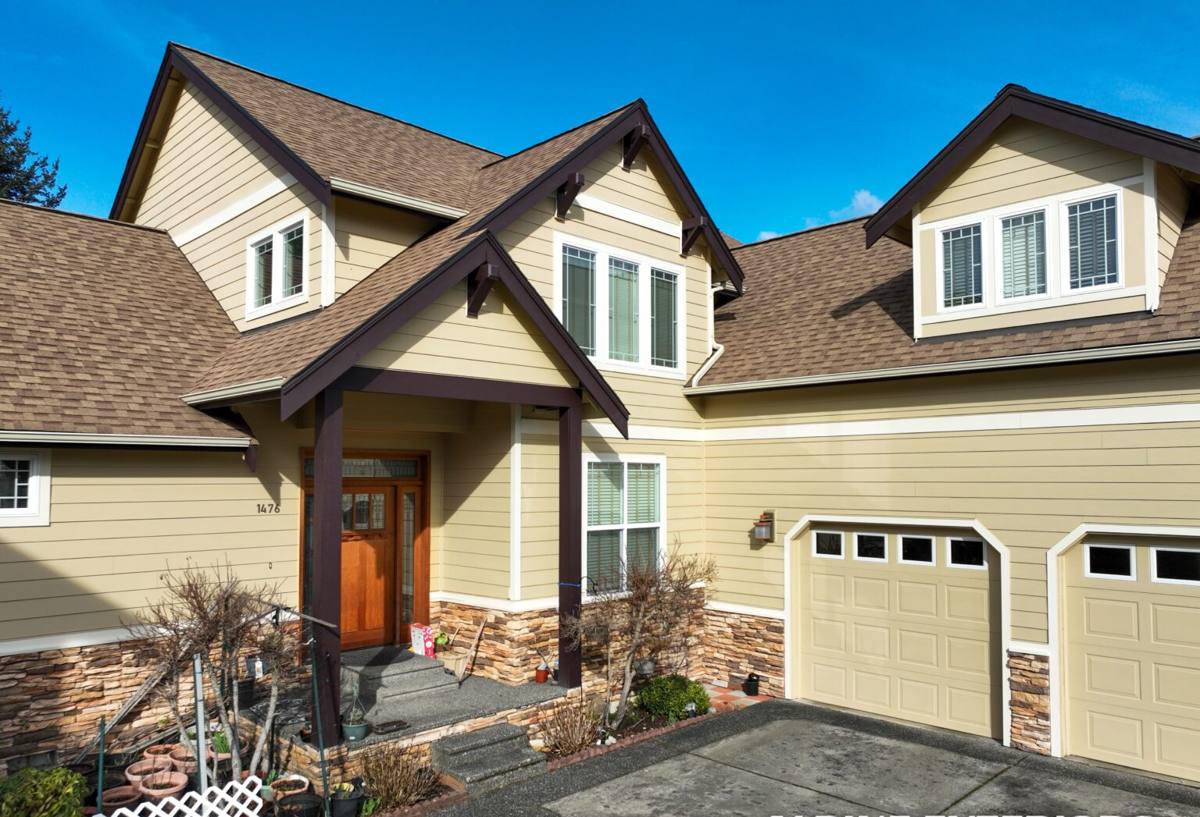
What James Hardie Siding Is Built to Handle Here
We install James Hardie fiber cement siding exclusively, and on Lummi Nation homes that's a deliberate match to the local conditions, not just a company policy applied uniformly everywhere. Fiber cement is non-combustible and dimensionally stable — it doesn't expand and contract with moisture the way wood-based siding does, and it doesn't feed the rot cycle that starts once trapped moisture meets an organic substrate. That matters directly here: a product that shrugs off standing moisture instead of absorbing it is a better fit for a six-month moss season than one that doesn't.
Salt Air and the Factory Finish
The biggest single advantage for a salt-air environment is James Hardie's ColorPlus factory finish. It's baked on in a controlled factory environment rather than sprayed or brushed on site, which produces a more uniform, better-adhered coating than field-applied paint can reliably achieve. That finish resists fading and chipping better than typical field paint jobs, and because it's more consistent, it holds up better against the slow chemical attack that salt air causes on painted surfaces over years of exposure.
Rain Screen Behavior
Fiber cement doesn't wick water the way engineered wood products can at cut edges and panel joints. That's a meaningful difference when you're dealing with wind-driven rain hitting a wall assembly repeatedly through a Whatcom County winter — the siding needs to shed water at the surface and rely on the rain-screen gap and flashing details behind it to handle anything that gets past, rather than absorbing moisture into the panel itself.
HZ5 Engineering: Product Selection Matters as Much as the Brand
James Hardie makes climate-engineered product lines, and choosing the right one for this coastline isn't automatic just because it says "Hardie" on the box. HZ5 products are engineered for wetter, harsher climates with more freeze-thaw cycling and moisture exposure than the HZ10 lines built for the Southeast and Gulf Coast. For Lummi Nation and the rest of Whatcom County's marine-influenced climate, using the correctly specified HZ5 formulation and installation details is part of getting the performance the product is actually capable of. We spec every job to the correct climate zone rather than defaulting to whatever's easiest to source.
What a Correct Installation Involves
The product only performs as well as the installation behind it. Most siding failures we see on older homes in this area — regardless of what material was originally installed — trace back to installation shortcuts, not the material itself failing on its own. A correct James Hardie install on a Lummi Nation home means paying close attention to several details that are easy to skip and hard to notice until they cause a problem years later.
- Proper clearance between the bottom of the siding and grade, decks, and roof lines — insufficient clearance traps moisture and invites the exact moss and rot conditions this climate already encourages
- Correct fastener type and placement, since the wrong fasteners corrode faster in salt air and can void manufacturer warranty coverage
- Weather-resistant barrier and rain-screen gap installed to spec, giving any moisture that gets behind the siding a path to drain and dry out
- Properly flashed and caulked penetrations at windows, doors, and utility penetrations — the most common point of water intrusion on any siding job
- Correctly sized and sealed joints and seams, factory-primed cut edges, and butt joints treated per manufacturer specification
- Ventilation behind the cladding so trapped humidity has somewhere to go instead of sitting against the panel
Skip any one of these and you can end up with premature coating failure, hidden moisture damage, or a warranty claim that gets denied because the installation didn't meet manufacturer requirements — even though the siding material itself was never the problem.
Our Process, Start to Finish
For a Lummi Nation home, our process is built around the same climate factors covered above, applied to your specific house rather than a generic checklist.
- On-site assessment — we look at wall orientation, existing moss and moisture patterns, grade clearance, and any current siding or trim damage before we recommend anything
- Product and color selection — matching HZ5-rated Hardie products and ColorPlus finish options to your home and the exposure it actually faces
- Removal of existing siding — with inspection of the sheathing and framing underneath for any hidden moisture damage that needs to be addressed before new siding goes on
- Weather-resistant barrier and rain-screen installation — the unseen layer that does most of the long-term moisture management work
- Flashing at every penetration — windows, doors, vents, and any utility penetrations, sealed and lapped correctly for water to shed downward and outward
- Hardie panel or lap installation — fastened, spaced, and seamed to manufacturer specification for this climate zone
- Trim, caulking, and final detail work — the finishing details that keep water out of joints and corners over the long run
- Final walkthrough — reviewing the completed work with you and covering warranty registration
What Drives the Cost of a Lummi Nation Siding Job
Every home is different, and we won't quote a number without seeing the house, but these are the factors that actually move the price on a James Hardie job in this area.
| Factor | Why It Matters Here |
|---|---|
| Home size and wall complexity | More corners, dormers, and wall planes mean more cutting, flashing, and labor time |
| Current siding condition | Rot or moisture damage found under the old siding adds sheathing repair before new siding can go on |
| Product line (lap, panel, shingle style) | Different Hardie profiles carry different material and install labor costs |
| ColorPlus vs. primed-for-paint | Factory-finished ColorPlus costs more upfront but removes a future repaint cycle, which matters more in salt air |
| Exposure severity | Waterfront-facing and west-facing walls may need extra flashing and rain-screen detailing |
| Access and site conditions | Tight lots, landscaping, or multi-story walls affect scaffolding and labor time |
Why a Local Crew That Already Works Lummi Nation Matters
A crew that's already worked on homes in this specific area knows the exposure patterns before they even walk the property — which walls take the worst of the wind-driven rain, where moss tends to establish first, and what grade and drainage issues show up repeatedly in this stretch of coastline. That's different from a general contractor pulling from a statewide playbook. It also means we're not learning the local building department's expectations for the first time on your job, and we're around afterward if a warranty question or a flashing detail needs a second look.
Because we install only James Hardie products, we're not choosing a material based on what's cheapest to source that week or easiest to install fast — we've standardized on one system, learned its installation requirements in depth, and apply that same standard to every home, including yours.
Maintenance That Actually Matters in This Climate
James Hardie siding is genuinely low-maintenance compared to wood-based alternatives, but "low-maintenance" doesn't mean "no attention needed" in a climate like this one.
- Rinse siding periodically to clear salt residue and organic buildup before moss gets a foothold, especially on shaded and north-facing walls
- Keep gutters and downspouts clear so overflow doesn't run down the siding face repeatedly
- Trim back vegetation and landscaping that keeps a wall section shaded and damp longer than the rest of the house
- Check caulking at trim and penetrations every couple of years — caulk is the one component that wears out before the siding does
- Watch for moss establishing at grade level or under roof overhangs and remove it early, before it holds moisture against the surface long-term
None of this is heavy work, but a few minutes of attention once or twice a year goes a long way toward getting the full lifespan out of the material and the finish.
Warranty Protection Worth Understanding
James Hardie backs its fiber cement products with a strong, transferable limited warranty, and ColorPlus finishes carry their own separate finish warranty covering fading and chipping. That transferability matters if you ever sell — it's a real, documented asset for the home, not just a sales point. But warranty coverage depends on installation meeting manufacturer specification, which is exactly why the installation details covered earlier in this page aren't optional extras. We install to spec and handle warranty registration as part of every job so that coverage is actually in place, not just theoretically available.
If you're weighing a siding replacement or repair on a Lummi Nation home and want a straight assessment of what your walls actually need, we're glad to take a look. Reach out for a free, no-pressure estimate using the form below.