 Ferndale Siding
 Lummi Island Sits in One of Whatcom County's Toughest Microclimates for Siding
Lummi Island homes take a different kind of weathering than a house a few miles inland in Ferndale or Bellingham. Being surrounded by salt water means constant exposure to salt-laden air, wind-driven rain off the Strait, and long stretches of shade and moisture on the north and west-facing walls that never fully dry out between storms. Add in the fact that most homes here are only reachable by ferry, and it becomes clear why siding choice and installation quality matter more on this island than almost anywhere else in the county.
We've worked enough homes in this specific environment to know that siding that performs fine in a typical Ferndale subdivision can struggle here. Salt air accelerates corrosion on fasteners and trim. Constant dampness feeds moss and mildew growth on any surface that holds moisture. And the driving rain that comes with winter storms off the water finds every weak seam, gap, or poorly flashed penetration in a wall system.
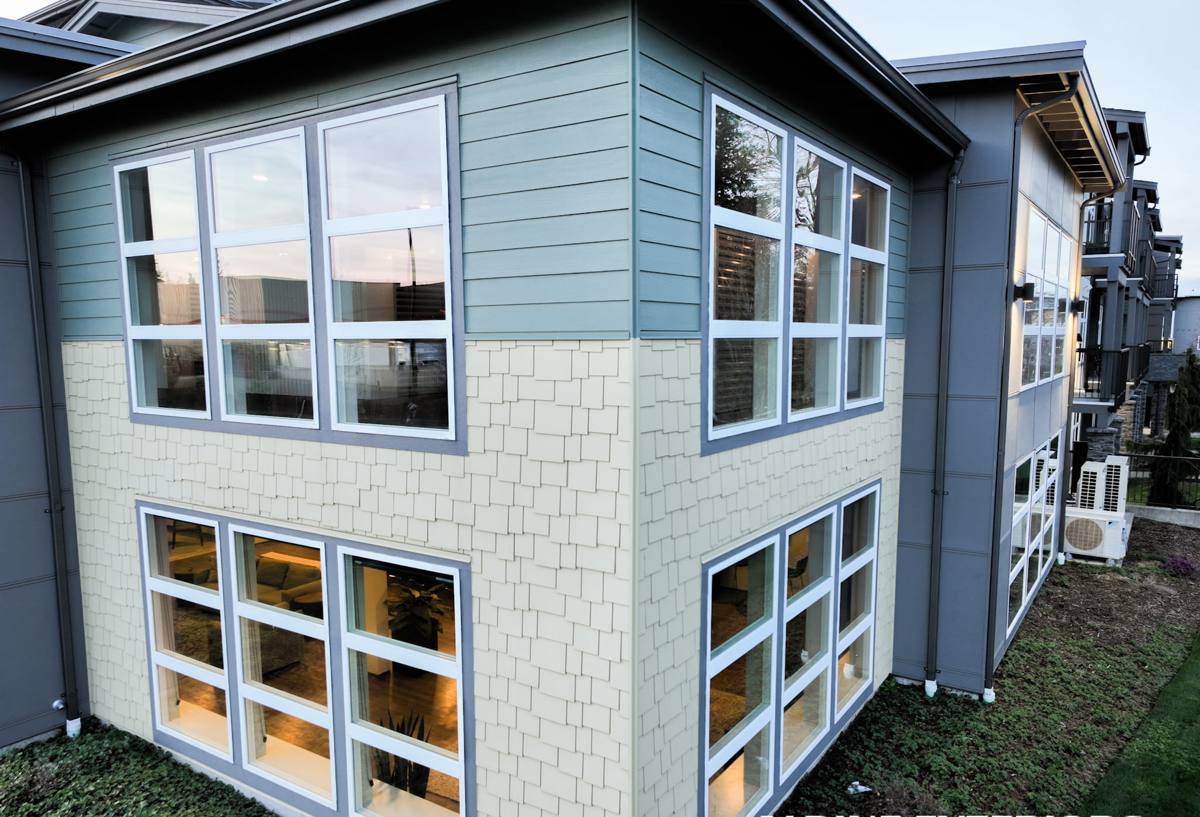
What Salt Air, Rain, and Moss Actually Do to a Wall System
Salt Air
Airborne salt is corrosive to unprotected metal — nails, screws, flashing, and trim fasteners all degrade faster near saltwater than they do even a short distance inland. Over years, corroding fasteners can loosen siding panels, stain the surface with rust streaks, and create small gaps where water gets behind the cladding.
Driving Rain
Wind off open water doesn't just fall — it drives rain sideways into walls, especially on west- and south-facing exposures. That kind of pressure finds any shortcut in flashing, caulking, or panel overlap. A siding system that relies on caulk alone to keep water out, rather than proper lap, flashing, and drainage detailing, will eventually let moisture in.
Moss and Sustained Moisture
Lummi Island's tree cover and marine humidity mean many walls stay damp longer after a storm than they would in a drier, more open location. Moss and algae take hold on siding surfaces that don't shed water well or that trap moisture against the substrate, and over time that sustained dampness is what causes rot in wood-based products and paint failure in lower-quality finishes.
Why We Install Only James Hardie Fiber Cement on Lummi Island Homes
We don't offer vinyl, LP SmartSide, primed spruce, cedar, or other fiber cement brands like Cemplank or Allura on this job — and that's a deliberate standard, not a lack of options. In a marine environment with heavy moisture cycling, the material differences between products stop being theoretical and start showing up on the wall.
- Vinyl expands and contracts with temperature swings and can warp or loosen over time, and it doesn't hold up structurally the way a rigid fiber cement panel does under sustained wind-driven rain.
- Wood-based siding (LP SmartSide, primed spruce, cedar) is an engineered or natural wood product at its core — even with treated strand or solid-sawn construction, wood siding is more vulnerable to moisture intrusion, rot, and insect activity, and it demands more frequent refinishing to stay protected in a damp climate like this one.
- Other fiber cement brands use the same basic cement-and-cellulose formula as James Hardie, but the finish systems, warranty structures, and climate-specific engineering behind them vary. We standardized on Hardie because its ColorPlus factory finish and HZ5 formulation are built specifically around Pacific Northwest moisture exposure, and the company backs the product with a strong, clearly transferable warranty.
James Hardie fiber cement is non-combustible, doesn't rot, and won't feed moss or insects the way wood-based products can. Its factory-applied ColorPlus finish is baked on under controlled conditions, which gives it better fade and moisture resistance than field-applied paint — a real advantage on a wall that's going to spend a lot of its life damp.
Choosing the Right Hardie Product for This Climate
James Hardie makes its siding in different HZ (HardieZone) formulations engineered for different climate zones. Western Washington, including Lummi Island, falls in the HZ5 zone, which is engineered for the freeze-thaw cycling, sustained moisture, and moderate temperatures typical of the Pacific Northwest. Using the correct HZ formulation isn't a marketing detail — it affects how the panel's cement composition handles moisture absorption and expansion over decades of exposure.
Beyond the HZ rating, profile choice matters for a marine-exposure home. Lap siding with a wider exposure sheds water more predictably on a wind-exposed wall, while vertical board-and-batten or panel systems need extra attention to seam and joint detailing to perform well when rain is being driven sideways. We walk through profile and color options with each homeowner based on their home's actual exposure — which walls face open water and prevailing wind, which are shaded and slow to dry, and which get the most direct weather.
What a Correct Installation Involves
Fiber cement siding is only as good as the installation behind it. Most of the failures we get called out to inspect on marine-exposed homes trace back to installation shortcuts, not the material itself. On Lummi Island specifically, we pay close attention to the details below.
| Installation Detail | Why It Matters Here |
|---|---|
| Correct fastener type and spacing | Corrosion-resistant fasteners, driven and spaced to Hardie spec, resist the accelerated corrosion salt air causes to lesser hardware |
| Proper weather-resistive barrier and flashing at every penetration | Driving rain finds any gap — flashing around windows, doors, and vents has to shed water outward, not rely on caulk to hold it back |
| Correct panel overlap and clearance from grade/decks | Keeps water moving off the wall instead of wicking up into the bottom edge of the siding, which is where rot and moss problems start |
| Rainscreen or drainage gap where appropriate | Gives the wall a way to dry out between storms instead of trapping moisture against the sheathing — important on shaded, slow-drying elevations |
| Factory-cut and sealed panel edges | Field-cut edges left unsealed absorb moisture faster and are where paint failure and moss growth typically start first |
A Note on the Ferry and Scheduling
Because Lummi Island is only reachable by ferry, materials, crews, and equipment all have to be scheduled around ferry timing. We plan our Lummi Island jobs with that logistics reality built into the schedule from the start, rather than treating it as an afterthought that causes delays mid-project.
Our Process From Estimate to Finished Wall
Every Lummi Island siding job starts the same way: an in-person assessment of the home's specific exposure — which elevations take the worst of the wind and rain, where moisture and moss have already caused problems, and what condition the existing sheathing and framing are in underneath the current siding. From there we put together a scope that covers material, profile, color, and any repair work needed before new siding goes on, along with a clear timeline that accounts for ferry scheduling.
During installation, we follow James Hardie's published installation specifications on fastening, clearances, flashing, and joint treatment — not as a minimum to hit, but because those specs are what the manufacturer's warranty is actually based on. Skipping or shortcutting them is the single most common reason a warranty claim gets denied down the road.
Maintenance in a Moss-Prone, Salt-Air Environment
Correctly installed James Hardie siding is low-maintenance compared to wood-based alternatives, but "low-maintenance" isn't "no-maintenance" in a climate like this one. A little regular attention goes a long way toward keeping the finish and the wall assembly behind it in good shape for decades.
- Rinse siding annually with a garden hose and soft brush to remove salt residue and early moss or algae growth before it takes hold
- Keep gutters clear and downspouts directed away from the wall so runoff isn't concentrating moisture against any one section of siding
- Trim back vegetation and tree cover that keeps a wall shaded and damp longer than the rest of the house
- Inspect caulking at trim, window, and door joints yearly and have gaps resealed before they become water entry points
- Watch for any staining around fasteners, which can signal early corrosion, and have it checked rather than waiting
Why Hiring a Crew That Already Works Lummi Island Matters
A contractor who's only worked drier, inland sites doesn't automatically know how to detail a wall for sustained salt air and driving rain — and on an island where a callback means another ferry crossing, getting it right the first time isn't optional. We've built our installation practices around this specific coastal exposure: fastener selection, flashing details, drainage planning, and profile choice are all decided with Lummi Island's climate in mind, not applied as a generic template.
That local familiarity also means a more realistic estimate and timeline up front — we're not guessing at ferry logistics, material staging, or how a given elevation on the island tends to weather, because we've already done that work on homes like yours.
If you're planning a siding project on Lummi Island, we're happy to walk your home, look at how each elevation is holding up, and put together a straightforward, no-pressure estimate for James Hardie fiber cement siding built for this exact climate.