 Ferndale Siding
 Sumas Sits in a Valley That Doesn't Let Siding Off Easy
Sumas is a small border community tucked into the low ground of the Sumas River valley, ringed by farmland and hillside, with Sumas Mountain rising just to the south. That geography matters more than most homeowners realize when it comes to siding. Low-lying valley air doesn't move the way it does on a breezy hilltop or an open coastal bluff — moisture settles, humidity lingers longer after a storm, and surfaces that would dry out in a few hours elsewhere can stay damp for a day or more. Add in Whatcom County's long wet season, driving rain that comes in sideways off frontal systems, and a moss season that can stretch from fall through spring, and you have a climate that is genuinely hard on a home's exterior.
None of that is exotic weather. It's the normal cycle of a Pacific Northwest valley town. But "normal" here still means siding has to shed water reliably, resist swelling and rot where it meets trim and window flashing, and hold its finish without letting moss and algae take hold on north-facing walls that rarely see direct sun. Siding that's installed correctly handles all of that without drama. Siding that's installed carelessly — or built from a material that wasn't engineered for this kind of dampness — starts showing problems within a few winters, usually at the seams, the bottom courses, and anywhere caulk was asked to do a waterproofing job it was never designed for.
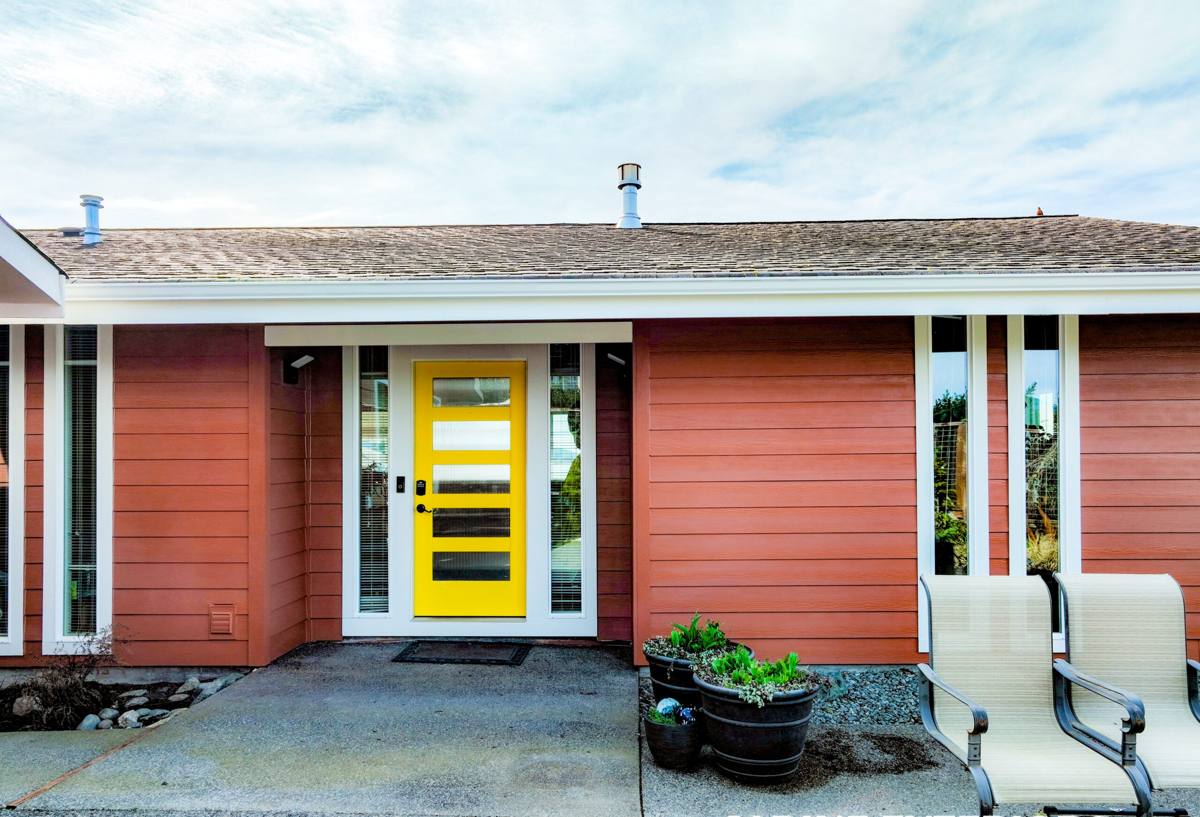
What Correct Siding Installation Actually Involves
Siding installation is often talked about like it's just "putting boards on the wall." It isn't. The board itself is maybe a third of the job. The rest is the water management system behind and around it — the part nobody sees once the project is done, and the part that determines whether the house is still dry and solid in fifteen years.
Weather-Resistive Barrier and Flashing
Every wall needs a continuous weather-resistive barrier (housewrap or equivalent) installed shingle-style so water always drains outward and down, never behind a lower layer. Every window, door, and penetration needs proper flashing integrated into that barrier — not caulked over as an afterthought. This is the step that gets rushed on lower-bid jobs, and it's also the step that, when done wrong, you won't notice until there's rot in the sheathing.
Fastening and Clearances
Fiber cement siding has manufacturer-specified nailing patterns, fastener types, and minimum clearances from grade, roof lines, decks, and any horizontal surface. Get the clearance wrong and you're inviting the exact standing moisture and splashback that causes premature failure at the bottom courses — the single most common failure point on siding jobs done without attention to detail.
Joints, Caulking, and Expansion
Butt joints need to be backed and sealed correctly, not just butted together and caulked on the face. Fiber cement also needs to be primed and painted on any field-cut edge that wasn't factory-finished, or moisture will wick in from the cut end. Skipping this step is invisible on installation day and a visible stain within a year or two.
Why We Only Install James Hardie Fiber Cement
We don't install vinyl siding, LP SmartSide, Cemplank, Allura, or unfinished wood siding like primed spruce or cedar. That's a deliberate standard, not a limitation of what we're capable of installing — and it's worth explaining honestly rather than just stating it.
Vinyl is affordable and low-maintenance in mild climates, but it's a thin plastic product that expands and contracts significantly with temperature swings, can crack in impact or hard freezes, and simply doesn't hold up visually or physically the way a rigid fiber cement panel does over decades. Engineered wood products like LP SmartSide use a wood-strand core that performs well when installation and sealing are perfect, but any breach in that sealed surface — a missed caulk line, a fastener through unprotected edge — gives moisture a path into a wood-based core, which is a real risk in a valley climate where things stay damp longer. Unfinished wood siding, whether cedar or primed spruce, looks great on day one but demands a maintenance schedule of repainting and resealing that most homeowners underestimate, and any lapse invites rot.
James Hardie fiber cement is not immune to weather, but it's built from cement, sand, and cellulose fiber — a material that doesn't rot, doesn't feed pests, and isn't damaged by the moisture cycling that defines a Whatcom County winter. It's non-combustible, which matters for wildfire-adjacent risk across the region. And it comes with a factory-applied ColorPlus finish baked on under controlled conditions, which holds color and resists fading and moss growth far better than field-applied paint. That combination — material stability plus a finish that isn't dependent on job-site weather to cure correctly — is why we standardized on it and stopped installing the alternatives.
HZ5 Climate Engineering
Hardie manufactures different formulations of the same core product tuned to regional climate zones. Our region calls for the HZ5 line, engineered for climates with freeze-thaw cycles and sustained moisture exposure — exactly the profile of a Whatcom County valley town like Sumas. Installing the wrong climate zone product is a subtle mistake that doesn't show up on day one, but it's one more reason to work with a crew that already knows which Hardie product line belongs on this side of the state.
Our Installation Process
- On-site assessment — we inspect the existing wall assembly, sheathing condition, and any trouble spots (window flashing, deck ledger connections, grade clearance) before quoting anything.
- Tear-off and sheathing check — old siding comes off and we look at what's underneath. Soft or water-damaged sheathing gets flagged and addressed before anything new goes up; covering a problem is not an option.
- Weather-resistive barrier and flashing — installed to manufacturer and code specification, with extra attention to every window, door, and penetration.
- Hardie panel or lap installation — fastened per Hardie's published spec for our climate zone, with correct clearances maintained at grade, roofs, and decks.
- Trim, joints, and finish detailing — factory-cut edges primed, joints backed and sealed, and all trim integrated so water sheds outward at every transition.
- Final walkthrough — we go over the finished exterior with the homeowner before calling the job done.
Cost Factors for a Sumas Siding Project
Every home is different, and we don't quote real numbers without seeing the property, but these are the factors that actually move the price on a fiber cement installation:
| Factor | Why It Matters |
|---|---|
| Tear-off scope | Removing old vinyl, wood, or damaged siding down to sheathing adds labor before new siding can go up |
| Sheathing repair | Rot or soft sheathing found during tear-off has to be replaced before installation continues |
| Wall complexity | Dormers, multiple gables, and cut-ins around windows and trim take more time than flat wall runs |
| Siding profile chosen | Lap siding, panel siding, and shingle-style Hardie products differ in material and labor cost |
| Trim and accessory work | New trim boards, fascia, or soffit work done alongside siding affects total scope |
| Access and site conditions | Steep grades, tight lot lines, or limited equipment access can add labor time |
Signs a Sumas Home Needs New Siding
- Persistent moss or dark streaking on north- or shade-facing walls that keeps returning after cleaning
- Soft spots, bubbling, or visible warping, especially near the bottom courses close to grade
- Cracked or separated caulk lines at joints and trim that keep needing to be redone
- Paint that's peeling or chalking heavily rather than fading evenly
- Visible gaps or misaligned panels that let daylight or drafts through at seams
- Interior signs — musty smell, staining on interior walls near exterior corners, or unexplained higher heating bills
Any one of these on its own might just need a repair. Several together, especially near the same wall, usually points to a water management failure behind the siding rather than a surface problem.
Why Hiring a Crew That Already Works in Sumas Matters
Sumas is a small town, and it doesn't get the volume of siding work that a bigger city sees, which means a lot of contractors quoting jobs here are not ones who've actually installed on the local housing stock — the mix of older farmhouses, mid-century homes, and newer construction along the valley floor. A crew that regularly works this part of Whatcom County knows how grade and drainage behave on valley-bottom lots, has already seen how moss establishes on the shaded sides of homes tucked against tree lines or hillsides, and isn't guessing at flashing details based on a manual written for a drier climate. That local familiarity shows up in the small decisions made on-site — where to add extra flashing, how tight to run clearances, which walls need extra drainage attention — that don't appear on an estimate sheet but matter for how the siding performs ten winters from now.
Maintenance After Installation
One of the practical advantages of Hardie fiber cement with a ColorPlus finish is how little upkeep it demands compared to painted wood. A rinse-down once or twice a year to keep moss and organic buildup from establishing, a visual check of caulk lines at joints and trim every year or two, and prompt attention to any impact damage is really the extent of it. There's no repainting cycle to plan around, and the material itself isn't feeding the moss and mildew the way bare or painted wood can in a damp valley climate.
If your Sumas home's siding is showing wear, or you're planning ahead for a replacement, we're happy to take a look and put together a straightforward, no-pressure estimate — just fill out the form below.