 Ferndale Siding
 Coastal Whatcom County Puts Different Demands on Siding
Homes along the Lummi Peninsula and the waterfront communities near Ferndale sit in one of the toughest siding environments in Whatcom County. You've got saltwater spray coming off Bellingham Bay and the Strait of Georgia, wind-driven rain that hits walls sideways instead of falling straight down, and a wet season that runs long enough for moss and algae to get a real foothold on anything that stays damp. A siding product that performs fine twenty miles inland in Bellingham or Lynden can fail early out here simply because it wasn't built for what salt air and standing moisture do to a wall system over time.
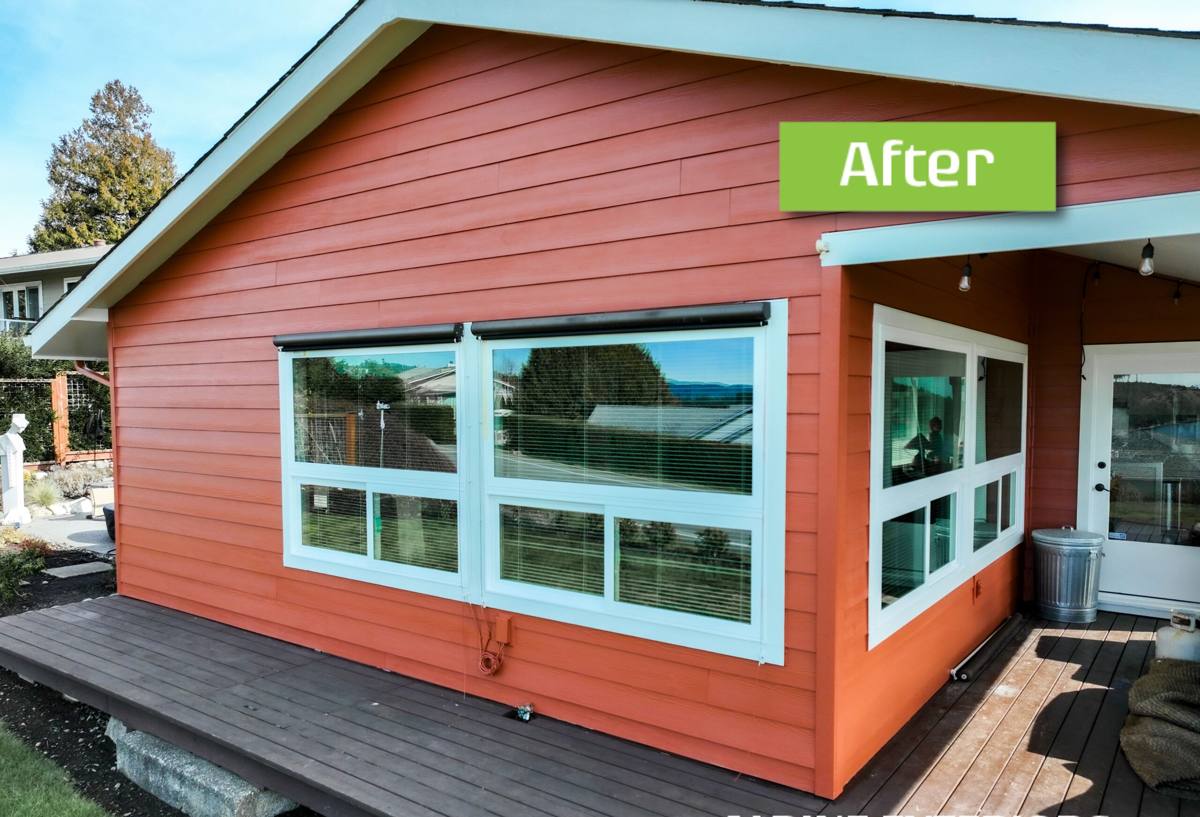
This page is about one job done right for this one area: full siding replacement on a home in or near Lummi Nation. Not a general overview of siding — the specific decisions, materials, and installation details that matter when the house is a few hundred yards from saltwater instead of sitting inland.
What Salt Air, Driving Rain, and Moss Actually Do to a Wall
Salt Air
Airborne salt is corrosive to metal and abrasive to finishes. Nails, flashing, and fasteners that aren't rated for coastal exposure corrode faster here than almost anywhere else in the county. Painted finishes chalk and fade faster too — salt accelerates UV breakdown of pigment, which is why a lot of coastal homes look tired years before an inland home with the same siding would.
Driving Rain
Wind off the water doesn't just wet a wall — it drives water sideways and upward under laps, around trim, and into any gap in the flashing. A siding system that relies on caulk and hope instead of a properly lapped and flashed drainage plane will let water in eventually. Once water gets behind the siding, the sheathing and framing underneath are what actually rot, not the siding itself.
Long Moss Season
North-facing walls, shaded corners, and anything under tree cover in this area stay damp for months at a stretch. Moss and algae need that sustained moisture to establish, and once they do, they hold even more water against the surface — which is bad news for any siding material that swells, delaminates, or feeds mold when it stays wet.
Why This Matters for Material Choice, Not Just Installation
Good installation only gets you halfway out here. The material itself has to tolerate constant moisture cycling and salt exposure without swelling, cupping, or feeding organic growth. This is exactly why we install only James Hardie fiber cement siding on every job we do, including in the Lummi Nation area. It's not a brand preference — it's a decision built around what actually holds up in a marine climate.
| Material | Behavior in Salt Air / Driving Rain | Moss & Algae Resistance |
|---|---|---|
| James Hardie fiber cement | Non-combustible, dimensionally stable, doesn't absorb and swell like wood-based products | Factory ColorPlus finish resists staining; surface doesn't feed organic growth like bare wood |
| Vinyl | Can warp and crack under UV and temperature swings; seams are a common water entry point | Grows algae readily on shaded, damp faces; hard to clean without damaging the finish |
| LP SmartSide (engineered wood) | Wood-based core is vulnerable to edge swelling if water gets behind or into cut ends | Prone to moss and mildew if moisture management at seams isn't perfect and maintained |
| Cedar / primed spruce | Natural wood absorbs moisture, checks and cups over repeated wet-dry cycles near saltwater | Needs regular refinishing to resist moss; bare or worn spots invite rot |
We'll be direct: those other products aren't junk, and plenty of them get installed correctly and last a while in gentler climates. But on a coastal wall taking salt spray and driving rain for years, we don't think the trade-offs are worth it — the maintenance burden, the moisture sensitivity at cut edges and seams, and in most cases a weaker warranty structure than what Hardie backs its product with. That's why we standardized on one system and install it correctly every time instead of juggling multiple products with different failure points.
What a Correct Replacement Job Actually Involves
Replacing siding on a coastal home isn't just swapping old boards for new ones. The parts you don't see matter more than the parts you do.
Tear-Off and Inspection
Once the old siding is off, we look at the sheathing underneath for soft spots, staining, or rot — especially around windows, doors, and any place water has historically found a way in. On homes near saltwater, this step often turns up moisture damage that wasn't visible from outside. It gets addressed before anything new goes on the wall.
Weather-Resistive Barrier
A continuous, properly lapped weather barrier goes on the sheathing before any siding. This is the actual waterproofing layer of the wall system — the siding sheds the bulk of the water, but the barrier behind it is what protects the structure if any moisture gets past the surface, which it eventually will on a home exposed to driving rain.
Flashing at Every Penetration
Windows, doors, vents, hose bibs, light fixtures — every penetration through the wall is a place water can get in if it isn't flashed correctly. This is where a lot of failures start on homes that weren't built or re-sided with coastal exposure in mind. We flash every penetration properly rather than relying on caulk as the primary water seal.
Fastening and Clearances
James Hardie specifies exact nailing patterns, fastener types, and clearances above grade, decks, and roof lines. Corrosion-resistant fasteners matter more here than inland — we use fasteners rated for the exposure, not whatever's cheapest. Clearances keep the bottom edge of the siding from sitting in standing water or snow melt, which is a common cause of early failure on homes near the water where drainage is already sluggish.
Caulking and Finish Details
Caulk is a backup, not the primary water management strategy. Where it's used — trim joints, butt joints — it's applied per Hardie's spec with the right product for a marine environment, not general-purpose caulk that will fail in a season or two of salt and UV exposure.
Cost Factors for a Lummi Nation-Area Siding Job
Every home is different, but the same handful of factors drive cost on coastal replacement jobs in this area more than they do inland.
| Factor | Why It Matters Here |
|---|---|
| Sheathing condition after tear-off | Homes exposed to years of driving rain more often need sheathing repair before new siding goes on |
| Number of penetrations | More windows, doors, and fixtures mean more flashing detail work, which takes time to do right |
| Site access and staging | Waterfront and peninsula properties can have tighter access or longer material staging distances |
| Trim and corner detail | Coastal homes often need corrosion-resistant trim accessories, not standard-grade hardware |
| Existing moss or algae growth | Heavily affected walls may need additional cleaning or treatment before tear-off begins |
We give straightforward, itemized estimates after seeing the actual condition of your walls — not a number pulled from a square-footage chart that ignores what a coastal climate does to a house.
Why Local Experience in This Specific Area Matters
A crew that mostly works inland Whatcom County jobs doesn't automatically know how differently a wall behaves a few hundred yards from saltwater. Fastener corrosion rates, moss growth patterns on shaded north walls, how far driving rain actually pushes water up under a lap — these are things you learn by working this specific stretch of coastline repeatedly, not by reading a spec sheet once. A crew that already works the Lummi Nation and broader Ferndale waterfront knows which details get skipped on lower-bid jobs and cause callbacks two winters later.
We also respect that a lot of properties in this area carry family history, sometimes going back generations, and that trust matters as much as craftsmanship. We show up, do the work as specified, clean up after ourselves, and stand behind it.
What to Check Before Hiring Anyone for a Coastal Siding Job
- Do they specify fastener type and rating, or just say "we'll nail it up"?
- Will they show you the weather-resistive barrier and flashing plan before covering it up?
- Do they follow the manufacturer's written installation spec for clearances and nailing patterns?
- Are they installing a product actually engineered for marine/coastal exposure, or a general-purpose line?
- Is the warranty transferable, and does it cover the product itself — not just labor?
- Can they explain, specifically, what changes about the install because your home is near saltwater?
If a contractor can't answer the last one with specifics, that's worth noticing.
Maintenance After Installation
James Hardie siding installed correctly is low-maintenance, not zero-maintenance. In this climate, that means an occasional rinse to keep salt film and organic buildup from accumulating, a yearly walk-around to check caulking at trim joints, and prompt attention if you ever notice a section of siding that stays visibly wet longer than the rest of the wall — that's usually a sign of a drainage or flashing issue worth checking, not the siding itself failing.
ColorPlus factory finish holds color far longer than field-applied paint in salt air, but it's still smart to keep gutters clear and downspouts directed away from the foundation so water isn't sheeting down the wall face any more than it has to.
Get a Straight Answer for Your Home
If your siding is showing moss staining, cupped boards, soft spots near trim, or you're just planning ahead before it becomes a bigger repair, we're happy to take a look. We'll tell you honestly what your walls need and what a correct James Hardie installation for this climate actually costs — no pressure, no inflated scare tactics. Reach out for a free estimate using the form below.