 Ferndale Siding
 Custer's Siding Has to Work Harder Than Most
Custer sits close enough to the water and open farmland north of Ferndale that its homes take on a specific mix of punishment: salt-laden air drifting off the Strait of Georgia and Puget Sound, wind-driven rain that hits siding sideways instead of straight down, and a long, damp shoulder season each fall and winter where moss and algae get a head start on anything that stays wet. None of these factors are dramatic on their own. Together, over ten or twenty years, they're exactly the conditions that separate a siding job that ages well from one that doesn't.
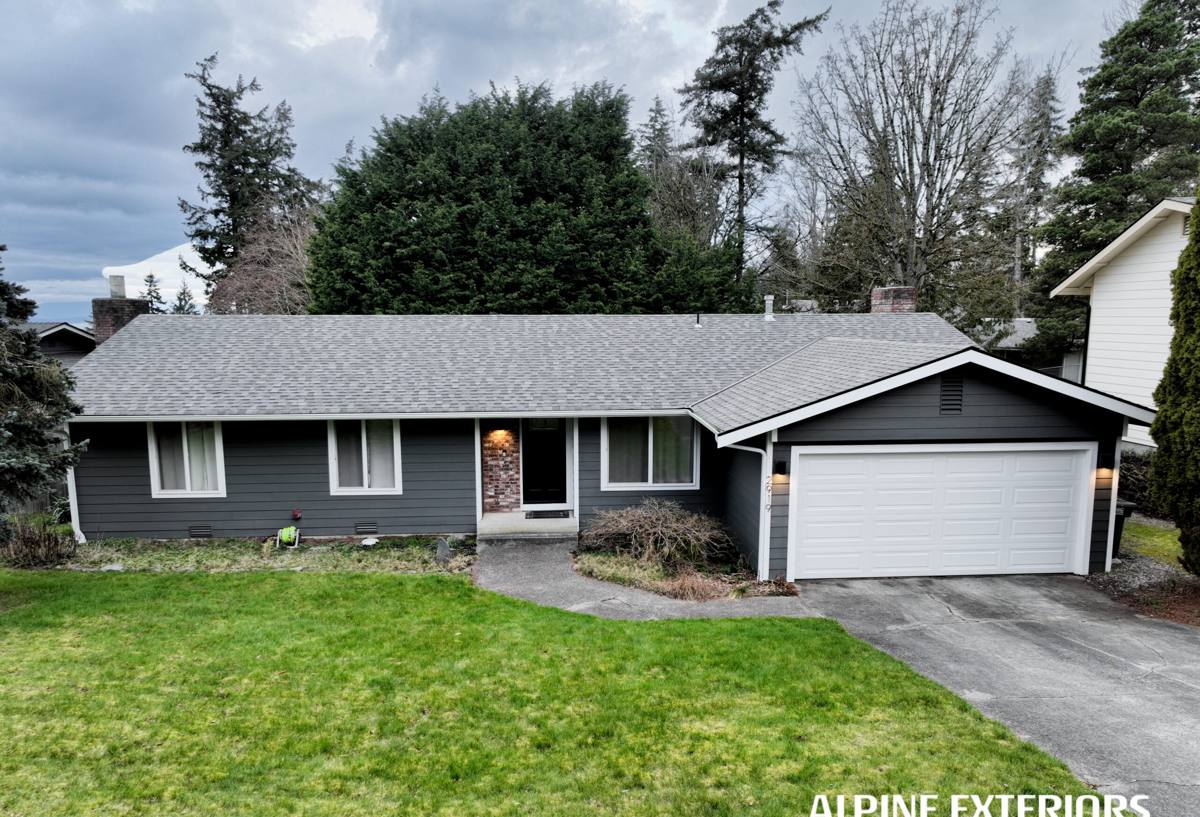
This page is about one thing done right: fiber cement siding installed correctly on a Custer-area home, in the material we actually put on houses — James Hardie. Not a general overview of siding, and not a sales pitch. Just what this climate demands, what a correct installation involves, and why the details matter more here than they would in a drier inland town.
What Salt Air, Rain, and Moss Actually Do to Siding
Salt Air
Airborne salt is corrosive to metal fasteners, flashing, and trim, and it accelerates the breakdown of coatings that aren't formulated to resist it. On a home near Custer's open farmland and coastal exposure, that means every metal component behind and around the siding — nails, flashing, corner posts — needs to be rated for it. Salt doesn't just affect wood or vinyl; it works on anything with a weak coating or an exposed cut edge.
Driving Rain
Whatcom County gets rain in volume, but it's the wind-driven angle of it that causes problems. Rain that's pushed sideways finds every gap in a siding system: unsealed butt joints, exposed nail heads, missing kick-out flashing above lower rooflines, and window and door trim that wasn't flashed to shed water outward instead of behind the cladding. A siding product can be excellent and still fail if the installation doesn't account for wind-driven moisture.
Moss and Algae Season
Custer's damp, shaded, north-facing walls and anything under tree cover get a long window each year where surfaces stay wet enough for moss and algae to take hold. This isn't just cosmetic — sustained moisture against a wall assembly, especially where moss holds water against a surface for weeks at a time, is what eventually finds its way into seams, trim, and fastener penetrations that aren't sealed properly.
Why We Install Only James Hardie Fiber Cement
We don't install vinyl, LP SmartSide, Cemplank, Allura, primed spruce, or cedar. That's a deliberate standard, not a matter of availability. Each of those products has real strengths, but none of them holds up as consistently as James Hardie fiber cement across the specific combination of salt exposure, driving rain, and moss season that Custer homes deal with every year.
- Non-combustible core: Hardie's fiber cement composition doesn't feed a fire the way wood-based products can, which matters given Whatcom County's dry-summer wildfire risk alongside its wet winters.
- Engineered for the Pacific Northwest: Hardie's HZ5 product line is formulated for exactly this climate zone — moisture cycling, temperature swings, and prolonged damp exposure — rather than a one-size-fits-all national spec.
- ColorPlus factory finish: A baked-on finish applied under controlled conditions holds color and resists the fading, chalking, and moss-friendly surface breakdown that field-applied paint is more prone to over time.
- Dimensional stability: Fiber cement doesn't swell, rot, or delaminate the way wood-based composites can when they take on repeated moisture.
- Long, transferable warranty: Backed by a manufacturer warranty structure that holds up over the decades this siding is meant to last, which matters if the home changes hands.
We're not claiming the products we don't install are without merit — some perform reasonably well in the right conditions. Our position is narrower: given what we see fail and what we see hold up on homes in this specific climate, Hardie fiber cement is what we're willing to put our name behind.
How Fiber Cement Compares for a Climate Like Custer's
| Factor | James Hardie Fiber Cement | Vinyl | Wood / Engineered Wood |
|---|---|---|---|
| Salt air resistance | Strong — inert core, factory-cured finish | Fair — can become brittle over time | Weak — coatings degrade, substrate absorbs moisture |
| Driving rain / wind-driven moisture | Strong when flashed and installed to spec | Moderate — depends heavily on seams and laps | Weak — end grain and seams are vulnerable |
| Moss/algae resistance | Good — dense, factory-finished surface resists holding moisture | Fair — surface itself is inert but traps moisture behind panels | Poor — organic material is a moss host |
| Fire performance | Non-combustible | Combustible, can melt/warp near heat | Combustible |
| Typical repaint/refinish interval | 15+ years (ColorPlus factory finish) | Does not repaint well; fades, doesn't take paint | 5–10 years |
What a Correct Installation Actually Requires
Fiber cement siding is only as good as the assembly behind it. A rushed or generic install on paper looks the same as a correct one until the first hard wind-driven rain finds the gaps. On a Custer-area home, we pay particular attention to:
Weather-Resistive Barrier and Drainage Plane
A properly lapped house wrap with a drainage gap behind the siding gives incidental moisture somewhere to go instead of sitting against the sheathing. This is non-negotiable in a climate where wind-driven rain is a regular event, not an occasional storm.
Flashing at Every Penetration
Windows, doors, hose bibs, vents, and roof-to-wall transitions all need flashing detailed to shed water outward, lapped correctly with the drainage plane. Kick-out flashing where a roofline meets a wall is one of the most commonly skipped details on lower-quality installs — and one of the most common sources of hidden rot when it's missing.
Fastener Selection and Placement
Corrosion-resistant fasteners, driven to the manufacturer's specified depth and location, matter more near salt air exposure. Over-driven or under-driven nails compromise the board's ability to move with temperature and moisture cycling and can crack the material or loosen over time.
Clearances and Gaps
Hardie's installation instructions specify minimum clearances from grade, roofing, and decks, plus gaps at butt joints and trim to allow for expansion. Skipping these clearances is one of the fastest ways to trap moisture against the bottom edge of a board — exactly where moss and rot get started.
Caulking and Sealant Practice
Sealant belongs at specific joints, not everywhere. Over-caulking can trap moisture inside a joint instead of letting it drain and dry, which does more harm than good in a wet climate.
Our Process on a Custer-Area Home
- On-site inspection: We assess existing siding, sheathing condition, moisture history, and any problem areas — north-facing walls, low rooflines, areas near grade — before quoting anything.
- Tear-off and sheathing check: Old siding comes off and we inspect the sheathing underneath for hidden rot or moisture damage before it gets covered again.
- Repair as needed: Any compromised sheathing or framing gets repaired before new siding goes on — no covering up existing problems.
- Weather-resistive barrier installation: Properly lapped house wrap and drainage details installed to manufacturer and code specification.
- Flashing detail work: Windows, doors, and all penetrations flashed before siding installation begins.
- Hardie fiber cement installation: Boards fastened to spec, with correct clearances, gaps, and fastener placement throughout.
- Trim, corners, and caulking: Finish details completed with attention to where sealant helps and where it doesn't.
- Final walkthrough: We review the finished job with the homeowner before calling it done.
A Homeowner's Checklist for Vetting a Siding Contractor
- Ask specifically what siding material they install and why — and whether they install more than one brand or system.
- Ask how they detail flashing at windows, doors, and roof-to-wall transitions, not just what siding brand they use.
- Confirm they check sheathing condition during tear-off, not just re-side over what's there.
- Ask about fastener type and whether it's rated for coastal or salt-air exposure.
- Request references from jobs at least a few years old, not just recent completions — siding problems often show up years later.
- Verify they carry proper licensing and insurance for exterior work in Washington State.
Living With Fiber Cement Siding in a Moss-Prone Climate
Even correctly installed siding benefits from basic upkeep in a climate like this. Keeping gutters clear so overflow doesn't run down the wall face, trimming back vegetation and tree cover that keeps walls shaded and damp, and an occasional gentle wash of north-facing or shaded walls all help keep moss from establishing. None of this is heavy maintenance — it's the kind of upkeep any exterior surface benefits from in Whatcom County, and Hardie's factory finish means you're not also repainting on a short cycle on top of it.
Why Local Experience on This Specific Job Matters
A crew that has worked houses in and around Custer already knows which walls tend to take the worst of the wind-driven rain, where moss shows up first, and how salt exposure from the surrounding open land and coastal proximity tends to affect fasteners and trim over time. That's not something a general installation manual covers — it's pattern recognition built from doing this work on homes in this specific area, under these specific conditions, repeatedly.
If you're weighing a siding replacement or new construction project in Custer, we're happy to take a look at your home and walk you through what correct James Hardie installation would involve for your specific exposure and conditions. The estimate is free, there's no pressure, and you can use the form below to get started.