 Ferndale Siding
 Building Decks for the Cordata Area's Weather
Homes around Cordata sit close enough to the water and open farmland north of Bellingham that they catch the same weather pattern that defines Whatcom County: long stretches of driving rain from fall through spring, salt-tinged air moving in off Bellingham Bay and the Strait of Georgia, and shade pockets that hold moisture long after a storm passes. A deck built without that pattern in mind doesn't fail because the wood was bad or the crew was lazy — it fails because it was designed like it was going into a dry climate somewhere else. We build decks in this area specifically for what this area does to wood, metal, and fasteners over time.
That means thinking about moss before it ever shows up, choosing hardware that won't corrode in salt-influenced air, and framing so water has somewhere to go instead of somewhere to sit. It's not complicated, but it has to be intentional from the first stake in the ground.
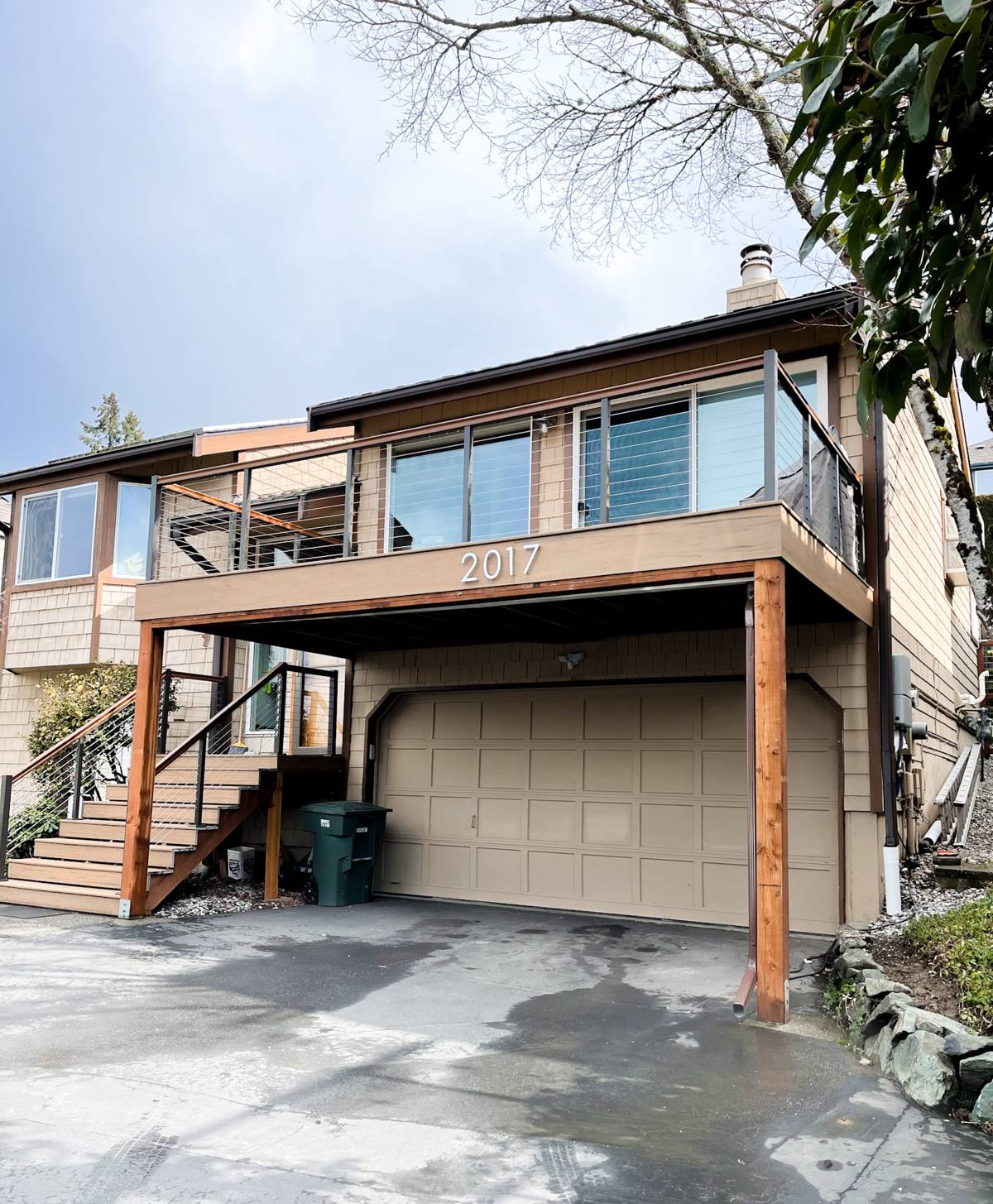
What "Correct" Actually Means in This Climate
A deck that's technically up to code can still be a maintenance headache in five years if it wasn't built with local conditions in mind. Here's what we treat as non-negotiable on every Cordata-area deck we build:
- Joist and beam spacing sized for the actual load and span — not the minimum the span table allows, since sagging shows up faster in a wet climate
- Stainless or heavy hot-dip galvanized fasteners and hardware, not standard-coated screws that streak and weaken near salt air
- Gaps between deck boards sized to let the surface dry between rain events instead of trapping standing water
- Flashing at every ledger board connection to the house, full stop — this is the single most common source of hidden rot we find on older decks
- Post bases that keep wood off concrete and off grade, so ground moisture doesn't wick straight up into the structure
None of this is exotic. It's standard good practice — but it's the kind of detail that gets skipped when a crew is moving fast or building from a generic template instead of thinking about the specific site.
Why Moss Season Changes the Calculus
Whatcom County's moss season isn't a cosmetic issue — it's a moisture-retention issue. Moss holds water against wood and against fastener heads for weeks at a time, which accelerates rot and corrosion in exactly the spots you can't see without pulling boards. Decking material, board spacing, and even the compass orientation of the deck all affect how much moss you'll fight later. We factor that in at the design stage rather than leaving it as a maintenance problem for the homeowner.
Decking Material Options for This Climate
There's no single "right" material for every deck — it depends on budget, how much upkeep you want to do, and how much sun exposure the deck actually gets. Here's how the common options stack up for a Cordata-area build:
| Material | Moisture & Moss Behavior | Upkeep | General Cost Range |
|---|---|---|---|
| Pressure-treated fir/pine | Sheds water fine if sealed regularly; moss grabs on to unsealed grain fast | Annual cleaning and re-sealing recommended | Lowest upfront cost |
| Cedar | Naturally rot-resistant, but still needs sealing in this rainfall to hold color and resist moss staining | Moderate — cleaning plus periodic finish | Mid-range |
| Composite decking | Doesn't rot, but moss and algae can still grow on the surface film in shaded, damp spots | Low — occasional wash, no sealing | Higher upfront, lower long-term labor |
| PVC/capped composite | Best moisture resistance of the group; still needs occasional cleaning to prevent surface film buildup | Lowest | Highest upfront |
We'll walk through these trade-offs honestly during an estimate rather than steering you toward whatever has the best margin. A shaded, north-facing deck under trees is a different decision than a full-sun deck facing open yard, even on the same street.
Framing and Footings Built for Whatcom County Ground
Soil around the Ferndale and Cordata area varies from block to block — some lots drain well, others hold water longer after our wet-season storms. Footing depth and post placement need to account for frost and for how saturated the ground gets, not just meet the minimum code depth on paper. We dig footings to the depth the site actually calls for, and we grade around post locations so water moves away from the structure instead of pooling against it.
For attached decks, the ledger board connection to the house is where we spend the most care. This is the joint that takes the most structural load and the one most exposed to water running off the house wall. Proper flashing — installed correctly, not just present — is what keeps that connection from becoming a hidden rot problem behind the siding a few years down the road.
Fasteners and Hardware
Standard zinc-coated deck screws corrode faster here than in drier inland climates, especially on decks with any salt-air exposure. We use stainless steel or heavy-duty coated fasteners rated for exterior/coastal-adjacent use, along with corrosion-resistant joist hangers and post bases. It costs a little more upfront and saves you from streaking, staining, and weakened connections later.
Our Process, Start to Finish
- Site visit and design conversation — we look at drainage, sun/shade exposure, existing structure (for attached decks), and how you actually want to use the space
- Material and layout decisions — honest trade-offs on decking material, railing style, and footprint based on your budget and maintenance preference
- Permit handling — we pull the required permits and coordinate inspections so you're not chasing paperwork
- Demo and footings — old structure removal if applicable, footings dug to proper depth for the site
- Framing — ledger flashing, joists, beams, and posts, built to the load and span the deck actually needs
- Decking, railing, and finish work — board installation, railing, stairs, and any fascia or skirting
- Final walkthrough — we go over the finished deck with you, including basic maintenance guidance specific to the material you chose
We communicate clearly at each stage about timeline and what's happening next — no disappearing for two weeks mid-project.
Permits and Code Considerations in the Ferndale Area
Deck permitting in Whatcom County depends on the deck's height, size, and whether it's attached to the house, and requirements can differ depending on jurisdiction within the county. Rather than guess or skip this step, we handle the permit application and inspection scheduling as part of the build. This protects you two ways: it confirms the structure meets current code (which matters for safety and for resale), and it keeps you from inheriting a permitting headache if you sell the house later and a buyer's inspector finds unpermitted work.
Maintenance Checklist for Cordata-Area Deck Owners
Whatever material you choose, a little seasonal attention goes a long way in this climate. Here's what we recommend:
- Sweep debris and standing leaves off the deck surface regularly through fall — trapped leaves hold moisture against the boards
- Check and clear gaps between boards once a year so water keeps draining instead of pooling
- Inspect fastener heads and railing connections annually for early corrosion or loosening
- Re-seal wood decking (pressure-treated or cedar) on the manufacturer's recommended schedule — don't wait until it looks gray and dry
- Watch shaded corners and areas under trees for early moss growth and address it before it spreads across the whole surface
- Confirm the ledger flashing area stays visible and isn't buried under mulch, siding trim, or plantings that trap moisture against the house
A deck that gets even minimal seasonal attention will outlast one that's ignored by years, regardless of what it's built from.
Why It Matters That We Already Work This Area
Building decks in Ferndale and the surrounding Whatcom County neighborhoods, including Cordata, means we already know how local lots drain, what the wet season does to an unflashed ledger board, and which fastener and material choices hold up versus which ones look fine for the first year and then start failing. That's not something you get from a crew that builds mostly in a drier region and treats every job the same. We size framing, choose hardware, and sequence the build around what actually happens to a deck here over five, ten, and twenty years — not just what passes inspection on day one.
If you're planning a new deck or replacing one that's showing its age, we're happy to take a look and talk through what makes sense for your specific site. Reach out for a free, no-pressure estimate using the form below — we'll walk the property, answer your questions honestly, and give you a clear picture of the options before you decide anything.