 Ferndale Siding
 Bellingham's Siding Takes a Different Kind of Beating
Homes near Bellingham Bay deal with a combination of stressors that a lot of siding simply wasn't built to handle for the long haul. Salt-laden air moves off the water and settles on exterior walls, driving rain comes in sideways during fall and winter storms, and a long, damp moss season keeps north- and west-facing walls wet for weeks at a stretch. None of these things cause failure overnight. They cause it slowly, in the places you're least likely to check — behind trim, under lap joints, at the bottom edge of a wall near grade.
We're a Ferndale-based crew, so this isn't abstract to us. We see the same failure patterns on Bellingham-area homes over and over: swollen or delaminating panels near downspouts, moss creeping into horizontal seams, and paint that's failing years before it should because moisture got underneath it instead of running off. Repair work in this area isn't just patching a hole — it's understanding why that spot failed in the first place, so the fix actually lasts through another wet season instead of reopening in a year.
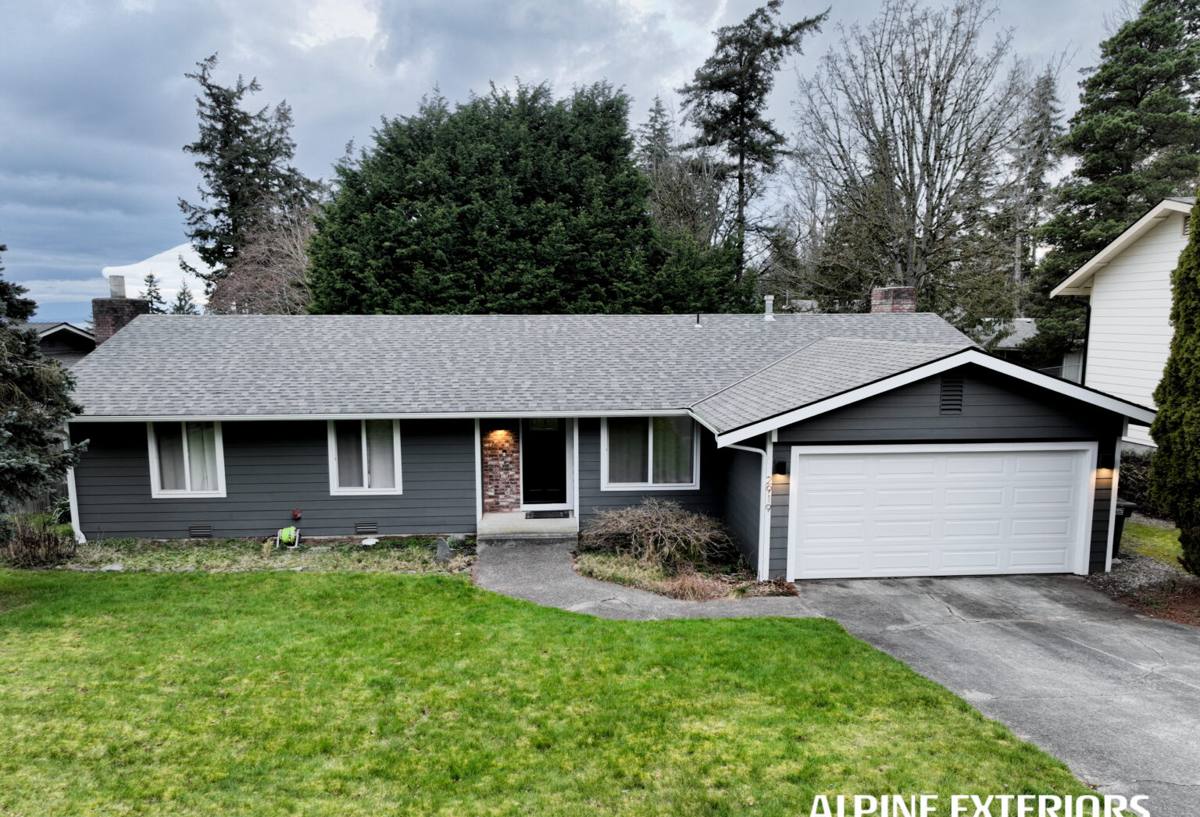
Signs Your Siding Needs Repair, Not a Full Tear-Off
Most siding problems we're called out for in the Bellingham area fall into a few recognizable categories. Catching them early is almost always the difference between a repair job and a much bigger replacement bill.
- Soft or spongy spots when you press on a panel — usually trapped moisture, sometimes rot underneath
- Visible gaps, cracking, or buckling at butt joints and corners
- Paint or finish peeling in a localized area rather than across the whole wall
- Moss or dark streaking concentrated on one exposure (typically north or west-facing)
- Staining or bubbling around window and door trim, a common sign flashing has failed
- Panels that have pulled away slightly from the wall, showing a shadow line at the seam
If what you're seeing is isolated to one wall, one corner, or a handful of boards, it's very often repairable. Widespread softness, rot that's traveled into the sheathing, or damage across multiple exposures is a different conversation, and we'll tell you plainly if that's what we're looking at.
Why Localized Damage Deserves a Real Diagnosis, Not a Guess
A lot of siding repair goes wrong because someone patches the visible symptom without figuring out the cause. Caulking over a soft spot, or nailing a new board over rotted sheathing, hides the problem for a season or two and then it comes back worse. Before we touch anything, we're checking what's happening behind the siding — whether water is getting in through a failed flashing detail, a caulk joint that's given out, or a grading issue that's splashing water up the wall every time it rains.
What a Correct Repair Actually Involves
A repair that holds up in Whatcom County's climate is more than swapping a damaged board for a new one. Here's what we're actually doing on a proper repair:
- Diagnosis first. We identify the moisture source, not just the damaged material. A board can be replaced perfectly and still fail again in two years if the water intrusion point wasn't fixed.
- Check the sheathing and framing behind the siding. If moisture reached the wall structure, that needs to be addressed before any new siding goes back on — otherwise you're covering a problem, not solving it.
- Correct the flashing and drainage details. Most repeat failures near windows, doors, and horizontal trim trace back to flashing that was missing, damaged, or installed wrong the first time.
- Match the material and reveal. Replacement panels need to match the existing siding's profile, exposure, and finish closely enough that the repair doesn't stand out as a patch.
- Reseal and re-finish properly. Caulking, painting, or factory-finish touch-up needs to be done to the same standard as the original install, not treated as an afterthought.
Common Failure Points We See on Bellingham-Area Homes
The material matters as much as the workmanship. Some siding types handle Whatcom County's wet, salty, moss-prone conditions better than others.
| Material | Common issue in this climate | Repair difficulty |
|---|---|---|
| Cedar lap siding | Absorbs moisture, prone to rot and moss growth, needs ongoing refinishing | Moderate — matching weathered cedar is hard |
| Vinyl siding | Warps and cracks in temperature swings, doesn't stop moisture from reaching sheathing | Easy to swap a panel, but doesn't address water behind it |
| OSB-based products (e.g. LP-type panels) | Edge and face swelling once moisture penetrates the coating | Difficult — swollen material usually needs full section replacement |
| James Hardie fiber cement | Resists moisture absorption and moss holds less on the factory finish | Straightforward — durable material takes repair work well |
This is part of why we standardized on James Hardie for the repair and replacement work we do. When we're patching into existing Hardie siding, we're working with a material that resists the swelling, delamination, and moisture wicking that make repairs to other products so much harder to get right — and to keep looking right.
Repair or Replace? A Straight Answer
Homeowners understandably want to know whether a repair is really worth it or whether they should just budget for new siding. There's no universal answer, but there are consistent signals we look at.
| Factor | Leans toward repair | Leans toward replacement |
|---|---|---|
| Extent of damage | Isolated to one area or wall | Spread across multiple walls or exposures |
| Age of siding | Well within expected lifespan | Already near or past its service life |
| Underlying material condition | Sheathing and framing are sound | Rot has reached structural wood |
| Match availability | Current siding/color still matched or close | Discontinued profile or badly faded color |
| Root cause | Easily corrected (flashing, caulk, grading) | Systemic moisture problem across the building envelope |
We'll walk you through where your home falls on this before we recommend anything. If a repair is the honest answer, that's what we'll propose — we're not trying to sell a full replacement when a targeted fix will genuinely hold up.
How Our Repair Process Works
1. On-Site Inspection
We look at the damaged area and the surrounding siding, check for moisture with a meter where needed, and look behind accessible sections to understand what's actually happening at the wall.
2. A Clear Explanation, Not Just an Estimate
You'll get a plain explanation of what caused the damage, what the repair involves, and what it costs — including whether we found anything that changes the scope, like rot that goes deeper than the visible board.
3. The Repair Itself
We remove only what needs to come out, address the moisture source, replace and refasten to spec, and match trim, caulking, and finish so the repair blends in rather than standing out.
4. Cleanup and Walkthrough
We clean up debris and walk the repair with you before we call it done, so you know exactly what was fixed and why.
Why a Local Crew Matters for Repair Work
Repair work is different from a full siding project in a few practical ways, and being based in Ferndale changes how we handle those differences. Water damage doesn't wait for a convenient scheduling window — a failed flashing detail found during a fall storm needs attention before the next one hits, not three weeks later. Being minutes from Bellingham means we can get eyes on a problem quickly, and we're already familiar with how homes in this area are built, what materials were commonly used in different eras of construction here, and which exposures typically take the worst of the weather off the bay.
There's also a practical benefit for color and material matching. We're not guessing at what's available regionally or waiting on a distributor across the state — we work with the same James Hardie product lines and finishes regularly, so matching an existing repair area is a routine part of our process rather than a special order.
Why We Only Repair Into James Hardie Siding
We install and repair James Hardie fiber cement exclusively — we don't do repair work on vinyl, LP SmartSide, or other engineered wood panel systems as a general practice, and we won't install those materials as replacements even when patching into an existing wall of them. That's a professional standard, not a knock on every homeowner who has one of those products. It comes down to what happens when moisture gets involved, which in Bellingham's climate is a matter of when, not if.
Hardie's fiber cement doesn't swell, delaminate, or feed rot the way wood-based panel products can once water gets past the surface. Its ColorPlus factory finish is baked on, which means touch-up and matching on a repair holds color far more consistently than field-applied paint over time. And because it's non-combustible, it doesn't introduce the fire-exposure trade-offs that come with some alternative claddings. When we're already on your wall making a repair, we want the material going back on to hold up as long as the surrounding siding — not become the next callback.
What to Ask Before Hiring a Siding Repair Contractor in This Area
Repair work is easy to do poorly and hard to verify after the fact, since the real fix is often hidden behind the finished surface. A few questions can tell you a lot about whether you're hiring someone who diagnoses problems or just patches symptoms.
- Will you check for moisture and damage behind the visible siding, not just replace what I can see?
- What caused this damage, and how does the repair address that cause specifically?
- Are you licensed and bonded to do exterior work in Washington State?
- Will the repair match the existing siding's profile, reveal, and finish?
- What happens if you find more damage once the siding is opened up?
- Do you warranty the repair, and for how long?
Any contractor who bristles at these questions, or wants to quote a price before actually looking at the damage, is worth a second opinion.
Get a Straight Look at Your Siding
If you're seeing soft spots, moss buildup, peeling paint, or damage near trim and flashing on a Bellingham-area home, it's worth getting eyes on it before another wet season makes the problem bigger. We offer free, no-pressure estimates — use the form below and we'll take a look and give you an honest read on what's going on and what it'll take to fix it right.