 Ferndale Siding
 Windows Built for Life Near the Water
Sudden Valley sits in a part of Whatcom County where the weather doesn't do things halfway. Homes here deal with damp air rolling off the water, driving rain that comes in sideways more often than straight down, and a moss season that seems to stretch longer every year. Windows take the brunt of all three. Frames absorb moisture at the corners, sashes swell and stick, and old aluminum or single-pane units start sweating condensation on the inside glass by the time October rolls around.
We've replaced windows on homes throughout the Ferndale area and out toward Lake Whatcom, and the pattern is consistent: it's rarely the glass that fails first. It's the seal around the window, the flashing behind the trim, or a frame material that was never suited to this climate in the first place. A window replacement done right in Sudden Valley isn't just a new pane of glass in an old hole — it's a full reset of how water and air move around that opening.
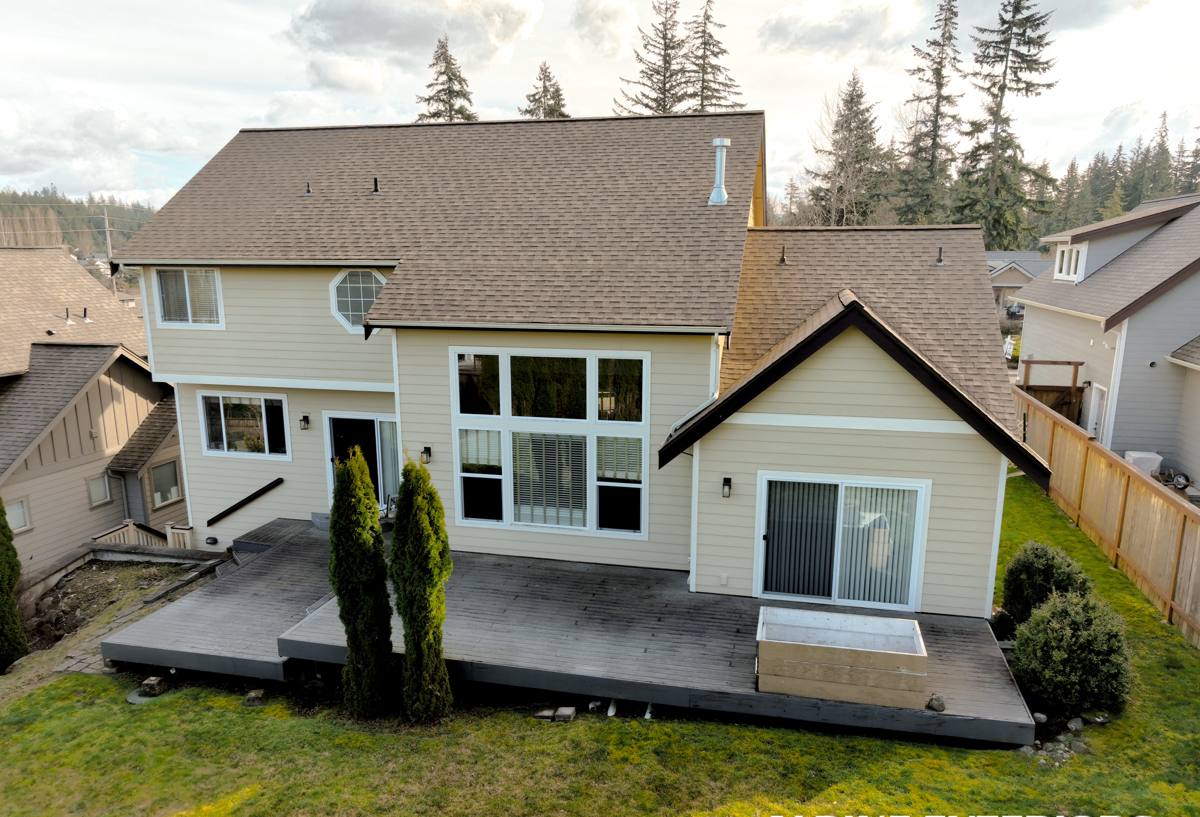
How the Local Climate Wears Down a Window
Salt Air and Moisture
Being close to open water means the air carries more salt and humidity than it does further inland. That moisture works into any gap in the exterior envelope, and it's especially hard on unpainted or poorly coated metal hardware — hinges, locks, and balance mechanisms corrode faster than most homeowners expect.
Driving Rain
Whatcom County storms don't just fall, they push. Wind-driven rain finds the weak point in a window installation — usually a gap in the flashing, a missed bead of sealant, or old caulking that's shrunk and cracked. Once water gets behind the trim, it doesn't dry out on its own; it sits against wood framing and starts rot from the inside, long before you'd notice a stain on the wall.
Moss and Shade
Many Sudden Valley lots have significant tree cover, which is part of the appeal of living there — but it also means less direct sun and more standing moisture on north-facing walls and window sills. Moss and algae growth on sills and lower sashes isn't just cosmetic; it holds moisture against the surface and accelerates decay in wood-frame windows that aren't properly sealed or capped.
Signs It's Time to Replace, Not Repair
Not every problem window needs full replacement. But in this climate, certain signs mean the window and its surrounding assembly have moved past the point where caulk and weatherstripping will fix things.
- Fogging or moisture trapped between panes of double-glazed glass — the seal has failed and can't be restored
- Soft or spongy wood at the sill, corners, or trim when pressed with a finger
- Windows that won't stay open, won't latch fully, or have become difficult to operate
- Visible daylight or a draft you can feel around the frame when it's closed
- Paint that keeps peeling or bubbling on the interior sill, a sign moisture is migrating through the frame
- Noticeably higher heating bills with no other explanation
- Persistent moss, algae, or dark staining on the sill or lower sash that keeps coming back after cleaning
Choosing a Frame Material for This Environment
The frame material matters more here than it would in a drier, sunnier climate. We steer homeowners toward materials that handle sustained moisture exposure without needing constant upkeep, and we're upfront about the trade-offs of each option rather than pushing one product line.
| Material | How It Handles This Climate | Maintenance |
|---|---|---|
| Vinyl | Won't rot, doesn't corrode from salt air, handles moisture well; most popular choice for this area | Low — occasional cleaning |
| Fiberglass | Very stable in temperature swings and moisture, holds paint well if a custom color is wanted | Low — occasional cleaning |
| Wood-clad (exterior aluminum/vinyl over wood interior) | Good for matching traditional or historic homes, but exterior seals must be installed correctly to keep water out of the wood core | Moderate — depends heavily on installation quality |
| Bare wood | Best appearance for period homes but highest exposure risk in a wet, shaded climate | High — regular painting and sealing required |
| Aluminum | Prone to condensation and thermal transfer; not our recommendation for primary living-space windows in this climate | Moderate to high |
For most Sudden Valley homes, we recommend vinyl or fiberglass for the balance of durability, moisture resistance, and reasonable upkeep. Wood-clad is a good option when matching an existing architectural style, as long as the installer pays close attention to flashing and sealing the wood core from the elements — that detail is what separates a wood-clad window that lasts decades from one that rots out in ten years.
What a Correct Installation Actually Involves
The window unit itself is only part of the job. Most window failures we get called out to inspect trace back to installation shortcuts, not a bad product. A proper replacement in this climate includes:
- Removing the old window and inspecting the framing and sill for hidden rot or water damage before anything new goes in
- Repairing or replacing any compromised framing — never installing a new window over damaged wood
- Installing correctly lapped flashing so water sheds outward and downward, never behind the siding
- Setting the window level, plumb, and square, then securing it per manufacturer specifications
- Sealing and insulating the gap between the window frame and rough opening — an under-insulated gap is a common source of drafts and condensation
- Applying weather-resistant sealant at all exterior joints, sized and placed for sustained wind-driven rain
- Finishing interior and exterior trim so the assembly is fully weather-tight, not just visually complete
Our Process, Start to Finish
1. On-Site Assessment
We walk the exterior and interior of each window being considered, checking sills, framing, and trim for existing moisture damage. This tells us whether we're doing a straightforward replacement or need to address rot or structural issues first.
2. Product Selection
We go over frame material, glass package, and style options based on your home, your budget, and how exposed that particular wall is to wind and rain. We're not tied to one manufacturer, so the recommendation is based on what suits your house, not what's easiest for us to sell.
3. Written Estimate
You get a clear, itemized estimate before any work starts — no vague allowances, no surprise add-ons once the crew shows up.
4. Installation
Old windows come out, any damaged framing gets repaired, and new units go in with correct flashing, insulation, and sealant. We protect your landscaping and interior spaces while work is underway.
5. Final Walkthrough
We test operation on every window, check seals, and walk the job with you before we consider it finished.
What Affects the Cost
Every home is different, but the same handful of factors drive most of the price difference between jobs. We won't give you a number without seeing the windows, but this is what typically moves the estimate:
| Factor | Why It Matters |
|---|---|
| Frame material chosen | Vinyl is generally the most budget-friendly; fiberglass and wood-clad cost more upfront |
| Condition of existing framing | Hidden rot found during removal adds repair time and material |
| Window size and configuration | Large picture windows, bays, or custom shapes cost more than standard double-hung units |
| Glass package | Upgraded low-E coatings or gas fills improve efficiency but add cost |
| Number of windows | Doing multiple windows in one project usually lowers the per-window cost |
| Access and site conditions | Second-story windows or tricky access on sloped, wooded lots can add labor time |
Why Local Experience in Sudden Valley Matters
A crew that hasn't worked this specific area doesn't always know what to look for. We've seen the pattern of moisture damage that shows up on shaded, north-facing walls near the lake. We know that flashing details that are optional in a drier climate are not optional here. And we know that a window that looks fine from the street can be hiding rot at the sill if it hasn't been properly sealed against years of wind-driven rain.
Hiring a contractor who already understands the Whatcom County climate means fewer surprises during the job and a window installation that's actually built for the conditions it has to survive, not just the conditions it was designed for on paper.
After Your Windows Are Installed
New windows in this climate still need a little attention to get their full lifespan out of them:
- Rinse sills and tracks periodically to clear moss spores and organic debris before they take hold
- Check exterior caulking annually, especially after a hard winter, and touch up any cracked sections
- Keep gutters and downspouts clear so runoff isn't sheeting directly across window heads
- Trim back vegetation that keeps a window in constant shade and moisture
- Operate each window a few times a season so tracks and hardware don't seize up
None of this is heavy maintenance — it's the kind of upkeep that takes a properly installed window from "lasting a while" to lasting the decades it's designed for.
Get a Free, No-Pressure Estimate
If your windows in Sudden Valley are fogging, sticking, drafting, or just showing their age, we're glad to come take a look. We'll give you an honest read on whether repair or replacement makes sense, walk you through material options suited to this climate, and put together a clear written estimate — no pressure, no obligation. Use the form below to get started.