 Ferndale Siding
 Deck Repair Built for Lynden's Wet Season, Not Just California Weather Manuals
Most deck repair advice you'll find online is written for climates that dry out for months at a time. Lynden isn't that kind of place. Whatcom County gets long stretches of driving rain, low winter sun that never quite dries the north side of a deck, and a moss season that can run from October through April in a shaded yard. A deck built or repaired using generic instructions often looks fine for a year or two, then starts failing exactly where our climate is hardest on wood: ledger boards, joist tops, and the gaps between deck boards where moisture sits instead of draining.
We repair decks in Lynden and throughout the greater Ferndale service area, and the failures we see here have a pattern. It's rarely one dramatic problem — it's slow, moisture-driven wear that homeowners don't notice until a board flexes underfoot or a railing post feels loose. Catching that early is the difference between a repair job and a full rebuild.
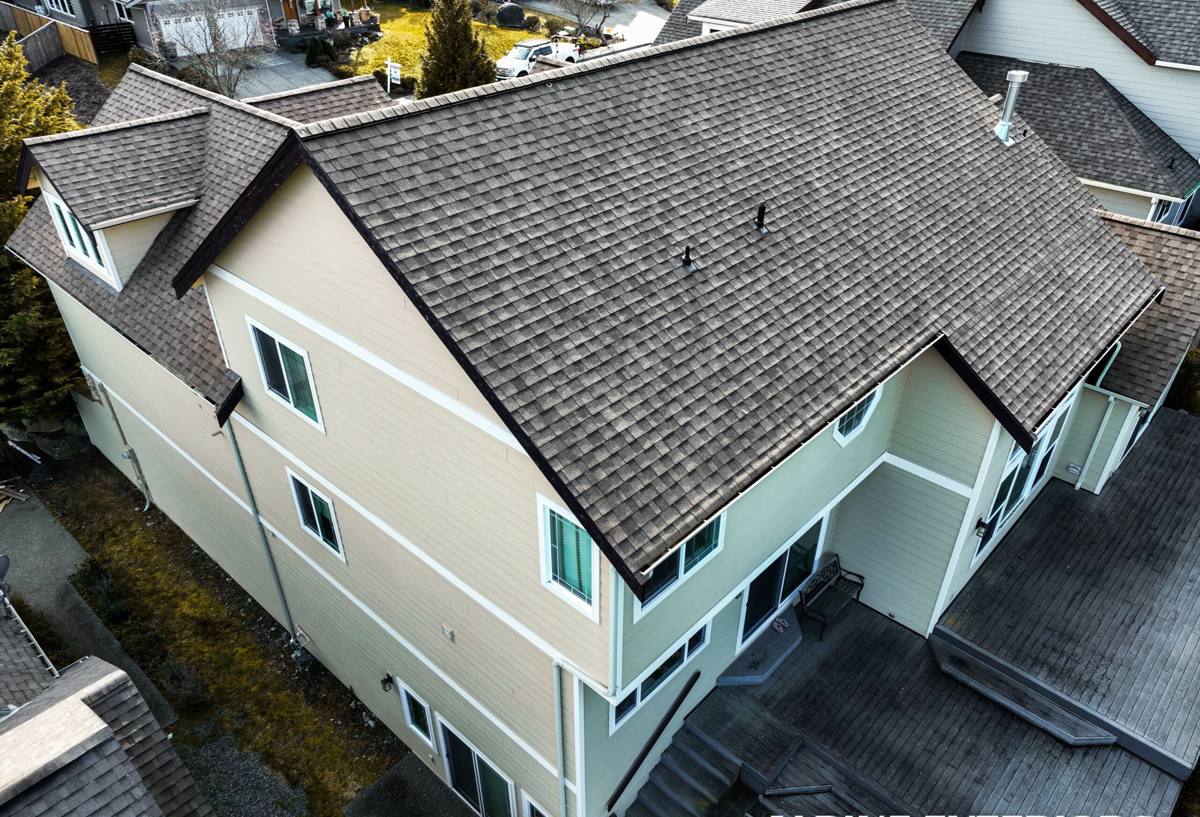
Why Decks in This Area Wear the Way They Do
A few regional factors combine to shorten the life of an unmaintained deck:
- Driving rain: Storms here often come in sideways, driving moisture up under railings, into end grain, and behind ledger boards where flashing may be missing or degraded.
- Marine and salt-influenced air: Whatcom County's proximity to the coast means fasteners, brackets, and any exposed metal hardware corrode faster than they would inland, which weakens connections long before the wood itself looks bad.
- Extended moss season: Shaded decks, especially those under trees or on the north side of a house, stay damp for months. Moss and algae hold water against the wood surface and make boards slick and slowly spongy.
- Freeze-thaw cycling: Whatcom County winters aren't brutally cold, but repeated freezing and thawing of trapped moisture in cracked or checked wood accelerates splitting.
None of this means a deck in Lynden is doomed — it means repairs need to account for moisture management, not just cosmetic fixes.
The Warning Signs Worth Acting On
Homeowners usually call us for one of two reasons: something already failed, or something feels "off" and they want it checked before it does. Both are good reasons to call. Here's what we'd want you to watch for between now and your next inspection:
- Boards that feel spongy, bounce, or flex more than neighboring boards
- Soft or discolored wood where the deck meets the house (the ledger board)
- Railings or posts that wiggle when pushed, even slightly
- Persistent moss, algae, or black staining that keeps returning after cleaning
- Rust streaks running down from screws, joist hangers, or brackets
- Gaps opening up between boards, or boards cupping (edges higher than the center)
- Stairs that creak, shift, or feel less solid than they used to
Any one of these on its own might be minor. Two or three together, especially near the ledger or stairs, usually means moisture has been working on the structure for a while.
What Correct Deck Repair Actually Involves
It starts with diagnosis, not patching
A repair that just swaps a bad board without asking why that board failed tends to repeat the same failure a year or two later. Before we replace anything, we check the framing underneath — joists, the ledger connection, and any flashing — because a deck surface problem is very often a symptom of a moisture path we need to close off first.
Ledger board and flashing
The ledger is the board that attaches the deck to the house, and it's the single most common source of hidden rot because it's where two structures meet and water naturally wants to collect. If flashing is missing, cracked, or was never properly installed, water gets behind the ledger and rots it from the inside — often invisible from a casual look at the deck surface. Correcting this means pulling back decking near the house, inspecting the ledger and rim joist, replacing any compromised wood, and installing or repairing flashing so water sheds away from the house instead of pooling against it.
Joists and structural framing
Joist tops are exposed to standing water every time it rains, especially if the decking above has tight or clogged gaps. We check for soft spots, delamination, and hanger corrosion, and we sister or replace any joist that's lost structural integrity rather than covering it up.
Decking boards
Individual board replacement is straightforward once the framing underneath is sound. We match spacing and fastening to allow proper drainage and airflow — tight, moisture-trapping gaps are one of the most common causes of premature rot in board replacements done without attention to airflow.
Railings, posts, and stairs
Loose railings are usually a connection problem, not a wood problem — bolts and structural screws that have corroded or backed out, or a post base that's been sitting in water. We rebuild these connections properly rather than just re-tightening hardware that's already failing.
Fasteners and hardware
Given how corrosion-prone standard fasteners are in this climate, repairs are only as good as the hardware holding them together. We use fasteners and structural connectors rated for exterior, moisture-heavy exposure rather than whatever's cheapest at the box store.
Repair vs. Replacement: How We Make That Call
| Situation | Usually Repairable | Usually Needs Replacement |
|---|---|---|
| A few soft or cracked boards, framing solid | Yes | — |
| Ledger board rot, isolated area | Yes, with flashing correction | — |
| Widespread joist rot across the deck | — | Likely, framing rebuild |
| Loose railing on solid posts | Yes, reconnect/reinforce | — |
| Deck under 10 years old, isolated damage | Yes | — |
| Deck 20+ years old, multiple failure points | Partial repair possible | Full rebuild often more cost-effective |
We'll always tell you honestly which category your deck falls into. A well-built deck with a moisture problem is usually a good repair candidate. A deck with failing framing across multiple sections often costs more to patch piecemeal than to rebuild once, correctly.
Materials: What We Use and Why
For structural repairs — joists, ledgers, framing — we use pressure-treated lumber rated for ground contact or moisture exposure, matched to the existing structure. For decking surfaces, we'll talk through options with you: repaired sections can match existing wood decking, or in some cases it makes sense to transition a repaired area to a composite board, depending on your goals, budget, and how much sun and shade the deck gets.
We're candid about trade-offs rather than pushing one material as a cure-all. Composite decking resists rot in a way wood can't, but it has its own maintenance considerations — surface cleaning to prevent mold in shaded, damp spots, and installation that has to account for expansion in temperature swings. Wood decking is more affordable to repair in sections and easier to match, but it needs regular sealing and cleaning to hold up through our wet season. Neither is wrong — the right call depends on your deck's exposure and how much upkeep you want to do.
Our Process, Start to Finish
- On-site inspection: We walk the full deck, probe suspect boards and the ledger connection, and check framing where accessible.
- Honest assessment: You get a clear explanation of what's failing, why, and whether it's a repair or a case for replacement — no upsell for its own sake.
- Written scope and estimate: Specific to what your deck needs, not a generic package.
- Repair work: Framing and moisture issues addressed first, then decking, railings, and hardware.
- Cleanup and walkthrough: We show you what was done and what to watch for going forward.
A Simple Maintenance Checklist for Lynden Decks
Between repairs, a few habits go a long way in this climate:
- Sweep leaves and debris off the deck regularly, especially in shaded corners where moss takes hold
- Keep gutters and downspouts clear so runoff isn't draining directly onto or under the deck
- Check railings and stair posts for movement once or twice a year
- Look at the ledger board area after heavy rain for staining or soft spots
- Clean and reseal wood decking on a regular schedule rather than waiting until it looks gray and dry
- Trim back vegetation that keeps sections of the deck shaded and slow to dry
Why Local Experience Matters for This Kind of Work
Deck repair looks simple from the outside — pull a bad board, put in a new one. The part that actually determines whether a repair lasts is understanding how moisture moves through a structure in Whatcom County's specific conditions: where flashing tends to fail first, which framing details hold up to driving rain and which don't, and how much drainage a deck needs to survive a moss season that can stretch half the year. A crew that repairs decks across Ferndale, Lynden, and the surrounding area sees these same failure patterns repeatedly and knows what to check before problems become visible from the surface.
If your deck has a soft spot, a loose railing, or you just want an honest read on its condition before it becomes a bigger repair, we're glad to take a look. Reach out for a free, no-pressure estimate using the form below — we'll walk the deck with you and tell you plainly what it needs.