 Ferndale Siding
 Storm Damage Is Different Near the Water
Fairhaven sits close enough to the water that homes here take a different kind of beating than a roof ten miles inland. Wind off Bellingham Bay drives rain sideways under shingle tabs and flashing edges that would stay dry in a calmer neighborhood. Salt-laden air accelerates corrosion on nails, flashing, and vent boots years before a manufacturer's warranty expects it. And Whatcom County's long, wet moss season adds a slow-motion kind of damage that often gets discovered only after a storm forces someone to actually look at the roof up close.
That combination means a "storm damage roof repair" call in this part of Ferndale is rarely just about one blown-off shingle. It's usually a mix of wind-lifted material, water that's been finding its way in for longer than anyone realized, and moss or organic growth that weakened the roof's ability to shed water in the first place. A repair that only addresses the visible damage and ignores the rest tends to fail again in the next storm.
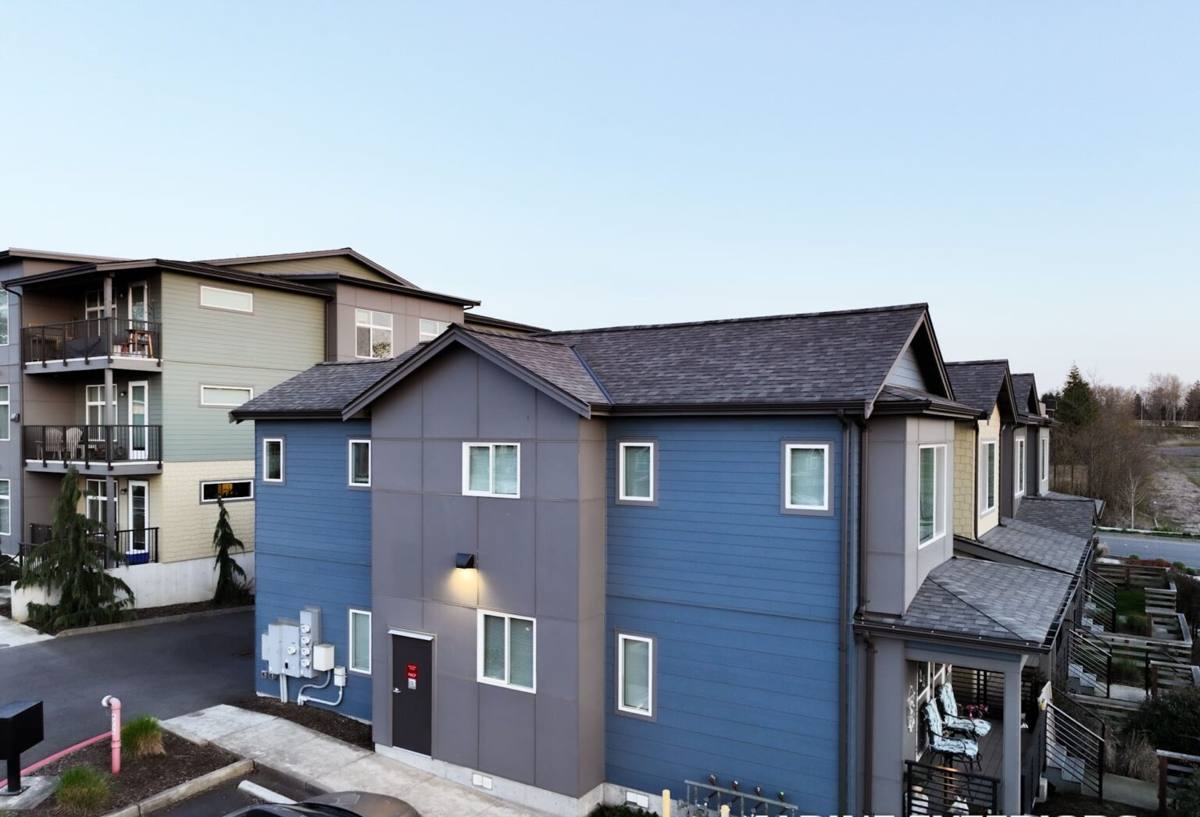
What Coastal Storms Actually Do to a Roof
Wind
Storms moving through this corridor don't need hurricane-force gusts to cause damage — sustained wind combined with rain is enough to lift shingle tabs, work fasteners loose, and peel back ridge cap over time. Once a tab is lifted even slightly, it rarely seals back down on its own, and every subsequent storm gets underneath it a little further.
Wind-Driven Rain
Rain that comes in at an angle behaves differently than rain falling straight down. It gets pushed up under shingle edges, around chimney flashing, and into any gap at a roof-to-wall transition. This is why leaks after a coastal storm often show up somewhere other than where the visible damage is — water travels along the roof deck before it finds a way through.
Salt Air
Homes near Fairhaven get measurable salt exposure compared to inland Ferndale properties. Over years, that accelerates rust on exposed fasteners, pipe boots, and metal flashing. A fastener that's rusted through doesn't hold a shingle down the way it should, which is one reason storm damage tends to cluster more heavily on homes closer to the water.
Moss and Organic Growth
Whatcom County's moss season runs long — mild, wet winters and shaded lots keep roofs damp for months at a time. Moss holds moisture against the roofing material, lifts shingle edges as it grows, and adds weight. A roof with an established moss problem is more vulnerable to wind and rain damage than a clean one, because the moss has already compromised the seal.
Signs a Fairhaven Roof Needs a Storm Repair
- Missing, cracked, or curled shingles, especially on the side of the roof that faces prevailing wind
- Granules collecting in gutters or at downspout outlets after a storm
- Water stains on interior ceilings or upper walls that appeared after a windy, rainy stretch
- Lifted or visibly damaged flashing around chimneys, skylights, or roof-to-wall joints
- Moss buildup along ridges and in shaded valleys, particularly on north-facing slopes
- Sagging or soft-feeling sections of roof deck, which usually means moisture has been present for a while
- Debris (branches, needles) that punctured or gouged the roofing surface during the storm
Not every item on that list means an emergency, but any of them is worth a professional look before the next storm arrives. Small problems on a coastal roof don't stay small for long.
What a Correct Storm Repair Actually Involves
A repair done right starts with figuring out how the water actually got in — not just patching the spot that's visibly damaged. That means checking the roof deck itself for soft or delaminated spots, not just the shingles sitting on top of it. Wet roofing material sitting over rotted decking is a repair that will fail again, sometimes within a single season.
Assessment
We walk the roof (weather permitting) and check the attic or interior ceiling for signs of moisture migration, since leaks rarely show up directly above where water entered. We also check flashing, pipe boots, and any roof penetrations, since these fail more often than the shingle field itself.
Matching Materials
Where possible, repairs use shingles that match the existing roof in style, color, and weight. A mismatched patch is a visible flag to future buyers that a repair was done, and it can also create a slightly uneven surface where wind can catch an edge.
Flashing and Fasteners
Given the salt-air corrosion issue, we replace compromised fasteners and flashing rather than reusing rusted material, even if it's not the piece that failed first. Reusing a fastener that's already partway corroded just moves the next repair call closer.
Moss and Debris Cleanup
If moss contributed to the failure, we remove it as part of the repair rather than leaving it to keep growing under the new material. We also clear storm debris from valleys and gutters, since trapped debris holds water against the roof long after the storm has passed.
Repair vs. Replacement: How We Think About It
Not every storm-damaged roof needs full replacement, and we don't default to recommending one. The honest answer depends on the roof's age, how much of the roof deck is affected, and whether this is an isolated storm event or the latest in a pattern of recurring damage.
| Factor | Leans Toward Repair | Leans Toward Replacement |
|---|---|---|
| Roof age | Under roughly 12-15 years | Near or past expected service life |
| Extent of damage | Localized to one slope or area | Widespread across multiple slopes |
| Deck condition | Solid, dry decking underneath | Soft, delaminated, or rotted decking |
| Storm history | First significant damage event | Repeated damage in recent years |
| Moss/organic growth | Minor, surface-level | Established growth under shingles |
We'll tell you plainly if a repair is a short-term fix on a roof that's better off being replaced. We'd rather lose a repair job than have a homeowner pay twice.
Insurance and Storm Claims
Many storm repairs in this area involve a homeowner's insurance claim. We can document damage with photos and a written assessment that your adjuster can use, and we're glad to walk the roof with an adjuster if that's helpful. What we won't do is inflate an estimate or describe damage that isn't there to help a claim along — that approach tends to cause more problems than it solves, and it's not how we want to run this business.
Why Local Experience with Fairhaven Homes Matters
A crew that regularly works this stretch of Ferndale and the surrounding Whatcom County coastline already knows which roof styles and ages are common here, how prevailing storm direction tends to concentrate damage, and what moss and salt exposure typically look like at different stages. That's not something you get from a general-purpose repair crew coming in from out of the area for a single job. It also means faster response — we're not driving in from across the county after a storm, we're already local.
We also know that homes in this area were built across a wide range of decades, with roofing materials and code requirements that varied over time. Part of doing this work correctly is recognizing what generation of roof you're dealing with and repairing it in a way that's compatible with the materials already up there, not just applying a one-size-fits-all fix.
A Practical Checklist Before and After a Storm
- Before storm season: clear gutters and downspouts so water has somewhere to go
- Before storm season: trim back branches that overhang the roof and could drop debris
- Before storm season: have any existing moss addressed rather than waiting for it to spread
- After a storm: check the attic for damp insulation or daylight showing through the deck
- After a storm: look for shingle granules collecting near downspouts
- After a storm: photograph any visible damage before cleanup, in case it's needed for a claim
- After a storm: get a professional assessment before the next weather system moves through
What to Expect When You Call Us
We start with a straightforward roof assessment — no pressure to sign anything on the spot. If it's a genuine repair, we'll explain what failed, why, and what we're doing to fix it so it doesn't just come back with the next storm. If we think replacement makes more financial sense than repeated repairs, we'll say so and explain the reasoning. Either way, you'll get a clear, written scope of work before anything starts.
Fairhaven's exposure to wind, rain, salt air, and moss means storm damage here often has more going on beneath the surface than it looks like from the ground. If your roof has been through a recent storm, or you want a professional set of eyes on it before the next one hits, we're happy to take a look and give you an honest assessment. Reach out for a free, no-pressure estimate using the form below.