 Ferndale Siding
 Why Roof Replacement in Sudden Valley Isn't a One-Size-Fits-All Job
Homes in and around Sudden Valley near Ferndale deal with a specific combination of weather that most national roofing guides never account for. Salt-laden air moving in off the water accelerates corrosion on fasteners and metal flashing. Driving rain, pushed sideways by wind rather than falling straight down, finds its way under poorly lapped shingles and around undersized flashing details. And a moss season that can run eight or nine months out of the year keeps roof surfaces damp far longer than roofs see in drier parts of the state. A roof replacement done right here has to be specified for this environment, not just installed to a generic code minimum.
We've replaced roofs across Whatcom County long enough to know which shortcuts show up as call-backs three winters later. This page walks through what a correct replacement actually involves for a Sudden Valley home, what to watch for in a contractor's process, and how to think about material choice when the climate is working against your roof almost year-round.
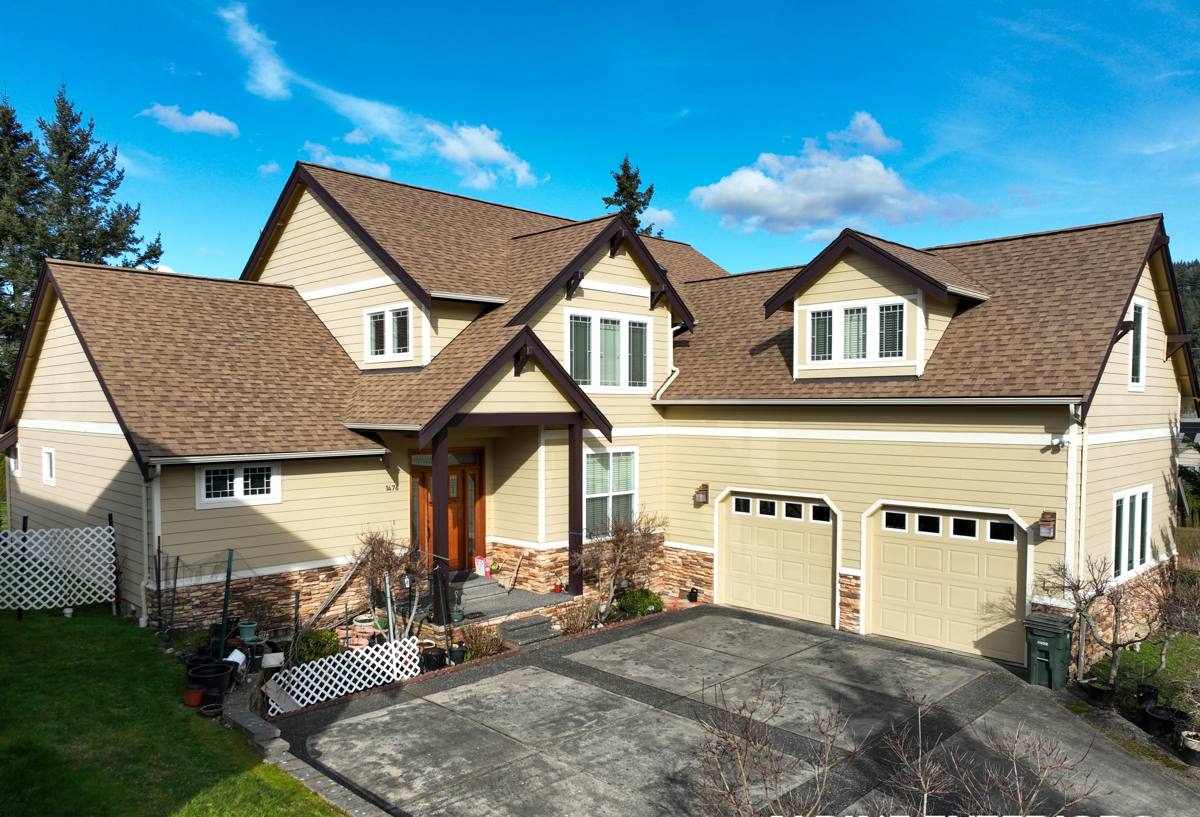
How the Local Climate Wears Down a Roof
Salt Air and Corrosion
Even homes set back from the water take on salt-bearing moisture in the air, especially during winter storms. Over years, that moisture attacks exposed steel fasteners, cheap flashing, and any metal component not rated for coastal exposure. The failure isn't dramatic — it's slow rust that eventually opens a path for water at nail heads, valleys, and edge metal.
Driving Rain and Wind-Driven Water
Storms here rarely drop rain straight down. Wind pushes it sideways and up under eaves, into vents, and along poorly sealed step flashing at chimneys and walls. A roof system that only handles vertical rainfall well will leak in this environment even if every shingle is installed correctly by generic standards.
Moss and Sustained Moisture
Tree cover and a long damp season mean moss gets a real foothold on north-facing slopes and anywhere debris collects. Moss holds moisture against the roofing surface, works its way under shingle tabs as it grows, and can lift edges enough to let wind-driven rain in behind the shingle line. Left unchecked, moss growth shortens the usable life of an otherwise sound roof by years.
Signs a Sudden Valley Roof Is Due for Replacement
Not every problem roof needs full replacement — but in this climate, certain signs point clearly toward it rather than another round of patching.
- Granule loss heavy enough that you can see bare asphalt mat in multiple spots, not just at one damaged shingle
- Moss established across large sections rather than a few isolated patches, especially if it's regrown quickly after a cleaning
- Soft or spongy decking felt underfoot during any roof access, a sign moisture has reached the sheathing
- Daylight visible through the roof deck from the attic, or staining on rafters near the ridge or valleys
- A roof at or past the manufacturer's rated lifespan combined with any of the above — patch repairs stop making financial sense once the underlying material is failing broadly
- Repeated leaks in different locations each storm season rather than one consistent trouble spot
What a Correct Roof Replacement Actually Involves
Full Tear-Off and Deck Inspection
We remove existing roofing down to the deck on every replacement rather than layering over old material. That's the only way to actually inspect the sheathing for soft spots, rot, or delamination caused by long-term moisture — problems that are common on older Whatcom County roofs and invisible from above.
Underlayment Built for Wind-Driven Rain
Given how often rain here comes in sideways, underlayment choice matters more than it does in drier climates. We use synthetic or ice-and-water-shield underlayment at eaves, valleys, and other vulnerable areas rather than relying on minimum-code felt paper, because the margin for error in a wind-driven storm is thinner.
Flashing Sized for Corrosion Resistance
Flashing at chimneys, walls, skylights, and valleys is where most roof leaks actually originate, not the shingle field itself. We use corrosion-resistant flashing and proper step-and-counter-flashing details rather than sealant-dependent shortcuts, because sealant is the first thing to fail in salt air and UV exposure.
Ventilation That Discourages Moss and Moisture Buildup
A roof deck that can't breathe stays damp longer, which feeds moss growth and shortens shingle life from underneath. Balanced intake and exhaust ventilation is part of a correct replacement here, not an optional upgrade — it directly addresses the moss problem rather than just treating symptoms after the fact.
Comparing Roofing Materials for This Climate
There's no single "best" roofing material for every home — but some perform noticeably better against salt air, driving rain, and moss than others. Here's how the common options stack up for a Sudden Valley property.
| Material | Moss Resistance | Wind-Driven Rain Performance | Typical Lifespan | Maintenance Burden |
|---|---|---|---|---|
| Standard asphalt shingle | Moderate — needs periodic cleaning | Good with proper underlayment/flashing | 20–25 years | Moderate |
| Algae/moss-resistant asphalt shingle | Better — copper or zinc granules discourage growth | Good with proper underlayment/flashing | 25–30 years | Lower |
| Standing seam metal | High — sheds moisture, little surface for moss to grip | Excellent | 40–50+ years | Low |
| Composite/synthetic shake | Moderate to high depending on product | Good with proper installation | 30–40 years | Low to moderate |
For most Sudden Valley homes we recommend either a moss-resistant asphalt shingle line or standing seam metal, depending on the roof's pitch, the homeowner's budget, and how much tree cover shades the roof. A low-slope, heavily shaded roof benefits more from metal's shedding characteristics; a steeper, more exposed roof often does fine with a good moss-resistant shingle at a lower installed cost.
Cost Factors Homeowners Should Understand
Roof replacement pricing varies with roof size, pitch, layers being removed, decking condition, and material choice — we won't quote a number without seeing the roof, but here are the factors that actually move the price up or down.
| Factor | Effect on Cost |
|---|---|
| Steep or complex roofline (multiple valleys, dormers) | Increases labor time and material waste |
| Existing decking needs partial replacement | Adds material and labor not visible until tear-off |
| Upgrading to metal from asphalt | Higher material cost, offset by longer lifespan |
| Multiple existing layers to remove | Adds disposal and labor cost |
| Extent of moss/moisture damage found at tear-off | Can add repair scope once the deck is exposed |
Our Process, Start to Finish
- On-site inspection — we walk the roof and attic, check for soft decking, moss extent, ventilation, and flashing condition before quoting anything.
- Written estimate — a clear scope of work and material recommendation, with options if more than one approach makes sense for the home.
- Scheduling around weather — given how much rain this area sees, we plan tear-off days around forecasts and keep the roof protected if conditions turn mid-project.
- Full tear-off and deck inspection — old roofing removed, deck inspected and repaired where needed before anything new goes down.
- Underlayment, flashing, and roofing installation — installed to the standard described above, not a stripped-down version of it.
- Ventilation check and correction — intake and exhaust balanced as part of the job, not left as-is by default.
- Final walkthrough — we review the completed roof with the homeowner and go over basic maintenance before we leave.
Mistakes We See in Roofs That Weren't Done Right the First Time
A lot of our Sudden Valley calls are for roofs that are only a handful of years old but already failing. The pattern is usually the same: corners cut in places that don't show up until a bad storm hits.
- Roofing installed over old layers instead of a full tear-off, hiding deck damage underneath
- Minimum-code felt underlayment used in valleys and eaves instead of a wind/water-resistant product
- Flashing relying on sealant instead of proper step-and-counter-flashing technique
- No attention paid to ventilation, leaving the deck damp and feeding moss growth from below
- Standard shingles used in heavily shaded, moss-prone areas where a resistant product would have made more sense
None of these show up on day one. They show up two, three, five years later as leaks, premature moss, or a roof that needs replacing again well before its rated lifespan is up.
Why Local Experience Matters for This Job
A roofing crew that already works Sudden Valley and the surrounding Ferndale area knows what this specific climate does to a roof over time — not from a manual, but from tear-offs where we've seen exactly which details failed and which ones held up. That means we're not guessing at underlayment specs or flashing details; we're specifying what actually holds up against salt air, driving rain, and a long moss season, because we've pulled off enough roofs that didn't to know the difference. It also means we're familiar with permitting through Whatcom County and can plan around this area's weather patterns rather than working off a generic install schedule.
After Your Roof Is Replaced
A correctly installed roof still benefits from basic upkeep in this climate. Keeping gutters clear prevents water backing up under the roof edge. A gentle moss treatment once a year, rather than aggressive pressure washing that can strip granules, keeps moss from re-establishing on shaded slopes. And a quick visual check after major storms — looking for lifted shingles or debris buildup in valleys — catches small issues before they become deck-level problems.
If your roof is showing moss, granule loss, or leaks, or you're just past its expected lifespan, we're happy to take a look and give you a straight answer on whether it needs full replacement or targeted repair. Reach out for a free, no-pressure estimate — someone who actually works this area will come look at your roof, not just quote it off a satellite photo.