 Ferndale Siding
 Deck Repair in Sumas: Built for Our Climate, Not a Showroom
A deck in Sumas lives a harder life than the lumber yard sample deck suggests. Out here toward the eastern edge of Whatcom County, closer to the foothills and the Sumas Mountain drainage than to the open coast, decks trade a little of the direct salt spray other parts of the county deal with for their own steady grind: valley fog that sits low in the mornings, heavy seasonal rain, and shaded yards where moss and algae get a long, uninterrupted growing season. The result is the same end problem homeowners call us about across Whatcom County — wood and fasteners that fail quietly, from the inside and underneath, long before the surface looks bad.
We're not here to sell you a full deck rebuild every time. Most of what we see in Sumas is repairable if it's caught before the damage reaches the structural framing. This page covers what actually goes wrong with decks in this area, what a correct repair looks like, and how we approach the job.
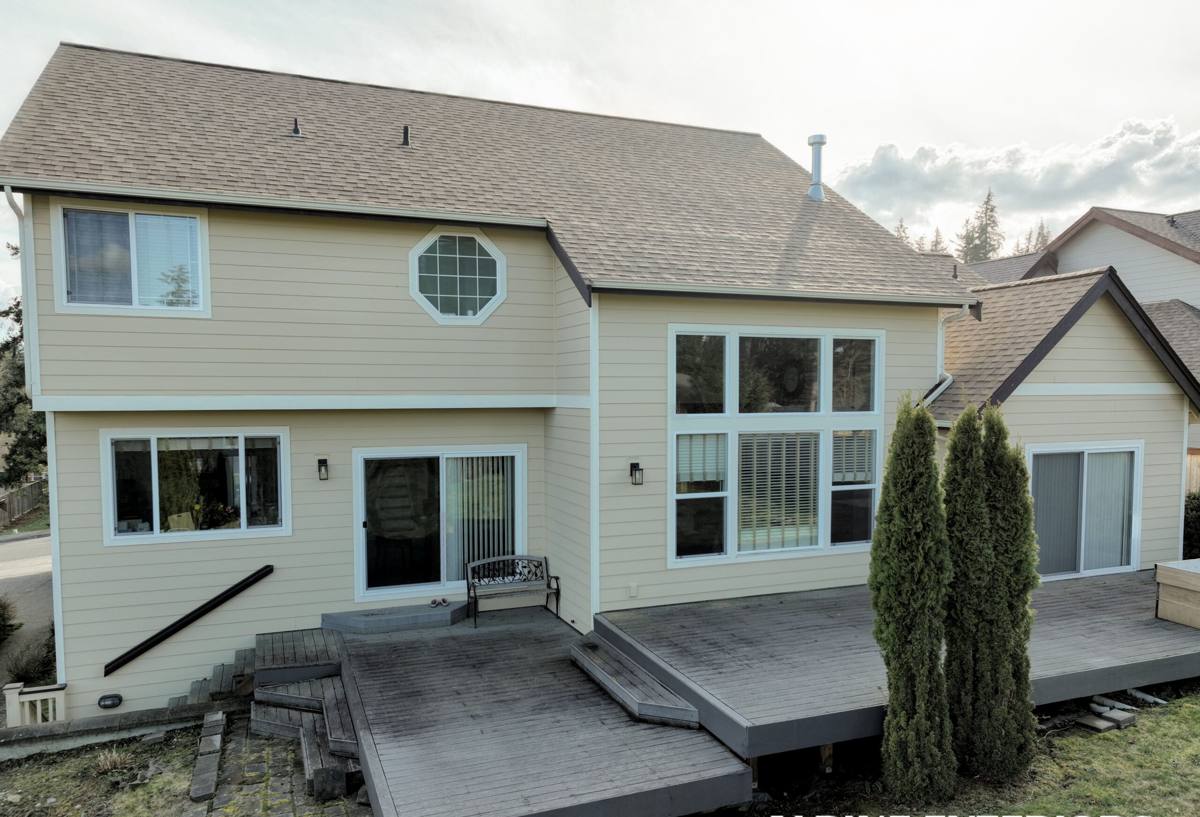
What Sumas Weather Actually Does to a Deck
Deck failure almost never starts where you can see it. It starts where water collects and can't dry out.
- Moss and algae on horizontal surfaces. Shaded decks and north-facing yards hold moisture on the board surface for days after a rain stops, which feeds moss growth and keeps the wood surface wet enough, long enough, for rot to take hold.
- The ledger board connection. Where the deck attaches to the house is the single most common failure point we find, and it's rarely visible from the yard. Flashing that was skipped, installed wrong, or has simply aged out lets water track behind the ledger and into the rim joist and framing behind it.
- Post bases at grade. Posts that sit in or near standing soil, without a proper standoff base, wick moisture up into the wood. This is a slow failure — the post can look solid at chest height and be soft at the bottom.
- Fastener corrosion. Older decks built with the wrong fastener type for treated lumber develop corrosion at joist hangers, screws, and bolts. Once a fastener loses its grip, the board or joist it's holding starts moving, which accelerates everything else.
- Freeze-thaw cycling. Whatcom County doesn't get deep freezes often, but the swings we do get open up small cracks in aging wood and concrete footings, giving water one more way in.
Signs a Sumas Deck Needs Repair — Now, Not Later
Deck damage is one of the few home repair categories where waiting genuinely increases the risk to people using it. A few warning signs deserve a same-week look, not a someday look:
- Any bounce, sponginess, or give underfoot, especially near the house or at the edges
- A railing or guardrail post that moves when you push on it
- Visible gaps, streaking, or dark staining where the deck meets the house siding
- Soft or discolored wood you can press a screwdriver into with light pressure
- Stair stringers that flex or steps that feel uneven
- Persistent moss or standing water on the deck surface after rain has stopped elsewhere
- Popped, rusted, or backed-out fasteners along joists or decking boards
- A post base that's cracked, rotted, or sitting in soil rather than on a proper footing
Any one of these can be an isolated fix. Several together usually mean the underlying moisture problem has been active for a while and it's worth a full structural look before we scope the repair.
What a Correct Deck Repair Actually Involves
It starts underneath, not on the surface
Replacing a few worn boards is the easy, visible part of deck repair. It's also the part that means nothing if the framing underneath is compromised. Before we touch decking, we check the ledger board attachment and flashing, the condition of the joists and rim joist, post and footing condition, and how the guardrail posts are actually anchored — bolted through framing, not just screwed to a fascia board. Guardrail attachment in particular is a spot we take seriously; a railing that looks fine but is only fastened into decking boards is a real safety gap, not a cosmetic one.
Then the visible repairs
Once the structure is confirmed sound (or brought back to sound), we move to decking boards, stair treads, railings, and any cosmetic elements. This is also where we address moss and surface staining properly — not just a pressure wash, which can drive water into open wood grain, but cleaning matched to the material and, where useful, drainage or shade adjustments that slow moss from coming right back.
Code matters more than it used to
Building code around deck ledger attachment and guardrail spacing has gotten stricter over the years, largely because of deck collapse incidents nationally that were traced to exactly the failure points above — unflashed ledgers and undersized fasteners. If your deck predates those code updates, a repair is a reasonable point to bring the connection up to current standards, even if the rest of the deck isn't being touched.
Repair or Replace? How We Help You Decide
Not every damaged deck needs to come down. The honest answer usually comes down to how much of the load-bearing structure is affected versus how much is cosmetic.
| Factor | Leans Toward Repair | Leans Toward Replacement |
|---|---|---|
| Ledger board and rim joist | Solid or isolated soft spot | Widespread rot behind the ledger |
| Posts and footings | Sound footings, one or two posts affected | Multiple posts rotted or footings undersized/cracked |
| Decking boards | Scattered boards worn or cupped | Most of the surface is failing at once |
| Age of structure | Newer deck with a localized issue | Older deck near the end of its practical life |
| Code compliance | Meets current standards or can be brought up to code affordably | Would require rebuilding most of the frame to meet code anyway |
We'll tell you plainly which category your deck falls into. If a repair genuinely covers it, that's what we'll scope — we don't have any incentive to talk a sound deck into a rebuild.
Our Deck Repair Process
- On-site inspection. We check the deck from underneath where access allows — not just a walk across the surface — including the ledger connection, framing, posts, and footings.
- Written scope and estimate. You get a clear breakdown of what's structural, what's cosmetic, and what it costs, before any work starts.
- Structural repairs first. Ledger flashing, framing, posts, footings, and guardrail anchoring get addressed before anything else.
- Surface and finish work. Decking, stair treads, railings, and cleaning happen once the structure underneath is confirmed sound.
- Final walkthrough. We check the deck under load — walking, standing at the rail, testing stairs — before we call it done.
Materials: What We Use and Why
Sumas's mix of shade, rain, and moss makes material choice matter more than it might in a drier climate. For repairs, we generally recommend:
- Pressure-treated lumber for framing repairs — matched to the fastener hardware rated for treated wood, to avoid the corrosion problems that caused the original failure.
- Stainless or coated structural connectors at joist hangers and post bases, since standard hardware is exactly what tends to fail first in a wet, shaded lot.
- Composite or capped-composite decking where a homeowner wants to reduce future moss and staining maintenance, with the trade-off being higher upfront material cost and a different look than natural wood.
- Cedar or treated wood decking where matching an existing deck's appearance matters more, understood as a material that will need periodic cleaning and refinishing to keep moss and gray weathering in check.
Neither option is objectively "better" — it's a maintenance-versus-cost trade-off, and we'll walk you through both honestly rather than pushing one.
After the Repair: Keeping Moss and Rot From Coming Back
A repair holds up longer with a little seasonal attention. This is the same short list we give every Sumas customer:
- Sweep debris and standing leaves off the deck surface before fall rains set in
- Clean visible moss growth early in the season rather than letting it establish
- Keep gutters and downspouts near the deck clear so runoff isn't landing on it directly
- Check railings and stair treads for movement once or twice a year
- Reseal or refinish wood decking on the manufacturer's recommended schedule, not just when it looks faded
- Trim back overhanging branches where shade is keeping the deck surface damp longer than necessary
Why Hire a Crew That Already Works in Sumas
Deck problems here follow patterns — the ledger-flashing failures, the shaded-yard moss buildup, the post rot at grade — because the climate and building stock repeat themselves across Whatcom County. A crew that's already diagnosed those patterns on other Sumas and Ferndale-area decks isn't guessing at what's likely wrong underneath your deck; they know where to look first. That translates into a faster, more accurate inspection and a repair scope that addresses the actual cause instead of just the visible symptom.
If you're ready for an honest look at your deck, we offer a free, no-pressure estimate — use the form below and we'll take it from there.