 Ferndale Siding
 Decks in Everson Take a Different Kind of Beating
Everson sits inland from Ferndale along the Nooksack River, but it shares the same weather pattern that soaks the rest of Whatcom County for much of the year: long stretches of driving rain, heavy fall and winter humidity, and enough overcast, damp days to keep moss and algae established on any wood surface that doesn't dry out fast. The same marine air system that pushes salt-tinged moisture off Bellingham Bay through Ferndale also carries that humidity inland, so Everson decks deal with the same slow, steady moisture cycle even without direct salt spray. Add in river-bottom fog and cooler overnight temperatures, and you get a climate that's genuinely tough on any deck built without that environment in mind.
Most deck failures we see out this way aren't dramatic — they're slow. A ledger board that's been quietly absorbing water behind poor flashing for six years. Joists that look fine from underneath but are soft where they meet the rim. Decking boards that cup, split, or grow a permanent green film no amount of pressure washing removes. By the time a homeowner notices the deck feels spongy or a railing post wiggles, the damage is usually well past a patch-and-paint fix.
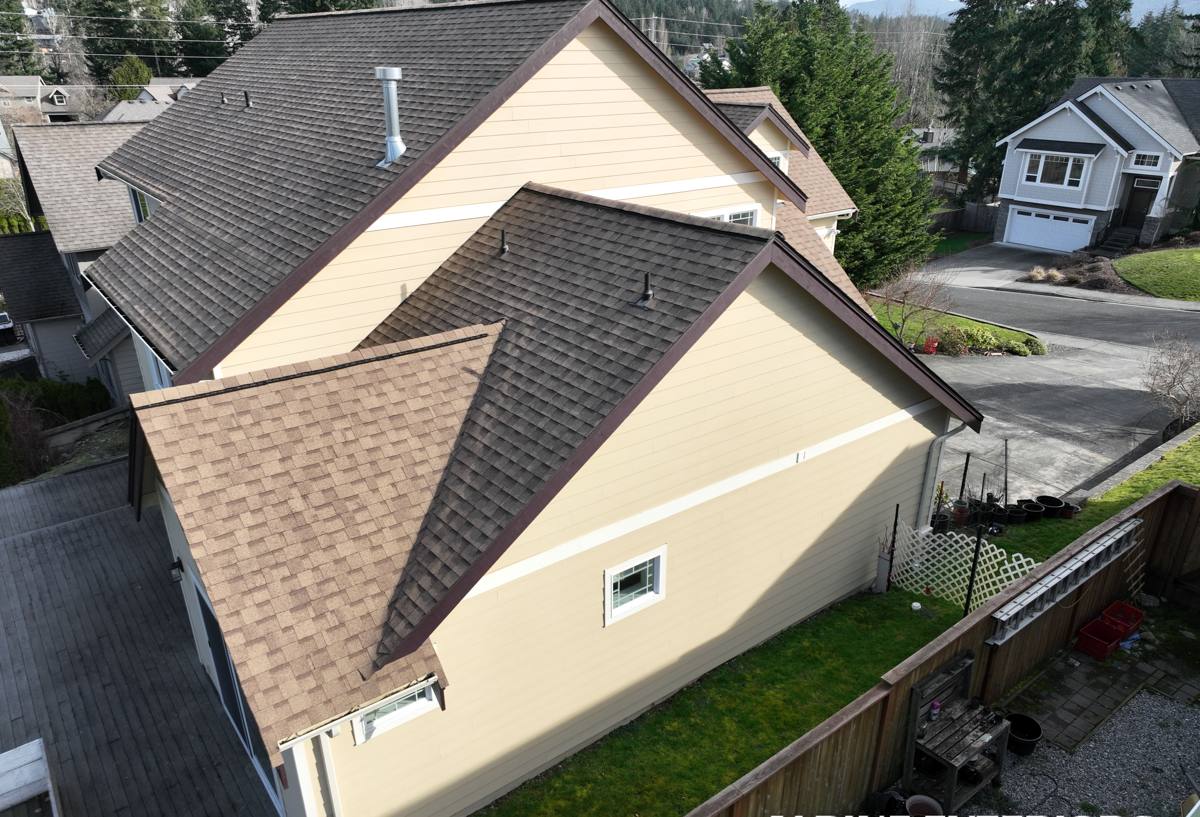
Signs a Deck Needs Replacement, Not Repair
Repair makes sense when the problem is isolated — one bad board, one loose railing baluster, a fastener pattern that needs updating. Replacement is the honest answer when the structure itself has been compromised. Here's how we tell the difference on a typical Everson property:
- Soft or spongy spots when you walk across the deck, especially near the house or stair stringers
- Visible rot, dark staining, or a flat screwdriver sinking easily into a joist or ledger
- Persistent moss or black-green film that returns within weeks of cleaning
- Fasteners that have rusted, backed out, or left dark streaks around each screw head
- A ledger board with no visible flashing, or flashing that's cracked and pulling away from the house
- Footings that have shifted, heaved, or show gaps where the post meets the concrete
- A deck that's more than 20-25 years old and was built before current code required proper ledger attachment and joist hangers
If two or more of these show up, replacement is almost always cheaper over time than chasing repairs on a structure that's already failing underneath.
What a Correct Deck Replacement Actually Involves
It starts below the decking, not with it
A lot of deck work sold as "replacement" is really just new decking boards screwed onto an old, unexamined frame. That's not a replacement — it's a cosmetic fix on top of whatever problems were already there. A proper job means pulling the old decking and inspecting every structural piece underneath: ledger board, joists, beams, posts, and footings. Anything soft, cracked, undersized, or rotted gets replaced, not patched.
Ledger and flashing come first
Given how much of Everson's deck damage traces back to water getting behind the house at the ledger board, this is the step we won't shortcut. That means proper flashing integrated with the house's water-resistive barrier, correct lag or through-bolt fastening (not just deck screws), and joist hangers sized and nailed to spec — not toe-nailed.
Footings sized for our soil and frost depth
Whatcom County's frost depth and the variable soil you get near river bottoms mean footings need to be dug to the right depth and diameter, not just poured to whatever the old ones happened to be. Undersized or shallow footings are a common cause of the slow heaving and shifting we see on older decks in this area.
Fasteners and hardware matched to the wood
Pressure-treated lumber sold today uses a different chemical treatment than it did 15-20 years ago, and it's more corrosive to standard steel hardware. Every connector, screw, and bolt needs to be rated for contact with modern treated lumber — otherwise you're building in hidden corrosion from day one.
Choosing Decking Material for This Climate
There's no single "best" decking material — there's a best fit for how a family uses the deck, what upkeep they're willing to do, and what budget makes sense. Here's how the common options hold up against Everson's damp, moss-prone conditions:
| Material | How It Handles Our Climate | Maintenance | Typical Lifespan |
|---|---|---|---|
| Pressure-treated wood | Needs regular sealing to resist moisture and moss; can cup or split if neglected | Annual cleaning, re-sealing every 1-2 years | 10-15 years with upkeep |
| Cedar | Naturally rot-resistant but still absorbs moisture; ages gray without finish | Cleaning and oiling every 1-2 years | 15-20 years with upkeep |
| Capped composite | Cap layer resists moisture absorption and moss staining well | Periodic washing, no sealing | 25-30 years |
| PVC / cellular decking | Fully synthetic, doesn't absorb water, resists mold and moss growth | Occasional washing | 25-30+ years |
We install real wood decks for homeowners who want that look and don't mind the upkeep, and we install composite and PVC for homeowners who'd rather spend a little more up front and a lot less time maintaining it. Our job is to lay out those trade-offs honestly, not push whatever has the best margin.
Our Deck Replacement Process
- On-site assessment — we inspect the existing deck from the ground up, including crawling underneath when access allows, to see what's actually failing versus what's cosmetic.
- Honest scope and estimate — you get a clear breakdown of what's being replaced and why, with material options and straight pricing, not a vague lump sum.
- Permit handling — we pull the required permit and coordinate any inspections so the job is fully documented and code-compliant.
- Demolition and disposal — old decking, framing, and hardware removed and hauled off; we protect landscaping and access points during teardown.
- Structural rebuild — ledger, flashing, footings, posts, beams, and joists installed to current code, not just matched to what was there before.
- Decking, railing, and stairs — installed per manufacturer spec if composite or PVC, or with proper spacing and fastening if wood.
- Final walkthrough — we go over the finished deck with you, including care instructions specific to the material you chose.
Permits and Local Code Considerations
Deck replacement in and around Everson typically requires a building permit through Whatcom County, particularly for decks attached to the house, decks above a certain height, or any work involving structural changes to footings or framing. Permit requirements and inspection timing can vary depending on whether the property falls inside Ferndale's jurisdiction or unincorporated Whatcom County, so we confirm the correct process for your specific address before work starts rather than assuming. Skipping permitting on a structural deck rebuild isn't just a compliance issue — it can also complicate a home sale or insurance claim down the road if the work was never inspected.
What Deck Replacement Typically Costs
Every deck is different, but these are the main factors that move the price up or down. We don't quote off a phone call — every estimate is based on an actual look at the structure.
| Cost Factor | Why It Matters |
|---|---|
| Deck size and shape | More square footage and more corners, angles, or multiple levels increase material and labor |
| Decking material chosen | Composite and PVC cost more upfront than wood but need far less long-term maintenance |
| Framing condition and code updates | Older decks often need full ledger, footing, and joist hanger upgrades to meet current code |
| Height and stairs | Elevated decks need railings, stair stringers, and sometimes engineered footings |
| Site access | Tight yards, slopes, or limited equipment access add labor time for demo and material handling |
| Permit and inspection requirements | Structural work generally requires permitting, which adds a modest but necessary cost |
Keeping a New Deck in Good Shape
A correctly built deck still needs some basic upkeep to get its full lifespan out of Whatcom County's wet, moss-friendly climate. A short seasonal checklist goes a long way:
- Sweep off leaves, needles, and debris regularly, especially in fall — trapped moisture under debris is what starts moss and rot
- Rinse or lightly wash the deck surface a couple times a year to knock back algae and moss before it takes hold
- Check that gaps between boards stay clear so water drains through instead of pooling
- Inspect the ledger flashing area yearly for any sign of staining or gaps
- Reseal wood decking on the schedule recommended for the specific product used
- Walk the deck periodically and note any soft spots, wobbly railings, or loose fasteners early
Why It Matters to Hire a Crew That Already Works in Everson
Deck framing that works fine in a drier climate isn't automatically right here. A crew that already builds and replaces decks throughout the Ferndale and greater Whatcom County area knows the frost depth, the moisture patterns, the way moss establishes itself on north-facing and shaded decks, and which fastener and flashing details actually hold up through a full wet season. That local, repeated experience is what separates a deck that looks good for the first summer from one that's still solid in fifteen years. We also already know the local permitting process, which keeps the paperwork side of the project from becoming its own headache.
If your deck in Everson or anywhere around Ferndale is showing its age, we're happy to take a look and give you a straight assessment — no pressure, no upsell, just an honest read on whether it needs repair or full replacement. Reach out for a free estimate using the form below.