 Ferndale Siding
 Composite Decking Built for the Nooksack Area's Weather
Homes near Nooksack sit in one of the wetter corners of Whatcom County. Rain moves through in long, low-intensity systems for much of the fall and winter, humidity stays high even on dry days, and the tree cover along the Nooksack River valley keeps decks and low-lying yards shaded and damp longer than homes out in open country. That combination is exactly what wears out a poorly built deck: wood rot at the ledger and joists, moss and algae staining the deck surface, and fasteners that corrode faster than they should. A composite deck done right handles all of that, but "composite decking" covers a wide range of products and installation quality, and not every install is built to actually perform in this climate.
This page is about composite decking specifically for Nooksack-area properties: what the local conditions demand, what a correct installation looks like underneath the boards (not just on top), and how we approach the job differently because we already know this ground.
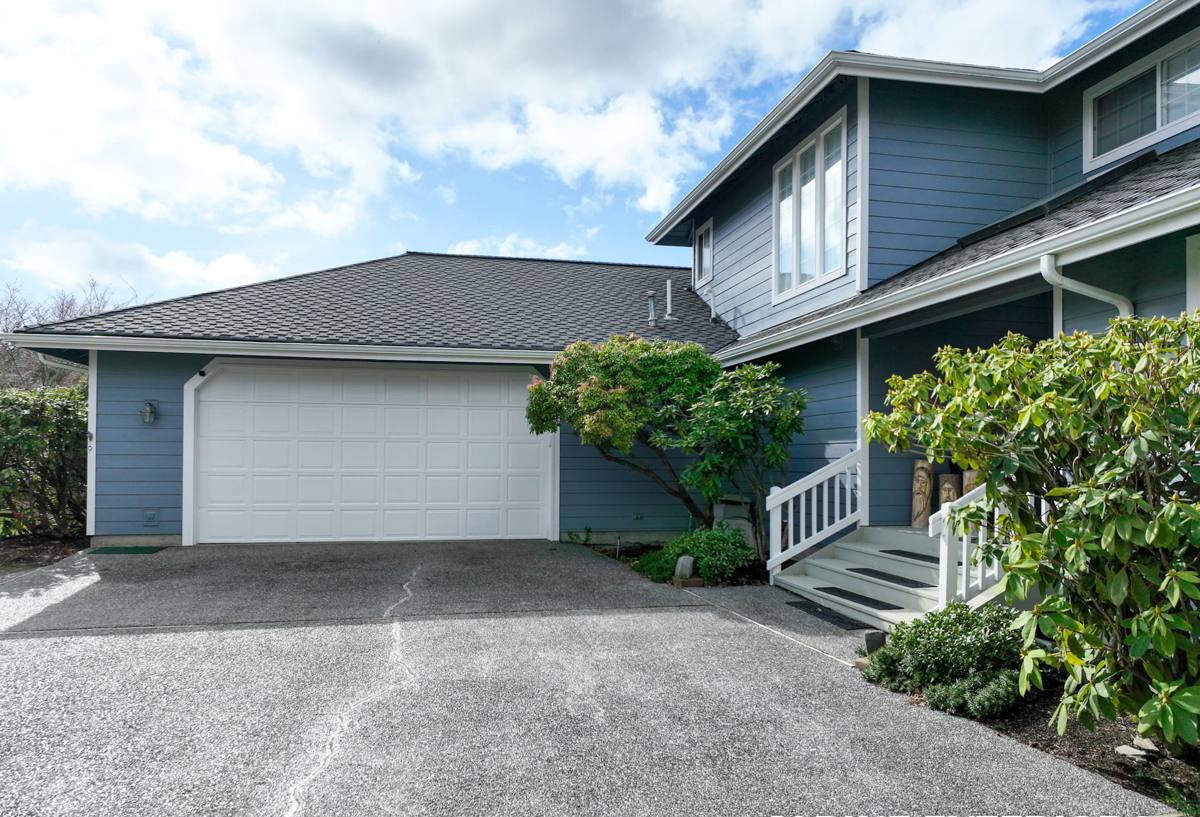
What Nooksack Homes Actually Need From a Deck
Every composite deck sold in Washington resists moisture better than untreated wood, but "resists moisture" isn't the same as "built for Whatcom County." A few things matter more here than they would in a drier part of the state:
Moss and algae pressure
Shaded, damp decks near the river valley and under mature trees grow moss and green algae film faster than decks in full sun. This isn't a defect in the decking — it's biology. Any organic debris (needles, leaves, seed pods) that sits on a deck surface holds moisture and gives moss spores something to grab onto. The board's surface texture and cap material make a real difference in how easily that washes off versus how deep it stains in.
Sustained rainfall, not just downpours
Driving rain that comes sideways off a storm is one thing; the bigger issue in this area is weeks of steady, soaking rain that keeps everything under and around the deck wet. That's a substructure problem more than a surface problem — it's about how water drains away from the frame, ledger, and post bases, not just whether the boards themselves shed water.
Ground moisture and low airflow
Decks built low to the ground, or over areas with poor drainage, trap humid air underneath. Composite decking doesn't rot, but the framing under it usually still involves wood or metal connectors that can. A deck built for this area accounts for airflow and ground clearance from day one, not as an afterthought.
What Goes Into a Correct Composite Deck Installation
The composite boards get all the attention, but most of what determines whether a deck lasts 10 years or 30 happens before a single board is installed.
Framing and ledger connection
The ledger board — where the deck attaches to the house — is the single most common failure point on any deck in a wet climate. It needs proper flashing that directs water away from the house structure, not just caulk and lag bolts. We treat this connection as the most important part of the build, because a mistake here causes hidden rot that isn't visible until it's expensive.
Joist protection
Composite decking doesn't need protection from moisture, but the joists underneath it usually do. Joist tape or a comparable protective barrier over the top of each joist keeps water from wicking into the wood through fastener holes — a small step that's easy to skip and expensive to regret in a climate that stays damp this much of the year.
Ventilation and clearance
We build in appropriate clearance between the ground (or a lower roof) and the underside of the deck wherever the design allows it, and we avoid boxing in the underside of a low deck without a way for air to move. Standing damp air under a deck is one of the biggest drivers of hidden structural problems in this region.
Fasteners and hardware
Everything below the decking — joist hangers, screws, structural connectors — should be corrosion-resistant hardware rated for ground contact and coastal-influenced, moisture-heavy air. Mixing incompatible metals (the wrong screws in the wrong hangers) causes galvanic corrosion that shows up years later as a structural issue, not a cosmetic one.
Board fastening at the surface
Most quality composite systems today use a hidden fastener/clip system rather than face-screwing, which keeps water from sitting in screw heads and gives a cleaner look. Hidden fasteners also reduce the number of penetration points where water can work into the board core over time.
Our Installation Process
- On-site assessment — we look at drainage, sun exposure, tree cover, existing structure (if replacing a deck), and how water currently moves around the area.
- Design and material selection — sizing, board layout, railing, and picking a composite line that fits the budget and the site's specific moss/shade exposure.
- Permitting — most deck work in Whatcom County requires a permit; we handle that process rather than leaving it to the homeowner.
- Demo (if applicable) — removal of the old deck, with an honest look at the ledger and framing underneath before we build over it.
- Framing and flashing — ledger flashing, joist layout, hardware, and joist protection tape installed to spec.
- Decking and railing installation — boards, hidden fasteners, fascia, and railing system installed per manufacturer spec (installation errors are the most common reason a warranty gets denied later).
- Final walkthrough — we go over care and cleaning specific to a shaded, damp property before we consider the job done.
Composite vs. Wood vs. PVC: What Actually Fits This Climate
| Material | Moss/algae resistance | Maintenance | Typical lifespan |
|---|---|---|---|
| Pressure-treated wood | Low — porous surface holds moisture and organic debris | Annual cleaning, periodic staining/sealing | 10-15 years |
| Capped composite | High — dense cap sheds surface moisture, easier to clean | Occasional wash-down, no staining or sealing | 25-30+ years |
| Uncapped/early-generation composite | Moderate — can absorb moisture at the surface over time | More frequent cleaning to prevent staining | 15-20 years |
| Cellular PVC | High — non-porous, but can look and feel less natural | Low, similar to capped composite | 25-30+ years |
For a shaded, damp lot like much of the Nooksack area, we generally steer homeowners toward capped composite as the best balance of moss resistance, low maintenance, and cost — not because other materials are bad, but because that's the profile that holds up with the least ongoing work in this specific climate.
What Drives Cost on a Composite Deck
| Factor | Why it matters here |
|---|---|
| Deck size and shape | More linear footage of framing, fascia, and picture-framed edges adds labor and material |
| Board tier | Entry-level composite vs. premium capped lines have a real price spread, mainly in surface texture and color retention |
| Substructure condition | A rotted ledger or joists on an older deck adds repair work before any decking goes down |
| Railing and stairs | Composite or metal railing systems, multiple stair runs, and lighting add cost beyond flat decking |
| Site access and grade | Sloped lots or limited access near tree lines can add labor time for material handling |
We give homeowners a real number after seeing the site — broad ranges quoted without seeing the property rarely hold up once framing condition and site access are factored in.
Maintaining a Composite Deck in a Moss-Prone Climate
- Sweep off leaves, needles, and seed debris regularly rather than letting it sit through a wet stretch
- Rinse the deck surface a few times a year, more often under heavy tree cover
- Use a soft-bristle brush and a composite-safe cleaner for any moss or algae film — avoid pressure washing directly into board grooves
- Keep gutters and downspouts clear so roof runoff isn't dumping extra water onto or near the deck
- Check that furniture, planters, and rugs aren't trapping moisture against the board surface for long periods
- Have the substructure looked at every few years, even though the decking itself won't rot
Signs an Existing Deck Needs Attention
- Soft or spongy spots when walking across the deck
- Visible gaps, rust staining, or movement at the ledger connection to the house
- Persistent green or black staining that doesn't come off with normal cleaning
- Loose railing posts or noticeable flex when leaned on
- Fasteners backing out or visible corrosion on hardware underneath
Any of these on a wood deck usually points to moisture getting into the frame — worth having looked at before it becomes a safety issue rather than a repair.
Why It Matters That We Already Work in This Area
A composite deck built to a generic spec sheet can still fail in Whatcom County if the crew installing it doesn't account for how wet this region actually is compared to the rest of the state. We work throughout Ferndale and the surrounding Nooksack area regularly, which means we've seen how decks here actually age — where moss builds up first, which framing details hold up and which don't, and how local permitting and inspection actually go. That's different from a crew passing through on a one-off job with no track record in this specific climate.
If you're planning a new deck or replacing one that's showing its age, we're happy to take a look and give you a straight answer on what it needs. Reach out for a free, no-pressure estimate using the form below.