 Ferndale Siding
 Windows Built for a Sudden Valley Address
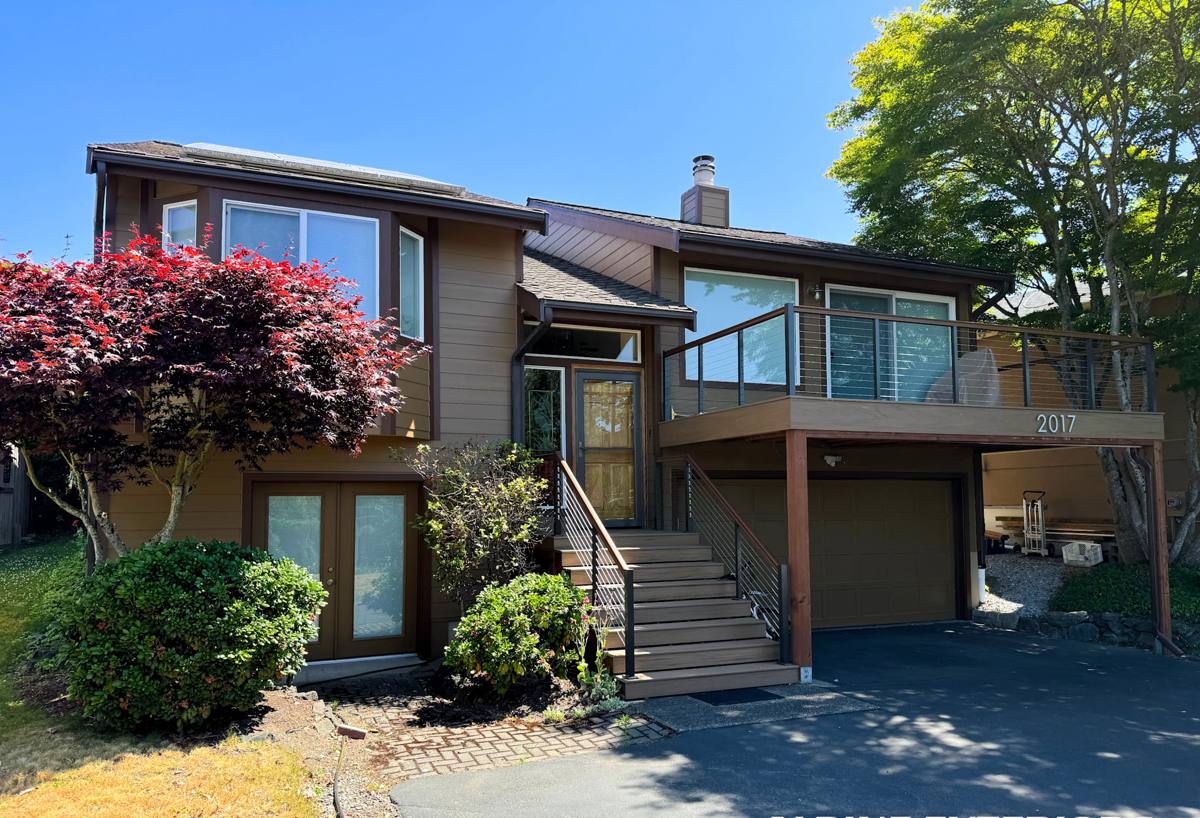
Homes around Sudden Valley sit in a different weather pocket than a lot of the surrounding Whatcom County towns. You get wind funneling off the water, long stretches of driving rain, and a shade-and-moisture combination from tree cover that keeps things damp longer than homeowners expect. None of that is a problem on its own. It becomes a problem when a window was installed without accounting for it — and years later, that shows up as fogged glass, soft trim, or a draft that no amount of caulk seems to fix.
We install windows across this area regularly enough to know which failure points show up first here, and we build the installation around avoiding them, not just around getting a new window into an old opening.
What the Local Climate Does to Windows Over Time
Three things drive most of the window problems we see on Sudden Valley homes, and they compound each other.
Salt Air
Being close enough to marine air means metal hardware, aluminum components, and unprotected fasteners corrode faster than they would further inland. Vinyl and fiberglass frames hold up better here than raw aluminum, and hardware quality matters more than it does on a drier, inland install.
Driving Rain
Wind-driven rain doesn't fall straight down — it gets pushed sideways into wall assemblies, which means the flashing and drainage plane behind a window has to actually work, not just look finished. A window that's cosmetically perfect but poorly flashed will leak eventually. It's a matter of when, not if.
Moss and Sustained Moisture
Long moss season means extended periods where wood trim, sills, and siding around a window stay damp instead of drying out between storms. That sustained moisture is what actually causes rot — a quick rain that dries fast does far less damage than a lighter rain that lingers for days under tree cover, which is common around this neighborhood.
Warning Signs Worth Taking Seriously
Homeowners often live with small window problems for years before calling anyone, mostly because none of the signs feel urgent on their own. Here's what we'd want you to flag early:
- Soft or spongy wood at the sill or bottom corners of the trim
- Condensation or fogging between the panes of a double-pane window (a sign the seal has failed)
- Visible gaps between the window frame and siding, or daylight around the edges
- A window that's noticeably harder to open, close, or lock than it used to be
- Peeling paint or bubbling on interior trim near a window, especially after a stretch of wet weather
- Musty smell near a window that doesn't go away with cleaning
- Moss or dark streaking building up on the exterior trim or sill
Any one of these by itself might not mean much. Two or three together, especially on a window facing the prevailing weather, usually means water is getting into the wall assembly and it's worth having someone look before it turns into a bigger repair.
What a Correct Window Installation Actually Involves
The window itself — vinyl, fiberglass, whatever brand — is honestly not where most installations go wrong. It's everything around it. A window is only as good as the assembly it's set into, and in a wet, salt-influenced climate that assembly needs to be right, not approximate.
Sill Pan and Drainage
Every opening should get a sloped sill pan that directs any water that gets past the exterior seal back outside, instead of letting it sit against the wood framing. This is one of the most commonly skipped steps in budget installations, and it's usually the reason a "new" window starts showing rot within a few years.
Flashing Sequence
Flashing tape and building paper or house wrap need to be layered correctly — think shingles, where each layer overlaps the one below it so water is always directed outward and down, never trapped behind a seam. Get this sequence backwards and you've built a pocket that holds water against the framing.
Insulation and Air Sealing
The gap between the window frame and the rough opening needs to be filled with a low-expansion foam or backer rod and sealant — not stuffed with fiberglass batting, which does little for air sealing and nothing for water management. This is also where a lot of drafts and energy loss originate, even on a window that looks properly installed from outside.
Exterior Sealant and Trim
The final sealant bead and trim work has to be done with the right product for the substrate and left to cure properly before the window is exposed to weather. Rushing this step in our climate — sealing a window right before a rain event, for example — undermines everything done correctly underneath.
Choosing the Right Window for This Site
There's no single "best" window — the right choice depends on sun exposure, wind exposure, and how much upkeep you want to take on. Here's how the common options compare for a home in this kind of environment:
| Frame Material | How It Handles Salt Air & Moisture | Maintenance |
|---|---|---|
| Vinyl | Does not corrode; performs well in coastal-influenced air | Low — occasional cleaning |
| Fiberglass | Very stable, resists warping and moisture-related expansion | Low |
| Wood (clad exterior) | Good if the exterior cladding is intact; interior wood adds warmth | Moderate — watch for cladding damage |
| Aluminum | Most prone to corrosion in salt-influenced air over time | Higher — hardware and finish need monitoring |
For most Sudden Valley homes, we lean toward vinyl or fiberglass frames for the maintenance savings alone. That's a professional recommendation based on how these materials hold up in this specific environment, not a knock on wood or aluminum windows generally — they have their place, and we'll walk you through the trade-offs honestly for your specific home.
Our Installation Process, Start to Finish
- On-site assessment. We look at existing window condition, framing, and any signs of prior water intrusion before quoting anything.
- Precise measurement. Replacement windows are ordered to the actual opening, not a catalog standard size.
- Removal and opening inspection. Once the old window is out, we check the framing underneath — this is often the first time hidden rot or old flashing mistakes become visible.
- Sill pan and flashing installation. Built and layered correctly for this climate, every time, regardless of whether it's visible in the finished product.
- Window setting and leveling. Shimmed, leveled, and secured per manufacturer specs so the window operates properly for its full lifespan.
- Insulation and air sealing. Low-expansion foam or backer rod around the frame perimeter.
- Exterior sealing and trim finish. Weather-appropriate sealant, proper cure time, and trim work that matches the rest of the home.
- Final walkthrough. We test operation, check the seal, and walk you through anything you should watch for going forward.
What Affects Cost
Every home and opening is different, so we won't throw out a flat number that doesn't mean anything until we've seen the job. What generally moves the price:
| Factor | Why It Matters |
|---|---|
| Frame material | Fiberglass typically costs more upfront than vinyl but needs less long-term upkeep |
| Existing rot or framing damage | Repair work before the new window goes in adds labor and material |
| Window size and type | Larger openings, custom shapes, or egress-code windows cost more than standard sizes |
| Number of windows | Doing multiple windows in one visit reduces the per-window cost of setup and labor |
| Glass package | Double vs. triple pane, and low-E coatings, affect both price and energy performance |
We'll give you a clear, itemized estimate after seeing the actual openings — no guessing, and no pressure to upgrade to something your home doesn't need.
Why Local Installation Experience Matters Here
A window installer who mostly works drier, inland jobs isn't necessarily doing anything wrong on those projects — but the margin for error is smaller in a place with sustained rain, salt-influenced air, and long damp stretches under tree cover. Flashing sequences that would be fine elsewhere aren't enough here. Sealant choices that cure fine in a dry climate can fail if they're applied right before a wet spell that's common in this part of Whatcom County.
Working in and around Ferndale and communities like Sudden Valley regularly means we've already seen how these installations hold up — or don't — five and ten years out, and we build every job around what actually lasts in this environment rather than what looks acceptable on installation day.
Get a Straight Answer About Your Windows
If you're dealing with drafts, fogged glass, soft trim, or you're just planning ahead for a home in Sudden Valley, we're happy to take a look and give you an honest read on what's going on — no pressure, no upsell. Use the form below to request a free estimate.