 Ferndale Siding
 Why Sudden Valley Homes Wear Siding Out Faster
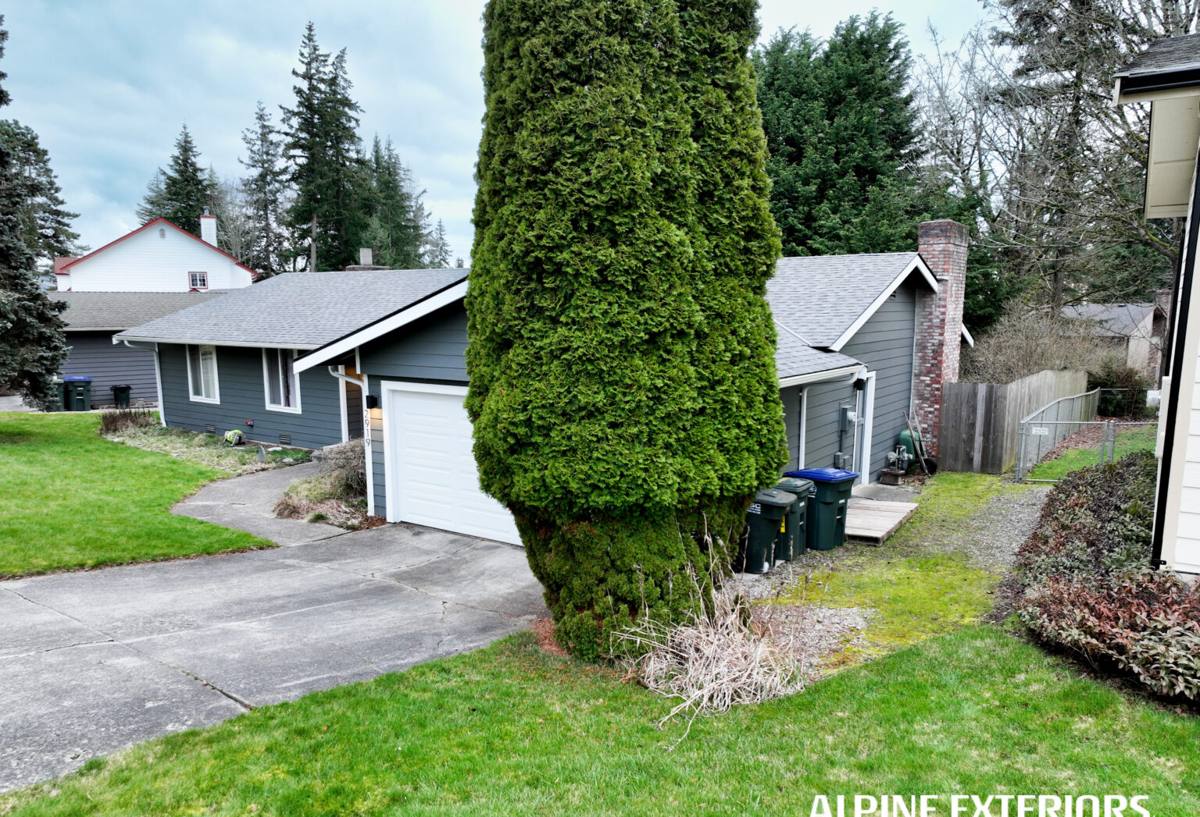
Homes around Sudden Valley sit in a setting most siding was never designed for. Tree cover keeps walls shaded and damp long after a storm passes. Moisture rolling off the water sits against north- and east-facing walls for months at a time. Add in driving rain that comes sideways during winter storms and a moss season that can stretch from October through May, and you have an environment that finds every weak point in a siding system — every gap in caulking, every panel that wasn't primed on the cut edge, every nail that backed out a sixteenth of an inch.
This isn't a knock on any particular product. It's just physics. Wood-based and wood-adjacent siding absorbs moisture, swells, and eventually delaminates or rots at the seams. Vinyl doesn't rot, but it flexes, gaps, and lets wind-driven rain track behind it at the laps. Whatcom County's climate doesn't punish siding evenly — it punishes siding that wasn't matched to the conditions in the first place. That's the starting point for any honest conversation about replacing siding on a Sudden Valley home.
Signs a Sudden Valley Home Needs Siding Replacement
Siding failure is rarely sudden. It shows up as a pattern of small problems that add up over a few wet seasons. Walk your exterior and look for these:
- Soft or spongy spots when you press on the siding, especially near the bottom courses and around window trim
- Persistent moss or dark streaking that comes back within weeks of being cleaned off
- Visible cupping, warping, or bowing in individual boards or panels
- Paint that's peeling, bubbling, or failing faster than it should on a normal repaint cycle
- Gaps opening up at butt joints, corners, or where siding meets trim
- A musty smell in the wall cavity or interior staining that lines up with an exterior wall
- Nail heads popping through the surface, especially on shaded walls
Any one of these on its own might just need a repair. Several of them together, especially on the walls that face prevailing weather or sit under tree canopy, usually mean the siding system has reached the end of its useful life and a full replacement is the more honest recommendation than another round of patching.
What a Correct Siding Replacement Actually Involves
Pulling old siding off and nailing new siding on is the easy part to see. The parts that determine whether the new siding lasts 30-plus years or fails again in eight are mostly hidden once the job is done.
Tear-Off and Sheathing Inspection
Once old siding comes off, the sheathing underneath gets inspected before anything new goes up. This is the point where hidden rot, soft sheathing, or old moisture damage gets found — and it needs to be dealt with now, not covered over. Skipping this step is the single most common reason a siding job fails early.
Water-Resistive Barrier and Flashing
A new weather-resistive barrier goes on correctly lapped, and flashing gets installed at every window, door, deck ledger, and roof-to-wall transition. In a climate that sees as much wind-driven rain as this region does, flashing detail is what actually keeps water out of the wall — the siding itself is the second line of defense, not the first.
Siding Installation
Panels or planks get installed to the manufacturer's fastening schedule, with correct nail placement, proper gapping at butt joints, and factory-primed or factory-finished cut edges sealed where required. Corners, trim, and caulking joints are detailed to shed water rather than trap it.
Trim, Paint, and Final Detail
Trim gets installed with the same attention to flashing and water management as the field siding. Any field-painted elements use exterior-grade products appropriate for a marine-influenced climate, and every penetration — hose bibs, light fixtures, vents — gets sealed properly rather than left for water to find.
Why We Install Only James Hardie Fiber Cement
We standardized on James Hardie fiber cement siding and don't install vinyl, LP SmartSide, cedar, primed spruce, Cemplank, or Allura. That's a deliberate call, not a sales preference, and it's worth explaining honestly.
Wood-based products, even engineered ones, are organic material. In a wet, shaded, moss-prone environment like Sudden Valley's, that means an ongoing battle against moisture absorption at cut edges and seams, no matter how good the coating is. Vinyl doesn't absorb water, but it expands and contracts with temperature swings, can crack in cold snaps, and relies heavily on a tight, well-executed installation to keep wind-driven rain from tracking behind the laps — get the install slightly wrong and the product itself won't save you. Cedar is a beautiful, legitimate material with a real maintenance commitment attached: refinishing on a cycle that most homeowners underestimate.
James Hardie fiber cement is non-combustible, doesn't absorb moisture the way wood products do, holds paint and factory finish far longer, and is engineered in HZ product lines specifically for climate zones like ours — meaning the formulation accounts for moisture exposure rather than treating the Pacific Northwest the same as the desert Southwest. The ColorPlus factory finish is baked on under controlled conditions, which outperforms field-applied paint, and the warranty coverage is strong and transferable if the home sells.
| Factor | James Hardie Fiber Cement | Vinyl | Wood / Engineered Wood |
|---|---|---|---|
| Moisture absorption | Very low | None, but relies on tight install | Moderate to high at cut edges/seams |
| Moss/mildew resistance | High | Moderate | Low without regular treatment |
| Fire rating | Non-combustible | Combustible | Combustible |
| Finish longevity | 15+ years factory finish | Fades, doesn't repaint easily | Repaint every 3-7 years |
| Typical lifespan installed to spec | 30-50 years | 20-30 years | 15-25 years |
Our Process for Sudden Valley Projects
1. On-Site Assessment
We walk the exterior, check the shaded and lake-facing walls that typically take the worst of the moisture, and look at trim, flashing, and any existing damage before we talk product or price.
2. Written Estimate
You get a clear scope of work — what's being torn off, what sheathing repair is anticipated versus what might turn up once we open the walls, which Hardie product line and profile fits the home, and a firm price range.
3. Tear-Off and Repair
Old siding comes off, sheathing gets inspected and repaired as needed, and any rot or moisture damage is addressed before a single new panel goes up.
4. Weather Barrier, Flashing, and Installation
Barrier and flashing go in first, then Hardie siding and trim get installed to manufacturer spec, with fastening and gapping done correctly the first time.
5. Final Walkthrough
We walk the finished job with you, point out the detail work, and go over what maintenance — if any — the new siding actually needs going forward.
Cost Factors for Sudden Valley Siding Replacement
Every home is different, so we won't quote a number without seeing the house, but these are the factors that actually move the price:
| Factor | Why It Matters |
|---|---|
| Sheathing condition | Rot or moisture damage found during tear-off adds repair scope before new siding goes on |
| Home size and wall complexity | More corners, windows, and rooflines mean more cutting, flashing, and labor time |
| Siding profile chosen | Lap width, board-and-batten, or shingle-style Hardie products carry different material and labor costs |
| Access and site conditions | Steep lots, tree cover, or limited staging space around wooded properties can affect labor time |
| Trim and detail work | Full trim replacement versus reusing sound existing trim changes both cost and long-term performance |
Why Local Experience in Sudden Valley Matters
A crew that's worked in this specific area knows which walls take the worst weather, how moss establishes itself on shaded siding here, and what flashing details actually hold up through a Whatcom County winter versus what looks fine on paper. That's the difference between a siding job that gets re-done in a decade and one that's still doing its job in thirty years. We show up knowing the conditions your home is actually fighting, not guessing at them.
Maintenance After Replacement
Correctly installed James Hardie siding is low-maintenance, not no-maintenance. A rinse once or twice a year to keep moss and organic buildup from establishing itself, a quick visual check of caulking at trim joints, and prompt attention if you ever notice a soft spot or gap will keep the system performing the way it's designed to for decades. That's a fraction of the upkeep wood siding demands and none of the crack-and-fade risk vinyl carries in temperature swings.
If your Sudden Valley home is showing signs of siding failure, or you're planning ahead before the next wet season sets in, we'll come take a look and give you a straight, no-pressure estimate — use the form below to get started.