 Ferndale Siding
 Why Decks in Sandy Point Wear Differently Than Decks Inland
Sandy Point sits right on the water, and that changes what a deck has to survive year after year. Salt-laden air off the strait accelerates corrosion on anything metal, driving rain drives moisture into end grain and fastener holes, and the long Whatcom County wet season keeps surfaces damp for weeks at a stretch. A deck built with the same assumptions you'd use for a dry inland lot in Ferndale will show problems here faster: rusting hardware, soft spots at the framing, and moss or algae that never fully dries out between storms.
None of that means a deck can't hold up in Sandy Point. It means the material, the fasteners, the substructure, and the layout all need to be chosen with the marine environment in mind from the start, not patched around later. That's the whole case for composite decking here — it removes several of the failure points that wood struggles with in this exact climate, provided it's installed correctly.
What Composite Decking Actually Solves — and What It Doesn't
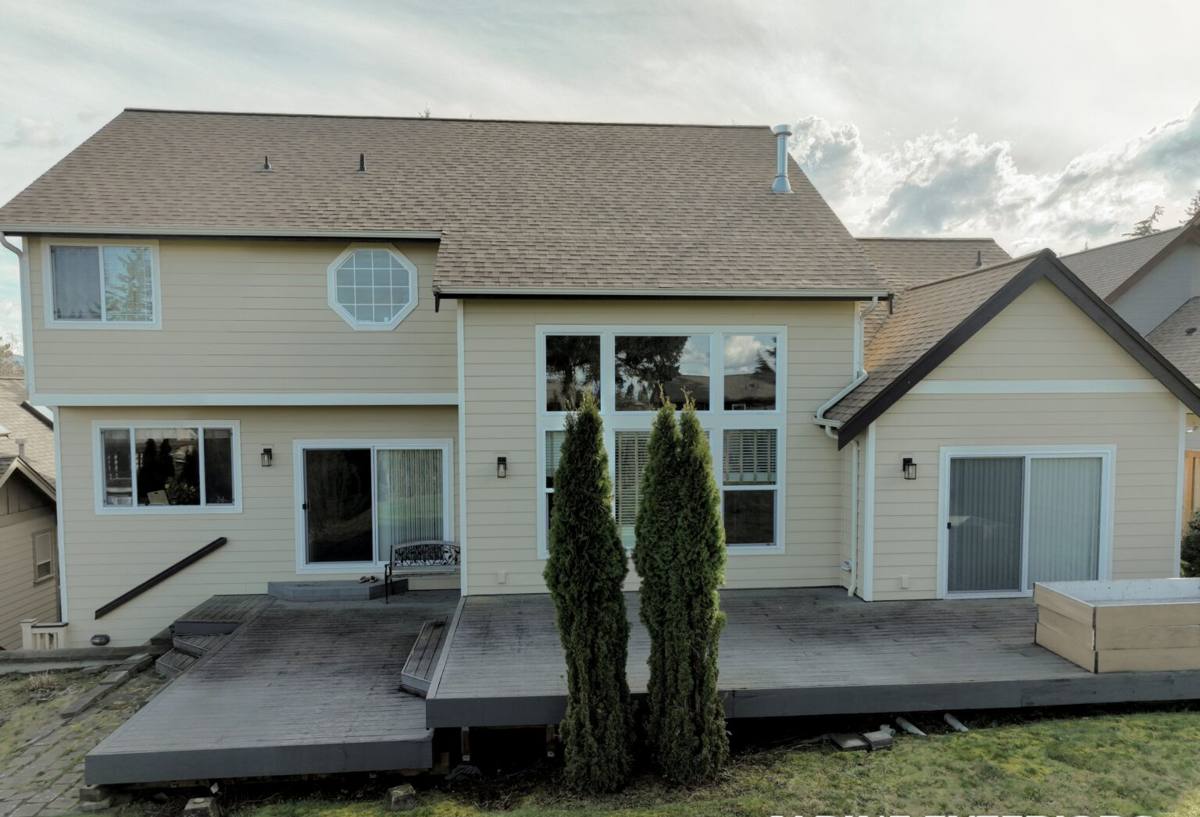
Composite decking is a mix of wood fiber and plastic, usually with a protective polymer cap on modern boards. It doesn't need staining or sealing, it resists rot and insect damage, and it doesn't splinter or cup the way wood can after repeated wet-dry cycles. For a salt-air, high-rainfall spot like Sandy Point, that combination matters a lot more than it does for a covered patio twenty miles inland.
What composite decking doesn't do on its own is fix a bad substructure. The boards themselves are only part of the system. The framing underneath, the fasteners holding it together, the ledger connection to the house, and the airflow beneath the deck all still have to be built to handle salt exposure and constant moisture. A composite deck built over an undersized, poorly fastened, or badly drained frame will still fail — it'll just take a little longer to show it, and the boards will outlast the structure holding them up.
Substructure and Fasteners
This is where most of the real engineering decisions happen, and it's also where corner-cutting is easiest to hide once the boards go down. For Sandy Point projects we look at:
- Framing lumber rated for ground contact or marine exposure where the deck sits low or near grade
- Stainless steel or heavily coated structural fasteners and joist hardware — standard galvanized hardware corrodes faster in salt air than most homeowners expect
- Joist spacing tightened to the composite manufacturer's spec, since composite boards can flex more than solid wood between supports if spacing is too wide
- A properly flashed ledger board connection to keep water from tracking into the house framing
Drainage and Airflow Underneath
A deck that can't breathe underneath stays damp longer, and damp framing near salt air corrodes and degrades faster. Board spacing, joist height above grade, and any skirting or under-deck drainage system all affect how quickly the structure dries out after the next round of driving rain. On lower decks near the water, we pay particular attention to ground clearance and cross-ventilation so moisture has somewhere to go instead of sitting under the boards.
Choosing the Right Composite Board for a Salt-Air Lot
Not all composite decking is built the same, and the differences matter more on a waterfront lot than they do elsewhere. Fully capped boards — with a polymer shell wrapping all four sides — handle standing moisture and salt spray better than boards that are only capped on the top and edges, or not capped at all. Grooved-edge boards paired with hidden fastener clips also reduce the number of exposed metal fastener heads on the surface, which is one less thing for salt air to attack over time.
| Board Type | Moisture Performance | Best Fit for Sandy Point |
|---|---|---|
| Uncapped wood-plastic composite | Absorbs some moisture over time; more prone to surface staining and mold in constant damp | Not recommended this close to the water |
| Cap-stock composite (top/sides only) | Good surface protection; cut ends and underside remain exposed | Acceptable with proper end-cap sealing and detailing |
| Fully capped composite (all four sides) | Best resistance to moisture intrusion and salt exposure | Preferred choice for waterfront and near-shore lots |
| Pressure-treated wood | Requires regular sealing/staining to keep performing; more maintenance in constant salt and rain | Viable if the owner commits to upkeep, but higher long-term labor |
We're not going to tell you every project needs the top-tier board — a covered, elevated deck set back from direct spray has more flexibility than a low deck exposed to wind off the water. What we will do is walk through the actual exposure on your specific lot and explain honestly which tier of board makes sense, rather than defaulting to whatever has the widest margin.
Moss, Algae, and Ferndale's Long Wet Season
Whatcom County's moss season runs long — shaded, damp surfaces can stay green from fall through spring, and a deck near the water gets extra moisture on top of that from salt spray and marine fog. Composite decking resists rot, but it isn't immune to surface growth. Moss and algae will still take hold on any surface that stays wet and shaded long enough, composite included.
The layout and installation choices made up front go a long way toward reducing how much moss you deal with later:
- Board orientation and spacing that lets water run off and air move underneath instead of pooling
- Keeping the deck surface clear of overhanging vegetation where possible, since shade prolongs damp periods
- Choosing a board texture/color that shows dirt and growth less between cleanings, if that matters to you
- A simple seasonal rinse-and-brush routine, which is far less work on composite than re-sealing wood every year or two
Permits, Setbacks, and Shoreline-Adjacent Building
Lots near the water in Whatcom County can carry additional permitting requirements and setback rules beyond what applies to a typical inland Ferndale property, and Sandy Point properties often have their own community guidelines on top of county rules. We don't guess on this — before we finalize a deck plan, we confirm what applies to your specific lot with Whatcom County and, if relevant, your community association, so there are no surprises about setbacks, height, or footing requirements once work starts.
How We Approach a Sandy Point Composite Decking Project
The process is straightforward, but each step is shaped by what this location actually demands:
- On-site assessment — we look at sun/shade exposure, wind and spray direction, existing framing condition if this is a replacement, and any drainage issues around the current or planned deck footprint.
- Material selection — we recommend a board tier and color based on actual exposure, not a one-size answer, and explain the cost and maintenance trade-offs plainly.
- Permit check — we confirm what Whatcom County and any applicable community rules require before finalizing the plan.
- Structural build — framing, corrosion-resistant fasteners, ledger flashing, and joist spacing built to the manufacturer's spec for the board chosen.
- Deck surface installation — hidden or top-fastened boards depending on the product, with attention to expansion gaps and cut-end sealing at every exposed edge.
- Walkthrough — we go over basic care so you know what upkeep composite decking actually needs here, which is far less than wood but isn't zero.
Composite vs. Wood: What Actually Changes Near the Water
Homeowners weighing composite against wood for a Sandy Point deck are usually really weighing time and money against each other. Wood costs less upfront and can be repaired board by board. Composite costs more upfront but removes the recurring staining, sealing, and rot-inspection cycle that salt air and Ferndale's wet season make more frequent than they'd be on a dry inland deck.
| Factor | Pressure-Treated Wood | Composite Decking |
|---|---|---|
| Upfront material cost | Lower | Higher |
| Maintenance in salt air/wet climate | Sealing/staining every 1–2 years, more frequent inspection for rot | Occasional cleaning; no sealing or staining |
| Typical lifespan here | Shorter if maintenance lapses, especially near the water | Longer, largely maintenance-driven rather than exposure-driven |
| Repair approach | Individual boards can be swapped fairly easily | Board replacement is possible but color-matching aged boards can be harder |
| Warranty structure | Limited, usually tied to the treatment chemical, not workmanship | Manufacturer warranties on the board plus our workmanship warranty on the install |
Why a Crew That Already Works Sandy Point Makes a Difference
A lot of deck problems near the water don't come from bad materials — they come from a crew building it the same way they'd build a deck in a dry, inland neighborhood. Fastener choice, framing spec, drainage detailing, and even board orientation should all shift once you're building this close to salt spray and constant rain exposure. A contractor who's already done that work in Sandy Point isn't guessing at what holds up here; they've seen what corrodes, what stays damp too long, and what actually needs to change from a standard build. That's the difference between a deck that needs attention in three years and one that doesn't.
We also already know the practical side of working in this community — what access looks like on a beachfront lot, what Whatcom County expects for permitting on shoreline-adjacent property, and how to sequence a build around the weather instead of fighting it.
Caring for a Composite Deck After Installation
Composite decking cuts the maintenance list way down, but "low-maintenance" isn't "no-maintenance," especially in this location.
- Rinse and lightly brush the surface a few times a year to keep salt residue and organic buildup from settling in
- Clear debris and standing leaves promptly, especially in shaded areas prone to moss
- Check fastener hardware and any metal railing components periodically for early corrosion, and address it before it spreads
- Keep gutters and downspouts near the deck clear so runoff isn't adding extra water on top of what the weather already brings
- Avoid pressure-washing at close range or high pressure, which can damage the board's protective cap over time
If you're planning a new deck or replacing one that hasn't held up to Sandy Point's salt air and rain, we're happy to take a look and give you a straightforward, no-pressure estimate — just fill out the form below and we'll go from there.