 Ferndale Siding
 Building a Deck That Can Actually Handle Semiahmoo
Semiahmoo sits close enough to the water that every deck out here is fighting a different battle than a deck fifteen miles inland. Salt-laden air moves through constantly, driving rain comes in sideways more often than straight down, and the long, damp Whatcom County shoulder seasons keep everything wet for weeks at a time. A deck built to a generic spec sheet will look fine for a year or two and then start showing problems — corroding fasteners, soft spots at the ledger, moss creeping across the boards by the second winter. A deck built for this specific stretch of coastline holds up because every material and connection decision accounts for what the air and weather actually do here, not what they do somewhere drier.
This page covers what we look at specifically for deck projects in Semiahmoo: material choice, hardware grade, drainage and airflow, and the parts of our process that change because of where the site sits relative to the water.
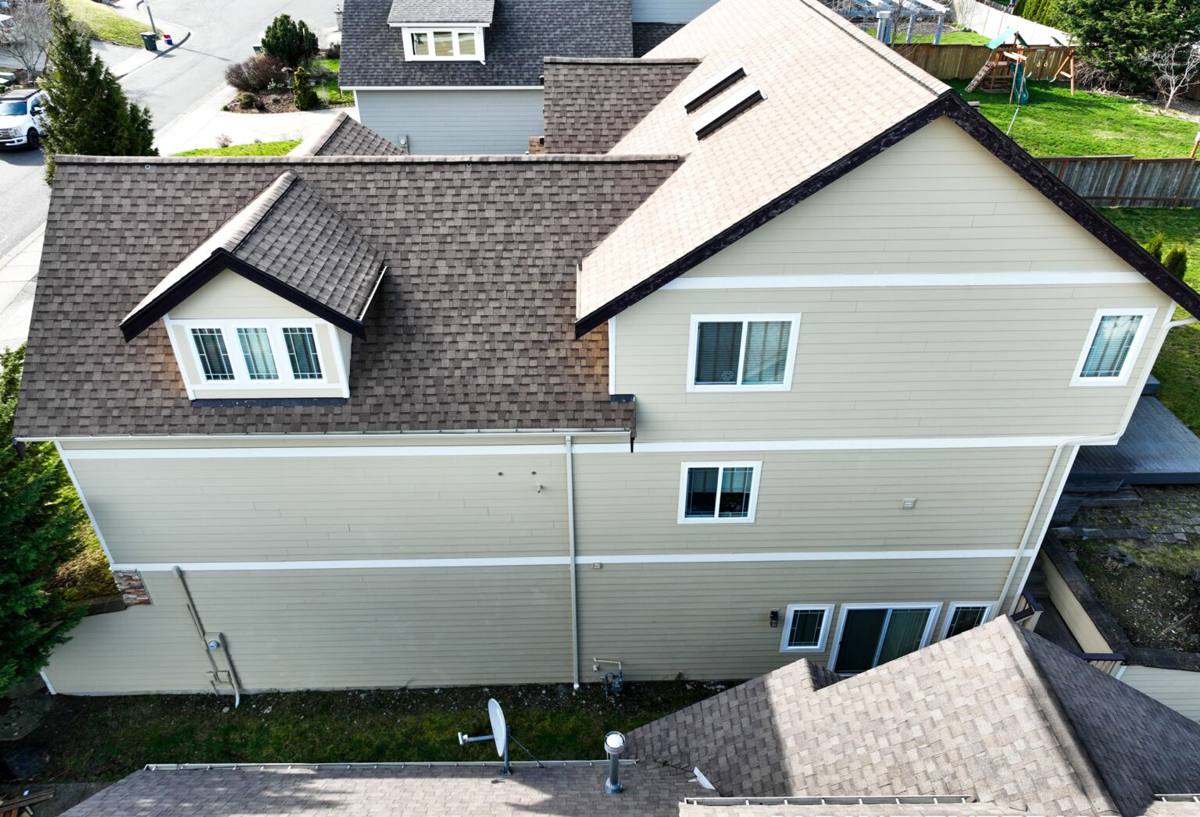
What Salt Air and Coastal Moisture Actually Do to a Deck
Corrosion Moves Faster Near the Water
Standard coated deck screws and joist hangers are rated for general outdoor use, not for sustained salt exposure. Near Semiahmoo Bay, airborne salt accelerates corrosion on anything less than a marine-grade fastener. The failure isn't always visible from the top — it's often hidden hardware, hangers, and structural screws that weaken years before the surface boards show any sign of trouble.
Wood Decay and Moss Have a Longer Season
Whatcom County's wet months stretch long, and a coastal site holds moisture even longer because morning fog and marine humidity keep surfaces damp after the rain itself has stopped. That extended dampness is exactly what moss and mildew need to establish, and it's what drives rot in any wood that isn't properly sealed, spaced, or ventilated underneath.
Finishes Break Down Faster Too
Stains, sealers, and even some factory-applied composite finishes wear differently in salt air. UV plus salt plus constant moisture cycling breaks down surface coatings faster than inland exposure does, which is why refinishing schedules for a Semiahmoo deck should be shorter than what a manufacturer's general guidance assumes.
Choosing Decking Material for a Coastal Site
There's no single "best" decking material — there's a best material for this exposure and this budget. Here's how the common options actually compare once salt air and constant moisture are part of the equation.
| Material | Moisture & Salt Behavior | Maintenance Needed | Typical Lifespan Here |
|---|---|---|---|
| Pressure-treated wood | Resists rot with proper treatment, but fasteners and hardware corrode faster in salt air than the wood itself decays | Annual cleaning, re-stain or seal every 1-2 years | 10-15 years before major repairs, longer with disciplined upkeep |
| Cedar | Naturally moisture- and insect-resistant, but softer surface wears faster under driving rain and salt cycling | Regular cleaning, sealing every 1-2 years to hold color and grain | 15-20 years with consistent maintenance |
| Composite (capped) | Doesn't absorb moisture or rot; performs well against salt air when hardware underneath is upgraded | Periodic washing to prevent surface algae/moss film | 25+ years, with fading/wear varying by brand and cap quality |
| PVC decking | Fully synthetic, no organic material for rot or insects; handles salt exposure the best of the four | Occasional washing | 25-30+ years |
Upfront cost generally runs lowest for pressure-treated wood and highest for PVC, with cedar and composite in between depending on the product line. The gap narrows once you account for how often wood needs refinishing in this climate — a homeowner who skips two or three restaining cycles on a wood deck often ends up spending close to what composite would have cost, minus the labor of doing it themselves in between.
Framing and Hardware: Where Coastal Decks Actually Fail
Most deck failures we see aren't decking-board problems — they're framing and connection problems that were fine inland but weren't right for salt air.
Ledger Attachment and Flashing
The ledger board connection to the house is the single most important structural joint on any deck, and it's also the one most exposed to water intrusion if flashing is done wrong. On a coastal site, we treat ledger flashing as non-negotiable — proper metal flashing integrated with the house's water-resistive barrier, not just caulk over a bolt pattern.
Fastener and Connector Grade
For anything within a few miles of Semiahmoo Bay, we specify stainless steel or heavy hot-dip galvanized fasteners and joist hardware rather than standard coated hardware. It costs more upfront. It's also the difference between hardware that's still sound in fifteen years and hardware that's rusting through in five.
Footings and Post Bases
Standing water at the base of a post is one of the fastest ways to shorten a deck's structural life. We set post bases above grade with proper drainage away from the footing, not flush with soil where moisture collects.
Drainage, Airflow, and Keeping Moss Off a Semiahmoo Deck
Moss doesn't grow because a deck is old — it grows because moisture sits somewhere it shouldn't. Two things control that: how water moves off the deck surface, and how air moves underneath it.
- Board spacing set correctly for the material, so water drains through rather than pooling on the surface
- A slight slope away from the house built into the framing, not relied on from the decking alone
- Open or vented skirting where there's under-deck space, so airflow can dry out the framing after rain
- Joist tape or protective flashing on top of the joists, so standing water can't sit directly on cut lumber
- Clear space between the lowest framing member and the soil, so ground moisture doesn't wick straight into the structure
None of this eliminates moss entirely — nothing does in a climate this wet — but it slows it down significantly and keeps the cleaning that homeowners do on their own from turning into a losing battle by the second winter.
Our Deck Building Process
The process itself isn't dramatically different from any well-run deck project, but every step gets evaluated against the site's exposure before we finalize a plan.
- Site walk and exposure assessment — we look at how much direct salt air and wind the site gets, drainage patterns, and existing moisture damage if this is a rebuild
- Material and hardware selection — matched to that exposure level, not a one-size answer
- Design and permit prep — sizing, footings, and attachment method laid out to meet local code
- Framing and structural work — ledger, footings, and joists built with corrosion-appropriate hardware throughout
- Decking installation — spacing and fastening set for the chosen material's expansion and drainage needs
- Final walkthrough — we go over maintenance expectations specific to a coastal site, not generic care instructions
Permits and Local Code Basics
Most new decks and many deck rebuilds in Whatcom County require a permit, particularly once the structure is elevated above a certain height or attached to the house. Requirements can vary depending on jurisdiction, setback from property lines, and whether the deck is a new structure or a repair of an existing one. We handle the permit application and inspection scheduling as part of the build so homeowners aren't left navigating that process alone, but it's worth knowing upfront that "just build it" isn't usually an option on an attached, elevated deck — and skipping that step can complicate things later if the property is ever sold or insured.
Why Local Experience in Semiahmoo Actually Matters
A crew that mostly builds decks inland will often default to standard hardware and standard spacing because that's what works where they usually work. That's not negligence — it's just a different climate reality. A crew that already works Semiahmoo has already seen which fastener grades hold up, which framing details keep moisture out of a ledger connection, and how fast moss actually establishes on a shaded, damp deck near the water. That local pattern recognition is what keeps a deck from needing hardware repairs or moss remediation years before it should.
It also means fewer surprises during the build. Local crews already have working relationships with the permitting process, already know how prior seasons have treated similar decks nearby, and can set realistic maintenance expectations instead of quoting a generic lifespan that doesn't hold up to salt air and driving rain.
Keeping a Deck Sound After It's Built
Whatever material a homeowner chooses, a few habits extend a Semiahmoo deck's life significantly: rinsing off salt residue and organic debris a few times a year, keeping gutters and downspouts clear so runoff doesn't dump onto the deck surface, checking fastener heads and hardware for early rust during an annual walk-through, and resealing wood on a tighter schedule than manufacturer defaults suggest for this climate. None of this is complicated, but skipping it is the most common reason a well-built deck ages faster than it should.
If you're planning a new deck or need to replace one that hasn't held up to the weather out here, we're happy to take a look and talk through what actually makes sense for your site. Reach out for a free, no-pressure estimate using the form below.