 Ferndale Siding
 Siding Repair in Sudden Valley: Built for This Specific Setting
Sudden Valley sits differently than a lot of the neighborhoods we work in around Whatcom County. Homes here are tucked into mature tree cover along the lake, which means less direct sun on many walls, more standing shade, and siding that stays damp longer after every rain than it would out in the open. Add in Whatcom County's long stretch of overcast, drizzly weather from fall through spring, and you get a set of siding problems that show up earlier and more often here than in drier, sunnier parts of the region.
Siding repair in this kind of setting isn't just about patching a hole or replacing a cracked board. It's about understanding why that board cracked in the first place, and making sure the repair doesn't just fail again in two winters. That's the difference between a quick patch and a repair that actually holds.
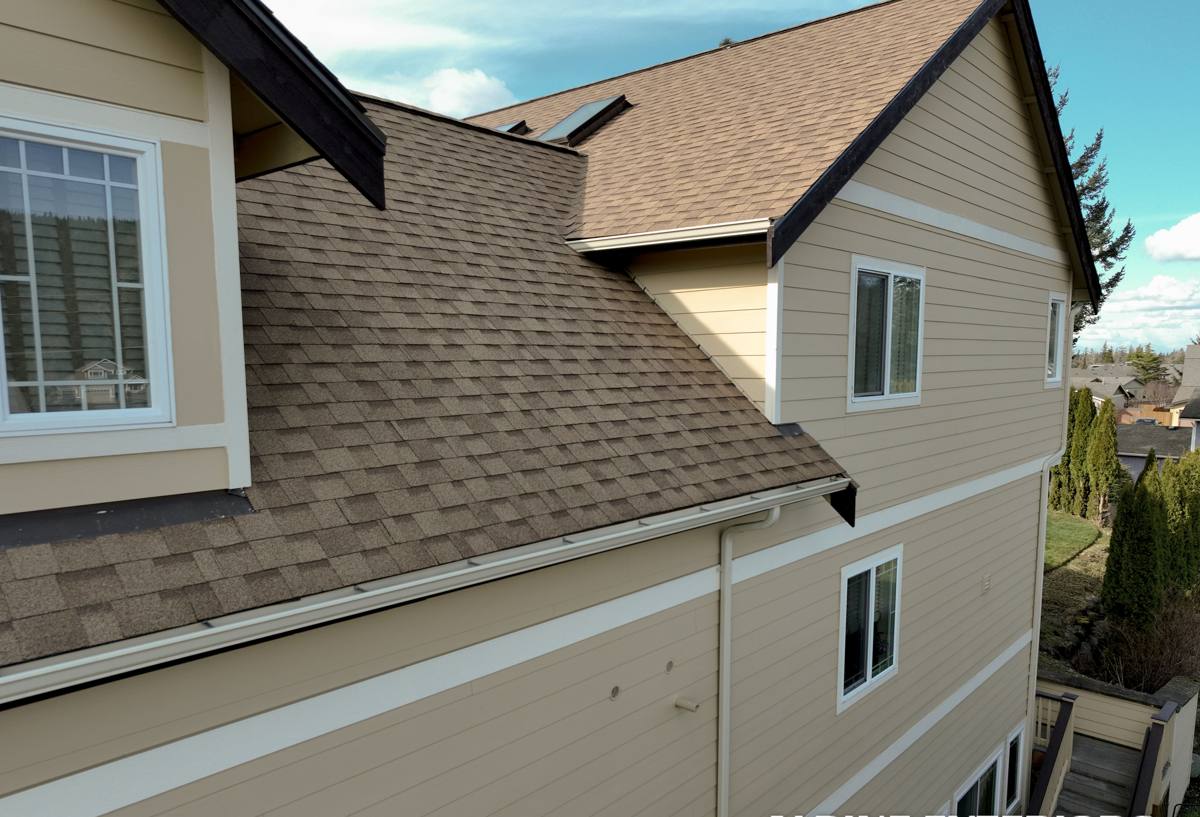
How Sudden Valley's Setting Shapes Siding Problems
A few things about this area compound to create conditions that are tougher on siding than a typical open-lot home:
- Shade and slow drying: Tree-lined lots keep walls wet longer after rain, which is exactly what moss, algae, and wood-boring insects want.
- Moisture from the lake: Proximity to water raises ambient humidity, especially on north- and east-facing walls that get less afternoon sun.
- Driving rain exposure: Whatcom County's weather pattern regularly pushes rain sideways, forcing water into laps, seams, and trim joints that would stay dry in a light vertical rain.
- Long moss season: Moss doesn't just sit on the surface — its root structure holds moisture against the siding for months at a stretch, which accelerates rot in wood-based products and degrades caulking and paint film on almost any material.
None of this means Sudden Valley homes are doomed to constant siding trouble. It means the repair work needs to account for these conditions instead of ignoring them, and the material going back on the wall needs to be able to handle sustained damp exposure without breaking down.
Common Siding Repair Needs We See in This Area
Every home is different, but the pattern of damage in shaded, moisture-heavy settings like this tends to repeat itself. Signs worth having looked at:
- Soft or spongy spots on wood-based siding, especially near the bottom courses and around windows
- Persistent moss or algae growth that keeps returning within a season or two of cleaning
- Paint that's bubbling, peeling, or chalking faster than it should on a wall that gets little sun
- Cracked, split, or warped boards, particularly on shaded elevations
- Gaps opening up at seams, corners, or trim where caulking has failed
- Staining or discoloration running down from a seam, which usually points to water tracking behind the siding rather than just sitting on top of it
- Soft trim or fascia boards near roof-to-wall transitions, where runoff concentrates
Any one of these, caught early, is usually a straightforward repair. Left alone through another wet season, they tend to spread — moisture doesn't stay in one board, it works its way along a wall.
What a Correct Siding Repair Actually Involves
A repair that's done right addresses the cause, not just the visible symptom. That generally means:
1. Diagnosing before cutting anything
We check whether damage is surface-level or whether moisture has already reached the sheathing or framing behind the siding. This matters a lot in shaded, damp settings like Sudden Valley, where surface damage is often a later sign of a problem that started behind the wall.
2. Checking the water-resistive barrier
Once siding is off, the house wrap or building paper underneath needs to be intact, properly lapped, and flashed correctly at every seam, window, and penetration. A siding repair that ignores a torn or improperly installed barrier is a repair that will need to be redone.
3. Matching material, not guessing at it
Patched-in siding that doesn't match thickness, profile, or finish stands out and creates a weak point where the old and new material meet. Getting a clean, durable match matters as much as the labor itself.
4. Correct fastening and clearances
Siding needs proper nailing patterns and the right clearance from grade, roof lines, and decks. In a shaded, damp lot, skimping on ground clearance is one of the fastest ways to guarantee a repeat repair.
5. Sealing and finishing to spec
Caulking, painting, or factory-finish touch-up needs to be done to the material manufacturer's specification — not just "close enough" — or the repair will weather differently than the surrounding siding.
Repair vs. Replacement: How We Make the Call
Not every damaged section needs full replacement, and not every damaged section should just be patched. Here's how we generally think about it:
| Factor | Repair Usually Makes Sense | Replacement Usually Makes Sense |
|---|---|---|
| Extent of damage | Isolated to a few boards or one elevation | Spread across multiple walls or the whole home |
| Underlying moisture | Barrier and sheathing test dry and sound | Sheathing is soft, delaminated, or shows rot |
| Material age | Existing siding still has useful service life left | Siding is near or past its expected lifespan |
| Match quality | Discontinued material can still be closely matched | Material is no longer available or won't blend |
| Recurrence | First time this section has failed | Same area has already been patched more than once |
We'll always tell you honestly which side of that table your situation falls on, including when a repair is the right call even if replacement would be more profitable for us.
Our Siding Repair Process
- On-site inspection: We look at the damaged area and the surrounding wall, not just the spot you called about — problems in shaded, damp settings rarely stay isolated.
- Moisture check: Where there's any doubt, we open up enough of the wall to see whether water has reached the sheathing or framing.
- Written scope and estimate: You get a clear explanation of what's being repaired, why, and what it will take to bring it back to spec.
- Removal and barrier repair: Damaged siding comes off, and any compromised house wrap or flashing gets corrected before anything new goes back up.
- Reinstallation to manufacturer spec: New material is fastened, sealed, and finished according to the product's installation requirements.
- Final walkthrough: We confirm the repair blends with the surrounding siding and that you're clear on any care it needs going forward.
Why the Material You Repair With Matters
We install James Hardie fiber cement exclusively, and that decision shows up clearly in repair work. Hardie's HZ5 product line is engineered for exactly the kind of sustained moisture exposure that shaded, lake-adjacent settings like Sudden Valley deal with — it's non-combustible, it doesn't absorb and swell the way wood-based siding can, and its ColorPlus factory finish holds color and resists the fading and chalking that shaded walls are prone to.
That matters for repairs specifically because a fiber cement board that's been on a wall for years will still match a new board far better than most wood-based or engineered-wood products will after the same exposure. Wood siding, cedar, and engineered wood products can look reasonable when new, but once they've spent a few wet seasons in constant shade, patched sections often weather differently than the surrounding material — different absorption rates, different paint adhesion, different long-term color behavior. That's a real trade-off of those products, not a flaw unique to any one brand, and it's a big part of why we standardized on Hardie for every job we take on, repairs included.
If your home currently has a different siding material and it's failing repeatedly in the same spots, that's worth a conversation about whether targeted replacement with Hardie in that section — or eventually the whole elevation — makes more sense than another round of patching.
Why Hiring a Crew That Already Works in Sudden Valley Matters
Siding repair looks similar on paper everywhere, but the details that make a repair actually last are local. A crew that already works this area knows which elevations in shaded, tree-covered lots tend to fail first, how aggressively moss needs to be addressed before it's sealed back under new siding, and how Whatcom County's driving rain pattern tends to find weak points at seams and trim. That local pattern recognition is what keeps a repair from becoming a callback.
It also means faster, more accurate estimates — we're not guessing at how this climate treats siding, we're working from what we see on homes like yours in this exact setting on a regular basis.
Get a Straight Answer on Your Repair
If you've got a section of siding showing damage — whether it's soft boards, recurring moss, peeling paint, or something you're not sure about yet — we're happy to take a look and give you a straight, no-pressure assessment of what it needs. Fill out the form below for a free estimate, and we'll tell you honestly whether it's a simple repair, a larger fix, or something that can wait.