 Ferndale Siding
 Storm Damage Roof Repair in Lynden: Built for What This Valley's Weather Delivers
Lynden sits inland in the Nooksack River valley, in the northern reach of Whatcom County near the low gap in the Cascades that opens toward the Fraser River valley in British Columbia. That gap matters more than it might seem. It's the same terrain feature that funnels cold outflow wind south out of the Fraser valley during the winter months, producing gusty windstorms that hit Lynden and the surrounding farmland harder than you'd expect for a town that isn't on open water. Add in the driving, wind-pushed rain that's normal for this whole corner of Washington and a moss season that runs long on any shaded roof plane, and you get a specific set of storm damage patterns that a generic repair approach doesn't account for.
Roofs closer to the water in our service area deal with more direct salt exposure; Lynden's roofs deal less with that and more with sustained wind load and rain that gets pushed sideways under flashing and shingle edges. A storm damage repair here has to account for both the immediate damage — the missing shingles, the lifted flashing, the branch that came down on a slope — and what that damage exposes underneath, which is where a rushed patch job tends to fail again the next time the wind picks up.
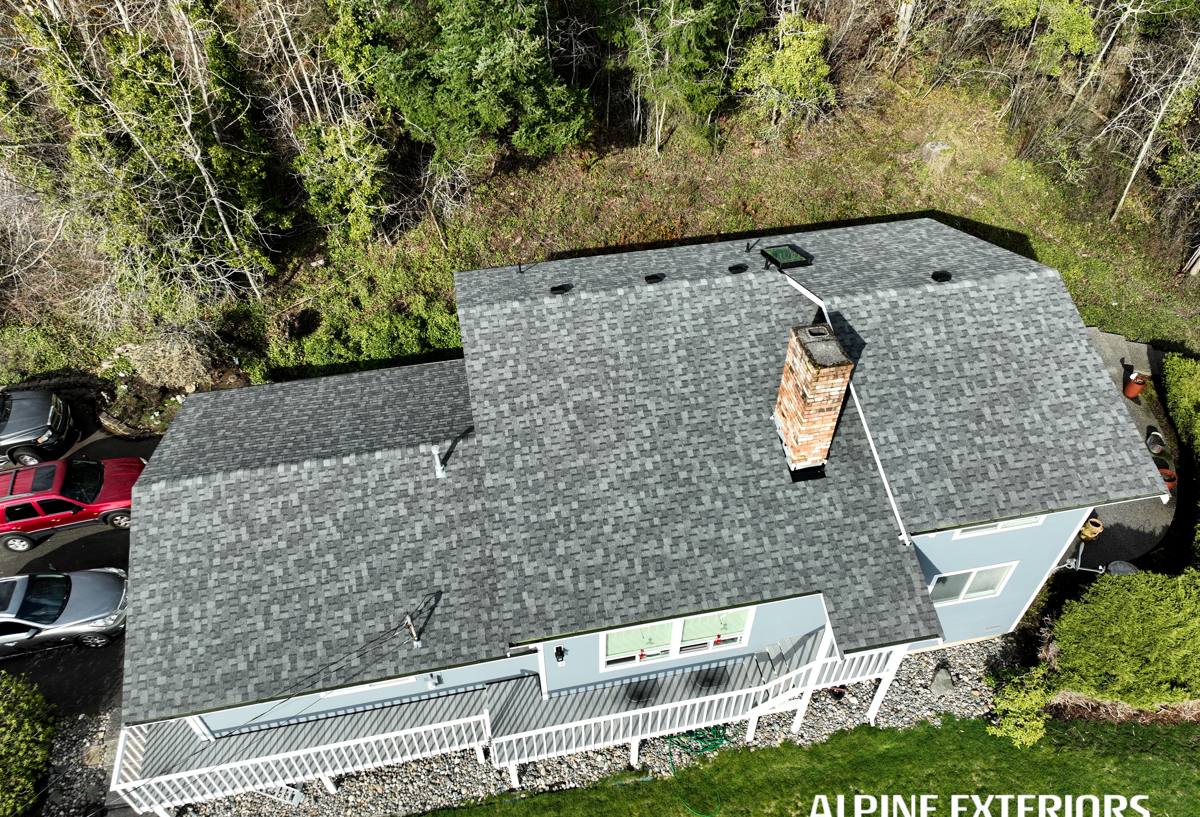
What Actually Causes Storm Damage to Roofs in Lynden
Outflow Windstorms
Several times most winters, cold, dense air pushes down out of the British Columbia interior through the Fraser River gap and accelerates as it reaches lower elevation, producing the kind of sustained, gusty windstorm locally referred to as an outflow or Sumas wind event. Lynden's position closer to that gap than most of the rest of the county means these events can hit here with more force than a typical Pacific storm system. That wind is what lifts shingle tabs, peels back ridge caps, and drives debris and broken branches — common in a farming valley with plenty of mature trees — onto roof surfaces.
Wind-Driven Rain
Rain in this part of Washington rarely falls straight down during a storm. Wind pushes it sideways into valleys, around chimney flashing, and up under shingle edges that would shed water fine in a calm rain. That's a fundamentally different load than a roof needs to handle on an ordinary wet day, and it's usually where storm damage repairs uncover a second, older problem — flashing or underlayment that was already marginal before the storm made it obvious.
Snow and Ice, Occasionally
Lynden doesn't see heavy snow most winters, but the valley does get occasional cold snaps and snow events that a coastal town nearby might miss entirely. A few inches of wet snow followed by a freeze can add real weight to a roof and create ice damming at eaves, especially on roofs with marginal attic ventilation. It's not the dominant storm risk here, but it's real often enough to plan for rather than ignore.
What a Correct Storm Damage Repair Actually Involves
Emergency Mitigation First
If a roof is actively leaking or has an open section exposed to weather, the first job is stopping more water from getting in — tarping, temporary flashing, or securing loose material — before anything else happens. That's not the fix; it's what buys time to do the actual repair correctly instead of rushing it in bad weather.
A Full Inspection, Not Just the Obvious Spot
Wind damage rarely stays where you can see it from the ground. A missing shingle at the ridge often means several more nearby have lifted seals and will fail on the next windstorm even though they're still technically in place. We check the whole roof plane, not just the spot the homeowner points to, because storm damage that gets missed now almost always turns into a second repair call after the next storm.
Matching Materials and Getting Flashing Right
A storm repair should look and perform like it belongs on the roof, not like a patch. That means sourcing shingles or roofing material that match the existing roof as closely as the product line allows, and it means re-flashing valleys, vents, and roof-to-wall transitions correctly rather than just resealing what's there with caulk. Caulk is a short-term fix; correct flashing is the actual repair.
Our Storm Damage Repair Process
- Contact and mitigation: We assess urgency first. If water is actively getting in, we prioritize stopping that before scheduling the full repair.
- Full inspection and documentation: We walk the whole roof, photograph the damage, and note anything beyond the obvious impact point — lifted seals, compromised flashing, or deck moisture.
- Honest scope and estimate: We tell you what we found, what it will take to fix it correctly, and give you a written estimate before any work starts.
- Insurance coordination, if needed: If you're filing a claim, we provide the documentation and scope your adjuster needs and answer their questions directly.
- Repair and follow-up: We complete the work to the same standard we'd want on our own roof, and we're reachable afterward if anything about the repair doesn't hold up.
Repair or Replace? How We Help You Decide
Not every storm-damaged roof needs to come off. The right call depends on the roof's age, how much of it was affected, and what the storm exposed underneath.
| Situation | What We Look For | Typical Direction |
|---|---|---|
| Isolated wind damage, roof under 15 years old | Extent of lifted or missing shingles, condition of surrounding material | Localized repair, matched to existing roofing |
| Storm damage on a roof already near end of life | Overall granule loss, brittleness, prior repair history | Repair now buys little time; replacement is usually the honest answer |
| Wind damage plus signs of deck moisture | Soft spots, staining on the underside of the deck, mold or rot | Repair scope expands to include deck repair, sometimes a full section replacement |
| Storm damage concentrated in one slope only | Whether that slope's material is still available or close enough to match | Slope-specific repair or replacement, leaving unaffected slopes alone |
| Repeated storm damage in the same area over several years | Underlying design issue — poor ventilation, undersized flashing, wrong material for exposure | Address the root cause, not just the latest damage |
We'll walk you through which category your roof actually falls into instead of defaulting to whichever option pays better. A straightforward repair is often the right and honest answer, and we'll say so.
Working With Your Insurance Company
Most storm damage repairs in this area involve a homeowner's insurance claim, and our job in that process is straightforward: document what actually happened to the roof, thoroughly and accurately, and give your adjuster a clear, honest scope of work. We don't inflate damage to pad a claim, and we don't downplay it to make a job look smaller than it is — both approaches cause problems for the homeowner later, either with a denied claim or an underfunded repair. If your adjuster has questions about our findings or our proposed scope, we'll talk with them directly.
Signs of Storm Damage Worth a Roof Check
- Shingles that look lifted, curled, or out of alignment after a windstorm
- Granules collecting in gutters or at the base of downspouts following heavy wind or rain
- A tree branch or debris impact anywhere on the roof, even if it looks minor from the ground
- Water staining on interior ceilings or walls that appeared or worsened after a storm
- Flashing around chimneys, vents, or valleys that looks bent, lifted, or missing sealant
- Daylight visible through the roof deck from inside the attic
- Any leak, drip, or damp spot that started during or right after a windstorm
None of these on their own means you need a new roof. But any of them is worth a professional look before the next storm finds the same weak spot again.
Why a Local Whatcom County Crew Matters After a Storm
A crew that works this county through every storm season knows how outflow wind behaves differently in Lynden than it does in a waterfront town, which roof orientations take the worst of a valley windstorm, and how much ice-and-water shield a given eave or valley actually needs given how long moss and moisture sit on it between storms. That local pattern recognition matters as much as the repair skill itself — it's the difference between a fix that addresses this storm and one that anticipates the next one. It also means a faster, more realistic response after a bad windstorm, since we're not driving in from outside the area to look at a roof we've never seen the local conditions for.
A storm that damages a roof often stresses gutters, fascia, and siding at the same time — a branch that hits a roof edge can crease a gutter or crack trim on its way down. Since we work across roofing, siding, and the rest of the exterior, we can check those areas while we're already on the roof instead of leaving you to notice a second problem later.
Get a Free, No-Pressure Estimate
If a recent storm has damaged your Lynden roof, or you just want an honest opinion on whether that lifted shingle or stained ceiling is something to worry about, we're glad to take a look. Reach out using the form below to schedule a free estimate — no pressure, no upsell script.