 Ferndale Siding
 Why Window Installation Works Differently in Bellingham
Bellingham sits close enough to the water that salt air is a real factor in how building materials age, and the weather that rolls off the Pacific and through the Strait doesn't just bring rain — it brings rain moving sideways under pressure. Add in a long, damp shoulder season where moss and algae get a foothold on anything shaded or slow to dry, and you have a climate that is genuinely harder on window installations than most of the country deals with. A window that's a perfectly good product but installed with methods suited to a drier region will show problems here years before it should.
That's really the core issue with window work in this part of Whatcom County: the product matters less than most homeowners assume, and the installation detailing — flashing, sealing, drainage — matters more. Two identical windows installed by two different crews can have completely different lifespans once you factor in what Bellingham's climate does to a poorly sealed opening.
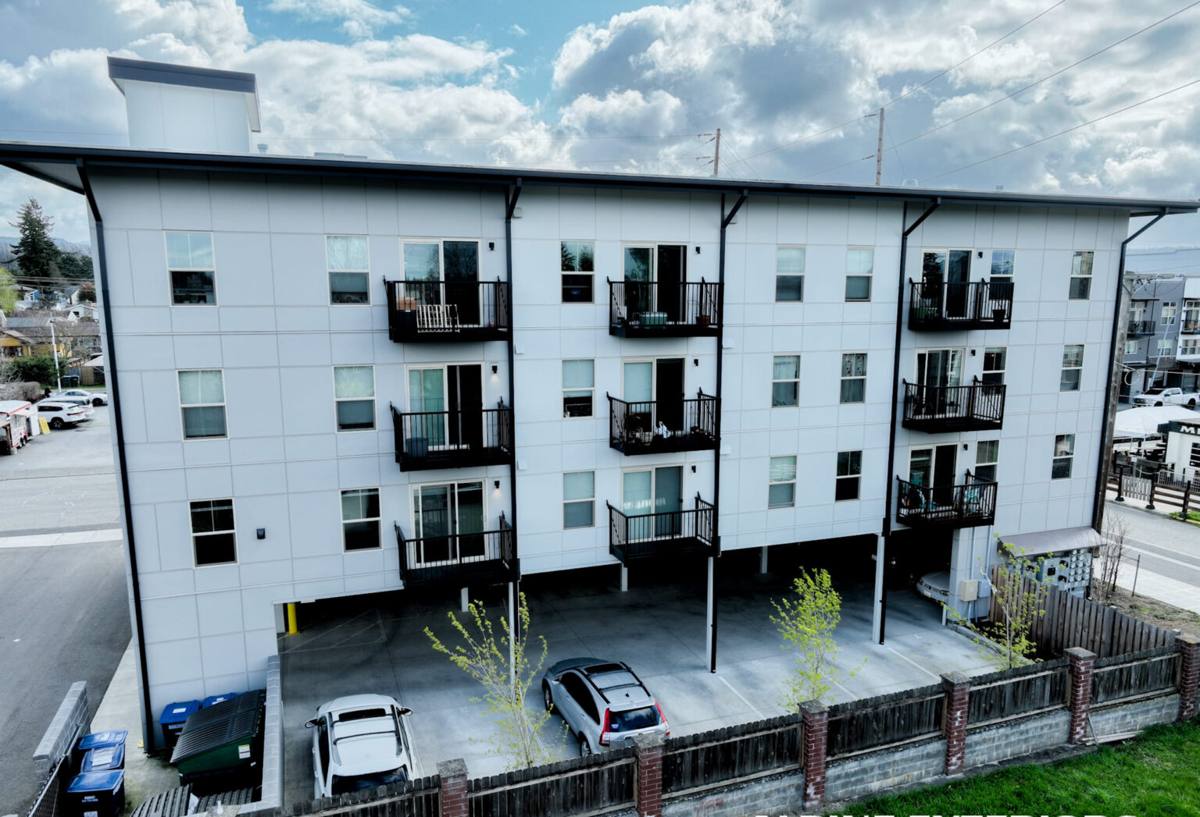
What Whatcom County's Marine Climate Does to Windows Over Time
Salt Air and Hardware Corrosion
Homes closer to Bellingham Bay and the surrounding shoreline deal with airborne salt that accelerates corrosion on window hardware — hinges, locks, balance mechanisms, and any exposed fasteners. Cheaper hardware finishes pit and seize up faster in this environment, which is one reason we pay attention to hardware grade and finish, not just glass and frame, when we spec a window for a coastal-influenced property.
Driving Rain and Flashing Failures
Wind-driven rain doesn't behave like a normal rain shower — it gets pushed sideways and upward into gaps that would stay dry in calmer weather. Most window leaks we're called out to fix aren't glass failures at all; they're flashing failures. Water is finding a path behind the trim, behind the nailing flange, or under a sill that wasn't pitched to shed water outward, and it's doing slow damage to the framing long before anyone notices a stain on the drywall.
Moss, Shade, and Sill Rot
Bellingham's tree cover and long wet season mean north- and east-facing walls, and anything shaded by mature landscaping, stay damp for extended stretches. Moss and algae take hold on sills, trim, and exterior casing, holding moisture against the wood or composite surface far longer than direct sun and wind would allow elsewhere. Left alone, that constant dampness is what turns a cosmetic issue into a rot problem at the sill and jamb.
Signs Your Bellingham Home Needs Window Attention
Most window problems in this climate show up gradually. Here's what we tell homeowners to watch for before a small issue becomes a framing repair:
- Fogging or a hazy film between the panes of a double-pane window (the seal has failed and the gas fill is gone)
- Soft or spongy wood at the sill, jamb, or exterior trim when pressed with a screwdriver
- Visible moss or dark staining building up on the sill or lower casing that keeps coming back after cleaning
- Drafts or a noticeable temperature difference near the window on windy days
- Windows that are difficult to open, close, or lock — often a sign the frame has shifted or swollen
- Paint that's peeling or bubbling on interior trim near the window, which usually points to moisture getting in from outside
- Visible daylight or gaps around the frame when you look closely at the exterior trim line
Any one of these on its own might be minor. Two or three together, especially on a wall that gets a lot of weather exposure, usually means it's worth a real inspection rather than a caulk-and-hope fix.
What a Correct Window Installation Actually Involves
Swapping a window is easy to do badly and quietly. A correct installation in this climate has a few non-negotiable steps, whether it's one window or a whole house:
Inspection and Removal
Before anything goes in, the old window comes out and we check the framing underneath — sill plate, king studs, and sheathing — for rot or water staining. This is often where a "simple window swap" turns into something more involved, and it's better to find that out at the start than after a new window is already sealed over a rotten sill.
Flashing and Water Management
The window opening gets integrated into the wall's water-resistive barrier correctly — sill pan flashing that directs any incidental water back outside, side flashing that laps properly with the barrier, and head flashing that sheds water over the top of the window rather than behind it. In a driving-rain climate, this layered, shingle-style approach to flashing is the single biggest factor in whether a window stays dry for the next twenty years.
Insulation and Air Sealing
The gap between the window frame and the rough opening gets sealed with the right materials — typically low-expansion foam or backer rod and sealant, not just caulk smeared around the trim. Overfilling with high-expansion foam can actually bow the frame and cause operational problems, so this step takes some restraint, not just volume.
Trim and Finish
Interior and exterior trim gets reinstalled or replaced, exterior caulking joints are chosen for UV and moisture exposure, and everything is checked for square operation before we call the job done.
Choosing the Right Window for This Climate
There's no single "best" window material — the right choice depends on the home, the budget, and how much exposure that particular wall gets. Here's how the common options hold up in a coastal, high-moisture climate like Bellingham's:
| Frame Material | Moisture & Salt Air Behavior | Maintenance | Notes |
|---|---|---|---|
| Vinyl | Doesn't corrode or rot; handles moisture well | Low | Most cost-effective option; quality varies a lot between manufacturers |
| Fiberglass | Excellent stability in wet, temperature-swinging conditions | Low | Higher upfront cost; holds paint and finishes well over time |
| Wood | Needs a well-maintained exterior clad or finish to resist rot in this climate | High | Best suited to sheltered walls with less direct weather exposure |
| Aluminum-clad wood | Good exterior protection if cladding and seams stay intact | Moderate | Watch for corrosion at cladding seams and fasteners near salt-air exposure |
For most Bellingham homes we install vinyl or fiberglass on weather-exposed elevations, and reserve wood or wood-clad options for sheltered sides of the house where upkeep is realistic. That's a professional judgment call based on maintenance burden and moisture behavior, not a knock on any one product — it's about matching the material to how much weather a given wall actually takes.
Full-Frame Replacement vs. Insert (Pocket) Replacement
This decision matters more here than in drier climates, because it determines whether hidden moisture damage gets addressed or covered up.
| Approach | What It Involves | Best For |
|---|---|---|
| Insert / pocket replacement | New window fits inside the existing frame; original exterior trim and flashing stay in place | Frames that are sound, dry, and free of rot |
| Full-frame replacement | Old frame is removed entirely down to the rough opening, exposing framing and allowing new flashing | Homes with any sign of water intrusion, rot, or failed flashing at the sill |
Insert replacements are faster and less disruptive, but they only make sense when the existing frame and flashing are actually in good shape. Given how common hidden sill and jamb moisture is on older Whatcom County homes, we don't recommend an insert replacement sight unseen — it's worth confirming what's behind the trim first, because sealing a new window over a compromised frame just hides the problem for another few years.
What Drives the Cost of Window Installation
Every home is different, but the same handful of factors determine most of the cost swing on a window project:
| Factor | Why It Matters |
|---|---|
| Full-frame vs. insert replacement | Full-frame work involves more labor, flashing, and interior/exterior trim rework |
| Frame material | Vinyl, fiberglass, and wood-clad options carry different material costs and long-term maintenance |
| Hidden framing damage | Rot found at the sill or jamb during removal adds repair scope before the new window can go in |
| Window size and configuration | Larger units, bays, and custom shapes cost more than standard sizes |
| Number of windows | Whole-house projects typically bring a better per-window rate than single replacements |
| Access and site conditions | Second-story windows, tight landscaping, or difficult access add labor time |
Because hidden rot is common on homes that have taken on driving rain for years without proper flashing, we always build in an allowance for the possibility of framing repair rather than quoting blind and surprising a homeowner mid-project.
Our Installation Process
Our approach is the same whether we're doing one window or replacing every window on the house:
- On-site estimate — we look at the actual windows, note exposure and any visible moisture signs, and talk through what fits the home and budget.
- Product selection — we walk through frame material, glass options, and configuration based on which walls take the most weather.
- Scheduling around weather — we plan installation days around dry weather windows so the opening isn't exposed to rain any longer than necessary.
- Removal and inspection — old windows come out, and we check the framing before anything new goes in.
- Flashing, insulation, and installation — the new window goes in with proper sill pan flashing, air sealing, and integration into the wall's water barrier.
- Trim, finish, and cleanup — interior and exterior trim is finished, the site is cleaned up, and every window is checked for smooth operation.
Why It Matters to Hire a Crew That Already Works in Bellingham
Window installation isn't just a product install — it's a judgment call about flashing details, material choice, and how much weather a given wall actually sees, and that judgment gets sharper with local experience. A crew that regularly works Bellingham and the surrounding Whatcom County area has already seen how the area's housing stock ages, where moss and moisture tend to cause problems first, and what it takes to keep an installation dry through a full wet season rather than just through the punch-list walkthrough. That local pattern recognition is hard to substitute with a crew that's only passing through the region.
There's also a practical accountability piece: a contractor based nearby is easy to reach if a seal needs a second look after the first hard windstorm of the season, and has a reputation in the community worth protecting. That's a different relationship than a one-time install from a company with no ongoing presence in the area.
If you're seeing drafts, fogged glass, or moss buildup around your windows, or you're just planning ahead for a home that's due for an upgrade, we're happy to take a look. Reach out for a free, no-pressure estimate — we'll tell you honestly what your windows need and what your options are, using the form below.