 Ferndale Siding
 Why Sudden Valley Decks Wear Out Faster Than You'd Expect
Sudden Valley sits in one of the shadier, damper pockets of Whatcom County, and that combination is hard on outdoor wood structures. Tree cover keeps decks from drying out between rain events, lake-area humidity keeps moisture in the air even on dry days, and the region's long, gray stretch of fall-through-spring rain means most decks here spend six or seven months a year damp. Add a moss season that can run from October into May, and you've got the exact conditions that rot fasteners, soften structural lumber, and turn a walking surface slick and dangerous well before a homeowner in a drier part of the state would notice a problem.
We repair decks throughout Ferndale and the surrounding Whatcom County communities, and Sudden Valley's decks consistently show a specific pattern: surface rot on shaded boards, moss buildup in low-traffic corners and along the north side of railings, and hidden moisture damage at ledger boards and post bases where water collects and can't evaporate. Knowing that pattern in advance is what makes an inspection here faster and more accurate than a generic once-over.
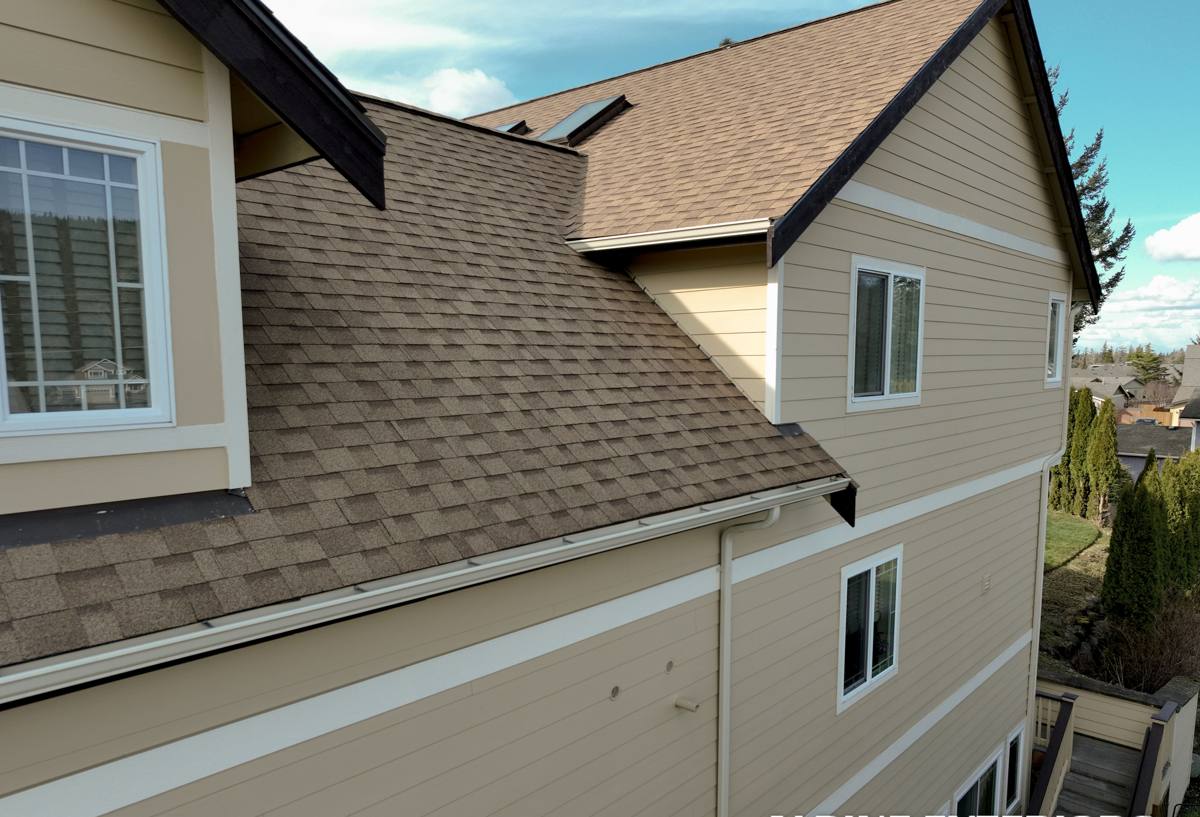
Signs Your Deck Needs Repair — Not Just a Cleaning
A lot of deck problems in this climate look cosmetic at first — a dark stain, some moss, a board that feels a little springy — but underneath they're often structural. Here's what we check for and what each sign usually means.
- Soft or spongy decking boards — usually internal rot, especially common on boards that stay shaded most of the day
- Rust streaks around fasteners — a sign the hardware is corroding and losing grip strength, common with lower-grade screws in a wet climate
- Gaps or movement at the ledger board — where the deck attaches to the house; this is a safety-critical connection and moisture intrusion here is one of the more serious issues we find
- Wobbly railings or posts — often a sign of post-base rot, not just a loose bolt
- Persistent moss or black streaking on boards — surface-level now, but it holds moisture against the wood and accelerates decay if left untreated
- Uneven or bouncy footing when you walk across it — can point to a failing joist underneath
If you're seeing more than one or two of these, it's worth having someone look underneath the deck, not just at the surface.
What a Correct Deck Repair Actually Involves
It starts underneath, not on top
A repair that only addresses what's visible from the top of the deck is a temporary fix. Before we touch a single board, we get underneath and check the framing — joists, beams, posts, and the ledger connection to the house. In a climate like this, framing damage is often further along than surface damage because it's had less airflow and more standing moisture.
Ledger board and flashing
The ledger board — where the deck bolts to the house — is the single most important connection on the structure, and it's also the most common place we find hidden water damage in this region. Proper flashing here keeps rain from running behind the deck and into the house framing. If flashing is missing, damaged, or was never installed correctly, we address that as part of the repair, not as an afterthought.
Structural lumber replacement
Rotted joists, beams, or posts get replaced with appropriately rated lumber — this isn't a place to cut corners, since these members carry the load of everyone standing on the deck. We match fastener spacing and connector hardware to current best practice, even on an older deck that was originally built differently.
Decking boards and railings
Individual board replacement is straightforward once the framing underneath is sound. Railings get the same scrutiny — a railing that looks fine from a distance can have a rotted post base that won't hold up under real weight.
Fasteners and hardware
We use corrosion-resistant fasteners and connectors rated for exterior/ground-contact use. In a damp, shaded environment like Sudden Valley, standard interior-grade hardware corrodes faster and can fail years before the wood around it does — that mismatch is one of the most common causes of "mystery" deck failures we get called out for.
Repair or Replace? An Honest Cost-Factor Comparison
Not every deck problem needs a full rebuild, and not every deck is worth repairing. We give a straight answer based on what we actually find, not a default recommendation. Here's how we weigh it:
| Factor | Favors Repair | Favors Replacement |
|---|---|---|
| Framing condition | Joists/posts sound, only isolated rot | Widespread rot in structural members |
| Ledger board | Intact, properly flashed | Damaged, unflashed, or improperly attached |
| Age of deck | Under 15–20 years, built to code | Older, undersized lumber, or non-code framing |
| Extent of damage | Limited to a few boards or one section | Damage spread across most of the surface |
| Budget goal | Extend usable life at lower cost | Want a long-term reset and possibly a design change |
Broad rule of thumb: if the framing is sound, a repair is usually a fraction of the cost of a full rebuild and can add many more years of safe use. If the framing itself is compromised, patching the surface just delays a more expensive problem.
Our Deck Repair Process in Sudden Valley
- On-site inspection — we check both the surface and underneath, including the ledger connection and post bases
- Written scope and estimate — you know exactly what's being repaired and why before any work starts
- Demo of damaged material only — we don't tear out more than needs replacing
- Structural repair first — framing, ledger, and flashing get addressed before any cosmetic work
- Board and railing replacement — matched to your existing deck where possible, or upgraded materials where it makes sense
- Final check and cleanup — we confirm the repair is solid and the site is left clean
Material Considerations When Replacing Boards
When boards need replacing, we talk through pressure-treated lumber versus composite decking as part of the repair, not just for new builds. Pressure-treated wood is more affordable and blends with existing wood decks, but it needs regular sealing to hold up to this climate's moisture load. Composite costs more upfront but resists moss and moisture absorption better in shaded, damp sections — which matters if the section being repaired is one that never gets direct sun. We'll give you our honest take on which makes sense for the specific area being fixed, rather than pushing one option across the board.
Moss and Moisture: Ongoing Maintenance After Repair
A repair is only as good as the maintenance that follows it, especially here. A few habits go a long way toward protecting the work:
- Sweep or blow off leaves and debris regularly in fall — trapped organic matter holds moisture against boards and feeds moss growth
- Treat visible moss early with an appropriate deck-safe cleaner rather than letting it establish
- Reseal or restain wood decking on the manufacturer's recommended schedule — in this climate that's often more frequent than the label suggests for drier regions
- Keep gutters and downspouts near the deck clear so runoff isn't draining directly onto or under it
- Check the ledger flashing and fastener condition once a year, ideally before the wet season sets in
A Quick Pre-Winter Deck Checklist
- Walk the full deck surface and check for soft spots
- Look underneath for standing water or debris buildup near posts
- Check railings for movement at the base
- Clear moss from shaded boards before it spreads
- Confirm fasteners aren't rusted or backing out
Why Hire a Crew That Already Works Sudden Valley
Deck repair done by a crew unfamiliar with this specific microclimate tends to under-treat the problem — resealing boards without checking the framing, or replacing wood without addressing why it rotted in the first place. Because we work throughout Ferndale and Whatcom County, we've seen how homes situated near tree cover and standing water behave differently than decks in more exposed, sunnier parts of the region. That means we're not guessing at where hidden damage is likely to be — we're checking the spots that actually fail here first.
It also means straightforward scheduling. We're not traveling in from out of the area for a single repair call, and we're available for the kind of follow-up check that a repair in this climate sometimes benefits from a year or two later.
What to Expect on Cost
Deck repair costs vary widely depending on how much structural work is involved versus surface-only fixes. A repair limited to a handful of boards and some hardware is a modest job. A repair that involves ledger board work, post replacement, or significant joist damage costs more because it's addressing the structural core of the deck, not just its appearance. We won't quote a number without seeing the deck — anyone who does is either guessing or lowballing to get in the door, and both approaches cost you more later.
If your deck in Sudden Valley is showing soft spots, moss buildup, rust streaks, or just doesn't feel as solid as it used to, we're happy to take a look. Reach out for a free, no-pressure estimate using the form below — we'll tell you honestly what we find, whether it's a small repair or something bigger.