 Ferndale Siding
 Deck Building Built for Sudden Valley's Lake Climate
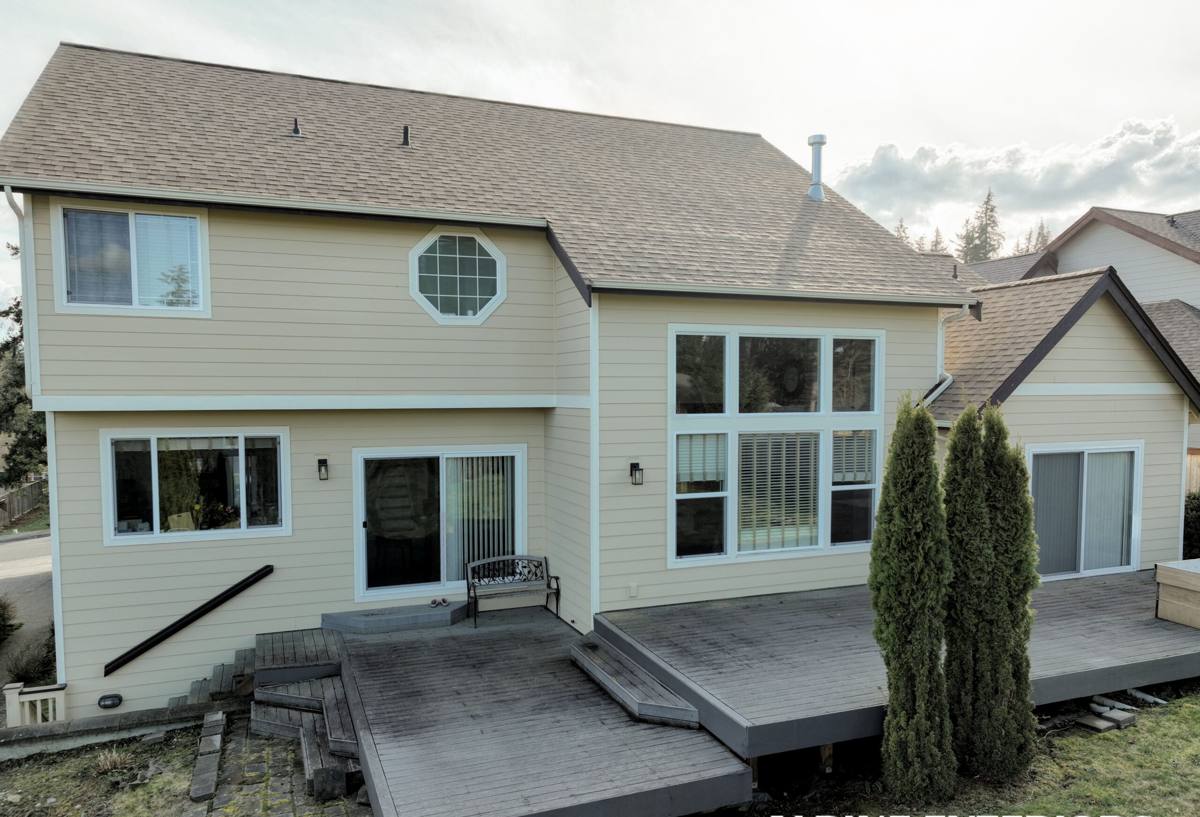
Sudden Valley sits under heavy tree cover along Lake Whatcom, and that setting is exactly what makes deck building here different from a typical backyard project. Homes are shaded for much of the day, humidity lingers longer near the water, and the same marine weather pattern that brings driving rain and salt-laden air across the rest of Whatcom County still finds its way into these forested lots. A deck built without that environment in mind will show moss, soft spots, and loose fasteners years before it should. A deck built for it will outlast the warranty on the materials.
We build and repair decks throughout the Ferndale and greater Whatcom County area, and Sudden Valley's combination of shade, slope, and lake proximity is one we plan for specifically rather than treat as an afterthought.
What This Environment Actually Does to a Deck
Shade and a Long Moss Season
Dense tree canopy is one of Sudden Valley's biggest selling points as a place to live, but it's hard on horizontal wood surfaces. Deck boards that stay shaded most of the day dry out slowly after rain, and slow-drying wood is exactly what moss, algae, and lichen need to take hold. Once established, that growth holds moisture against the board surface and turns walking surfaces slick, especially on stairs and any north-facing sections of a deck.
Driving Rain and Lake-Effect Humidity
Whatcom County's marine climate delivers plenty of driving, wind-blown rain, and lots on or near Lake Whatcom see extended damp periods on top of that. Moisture gets pushed sideways under railings and into ledger connections, not just straight down onto the decking. Fastener and flashing choices that would be fine on a dry, open lot elsewhere in the county aren't always enough here.
Slope and Tree Root Interference
Many Sudden Valley lots are sloped toward the lake or cut into forested hillside, which affects footing depth, post height, and how water sheds away from the structure. Root systems from mature trees can also complicate footing placement, which is something we plan for during the site visit rather than discovering mid-project.
Choosing the Right Decking Material
There's no single "best" decking material — the right choice depends on how much sun a deck actually gets, how much maintenance the homeowner wants to keep up with, and budget. In a shaded, moisture-prone setting like Sudden Valley, we weigh moss and algae resistance more heavily than we would on an open, sun-exposed lot.
| Material | Moisture & Moss Resistance | Maintenance | Typical Lifespan |
|---|---|---|---|
| Pressure-treated lumber | Fair — needs sealing to perform well in shade | Annual cleaning and re-sealing | 10–15 years with upkeep |
| Cedar | Naturally decay-resistant, but surface still grows moss in deep shade | Periodic cleaning, oil or stain every few years | 15–20 years with upkeep |
| Capped composite | Strong — non-porous cap resists moss staining and doesn't absorb water | Occasional wash, no sealing | 25–30+ years |
| Uncapped composite | Better than wood, but the exposed surface can still stain and pick up moss film over time | More frequent washing than capped composite | 20–25 years |
Our standard is capped composite for shaded, moisture-heavy lots like most of Sudden Valley — the closed surface simply gives moss and algae less to grip onto, which matters more here than it would on a full-sun lot elsewhere in Ferndale. We'll still install quality cedar or treated lumber when that's what a homeowner wants; we just make sure they understand the maintenance trade-off going in, not after the first mossy spring.
Framing and Structure: What a Correct Job Involves
Ledger Attachment and Flashing
The ledger board — where the deck attaches to the house — is the single most common failure point on decks in wet, shaded climates. Water that gets behind an improperly flashed ledger has nowhere to go and rots the house's wall framing from the inside, often long before anyone notices from outside. We install proper flashing and a ventilated gap behind the ledger so any moisture that does reach it can drain and dry instead of sitting there.
Footings Sized for the Site
Footing depth and post spacing need to account for the actual soil and slope conditions on the lot, not a generic assumption. On sloped or root-heavy Sudden Valley lots, that sometimes means adjusting footing placement on-site rather than following a plan drawn up without seeing the ground.
Fasteners and Hardware
We use corrosion-resistant, code-rated fasteners and structural connectors throughout — hidden fastener systems where appropriate for composite decking, and hot-dip galvanized or stainless hardware everywhere moisture collects. In a climate that stays damp longer than most, cutting corners on hardware is one of the fastest ways to end up with a deck that looks fine but isn't structurally sound underneath.
Drainage and Under-Deck Moisture Management
A deck that traps moisture underneath is a deck that rots from below while looking fine on top. On shaded lots this matters even more, because the ground under a deck often never gets direct sun to dry it out. We grade and route water away from the foundation, keep joist spacing and airflow adequate underneath, and avoid designs that create low spots where water and leaf debris can collect against framing. For decks built low to the ground or over living space below, we also plan for a proper under-deck drainage or membrane system so water is directed out and away rather than dripping through indefinitely.
Our Deck Building Process
1. On-Site Assessment
We walk the actual lot — checking slope, sun exposure, tree cover, soil, and how the deck will tie into the existing house — before recommending a design or material. This is where site-specific issues like root interference or poor drainage get caught.
2. Design and Permitting
We draw up a plan sized to the site and handle the permitting process. Many Sudden Valley homes also fall under the Sudden Valley Community Association's architectural review, so exterior projects like a new deck typically need that sign-off in addition to standard county permitting — we account for that step in the project timeline so it doesn't catch anyone by surprise.
3. Construction
Footings, framing, ledger flashing, decking, and railings are installed in sequence with inspections built in at the structural stages, not just at the end.
4. Final Walkthrough
We walk the finished deck with the homeowner, cover basic care and what to expect from the material chosen, and answer any questions before we consider the job done.
Keeping a Sudden Valley Deck in Good Shape
Even a well-built deck needs some seasonal attention in this climate. A little regular upkeep goes a long way toward avoiding the slick, mossy, soft-board problems that shaded lake-area decks are prone to.
- Sweep leaves and debris off the deck surface regularly, especially in fall — trapped organic matter holds moisture and feeds moss growth
- Wash the deck surface at least once a year to remove early moss and algae film before it takes hold
- Check railings, stair connections, and ledger flashing annually for looseness or gaps
- Keep gutters and downspouts near the deck clear so roof runoff isn't dumping extra water onto or under the structure
- Re-seal wood decking on the manufacturer's recommended schedule — shaded wood dries slower and needs consistent protection
- Trim back overhanging branches where practical to give the deck a bit more sun and airflow
Why It Matters to Hire a Crew That Already Works Here
Deck building isn't the same job on every lot. A crew used to building on open, sunny properties elsewhere in Ferndale can still do competent framing, but they may not think through moss-resistant material choices, under-deck drainage for a shaded lot, or the HOA review step that's specific to Sudden Valley. Knowing the neighborhood means fewer surprises during permitting, fewer callbacks for moss or moisture issues down the road, and a design that's actually matched to how the lot behaves through a wet Whatcom County winter.
We've built and repaired decks across this area long enough to know which details matter on a shaded lake lot versus an open one, and we bring that judgment to every estimate rather than a one-size-fits-all approach.
Get a Free, No-Pressure Estimate
If you're planning a new deck or need to replace one that's showing its age, we're happy to come take a look, walk the site with you, and put together an honest estimate — no pressure, no obligation. Use the form below to get started.